Key Takeaways:
The Supervision Standard: Your broker is a guardian of your license. If they aren't accessible, your professional standing could be at risk.
Effective Split Math: High splits often Read more...
Key Takeaways:
The Supervision Standard: Your broker is a guardian of your license. If they aren't accessible, your professional standing could be at risk.
Effective Split Math: High splits often mask overhead. Always calculate your take-home after potential brand royalties and monthly "junk" fees.
Proof over Promises: Never rely only on a recruiter's verbal promises. Demand to see the written Fee Schedule, Training Calendar, and E&O Policy page.
Compliance is Success: In California, a brokerage without a proactive, early file-review system for disclosures could be a significant professional liability.
TL;DR: The "Instant Exit" Checklist
A "Red Flag" is a symptom of a systemic failure. If a brokerage checks a bunch of these boxes—or any single box in Category 2 (Support & Compliance)—think long and hard about signing with them.
The Unavailable Broker: No designated backup for the Responsible Broker during nights or weekends.
The "Off-the-Top" Surprise: Commission splits calculated after a non-capped franchise royalty or brand fee is deducted.
Pay-to-Play Training: Mandatory monthly fees required even if you aren't closing deals.
Post-Closing Review: Files are audited only after the deal closes, leaving you exposed during the transaction.
Recruitment-Heavy Incentives: Internal focus on agent attraction that outweighs the focus on teaching the Residential Purchase Agreement (RPA).
“Your biggest risk isn’t a low split; it’s a high split with no support—leaving you with 100% of zero.”
Your License is Your Asset
While passing the California real estate exam is a monumental achievement, another important phase of your career begins the day you select a broker. In advising thousands of new licensees, I have watched many talented agents struggle early on because they chose a brokerage that provided zero operational protection.
What is a Brokerage Red Flag?
A red flag is any trait suggesting a brokerage prioritizes its own growth metrics over your professional development and legal safety. Conversely, a Green Flag system is one with transparent math, documented support standards, and a rigorous compliance framework.
Choosing a brokerage is not a branding exercise; it is choosing a Risk Management System for your license. In California, where disclosure requirements are complex, your broker’s supervision is your primary line of defense.
The 18-Point Brokerage Audit
Use these tables to guide How You Interview Brokerages in California. Demand the "Proof Artifact" for every category.
Category 1: Money & Fee Transparency
#
The Red Flag
The Recruiter Pitch
The Real Risk
Exact Verification Question
Proof Artifact
1
"Off-the-top" Fees
"It's a 90/10 split."
Brand royalties can drop your actual take-home significantly.
"Is my split calculated on Gross Commission or Net after brand fees?"
Written Fee Schedule
2
Hidden E&O Costs
"Insurance is included."
You may be liable for a significant out-of-pocket deductible per claim.
"What is my out-of-pocket deductible if a claim is filed against me?"
E&O Policy Dec Page
3
Mandatory Junk Fees
"Low monthly overhead."
Monthly desk/tech fees erode your capital while you are still ramping up.
"What is the total monthly cost to hang my license if I close zero deals?"
ICA (Fee Section)
4
Exit Fee Clawbacks
"Joining is free!"
You may owe "training reimbursements" if you move your license.
"Are there any financial penalties or fee clawbacks if I leave?"
ICA (Termination)
5
No Cap Clarity
"You keep 100% later."
"Caps" may only apply to the broker split, not the brand royalty.
"Does the annual cap include or exclude franchise/royalty fees?"
Commission Policy
6
Admin/Client Fees
"Standard processing."
Hidden fees charged to your clients can damage your reputation.
"Does the brokerage charge my clients any 'administrative' or 'compliance' fees?"
Written Admin Fee Policy
Category 2: Support & Compliance (The "Hard Pass" Category)
#
The Red Flag
The Recruiter Pitch
The Real Risk
Exact Verification Question
Proof Artifact
7
The "Ghost" Broker
"I'm always available."
If the broker is unreachable on weekends, you have no legal supervision.
"Who is the designated backup if the Responsible Broker is unreachable?"
Weekend Duty List
8
Delayed File Audit
"We review for closing."
Late audits can lead to serious legal exposure after the deal closes.
"When is the first compliance review performed on a new escrow?"
File Review SOP
9
Unsupervised AVIDs
"Just get it signed."
Failure to properly inspect (AVID) creates massive liability for new agents.
"Who specifically reviews my Agent Visual Inspection Disclosures?"
Compliance Checklist
10
No Support SLA
"Open-door policy."
You lose a deal because a contract emergency goes unanswered.
"What is the written policy for emergency response times on weekends?"
Escalation Procedure
11
No Legal Hotline
"Ask the manager."
Managers may give non-legal advice; you need expert guidance.
"Do agents have direct access to a legal hotline or staff attorney?"
Policy Manual
12
Part-Time Broker
"I still sell too."
A broker in personal production may prioritize their deals over your safety.
"Who on staff is responsible for performing daily compliance reviews?"
Review Staffing List
Category 3: Training & Culture
#
The Red Flag
The Recruiter Pitch
The Real Risk
Exact Verification Question
Proof Artifact
13
Unstructured Mentors
"Paired with a pro."
A producer may lack the protected time to review your first counter-offer.
"Is the mentor's time specifically compensated for teaching?"
Mentorship Syllabus
14
Video-Only Training
"1,000+ videos."
Passive watching does not build the skill of handling tough objections.
"What time is the weekly live roleplay or script practice session?"
Training Calendar
15
Recruiting Focus
"Growth incentives."
The office may prioritize agent attraction over production support staff.
"Can I see the names of the staff responsible for contract audit?"
Staff Roles List
16
No RPA Training
"You'll learn on the job."
You cannot explain the Purchase Agreement to a skeptical client.
"When is the next live class specifically covering the RPA?"
Training Syllabus
17
"Ramping" Leads
"We provide leads."
Leads are often old or recycled, wasting your prospecting time.
"How are leads distributed, and can I see the age of current lead inventory?"
CRM Lead Routing Rules
18
High Turnover
"We're growing fast!"
High churn indicates a lack of retention through support and value.
"Can I speak with two agents who have been in this office for 3+ years?"
Direct Agent References
The “High Split Trap” (Effective Split Reality)
While commission structures vary significantly across California, the underlying math remains constant. You should calculate your Effective Split.
Scenario: Your First $1M Deal ($25k GCI)
Illustrative scenario assuming you close after 6 months of ramp-up overhead and an example (assumed) 6% franchise royalty rate.
Item
90/10 Model (High Fee)
70/30 Model (All-In)
Gross Commission
$25,000
$25,000
Broker Split
($2,500)
($7,500)
Example (Assumed) Royalty (6%)
($1,500)
$0
Monthly Fees (6 months)
($1,500)
$0
NET TO AGENT
$19,500
$17,500
The Lesson: The 90/10 model netted more here, but if the 70/30 model provided a mentor who helped you close that deal one month faster, you would have gained production momentum that outweighs the split difference. Speed + Supervision often beats raw split.
Broker Access & the “Support SLA”
In California, contract deadlines are unforgiving. If you have a question about a counter-offer or a contingency removal at 4:30 PM on a Friday and your broker is unavailable, you risk a breach of contract for your client.
A Recommended Support Rule of Thumb:
Contract Emergencies: < 1-hour response window.
General Questions: < 24-hour response window.
If the broker is a solo practitioner with high personal production and no backup, verify the actual written support system. Don't assume access just because they were friendly during the interview.
Transaction Review & the Compliance Safety Net
California disclosure requirements (TDS, SPQ, AVID) are legally dense. A Green Flag brokerage uses a Safety Net approach:
Initial Review: Within 24–48 hours of an executed contract.
Milestone Audits: Systematic checks tied to key escrow events (e.g., disclosure package delivery or contingency milestones).
VID Audit: A review of your Agent Visual Inspection Disclosure language before it is delivered to the buyer.
Training Proof vs. Training Marketing
Recruiters sell "The Dream"; brokers sell "The System." To verify the training is real, you should treat the interview like a diagnostic exam. Demand these items:
The Calendar: Show me the classes from the last 30 days.
The Syllabus: Is there a written 30-60-90 day onboarding plan?
The "Why": Ask "What is the #1 mistake your new agents make on the RPA?"
Leads, Teams, and the Hidden Trade-Off
Before deciding Should You Join a Team or Go Solo, analyze the lead-gen model:
The Team is a "Ramp" if: They provide leads AND teach you the skills to eventually generate your own.
The Team is a "Treadmill" if: You are only allowed to work their scraps and you never learn to source business.
The Red Flag Scorecard
Score each 1-5 (1 = Poor, 5 = Excellent). If Compliance or Support SLA is below 4, this brokerage might be a "Pass."
Criteria
Score
Training Proof (Actual syllabus/calendar verified)
Support SLA (Documented response < 1 hour for emergencies)
Compliance Review (Audit within 24-48 hours of execution)
Fee Transparency (Written Schedule of Fees provided)
Mentorship Structure (Time specifically protected/compensated)
Lead Model Clarity (Clear path to self-generated business)
If You Already Joined a Bad Brokerage, Do This in the Next 30 Days
If you suspect you've made a mistake, take these steps:
Read Your Independent Contractor Agreement (ICA): Often, you cannot move a pending deal without a heavy fee.
Interview Early: Start interviewing Best Brokerages for New Agents in California before you resign.
Document Promises: If promised training never happened, keep a log of missed events.
Export Your CRM: Consider what happens to your contact data before you announce a move.
FAQ Section
Is a 100% commission brokerage good for new agents?
Usually no—unless it has documented supervision, training proof, and transparent fees. One disclosure error can create serious exposure that may cost more than any "saved" commission.
What is a "Franchise Fee"?
It is a royalty paid to a national brand. Always verify if it is calculated on the Gross commission and whether the cap applies to the royalty or only the broker split.
What is an E&O Deductible?
IErrors and Omissions insurance protects you, but many brokers have a deductible that can be several thousand dollars. You need to know if you are responsible for that out-of-pocket in the event of a claim.
Your first year in real estate is about survival and skill-building. The brokerage you choose should be your foundation, not your burden. By focusing on risk management and demanding proof, you ensure your career starts on solid ground.
Ready to build your career on a foundation of real education and support?
Start a Real Estate Career in California
|

TARGET AUDIENCE CHECK
This is for you if: You want a tactical tool to evaluate local California offices and identify which business model fits your specific personality.
This is NOT for you if: You Read more...
TARGET AUDIENCE CHECK
This is for you if: You want a tactical tool to evaluate local California offices and identify which business model fits your specific personality.
This is NOT for you if: You want a ranked list of "top brands" or corporate recruitment fluff.
Choosing your first brokerage in California is a high-stakes decision disguised as a simple choice. Your hard-earned license is a tool, not a trophy, and its value is determined entirely by the support system you choose to wield it.
You’ve passed the exam, but your license is truly tested the moment a client asks a question you can’t answer and you have nowhere to turn. In my 20+ years of experience, I’ve watched the same costly pattern repeat: agents seduced by a charismatic recruiter or a premium office, only to fail months later on a missed deadline or botched disclosure.
The fatal flaw isn’t picking the “wrong” brand—it’s choosing for atmosphere over accountability, for splits over support. This guide is your tactical framework. It replaces hope with strategy, helping you cut through the polish to find the partner that will truly protect your career and answer the phone when you’re in over your head.
The New Agent Brokerage Scorecard
Use this rubric to evaluate every office you visit. Score each category from 1 (poor) to 5 (excellent).
The Scorecard Rule:
If the average score for Training Proof, Compliance Review, and Broker Support is under 4, walk away.
If Broker Support cannot define a specific deadline-response path (how fast they answer on weekends), walk away.
If the All-in Fee Sheet isn't provided in writing, walk away.
Evaluation Rubric
Category
What to Look For
Why It Matters
Training Proof
A physical calendar showing weekly live contract drills and roleplay.
"We have training" is a platitude. You need to see the schedule.
All-In Fee Sheet
Get splits/caps/fees in writing. (Commission Splits Explained for New Agents)
If it isn't in writing, it will be "misremembered" later.
Broker Support
A documented response path for after-hours / deadline questions.
You need a manager with a defined response time when a deal is on the line.
TC Process
A dedicated Transaction Coordinator and a file-review checklist.
CA disclosures are paperwork-heavy; you need a professional safety net.
Mentor Structure
Minimum commitments: Weekly deal desk? Contract review? Shadowing?
You want a mentor with specific, documented responsibilities to you.
Required Tools
Who pays for the CRM, doc-sign software, and website?
Some brokerages hide "tech bundles" in your monthly fees.
Compliance Review
Does a broker review your RPA before it goes to a client?
This prevents expensive legal mistakes before they happen.
Lead Generation
Distribution rules, contact rates, and the specific cost (split/fee).
Avoid vague promises of "leads" without a defined system.
Exit Terms
Who owns team-provided leads? What are the non-solicit terms?
Some agreements restrict your ability to work your database if you leave.
E&O Insurance
A summary of coverage, deductible responsibility, and who pays.
New agents are often blindsided by deductible costs ($1k–$5k) after a mistake.
The "No-Go" Dealbreakers
Can't provide an all-in fee sheet: Hidden costs are a leading cause of first-year "quit" rates.
No broker review process: If no one audits your contracts, you are flying blind with your license on the line.
No training calendar: If they "can't show it right now," the training is unproven and likely inconsistent.
No after-hours support path: Real estate doesn't happen 9-to-5; you need a documented path for weekend deadlines.
The "Closed-Door" Policy: They won’t let you speak to 1–2 agents who joined in the last 12 months.
The Proof Pack (Ask for these in writing)
Full Fee Sheet (E&O, desk fees, franchise fees, deductibles)
Current month's onboarding/training calendar
Example Transaction Checklist / File Review Rubric
Written Mentor Structure (Frequency, responsibilities, and who covers the deal desk)
Copy of the Independent Contractor Agreement (ICA)
The Core: Brokerage Models (Choosing Your Fit)
The right choice depends on your learning style. Verify these details locally and do not rely on a national logo.
1. Training-First Model (The Classroom)
Best for: Career-changers who thrive in a structured environment and want a clear, step-by-step playbook.
The Trade-Off: You’re paying a higher split to buy speed-to-competence.
Verify This: Show me last month’s training recordings or the specific agenda for contract drills.
Failure Mode: If you skip the "reps," you will freeze in front of your first client.
2. Team-Centric Model (The Appointment Engine)
Best for: You want appointments now and accept a lower net commission to buy "reps" and experience.
The Trade-Off: You’re "renting" leads; you’ll pay for them forever unless you build your own pipeline.
Verify This: Show lead distribution rules, minimum activity requirements, and the team agreement. Need more context? I wrote a guide on whether you Should You Join a Team or Go Solo.
3. Boutique/Community Model (The Culture)
Best for: You value direct access to the owner and a localized, non-corporate vibe.
The Trade-Off: You’ll either become self-sufficient fast or you will drift.
Verify This: Show the file-audit checklist and the broker review cadence.
Failure Mode: If you require rigid structure to stay productive, you will likely stall here.
4. Fee-Based / Self-Directed Model (The High Margin)
Best for: You already have an existing pipeline or network and just need a place to "hang" your license.
The Trade-Off: Minimal hands-on supervision and zero provided training.
Verify This: Show support portal response standards and identify exactly who answers legal/compliance questions.
Failure Mode: This model is brutal without an existing pipeline; you will likely stall before your first closing.
5. Outbound Team (The Dialer)
Best for: You can commit to 2–4 hours a day of outbound calling and have a high tolerance for rejection.
The Trade-Off: High burnout risk and very low splits on team-provided leads.
Verify This: Show contact rate expectations and the script coaching cadence.
6. Traditional Full-Service Office (The Hybrid)
Best for: You want a mix of a brand name and on-site resources like transaction coordinators.
The Trade-Off: Mid-range splits; can often feel "sink-or-swim" if the manager is checked out.
Verify This: Show me the actual resources—TC availability, deal desk schedule, and broker-to-agent ratio.
Money Reality Check: The Math of Support
Don't be blinded by a split percentage. Consider this comparison for your first 6–9 months:
Scenario
Example A(High Split / Low Support)
Example B(Lower Split / High Support)
Training/Leads
None (Self-taught)
Intensive Coaching + Mentor
Production (6–9 mo)
0 Deals (Struggled to launch)
2 Deals (at an ~$800k price point)
Gross Commission (GCI)
$0
$40,000
Agent Net (Pre-Tax)
$0
$20,000
Note: Example only—commission rates and splits vary by market, brokerage, and side. Assumes 2.5% commission on a single side before broker fees, team splits, MLS dues, and taxes. The point remains: 2 deals at a lower split beats 0 deals at a high split.
Beginner Traps to Avoid
Paperwork Avoidance: Joining a model that doesn't force you to learn the RPA and disclosures. You cannot "out-sell" a lack of legal competence.
Recruitment Theater: Big promises during the interview but zero calendars, checklists, or accountability once you sign.
The "Invisible" Training: Accepting "we have online videos" as a substitute for live contract training.
Exit Term Surprises: Some team agreements claim ownership over team-provided leads and restrict solicitation. Red Flags When Choosing Your First Brokerage covers this in depth.
California-Specific Context: Compliance is Protection
California’s regulatory environment is demanding. Disclosures like the TDS, SPQ, and AVID are time-sensitive and legally heavy. For most new agents, joining an office without a documented file-audit process is gambling with your license.
Ask This: "Do you perform live RPA clause-by-clause drills and disclosure timeline walkthroughs?"
Ask This: "Who reviews my first 3 contracts before they go out to ensure I don't miss a disclosure deadline?"
The 60-Minute Decision Path
Self-Diagnose: Pick your top 2 needs (e.g., Appointments now vs. Paperwork Training).
Shortlist: Pick three local offices that represent different models.
Interview with a Weapon: Bring the Scorecard. Before you go, read How to Interview a Brokerage as a New Agent.
The Proof Pack: Do not leave without a fee sheet and training calendar.
Your first brokerage is a launchpad, not your final destination. Choose for speed-to-competence today; optimize splits later.
Ready to take the first step?
Start a Real Estate Career in California
FAQ SECTION
Q: Is a 100% commission brokerage good for new agents?
A: Only if you already have a solid lead pipeline and a documented plan for contract support. Without infrastructure, most rookies fail before their first deal.
Q: What should my broker’s response time be?
A: You should expect a response on the same day, and significantly faster during active contingency deadlines.
Q: Should I join a team my first year?
A: If you need a check quickly, a team accelerates the process. However, be aware of the long-term cost and the exit terms regarding lead ownership.
Q: How do I verify training is real?
A: Ask to see the calendar for the current month. If they can't show it, treat it as unproven and likely inconsistent.
TL;DR
Verify Training Proof: "We have training" is a placeholder until you see a live calendar with contract drills and roleplay.
Manager Availability (SLA): Your first crisis won't happen during office hours. You need a documented response path for deadlines.
All-In Cost Sheet: Get every desk, tech, insurance, and franchise fee in writing. If it isn't on the sheet, it doesn't exist.
Skill > Splits: A 100% split of zero is still zero. Prioritize speed-to-competence over high margins for your first 12 months.
|
The Real Numbers for Year One.
Disclaimer: Real estate income is highly variable. There are no salary guarantees. Your earnings depend on market conditions, brokerage choice, and individual effort. Read more...
The Real Numbers for Year One.
Disclaimer: Real estate income is highly variable. There are no salary guarantees. Your earnings depend on market conditions, brokerage choice, and individual effort. All numbers provided are scenario-based assumptions used to illustrate business mechanics, not a promise of future earnings.
Why You Can’t Find a Straight Answer
Searching for a "California real estate agent salary" is a frustrating exercise. You'll find averages from $45,000 to six figures—a range so wide it's meaningless. Here’s why: those numbers lump together top-performing veterans with brand-new agents who may go months without a single check.
After 20+ years coaching professionals at ADHI Schools, I can tell you the real question isn't about averages. It's about your first-year reality. Let's replace the confusing hype with a clear, mechanics-based framework you can use to plan your survival and success.
The Framework (The Only Formula That Matters)
To understand your income, you must stop thinking about a "paycheck" and start thinking about "net profit."
The Core Formula:
What You Sold × What You Keep × - What It Costs = Actual Check
As an example, let’s say you sold a $800,000 house and you are on a 70% commission split at a 2% commission.
$800,000 x 2% (gross commission earned) x 70% (your commission split) = $11,200
Every number we discuss below is an attempt to solve for that final variable. If you don't track these levers, you aren't running a business; you're just hoping for a miracle.
Quick Answer: Realistic First-Year Income Ranges (Scenario Models)
The following tiers represent common outcomes we see in the California market based on an $800,000 sales price and a roughly 70% commission split. These are model outputs based on assumptions, not guarantees.
Scenario Profile
Est. Closed Deals
Gross Comm. (To Brokerage)
Net to Agent (Pre-Tax)
The Part-Time Learner
1–2
$20,000 – $40,000
$10,000 – $25,000
The Hustling Newcomer
4–7
$80,000 – $140,000
$50,000 – $90,000
The Team Player
8–12
$160,000 – $240,000
$60,000 – $100,000
Context for the Math:
Part-Time: 10–15 hours/week; primarily referral-based.
Hustling: 40+ hours/week; includes weekly open houses and daily lead generation.
Team: High volume via provided leads; typically involves a 50/50 split with the team leader.
Important: These figures are pre-tax; taxes and your personal burn rate determine what is "livable."
Volatility Note: A single cancelled escrow can wipe out weeks of income projections.
Commission Math Decoded (From Sale Price to Your Bank Account)
Many new agents assume a 3% commission is a fixed rule. In reality, commission rates and splits vary by market and brokerage. This is a simplified model to show the mechanics.
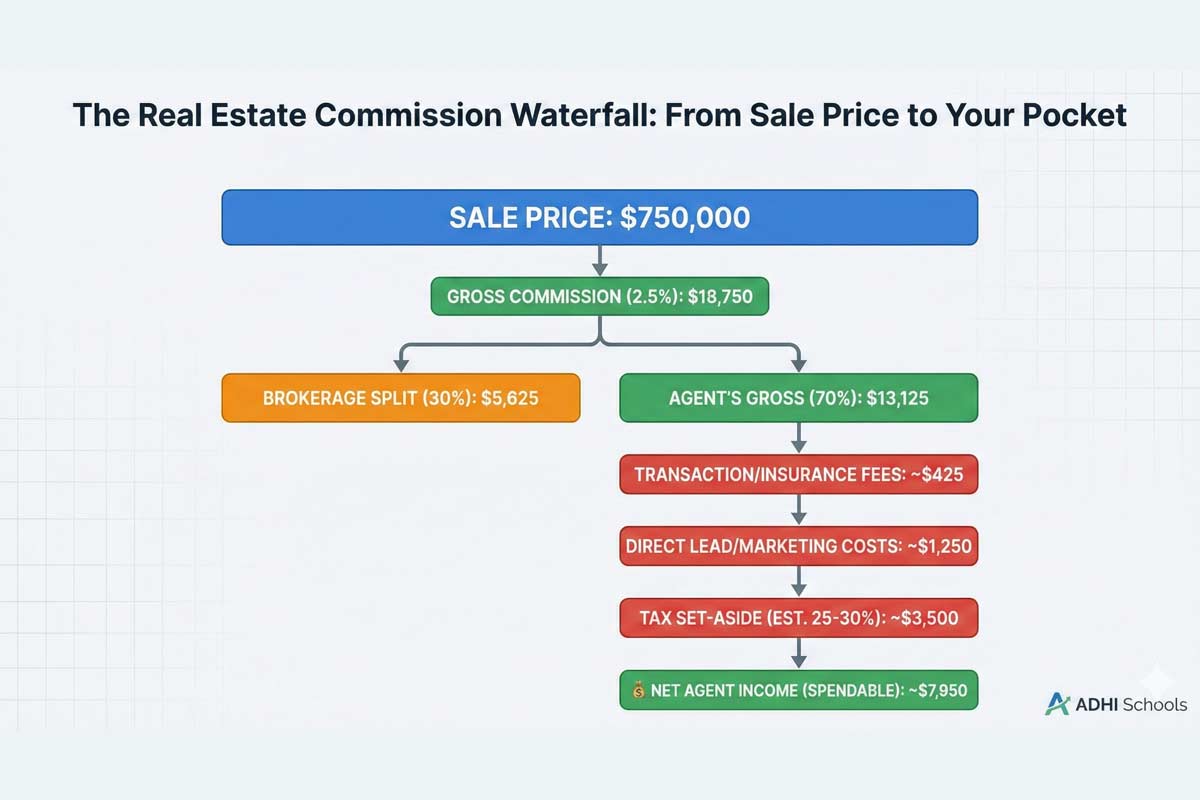
Example: The $750,000 Sale (Assumption Model)
Step
Assumption/Range
Remaining Balance
Sale Price
$750,000
—
Gross Commission to Broker (2.5%)
Model Assumption
$18,750
Brokerage Split (70/30)
Typical solo agent starting split
$13,125
Transaction/Insurance Fees
$250 – $600 (Per-deal variable)
$12,625
Direct Lead/Marketing Cost
$0 (Sphere) – $2,500 (Paid Leads)
$10,125
Tax Set-Aside
Varies by situation—confirm with CPA
Variable
The Takeaway: On a $750,000 sale, your actual spendable income is often less than half of the initial gross commission.
Timeline to Your First Commission Check (The Lag)
The biggest threat to a new agent isn't a lack of talent; it's a lack of capital during the "lag." Understanding how long it takes to start a real estate career is the first step in managing your cash flow, as the licensing process itself often takes a few months.
Once licensed, the wait for your first dollar of income is months, not weeks.
The Ramp: Active lead generation before an offer is accepted.
The Escrow: 30–45 days of waiting for the deal to fund and the check to clear.
Runway Reality: If you are going full-time, a 6–9 month cushion for living expenses is a common safety threshold.
What Slows You Down (Traps)
Administrative Perfectionism: Spending weeks on "branding" instead of talking to human beings.
Escrow Fallouts: In CA, inspections or loan issues can kill a deal late in the game, resetting your income timeline.
What Speeds It Up (Levers)
Focusing on Buyers: A motivated buyer can often be put into escrow faster than a listing can be prepped, staged, and marketed.
Open Houses: This is the fastest face-to-face way to meet unrepresented buyers without an upfront ad spend.
Hidden Expenses (Your First-Year “Cost of Existence”)
You are a business owner, and businesses have overhead. The "gotcha" is that expenses hit before income. You will be paying for access to the market while you are still trying to find your first client.
First-Year Expense Budget (Estimates)
Category
Item
Est. Annual Range
Fixed/Initial
Licensing, Exam, Fingerprints, Board Dues
$2,000 – $3,500
Operational
E&O Insurance, CRM, Signage
$1,500 – $4,000
Recurring Dues
Quarterly MLS Fees / Annual Association
$800 – $1,500
Transportation
Gas, vehicle maintenance, travel time
$1,500 – $4,000
Marketing
Mailers, Digital Ads, Lead Gen
$2,000 – $10,000+
TOTAL
$7,800 – $23,000+
Cash Flow Warning: Many board and MLS dues are due in full upon joining. Budget at least $2,000 for your "Day 1" operating costs.
Scenarios: Applying the Formula to Real Life
1. The Part-Time Learner
Assumptions: 2 deals/year ($800k avg), 70/30 split.
Math: ($40k Gross) x 0.70 = $28k. Minus $7k expenses.
Approx. Net Outcome: $21,000 (Pre-tax).
2. The Hustling Newcomer
Assumptions: 6 deals/year ($800k avg), 80/20 split (achieved via production or boutique brokerage; many start closer to 70/30).
Math: ($120k Gross) x 0.80 = $96k. Minus $15k expenses.
Approx. Net Outcome: $81,000 (Pre-tax).
Verdict: This is a common target for a dedicated full-time solo agent in their first year.
3. The Team Player
Assumptions: 10 deals/year ($800k avg), 50/50 team split.
Math: ($200k Gross) x 0.50 = $100k. Minus $8k expenses.
Approx. Net Outcome: $92,000 (Pre-tax).
What Moves the Needle Fastest (Highest-ROI Actions)
Lead Source Consistency: Pick two sources (e.g., Open Houses and Geographic Farming) and do them every week without fail.
Daily Lead Gen: A non-negotiable 3-hour block every morning dedicated to finding new business.
Database Mining: Your "Sphere of Influence" is your highest-ROI asset.
Common Mistakes That Keep New Agents Broke
Living on the Gross: Spending the full commission check and forgetting that a portion belongs to the IRS.
Compliance & Documentation: Missed signatures, missing disclosures, or late paperwork can delay funding and create liability.
Part-Time vs. Full-Time (The Financial Truth)
The reality of starting real estate part-time in CA is a common way to manage the financial gap while you learn the ropes. While your availability for mid-day tasks is limited—potentially extending your timeline—you bypass the immediate pressure of zero income during the ramp-up.
Fit Check (Should You Pursue This?)
Before diving in, ask yourself:
Runway: Do I have the cash to cover my life and my new business for several months?
Discipline: Can I work 40+ hours a week without a boss directing my daily tasks?
Risk: Am I comfortable with "lumpy" income where zero-dollar months are possible?
If you have the temperament, see if you align with the personality traits of successful California agents. If you're still on the fence, we have an honest assessment of whether you should become a real estate agent in California.
FAQs
“Do new agents really make $100,000 in their first year?”
It is possible, particularly in high-priced markets, but typically requires joining a high-volume team or having an existing, massive network.
“How many deals do I need to close to make $X in California?”
Don't use "rules of thumb." Use the formula: Calculate your local average price, subtract your broker's split, subtract your estimated expenses, and see how many deals it takes to reach your target.
“Is joining a team worth the split cut for a new agent?”
Usually. A 50/50 split of a closed deal is better than a 100% split of a deal that never happens. Teams offer immediate leads and coaching.
“What’s the fastest way to get my first commission check?”
Focusing on buyers is the most direct path to a contract, though "fast" in real estate still often means multiple weeks to months from meeting the client to getting paid.
“Can I survive on part-time real estate income in CA?”
Only if it is supplemental. Fixed costs remain the same whether you sell one house or twenty. You must close at least 1-2 deals a year just to cover your professional dues and expenses.
“What’s the biggest financial surprise for new agents?”
The self-employment tax and the fact that most business expenses hit your bank account before your first commission check does.
Key Takeaways + Your Next Step
You are a business: Gross commission is not your salary. Track your net income post-split and post-expense.
Mind the Lag: Budget for a multi-month ramp-up period.
Upfront Costs: Expect $2,000+ in startup fees before you can even begin marketing.
Now that you understand the math, the next variable is execution. If you want the step-by-step path from decision → licensing → first clients, the start a real estate career in California roadmap we use can help you build the right foundation.
TL;DR: * Gross vs. Spendable: You are a business owner. Your "take-home" is the remainder after brokerage splits, recurring dues, marketing costs, and tax obligations.
The Pipeline Lag: Due to licensing cycles and escrow, a common pattern we see is a multi-month wait for your first dollar of income.
Upfront Costs: Expect to pay $2,000–$4,000 in licensing and board fees before your first closing.
|

If you are looking for a single, definitive number of days to become a real estate agent, you won’t find it here. Anyone offering one is oversimplifying a complex process.
After 20 years of helping Read more...
If you are looking for a single, definitive number of days to become a real estate agent, you won’t find it here. Anyone offering one is oversimplifying a complex process.
After 20 years of helping students navigate this transition, I’ve found that the total time is actually determined by five interconnected clocks. The timeline is a series of moving parts: your personal study pace, the Department of Real Estate (DRE) processing speed, your background check, the state exam scheduling backlog, and your "business ramp."
This guide replaces speculation with an operational roadmap. By understanding who "owns" the time in each of these five clocks, you can stop reacting to the process and start managing it.
Note on DRE Timing: Processing and scheduling windows fluctuate significantly based on application volume. For the most accurate, real-time data, always Check DRE’s Current Processing Timeframes.
TL;DR: The Realistic Outlook
The Fast Track (10–14 Weeks): Full-time focus, electronic applications, and aggressive scheduling.
The Typical Track (4–6 Months): Part-time study with standard DRE processing.
TThe Slow Track (8+ Months): Inconsistent study, paper application errors, or exam retakes.
The Business Ramp: Expect a 3–6 month gap between getting your license and receiving your first commission check.
The "Five Clocks" Framework
To manage your expectations and your budget, you must identify what moves each clock:
Clock #1: Education – Controlled by a combination of you and state rules. DRE-approved providers like ADHI Schools enforce a minimum access period (commonly 18 calendar days per 45-hour course), so the fastest practical completion is often ~54 days.
Clock #2: DRE Processing – Controlled by the State. This is the time it takes for the DRE to review your application and transcripts.
Clock #3: Background Check – Controlled by DOJ/FBI. Your license generally won't be issued until your Live Scan fingerprint results are received and processed by the DRE.
Clock #4: The Exam – Controlled by DRE availability. Once qualified, you must find an open seat at a testing center for the 150-question, 3-hour exam.
Clock #5: Business Ramp – Controlled by you and your broker. This includes selecting a firm, lead generation, and an escrow period.
The 3 Timelines: Which Track Are You On?
1. The Fast-Track (The Organized Hustler)
Range: 11–14 Weeks (Approx. 3 to 3.5 months).
The Profile: Treats licensing like a high-priority project.
Vignette: Jake, a former operations analyst, utilized the provider minimum-access periods to master the material. He submitted an electronic "Combo" application on Day 55. Because he had already completed his Live Scan, his license was activated shortly after passing his exam.
2. The Typical Track (The Balanced Achiever)
Range: 4–6 Months.
The Profile: Balances licensing with a 9-to-5 or family responsibilities.
Vignette: Matthew, a server transitioning careers, studied 10 hours a week between shifts. It took him 16 weeks to finish the education. He monitored the Check DRE’s Current Processing Timeframes page weekly to prepare for her test date.
3. The Slow-Track (The Reactive Planner)
Range: 8+ Months.
The Profile: Struggles with consistency or paperwork errors.
Vignette: Sam completed his courses in 3 months but mailed a paper application with an incorrect fee. Paper applications increase the odds of mail-back delays because corrections require a physical return, and he lost 4 weeks before he could resubmit.
Step-by-Step Operational Roadmap
Step
Clock #
What You Actually Do
Time Range
Action Owner
Clock Controller
Micro-Action (Pro Tip)
Pre-Clock
—
Audit your finances/goals.
1-3 Days
You
You
Read Should You Become a Real Estate Agent in California?
1. Education
#1
Complete 3 courses (135 hrs).
8–52 Weeks
You
School
Set calendar alerts for Day 18 of each course to take your finals.
2. App/Legal
#2
Submit Combo Exam/License App.
Varies (Check DRE)
You
DRE
Use eLicensing; ensure ID names match transcripts exactly.
3. Background
#3
Live Scan fingerprinting.
Varies
You
DOJ/FBI
Submit fingerprints the same week you apply.Use Form RE 237.
4. The Exam
#4
Pass the 150-question, 3-hour test.
3–8 Weeks
You
DRE
Check the eLicensing portal frequently for seat cancellations.
5. Brokerage
#5
Hang your license at a firm.
2–4 Weeks
You
You / Broker
Choose your broker before taking the exam
6. First Sale
#6
Close your first transaction.
3–6 Months
You
You / Market
Read How Much New Real Estate Agents Make in California.
Top 3 Delay Traps (Ranked by Impact)
The Paper Application Error (High Impact): Mailing a paper application (RE 435) is a common cause of avoidable delays because corrections require a physical mail-back from the state.
The Antidote: Use the eLicensing portal for electronic submission whenever possible.
The Post-Exam "Background Hold" (Medium Impact): Many wait until after they pass the exam to do their Live Scan. The DRE won't issue the license—even with a passing score—until the background check clears. Processing depends on the DOJ and delays can occur.
The Antidote: Complete your fingerprints before submitting your combo exam/license application.
The Education Procrastination (Medium Impact): Because pre-licensing is self-paced, many people let Clock #1 stretch from 2 months to 10 months.
The Antidote: Treat the provider minimum-access period as a deadline, not a suggestion.
Your 90-Minute Launch Plan: Start Today
To gain control over the five clocks, complete these steps in order:
Clock #1 (Education): Enroll in your pre-licensing courses. The provider minimum-access clock does not start until you are officially enrolled in the first course.
Clock #2 (Paperwork): Create an account on the DRE eLicensing portal 2. to familiarize yourself with the requirements.
Clock #3 (Background):Download Form RE 237 and find a local Live Scan vendor.
Clock #4 (Exam): Decide on your target exam month and identify the two nearest testing centers to increase your scheduling options.
Clock #5 (Business Ramp): Determine your starting commitment. If you are balancing this with another job, read Whether You Should Start Real Estate Part-Time in CA.
Self-Assessment: Successful agents often share specific grit and organizational traits. Review The Personality Traits of Successful California Agents to see where you align.
Frequently Asked Questions
What is the fastest I can legally get my license?
The best-case scenario is ~10–12 weeks depending on DRE's Current Processing Timeframes and exam availability.
Can I do this while working full-time?
Many people do. It generally extends the timeline to the 4–6 month range. Success depends on dedicating a consistent "study block" each day.
When should I interview brokers?
Interview brokers while you are waiting for the DRE to process your application (Clock #2). Do not wait until you pass the exam, or you will stall your business ramp (Clock #5).
How long after passing the exam can I start selling?
You can start as soon as your broker "adds" you to their license via eLicensing. However, the lag between starting and getting paid is usually several months.
What if I have a past criminal conviction?
A background issue may extend Clock #3, as the DRE performs a manual review. Transparency is vital; disclosure errors often cause longer delays than the convictions themselves.
Take Control of Your Clock
The timeline to start a real estate career in California is a test of your ability to manage administrative details and personal discipline. While you cannot control State processing speeds, you can control the quality of your application and the consistency of your study habits.
Managing these clocks is your first project as a professional. Once you master the timeline, you can shift your focus to the long-term growth of your business. For a comprehensive look at the entire journey, see our roadmap on how to start a real estate career in California.
|
For many applicants, the most stressful part of getting a license isn’t the real estate license courses or the real estate exam—it’s the California real estate license background check.
The Department Read more...
For many applicants, the most stressful part of getting a license isn’t the real estate license courses or the real estate exam—it’s the California real estate license background check.
The Department of Real Estate (DRE) runs a fingerprint-based check on applicants as part of the licensing process. While many people with past infractions navigate this step successfully, others face delays or denials—often not because of the crime itself, but because of how they handled the application.
Disclaimer: I am a real estate educator, not an attorney. This article is for informational purposes only. If you have a complex criminal history, consider consulting a lawyer specializing in administrative law.
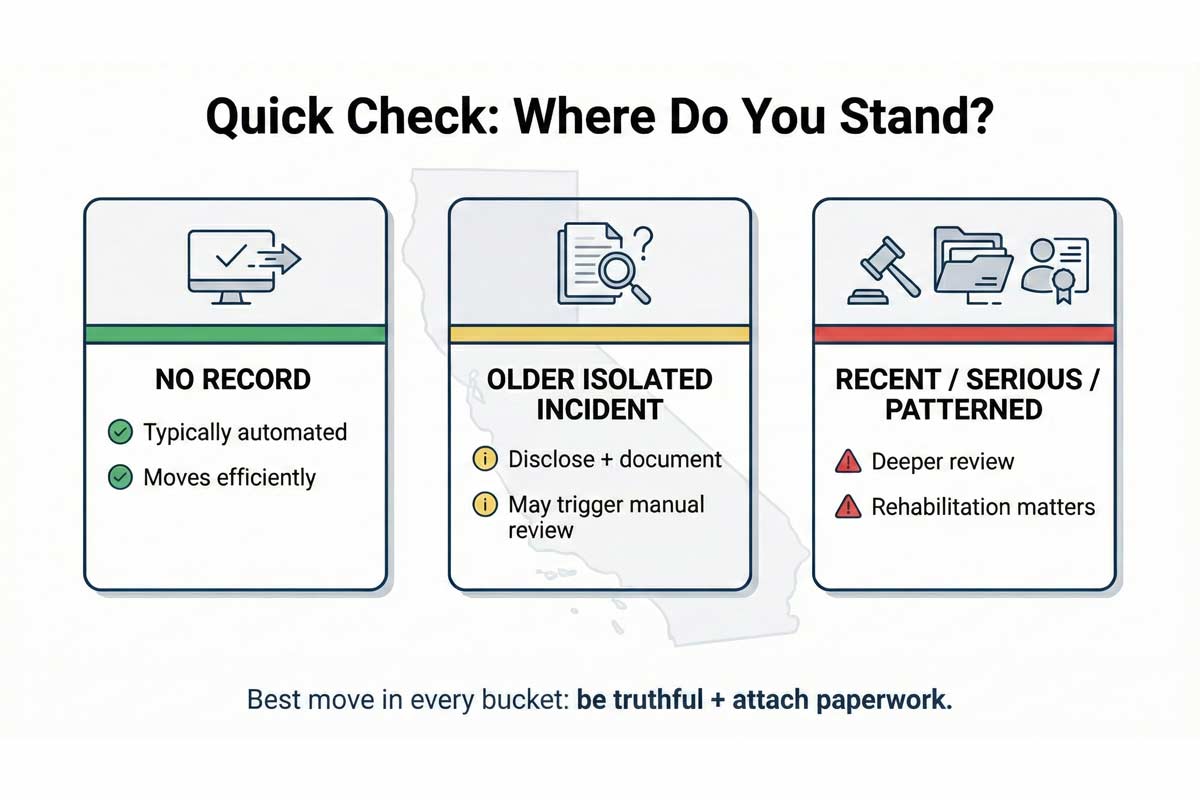
Quick Check: Where Do You Stand?
Before diving into the details, identify which "bucket" you likely fall into. This helps set your expectations.
No Record: If you have no criminal history, the process is typically automated and moves efficiently.
Older Isolated Incident: An incident from years ago often requires disclosure and may trigger a manual review, but outcomes depend heavily on the specific facts and documentation provided.
Recent, Serious, or Patterned Record: Felonies, crimes involving money/theft, or a pattern of repeat offenses will generally trigger a deeper review. Approval is not guaranteed and requires strong evidence of rehabilitation.
What "Background Check" Actually Means
The DRE uses a "Live Scan" service request. This digital fingerprinting process checks your prints against California Department of Justice (DOJ) and FBI databases.
It can surface criminal history information; what appears depends on record reporting and the specific questions being asked. The Live Scan system simply reports data—it does not make the decision. The DRE's Licensing Section reviews the results to determine if you meet the requirements for licensure.
If you are trying to time your application, understanding the logistics matters. You can learn more about the timeline here: How Long Does the CA Real Estate Fingerprinting Process Take?
The Core Metric: "Substantial Relationship"
The DRE evaluates whether a crime or act has a "Substantial Relationship" to the duties of a real estate licensee.
Because agents handle client funds, enter private homes, and negotiate binding contracts, conduct in these areas tends to draw more scrutiny because it relates to trust, money, and consumer protection:
Dishonesty: Theft, fraud, embezzlement, forgery, or tax evasion.
Money Handling: Financial mismanagement or passing bad checks.
Safety & Trust: Conduct suggesting consumer risk, impaired judgment, or danger to others.
Beyond the Charge: Your "Risk Profile"
The DRE considers contextual factors to build a risk profile:
Recency: The more time since the incident, the more it may be mitigated—especially with a clean record since.
Pattern:Repeated behavior suggests a habit rather than an isolated mistake.
Harm: Acts that caused financial loss or physical harm typically draw higher scrutiny.
Compliance: Outstanding court obligations (probation, fines, restitution) are major red flags.
Rehabilitation: Evidence of positive change, such as education or steady employment, is critical.
The #1 Application Killer: Non-Disclosure
The fastest way to complicate your application is to hide your history. If the form asks a question, answer that question—don’t answer the version you wish it asked.
If you check "NO" on a criminal history question when the correct answer is "YES," the DRE may view it as a new act of dishonesty. This can be grounds for denial even if the original offense was minor.
Crucial Warning: Consistency Matters
Your written explanation must match the official court paperwork. If you say an incident happened in 2015 but the court docket says 2017, or you list a different charge than what is on the record, it triggers follow-up questions. Double-check your dates and charges against the actual documents before writing your statement.
Operational Checklist: What to Do BEFORE You Apply
Don’t wait until you are filling out the form to start digging.
Request Court Dispositions: Contact the court clerk for certified copies of the final disposition for any incident.
Gather Proof of Compliance: Get written proof (completion letter/receipt), not just verbal confirmation.
Draft Your Statement: Use the facts from your court documents to write a concise explanation.
Review the Application Line-by-Line: Read the disclosure questions on the DRE form carefully to ensure you truthfully answer exactly what is asked.
Micro-Template: Personal Statement
Keep your explanation factual, accountable, and brief. Attach this to your application if required.
Incident: Date / Charge / Disposition / Completion status
Accountability: One clear sentence taking responsibility for the actions.
Rehabilitation: List steady employment and/or education since the incident.
Current Standard: One sentence affirming commitment to professional ethics.
Note: Attach your court paperwork to back this up. Don’t rely on memory.
What Happens If You Are Flagged?
If the background check triggers a review, the process typically follows these steps:
Manual Review: An analyst examines your history and documents.
Inquiry: The DRE may request additional information or clarification. Respond immediately to avoid delays.
Decision: Clearance OR a formal denial notice/Statement of Issues with options described in writing.
How to Position Your Application
Your goal is to show stability and honesty.
DO THIS
DO NOT DO THIS
Be direct. State the charge and date clearly.
Be vague. "I had a run-in with the law."
Show stability. Provide proof of steady work history.
Overshare. Avoid emotional stories or excuses.
Take ownership. "I made a poor decision."
Blame others. "The system was unfair."
Provide paperwork. Certified court docs are essential.
Make them hunt. Don't force DRE to search for your files.
Real-World Scenario:
I recall a student with a theft conviction from her early 20s who disclosed it fully, attached court records, and provided a character letter from her employer. Submitting documentation upfront can reduce follow-up requests compared to leaving the reviewer guessing.
Frequently Asked Questions
Will a misdemeanor stop me from getting licensed?
Not necessarily. The DRE looks at the nature of the crime (Does it relate to real estate duties?) and how much time has passed. A misdemeanor involving dishonesty is viewed differently than one that does not.
What if it was a long time ago?
Time is often a mitigating factor. A clean record for a significant period helps demonstrate rehabilitation and reduces the "risk profile."
Do arrests matter or only convictions?
Answer exactly what the DRE application asks. If the question asks for convictions, disclose them. Pending matters (arrests awaiting trial) may delay review until resolved.
Does expungement mean I don't have to disclose?
Some licensing processes still require disclosure even after dismissal/expungement—follow the instructions on the specific DRE form.
What if I forgot to list something?
If you realize you made an error after submitting, contact the DRE immediately to amend your application. Self-correcting is always better than letting them discover the omission on their own.
The Bottom Line
A background check is a standard part of protecting the public. If you own your past, provide the right documentation, and focus on your current qualifications, you improve your odds of a smooth process
Ready to map out the rest of your journey? Check out our complete Check out our complete California Real Estate License Guide.
|

There is a massive gap between the "Instagram version" of California real estate and the actual mechanics of the business. On screen, the job looks like high-end luxury tours and effortless commission Read more...
There is a massive gap between the "Instagram version" of California real estate and the actual mechanics of the business. On screen, the job looks like high-end luxury tours and effortless commission checks. In reality, being a real estate agent is a rigorous exercise in small business management, psychological resilience, and relentless lead generation.
If you are researching this career, you probably aren’t looking for a sales pitch. You are looking for a framework to decide if this career is for you—not the "idea" of the career, but the actual day-to-day work.
This guide provides a clear-eyed assessment of the industry. We will look at the actual daily schedule, a scorecard to measure your personal fit, and the financial reality of starting out in the Golden State.
Quick Answer: Is Real Estate a Good Career in California?
Becoming a real estate agent in California is a high-potential path for those who are disciplined self-starters, have a financial cushion, and possess a high tolerance for rejection. While the income ceiling is high due to California’s property values, it is not a "steady job." If you want a steady paycheck, this is the wrong job. It is, however, a fit for those who can navigate the first several months without a closing to build a long-term business.
Your next step: Use the scorecard below and run the 14-day test to help make a decision.
The Unvarnished Snapshot: A Day in the Life
Most new agents fail because they reverse the ratio: they spend 90% of their time studying houses (or other non-lead-generating activities) and 10% of their time prospecting. This career operates on a simple, unforgiving law: no pipeline = no income.
The agents who build a career understand this and systemize lead generation, protecting daily time for outreach above all else.
Note: This is a typical structure, not a promise—some days blow up due to an emergency or a sudden listing opportunity.
Lead Generation (8:00 AM – 11:00 AM): The "non-negotiable" block. Calling your sphere of influence, following up on old leads, or door-knocking.
The Documentation Grind (11:00 AM – 1:00 PM): Handling required disclosure paperwork and following office compliance procedures to protect your client.
Follow-up & Admin (1:00 PM – 3:00 PM): Chasing lenders for pre-approval letters, checking on escrow progress, and managing client anxiety.
Field Work (3:00 PM – 5:30 PM): Driving to properties—battling California traffic—to preview homes, meet appraisers, or attend a home inspection.
The "Second Shift" (6:00 PM – 8:00 PM): Meeting with clients who work 9-to-5 jobs to sign offers or review listings.
Kartik’s Perspective: In real estate, your value is often tested during time-sensitive windows of a transaction—like during a contingency period. I’ve watched agents jeopardize significant deals by being unavailable when a pressing issue arose. It might not always be a 9 PM call, but if a client discovers a major repair issue and needs guidance, or an emotional buyer panics after an appraisal gap, your responsiveness can be what saves the transaction. You aren’t just selling houses; you’re managing high-stakes, time-sensitive problems. If you’re not reachable when critical questions come up, trust can erode and deals can fall apart.
Core Decision Tool: California Agent Fit Scorecard
Be honest. Score each statement: 0 (No), 1 (Somewhat), 2 (Yes).
Statement
Score (0-2)
I have 3–6 months of living expenses saved (or a part-time plan that covers my bills).
I am comfortable asking friends, family, and strangers for business.
I can stick to a self-imposed schedule without a boss watching me.
I view "No" as a data point, not a personal rejection.
I am willing to work Saturdays and Sundays on occassion.
I am naturally detail-oriented and don't mind repetitive paperwork.
I am comfortable with my income fluctuating month-to-month.
I enjoy the "hunt" for new clients more than the "task" of showing homes.
I can remain calm when a paycheck is at risk due to an appraisal gap.
I am committed to learning CA forms and local office procedures.
The "Kill Switch"
If you won't do outreach, don't do real estate. You are starting a lead-generation business. If the idea of asking for business makes you recoil and you are unwilling to push past it, think carefully before committing to a full-time real estate career.
Interpretation & Next Steps:
0–8 (Uphill Battle): High risk of burnout. Next Step: Do not quit your day job yet. Consider an "inside sales" or admin role within a brokerage to see the grind first-hand.
9–14 (Strategy Required): You have potential but need structure. Next Step: Maybe thinking about starting real estate part time before jumping in head first.
15–20 (Strong Alignment): You have the entrepreneurial mindset. Next Step: Use our Start a Real Estate Career in California guide as your execution roadmap.
California-Specific Realities: Pros & Cons
The Pros
High-Value Commissions: Higher median home prices in CA mean the "per-transaction" pay is exceptional compared to most of the country.
Niche Diversity: Opportunities abound in ADUs, coastal luxury, probate, and multi-family investments.
Compounding Referrals: A satisfied client in a high-turnover CA neighborhood can provide a decade of repeat business.
The Cons
Systems Over Speed: You’ll handle complex disclosure paperwork and strict office procedures; details matter. Your broker and Transaction Coordinator (TC) will have specific protocol—follow them to the letter.
Traffic & Geography: The "time cost" of a showing deep in Los Angeles or the Bay Area is an operational expense you must factor into your day.
Emotional Volatility: Rejection, client "ghosting," and the stress of high-stakes negotiations are part of the daily job.
The Money Talk: Realistic Expectations
New agents often suffer from "pipeline lag." You might find a client in month two, get an offer accepted in month three, and close in month four.
Kartik’s War Story: An agent once worked for four months on a $1.2M deal. It died at the finish line and because the agent had already mentally "spent" the money, they were devastated. In California, the deal isn't done until recorded and closed.
Your "Cost of Existence"
Before you earn a commission, you must pay to "exist" in the industry:
Pre-license education and state exam fees.
Realtor association dues (Local, State, and National).
MLS subscription and lockbox access fees.
Errors & Omissions (E&O) insurance.
Gas, travel, and the "time cost" of being in the field.
Marketing (CRM, business cards, and digital presence).
For a granular look at take-home pay after splits and taxes, read: How Much Do New Real Estate Agents Make in California?
The Timeline: Decision to First Client
Licensing is just the entry fee. The real estate exam requires significant memorization of CA-specific law; many people fail because they underestimate the academic prep.
Education & Exam: Complete the 135 hours of CA courses and pass the state exam.
Brokerage Onboarding: Joining a firm and getting access to the MLS.
The Pipeline Phase: Active lead generation until your first escrow opens.
For the week-by-week specifics on getting licensed, see: The How Long Does It Take to Start a Real Estate Career?
Personality Fit: Who Thrives vs. Who Wilts
Who Thrives: The "Relentless Follower-Up." They don't take "not right now" as a "no." They are comfortable with the detail-oriented parts of the contract.
Who Wilts: The "Order Taker." If you wait for the phone to ring or for a buyer to "fall in your lap," you will likely struggle. High attrition rates in the first two years are almost always due to a lack of proactive lead generation.
To see if you match the psychological profile of a top producer, read: Personality Traits of Successful California Agents.
Part-Time Path: Is It Viable?
Starting part-time is possible, but it requires extreme discipline.
Works for: Those with a flexible primary job and a strong local network who will trust them regardless of their "full-time" status.
Doesn't work for: Those with a rigid 9-to-5 who cannot answer their phone or attend a home inspection during business hours.
For strategies to bridge the gap, see: Should You Start Real Estate Part Time in CA?.
Myths vs. Reality
Myth
Reality
"I'll be my own boss and have tons of free time."
You are your own boss, which means you are also your own most demanding employee.
"The market will carry me."
You are starting a marketing business that happens to sell houses. Markets fluctuate; systems endure.
"Instagram is the fastest way to get clients."
Social media helps, but it rarely replaces direct outreach to your existing database in the first 12 months.
Fence-Sitters: 14-Day Low-Risk Experiments
The Agent Interview: Call three active agents or visit a random open house and ask the agent: "What was the most frustrating negotiation you had this month?" and "What did you do this week that directly created future business?"
The Schedule Simulation: For the next two Saturdays, block out 10:00 AM to 1:00 PM. Spend that time researching local market stats. If you resent giving up your weekends now, you’ll hate it later.
The Outreach Muscle Test: For 10 minutes a day, call someone you know just to catch up. See if you have the stamina for consistent daily conversation.
If you have completed the scorecard and the experiments, and you still feel the "pull," it’s time to move to the execution phase.
Your next step is to build a grounded, step-by-step plan. Here is how to Start a Real Estate Career in California.
Disclaimer: This article is for informational and educational purposes only. It is not legal, financial, or tax advice. Consult the appropriate professionals for your situation.
FAQ
How much money should I save before starting real estate?
We recommend having 3 to 6 months of living expenses saved. Full-time agents often need closer to 6 to 9 months of runway to account for the "pipeline lag" before their first commission check clears.
Is the California real estate exam hard?
With roughly half of candidates failing on their first attempt, it can be a significant hurdle. It is a test of your knowledge of state-specific law and ethics, not your sales ability.
What’s the fastest way to get your first client in CA?
Focus on your "Sphere of Influence"—people who already know and trust you. For the full roadmap, see our guide on how to Start a Real Estate Career in California.
Why do so many agents quit within the first two years?
Attrition is high because many underestimate the "cost of existence" fees and the emotional toll of inconsistent income and rejection during the first 12 months.
Do I need a college degree to be an agent in CA?
No. You must be 18, legally present in the US, and complete 135 hours of approved education.
|
Key Takeaways
Common Live Scan Timing: DOJ often completes initial processing within 3–7 business days, though file matching at the DRE may add time.
The reader should treat all timelines as Read more...
Key Takeaways
Common Live Scan Timing: DOJ often completes initial processing within 3–7 business days, though file matching at the DRE may add time.
The reader should treat all timelines as highly variable: Estimates and always consult the DRE and DOJ websites for the most current official information.
Out-of-State Hard Cards: This process relies on mail and manual handling; plan for a timeline that can extend several weeks or longer.
Critical Dependency: The DRE cannot issue your license until they receive your fingerprint results and complete required review steps.
Common Delay Cause: Mismatched names (e.g., “Ben” vs. “Benjamin”) or using the wrong ORI code (A0075). The ORI code is input at the Livescan provider and must be input exactly as A0075 to ensure that the prints and background are transmitted to the DRE.
Waiting for your background check to clear can feel like the longest part of getting your real estate license. You’ve passed the real estate school exams, submitted your application, and now you’re stuck in limbo, wondering if something minor in your past is holding everything up.
Fingerprinting is a standard dependency step. While it can be nerve-wracking, delays are usually bureaucratic rather than catastrophic. For most applicants using Live Scan within California, the process is automated and relatively quick. For out-of-state applicants using physical fingerprint cards, a little more patience is required.
In my 20+ years of helping students navigate the California Department of Real Estate (DRE) system, we have found that most “stalled” applications aren’t actually stuck—they are simply moving through the standard queues. This guide breaks down exactly how long the process usually takes, why it might slow down, and how to keep it moving.
Disclaimer: This article is for informational purposes only and does not constitute legal advice. Processing times are estimates based on typical DRE and DOJ workflows. For individual eligibility questions, consult an attorney.
The 30-Second Answer: When Will My Fingerprints Be Processed?
If you are looking for a timeline to plan your career launch, here are the common benchmarks we see.
In-State (Live Scan): Often 3 to 7 business days.
Best case (sometimes): ~48 hours.
Standard: 1 week.
Buffer: It is wise to plan for 2 weeks to account for volume spikes or matching delays.
Out-of-State (Hard Cards): Can take several weeks to months.
Why: These often involve more manual handling and mailing time before they even reach the DRE.
The "Smart Applicant" Buffer: Do not schedule your “I’m a Realtor party!” until you have your license number in hand. Even after the DRE receives your results, they still need to process the file and complete issuance.
What "Fingerprinting" Actually Is
Many applicants think the DRE is scanning their prints personally. They don’t.
When you get fingerprinted, you are submitting your biometric data to the California Department of Justice (DOJ) (and, when applicable, FBI checks).
This is a "Live Scan." Your prints are digitized and cross-referenced against criminal records (arrests and convictions). The DOJ and FBI then generate a report—either "no record match" or a list of "Hits" (records found)—and transmit that report electronically to the DRE.
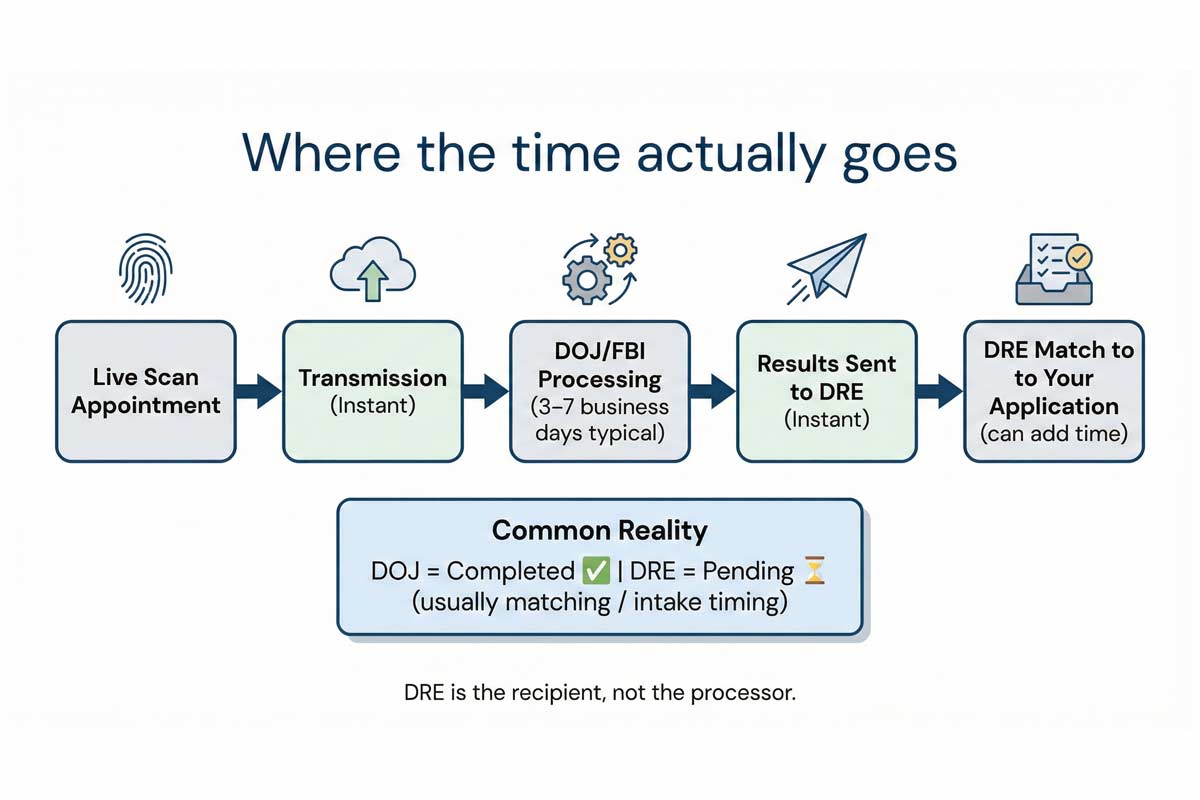
Important: The DRE is the recipient, not the processor. They are waiting on the DOJ just like you are.
Step-by-Step Timeline: From Scan to License
Understanding the invisible relay race helps you spot where things might be stuck.
Scheduling & Submission: You download Form RE 237(Live Scan Service Request) and visit a certified Live Scan provider (often a shipping center, notary, or law enforcement office). You pay the processing fee plus the operator’s rolling fee.
Transmission (Instant): The operator hits “send.” Your encrypted prints go directly to the DOJ and FBI.
Processing (Variable): The DOJ and FBI automated systems run the check (often within a few days, sometimes longer if a manual review is triggered).
Results Transmission (Instant): The system automatically sends the result code to the agency linked to the ORI code you used (specifically, the DRE).
DRE Match & Update (Variable): This is where delays often happen. Even if the DOJ status shows "Completed," the DRE’s system must receive that digital result and match it to your open license application.
Note on Delays: If DOJ shows "Completed" but DRE still says pending: it’s usually a matching or intake timing issue—not a denial.
The Biggest Reasons It Takes Longer (And How to Fix Them)
If it has been more than two weeks and you haven’t heard anything, one of these culprits is likely to blame.
1. The "Name Mismatch" Trap
Symptom: You passed your test and did Live Scan weeks ago, but the DRE still says "Pending."
Likely Cause: You applied for your license as "Michael Smith" but your driver's license (and thus your Live Scan) says "Mike Smith." The DRE’s computer system cannot automatically link the two files.
Fix: Ensure your name on Form RE 237 matches your DRE application character for character. If you suspect a mismatch, you may need to call the DRE to manually merge the files.
2. Wrong ORI Code
Symptom: Your results were sent to the wrong agency (like the Board of Nursing or a school district).
Likely Cause: The operator typed in a generic code or you used an old form.
Fix: Always use the pre-printed Form RE 237. The ORI Code for the CA DRE is A0075. If this was entered incorrectly, you may need to redo the Live Scan entirely to ensure the DRE receives the data.
3. Application Intake Volume
Symptom: DOJ completed days ago, but DRE status hasn't budged.
Likely Cause: Your application itself is still in the intake queue, or there is a backlog in manually associating results during peak seasons.
Fix: Call the DRE to confirm they have received the transmission and ask if your application is simply in the intake queue.
4. Poor Fingerprint Quality
Symptom: You receive a rejection notice or a request for a resubmission.
Likely Cause: Faint ridges due to manual labor, frequent hand-washing, or dry skin. The DOJ system couldn't read the prints.
Fix: Use a high-quality lotion for a few days before your rescan.
5. Manual Review (The "Hit" Delay)
Symptom: DOJ processing time drags on for 30+ days.
Likely Cause: A "Hit" (criminal record) or a name common enough to trigger a manual check against someone else's record. If you're worried about what a "hit" could mean for your license eligibility, this is a good read What the DRE Looks for in Your Background Check.
Fix: Patience is required here. The DOJ must manually verify that the record belongs to you (or clear you if it's a false match).
Live Scan vs. Out-of-State: Two Different Worlds
Track 1: Live Scan (California Residents)
This is the standard path. It is digital, efficient, and trackable. You walk into a participating Live Scan provider, put your hands on the glass, and you are done in 10 minutes. You get an ATI Number (Applicant Transaction Identifier) at the bottom of your form. Keep this number—it is your tracking ticket.
Track 2: Hard Cards (Out-of-State)
Live Scan is primarily available in California. Most out-of-state applicants must use physical fingerprint cards (FD-258) unless they travel to CA.
The Delay: The DRE has to physically receive the cards, process the payment, and then forward the cards to the DOJ. The DOJ then has to manually scan them. Hard-card timelines vary based on mail time, card quality, and backlog.
The Risk: Ink smudges easily. If your hard cards are rejected for quality after waiting several weeks, you often have to start over.
Pro Tip: If timing is critical, some applicants choose to travel to California to complete a Live Scan in person and reduce potential delays.
Delay-Proof Checklist
To minimize friction, treat the paperwork as seriously as the exam:
Download the correct form: Use the current RE 237 from the DRE website.
Verify the ORI: Check that Box 1 says A0075 and says "CA Department of Real Estate."
Match your ID: Ensure the name on the form matches your Driver's License and your exam application.
the receipt: Do not leave the operator without the ATI Number written on your copy.
Submit early: Do not wait until you pass the exam. You can (and should) submit fingerprints as soon as you apply for the exam to get the clock ticking.
If It’s Taking Too Long: Escalation Ladder
What to do today:
Check your ATI number.
Verify your name spelling on your receipt.
Check the online DOJ status tool.
If it has been longer than typical timeframes, follow this ladder:
Check the DOJ Status: Go to the California DOJ Background Check Status website. Enter your ATI Number and Date of Birth.
Note: This tool reflects DOJ processing status; it doesn’t guarantee the DRE has matched it to your application yet.
Status "In Process": The delay is at the DOJ/FBI level. The DRE cannot help you yet.
Status "Completed": The results were sent to the DRE. Now the ball is in their court.
Verify Your Info: Double-check your copy of the form. Did the operator transpose digits in your identifying information?
Contact the DRE: If the DOJ says "Completed" but the DRE status hasn't updated in 10 business days, call the DRE Licensing line. Have your ATI number ready and ask if there is a "matching issue" with your file.
Important Distinction: Processing vs. Evaluation
It is vital to understand that "processing" and "evaluation" are two different steps.
Processing is simply the DOJ confirming your identity and sending a list of records (if any) to the DRE.
Evaluation is the DRE reviewing those records to decide if you meet the standards of honesty and truthfulness required to hold a license. If you have a past conviction, the "processing" might finish quickly, but the "evaluation" could take weeks while a DRE review team examines your case.
Your Next Step
Fingerprinting is a hurdle, not a wall. While you wait for the results, focus on what you can control: preparing for your exam and interviewing brokerages.
Most delays are solvable, and the vast majority of applicants see their results clear without issue. If you are just starting your journey and want to ensure every step—from coursework to application—is handled correctly, check out our comprehensive California Real Estate License Guide.
|
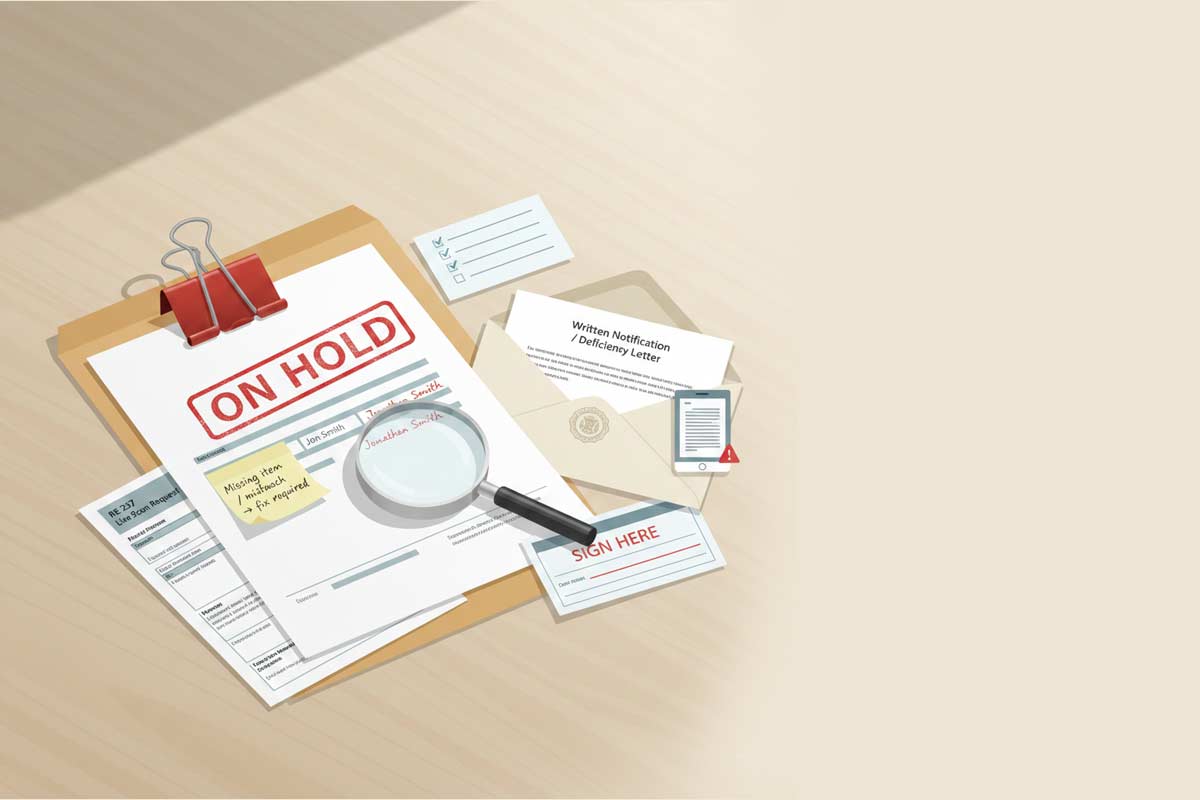
When the California Department of Real Estate finds a missing item, data mismatch, or unanswered question, your real estate exam or license application doesn’t “fail” — it simply stops moving forward Read more...
When the California Department of Real Estate finds a missing item, data mismatch, or unanswered question, your real estate exam or license application doesn’t “fail” — it simply stops moving forward until you provide what is requested. The DRE will send a deficiency letter if your application is incomplete or lacks required items when submitted.
You typically won’t be scheduled for your real estate exam until all requirements are met.
When it comes to applying for the real estate exam, you are not being graded on effort; you are being graded on completeness. Tiny issues — a name mismatch, unreadable certificates of completion, or incorrect fees — can turn into weeks of avoidable lag. The goal of this guide is to help you submit an application that avoids back‑and‑forth and keeps you on the most direct path to the real estate exam.
The Big 5: Highest‑Frequency DRE Form Mistakes
Mistake 1: Name Inconsistency Across Documents
The Error: Using a nickname or shortened name on the application while your transcripts or ID show a different variation.
Why DRE Flags It: DRE instructions (RE 435A/RE 400A) indicate you must use your legal name. If your application says “Jon Smith” but your transcripts and ID say “Jonathan Smith,” the DRE may ask for clarification to verify your identity.
The Fix: Use one consistent name across all three pillars: your application (RE 400A or RE 435), your certificates of completion, and your ID. If your transcripts include a middle name, include that middle name on all forms.
Verification Step: Lay your ID and transcripts next to your application. If there is a discrepancy in spelling or suffixes (Jr., III), edit the application to match your supporting documents before submitting.
Mistake 2: Combined Application Sequencing (Live Scan)
The Error: Choosing the Combined Exam + License path but failing to include the Live Scan paperwork.
Why DRE Flags It: DRE guidance for combined applications (RE 435) states that deficiencies — including a missing Live Scan Service Request (RE 237) — will delay processing. While fingerprints can be done later, a license cannot be issued until results are received.
The Fix: For the smoothest processing, include the completed RE 237 in your initial submission packet.
Verification Step: If submitting the RE 435 (Combined), ensure the RE 237 is the very next document in your physical or digital stack.
Mistake 3: Unacceptable Education Evidence
The Error: Submitting unofficial transcripts, portal screenshots, or blurry photos.
Why DRE Flags It: DRE requires official transcripts (or copies of official transcripts) or a credit certificate as evidence of completion. RE 435A explicitly states that unofficial transcripts are not accepted. Documents that are illegible or incomplete cannot be verified.
The Fix: Submit clear, high‑resolution scans of your official transcripts or credit certificates. Ensure the school name, student name, and completion dates are clearly visible.
Verification Step: Open your scanned PDF and zoom to 100%. If you cannot easily read the course titles or dates, rescan the document.
Mistake 4: Vague Background Explanations
The Error: Checking “Yes” to a disciplinary or criminal question but providing a brief or vague statement.
Why DRE Flags It: DRE instructions state that “insufficient or no explanations” to background questions will delay processing. Failure to disclose accurately can result in substantial delays or the denial of your application.
The Fix: For every “Yes” answer, provide a detailed written explanation. Include the specific charge, the date, the location, and the final disposition. Include court documents; providing certified copies can help avoid follow‑up requests.
Verification Step: Read your explanation. If it doesn’t clearly provide the context of the incident and the final outcome, it is likely to result in a deficiency letter.
Mistake 5: Fee Discrepancies
The Error: Submitting the wrong fee amount or an unsigned payment form.
Why DRE Flags It: Fees are non‑refundable and subject to change. An application cannot be processed until the correct fee is received.
The Fix: Verify the current fee schedule on the DRE website immediately before mailing. Ensure the Credit Card Payment (RE 909) or check is signed and matches the total for your selected application path.
Verification Step: Double‑check the total for “Exam Only” (RE 400A) vs. the combined application fee (RE 435). Ensure your payment matches the specific path you selected.
The “Death by Details” Mistakes (Rapid‑Fire List)
Original Signatures (Mail): If mailing the RE 400A or RE 435, use original wet signatures; faxes and photocopies of signatures are not accepted for mailed forms. (ADHI Schools recommends eLicensing not a physical mailed application.)
Form Choice: Verify you are using RE 400A for salesperson exam‑only or RE 435 for the combined path.
Unanswered Bubbles: Unanswered Bubbles: Every "Yes/No" bubble is mandatory. Skipping one can result in written notification of deficiency.
Outdated Revisions: Check the “Rev” date at the bottom of your form to ensure it matches the most recent version on the DRE website.
Non‑Resident Requirements: If you are not a California resident, you may be required to include a Consent to Service of Process (RE 234).
Cropped Scans: If page numbers or form borders are cut off in your PDF, it may be rejected as incomplete.
Missing Prerequisites: Do not submit until you have completed all three required courses (Principles, Practice, and an Elective).
Incomplete RE 909: If submitting by mail, a missing signature on the credit card authorization form is a common cause for administrative lag.
Submission Quality Control: 7‑Minute Pre‑Flight Checklist
Name Consistency: Is my name identical across my transcripts, ID, and application?
Path Selection: Did I use RE 400A for exam‑only or RE 435 for combined?
Evidence: Are my transcripts or certificates official and 100% legible?
Fingerprints: For combined applicants, is the RE 237 included in the packet?
Background: Is every "Yes" answer supported by a detailed statement and court docs?
Payment: Is the fee submitted online correct and the check or RE 909 signed in ink? (if submitting by mail)
Method: Have I reviewed the How to apply for the real estate exam guide to ensure my submission is organized correctly?
If You Receive a Deficiency Letter
If the DRE sends written notification, it means they need additional information before they can move you forward. To resolve this:
Follow Instructions Exactly: The letter will specify exactly what is missing. Provide only what is requested.
Submit a Unified Response: If multiple items are requested, send them all in one package to avoid further confusion.
Expect Additional Time: Once you respond, your file must be re‑reviewed. Check the DRE’s current processing timeframes online for an estimate of the updated wait.
Maintain Consistency: Ensure any new documents or signatures match the information provided in your original submission.
Get Back on the Fast Path
At ADHI Schools, Kartik Subramaniam’s 20+ years of helping California candidates has shown that success begins with the paperwork. The DRE is a high‑volume agency; they prioritize files that are complete, consistent, and easy to verify. Treat your application with the same level of focus as your studies.
For a full breakdown of every requirement you need to satisfy before the DRE ever sees your name, read our California Real Estate License Guide.
|
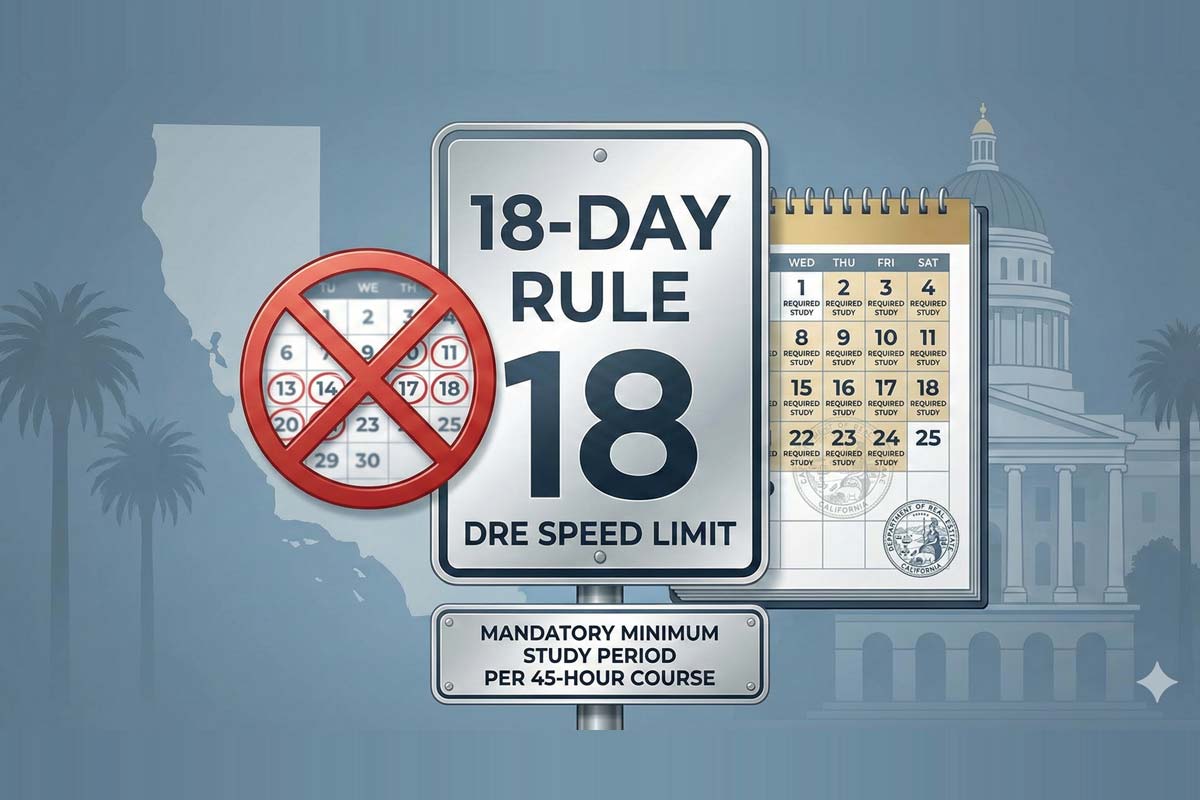
To get a California real estate license, you must complete 135 hours of approved coursework. These are the California real estate license education requirements set by the DRE. You don’t need a college Read more...
To get a California real estate license, you must complete 135 hours of approved coursework. These are the California real estate license education requirements set by the DRE. You don’t need a college degree, and you don’t need industry experience to get a sales license.
Voice Answer: You need 135 hours of DRE-approved coursework to qualify for a California real estate license. That includes Real Estate Principles, Real Estate Practice, and one elective. No degree is required. Each course must be completed over at least 18 days, which is a strict DRE timing rule.
You only need to complete three specific courses: Real Estate Principles, Real Estate Practice, and one approved elective. That’s the entire academic requirement.
These education rules form the core DRE prerequisites for exam eligibility. Once you finish the 135 hours and receive your certificates, you can apply for the salesperson exam. When your exam application is approved, remember that you'll need a valid photo ID (like a driver's license) to be admitted to the testing center on exam day.
There are no shortcuts, no alternative pathways (besides being a member of the California bar), and no substituted degrees unless directly listed in the law.
The system is strict but simple.
If you want more information or a deeper dive, check out our complete guide to getting your real estate license.
🔍 Myth vs. Reality: The College Degree
People often assume real estate is like accounting or law. They believe a degree unlocks the license. That myth stops students before they even start. The truth is blunt: The DRE does not require a degree.
You only need the mandated courses.
Some students do qualify through certain college courses they have taken in the past but most people will meet the education requirements through the standard 135-hour pathway. That’s why it’s important to understand the real rules.
Myth
Reality
Why it matters
You need a college degree.
You only need 135 hours.
Saves time and avoids unnecessary schooling.
Business majors skip everything.
Only specific real estate courses qualify.
Prevents false assumptions about automatic credit.
GPAs affect eligibility.
GPAs are irrelevant.
Removes anxiety about academic history.
These myths distract people from the simple path. Focus on what the DRE actually requires.
To be clear, I went to college at Cal Poly, got a degree and don’t regret it at all. That experience shaped a lot of how I teach today. College pushed real teamwork, deadlines, and problem-solving — all skills that translate directly into real estate, but the degree isn’t a requirement.
⭐ The "Big Three" Required Courses
Remember that California only requires one thing academically: Complete three 45 hour DRE-approved courses totaling 135 hours. Every applicant—whether new to the industry or coming from another field—must take these same classes.
Real Estate Principles
Consider this your foundation. It equips you with the vocabulary—from property types to agency laws—that you will face on test day. Many students make the mistake of underestimating this course. Don’t. Principles is the backbone of your future license.
Real Estate Practice
This course focuses on the day-to-day realities of the business. Disclosures, listings, offers, and client interactions dominate this material. It helps you think like an agent, not a test taker. Remember that the Real Estate Practice course must now contain an interactive implicit bias component according to SB1495.
One Elective
You can choose from options like Finance, Legal Aspects, or Property Management. The choice of the elective is less important than getting it done.
These are the only education requirements the DRE needs academically. Complete the Big Three, earn the certificates, and you’re eligible to apply for the real estate exam.
⏱️ The 18-Day Rule (Speed Limit)
Who doesn’t love speed? But California sets a hard limit. You cannot legally complete a 45-hour correspondence course in less than 18 days. This applies to every approved school, including ours. There is no workaround. There is no exception.
Why? The state wants meaningful study time. They want students to absorb the content instead of rushing through modules. So the DRE built this rule to slow you down. Schools must track your progress and enforce it.
You can take multiple courses at once, but each course has its own minimum timeline. That means the fastest anyone can complete the three courses is 54 days (18 days x 3 courses). Many providers imply faster completion. Don’t fall for it.
Plan your schedule with this rule in mind. You’ll finish more smoothly, and you won’t get flagged for rushing the material.
❌ The Mistakes That Slow Students Down
Most delays have nothing to do with the coursework. They come from preventable mistakes.
Here are the biggest pitfalls:
Choosing a difficult elective and stalling halfway through.
Forgetting to save course certificates for the state application.
Stopping mid-course and restarting later, losing momentum.
Using non-approved schools and discovering the courses don’t count.
Ignoring the 18-day rule and failing required chapter quizzes.
Failing to disclose a past background item. The DRE values honesty above almost everything else; attempting to hide a background issue causes more delays than the issue itself.
Each mistake adds stress and time. Avoid them and you’ll finish your education and licensing quickly and cleanly.
🧭 In My 23+ Years of Teaching…
Students sometimes fear math. They imagine complex loan calculations or high-level finance problems. But the exam isn’t built to stump you with math. The real challenge is vocabulary. California real estate uses precise language, and exam writers test your understanding of those terms.
I’ve watched strong students fail because they ignored terminology. I’ve also watched anxious students pass because they focused on consistent reading. The DRE expects you to know definitions, agency concepts, disclosures, and basic laws. That’s where the exam is won.
The best students build a pattern: short study sessions, steady note-taking, and quiz repetition. They avoid cramming. They respect the 18-day rule. They treat the material like the new language it is. Master the vocabulary and you stack the deck in your favor.
❓ Education FAQs
Q: Can I take the courses online?
A: Yes. The DRE allows fully online, self-paced courses through approved providers like ADHI Schools. Most students finish faster online because they control their study time.
Q: Do old college credits count?
A: Only specific real estate or real estate-adjacent courses qualify. General business classes don’t count. The DRE reviews transcripts individually.
Q: Do I need a degree?
A: No. Degrees are irrelevant. Only the three 45-hour courses matter for most applicants.
Q: Can I complete the courses faster than 18 days?
A: No. The 18-day rule is firm. Every 45-hour course requires a minimum of 18 days.
Q: What if I already took one of the courses?
A: If it’s from a DRE-approved provider or qualifying college program, you may use it. Keep your certificate or transcript.
Q: How long do most students take?
A: Many complete the 135 hours in 8–12 weeks.
Finishing the California real estate license education requirements is straightforward once you understand the system. Complete the Big Three, follow the 18-day rule, and avoid the common mistakes.
If you want the simplest possible path to finishing your 135 hours, check out our packages.
|

No, you don’t need to live in California to get your real estate license. But you do need to meet one specific requirement that’s often misunderstood. Before you spend money on real estate courses Read more...
No, you don’t need to live in California to get your real estate license. But you do need to meet one specific requirement that’s often misunderstood. Before you spend money on real estate courses or start planning your real estate exam, it’s important to understand how residency actually fits into the licensing process — and why it isn’t always a barrier.
Do I need to live in California to get my real estate license?
No, you don’t need to live in California to get your real estate license.
The DRE has no residency requirement. You only need a Social Security Number, a valid government-issued ID for the exam, and to take the test in person in California.
🔍 Myth: You Must Be a California Resident
This is completely false.
Your physical location — whether you live in Texas, Nevada, Oregon, or anywhere else in the U.S. — has zero effect on your eligibility.
The California Department of Real Estate (DRE) does not require:
A California address
A California driver’s license
California residency
Previous time spent in the state
You can complete the entire education portion from anywhere.
⭐ So What Is Required? A Valid SSN/ITIN
Here’s the real requirement that trips people up:
✔ You must have a Social Security Number (SSN).
This is the only “residency-adjacent” requirement — and it has nothing to do with where you physically live.
It’s strictly related to tax reporting.
If you have an SSN, you meet the identification requirement.
Residency doesn’t matter.
Your SSN does.
What About Identification? You Do Need a Valid, Acceptable ID
While residency doesn’t matter, the DRE does require that you provide valid government-issued identification when you take the state exam. This ID is used to verify your identity — not where you live.
Here’s what the DRE accepts:
✔ A current driver’s license (from any U.S. state)
✔ A state-issued ID card
✔A U.S. passport
✔ Military ID
And importantly:
❌ It does not need to be a California ID.
❌ It does not need to match a California address.
A Texas driver’s license, a Nevada state ID, a U.S. passport — all perfectly acceptable.
Your ID is simply used to confirm you are the person scheduled for the exam. It has nothing to do with proving residency, eligibility, or where you plan to live long term.
If your ID is expired, mismatched, or unusual, the DRE may not let you sit for the exam — so double-check that it’s valid and unexpired before test day.
🛠 What the Licensing Process Looks Like if You’re Out of State
If you’re living elsewhere in the U.S., here’s exactly what you can expect.
1. Complete the 135 Hours of Required Courses (Online)
This part is easy — all the courses can be done remotely from any state.
2. Submit Your Exam Application to the DRE
You’ll provide:
Your SSN
A mailing address (can be out-of-state)
Course certificates
3. Travel to California for the State Exam
The exam must be taken in person at a DRE-approved testing center.
4. Complete Fingerprinting (Live Scan) in California
You can do your LiveScan while you’re in California for the exam.
Can I Do My Fingerprints Out of State?Yes, but it requires "hard cards" rather than the electronic Live Scan. You will need two FBI Applicant Fingerprint Cards (FD-258).
Take these to a local law enforcement agency in your state to get fingerprinted, then mail the completed cards to the DRE with your application.Note on Fees: You must include the $49 fingerprint processing fee. The DRE allows you to combine this fee with your exam and license fees in a single payment.
5. Receive Your License
Your license will be mailed to you — even if your mailing address is outside California.
📋 The Real Residency Requirement Checklist
Here's what you actually need:
✔18 or older
✔ 135 hours of DRE-approved pre-license education
✔ Valid SSN
✔Pass the California state exam (in person)
✔ Live Scan fingerprinting in California
Here’s what you don’t need:
❌ California residency
❌ A California driver’s license
❌ A California mailing address
❌ Ever having lived in the state before
🧠 Why the Confusion Exists
A lot of the confusion comes from people mixing up:
DRE rules (state licensing)
Brokerage rules (company hiring policies)
Real estate practice laws (where you can legally work)
Let’s simplify:
👉 The DRE doesn’t care where you live.
👉 The DRE only cares that you can report income using your SSN and clear criminal background.
👉 You are licensed in California — not the state where you live.
🛡 In My 20+ Years of Teaching…
I’ve helped countless students who lived out of state:
Military personnel
College students home for the summer
Professionals planning to relocate later
Investors wanting a California license
Remote workers who never intended to move here
None of them were ever blocked by residency.
But some were concerned about background checks — and understandably so.
🏁 Final Word: Residency Isn’t a Requirement — But Your SSN Is
Here’s the plain-English truth:
California does not require you to live in the state.
California does require you to be identifiable for tax purposes.
If you have:
Your SSN,
Your courses,
And a trip planned for the exam,
You’re already on the right track.
Residency Requirement FAQs
1. Do I need to live in California to get my real estate license?
No. California has no residency requirement for real estate licensing. You can live anywhere in the U.S. and still qualify.
2. Can I use an out-of-state driver’s license for the California real estate exam?
Yes. Any valid U.S. government-issued ID — including an out-of-state driver’s license — is acceptable.
3. Is a Social Security Number required to get a California real estate license?
Yes. A valid SSN is required for tax reporting and identity verification. Residency has nothing to do with this requirement.
4. Can I take the California real estate exam if I live in another state?
Yes. You can complete all coursework remotely and apply from out of state, but you must travel to California to take the exam in person.
5. Do I need a California address to apply for the real estate exam or license?
No. You can use an out-of-state mailing address on your exam or license application.
6. Can I complete Live Scan fingerprinting outside California?
No. Live Scan must be completed in California, usually during your exam trip.
7. Will my out-of-state background check affect my eligibility?
California reviews background history regardless of your state of residence. Residency does not change how the DRE evaluates your record.
8. Do brokerages require California residency even if the state doesn’t?
Some brokerages have internal policies, but these are company rules, not DRE requirements.
📌 Next Steps
If you want more information or a deeper dive, here’s the complete California Real Estate License Guide, which walks you through the entire process in more detail.
🙋 Questions About Your Situation?
Email me anytime.
In 20+ years, I’ve seen every scenario — if there’s a path, we can help you find it.
|

You’ve spent weeks staring at practice real estate exams and memorizing the difference between joint tenancy and community property.
You passed.
You have that provisional sense of accomplishment. Read more...
You’ve spent weeks staring at practice real estate exams and memorizing the difference between joint tenancy and community property.
You passed.
You have that provisional sense of accomplishment. But here is the unvarnished truth: Passing the California real estate exam tested your memory. Choosing your brokerage will test your judgment—and the wrong choice can be more expensive than a failed test.
In California, your broker is your supervisor. Your brokerage isn't just a place to hang your license; it is a professional partnership where they are responsible for your conduct and you are responsible for their reputation. This interview is a risk audit.
Imagine this: It’s 8:00 PM on a Thursday. You’re in your first escrow. The buyer’s agent is screaming about a missed disclosure deadline on the Transfer Disclosure Statement (TDS). If you miss this window, you risk triggering cancellation disputes, the potential loss of your client’s deposit, a DRE complaint, and significant professional liability. You call your broker. It goes to voicemail. You call the office manager. No answer. You are alone, and your license is on the line.
New agents don’t fail because they lack “hustle.” They fail because they lack structured support. This guide is designed to transform you from a nervous applicant into a confident investigator.
THE 10-MINUTE PRE-INTERVIEW CHECKLIST
Do not walk into the office until you have these items in your hand:
The Scorecard: A physical copy of the scoring rubric found at the bottom of this guide.
My Goals Sheet: Your target hours per week and your monthly “keep the lights on” budget.
The Evidence Folder: A notepad ready to document specific proof (calendars, checklists, and fee schedules).
The Deal Timeline: A printed sheet showing the lifecycle of a deal (Offer → Acceptance → Disclosures → Contingencies → Closing) to ask exactly where their review gates occur.
1. Your Pre-Interview Intelligence Gathering
Before you step into an office, you need to know who you are talking to. Not every brokerage is built for a rookie. First, you must Decode the Model. Is this a training-centric firm, a “desk-fee farm,” or a high-volume team? If you aren't sure which path fits your personality, stop and read Should You Join a Team or Go Solo before you schedule the meeting.
Next, scan for online red flags. Look at their social media. Are they constantly recruiting “unlimited potential” but showing zero photos of actual training sessions? For a deeper dive into the specific warning signs I’ve seen over the last 20 years, see our guide on Red Flags When Choosing Your First Brokerage.
2. The Five-Point Interrogation (The System Audit)
Category 1: Training PROOF, Not Promises
Core Question: Does this brokerage have a repeatable system to turn a student into a producer?
Ask the Script: “Walk me through the exact training schedule for my first 30 days. Can I see the syllabus for your contract writing role-play?”
Proof to Demand: Demand to see a Live Calendar, a Course Syllabus, and an Invitation to sit in as a guest at the next session.
Good Answer: “We have a 4-week ‘Launch’ program. It’s live every Tuesday and Thursday. Here is a copy of the calendar; you are welcome to attend the 10 AM session this Thursday to see for yourself.”
Dangerous Answer: “We have an amazing culture of learning. Everyone here is an open book, and you can watch our library of videos whenever you want.”
Category 2: Broker Access & Supervision (Your License SLA)
Core Question: Who saves you when a deal goes sideways at 9:00 PM?
Ask the Script: “What is your agent-to-supervisor ratio? What is your guaranteed response time for a contract emergency? If you aren't available, who is the designated backup by name and title?”
Proof to Demand: Demand a Written Service Level Agreement (SLA) or a clear, documented protocol for after-hours support.
Good Answer: “Our ratio is 25:1. I am available until 9 PM, after which [Name], our Assistant Manager, takes over. We guarantee a 30-minute response for active escrows.”
Dangerous Answer: “We’re like a family here. Someone is always around, and you can just text the group chat if you get stuck.”
Category 3: Compliance & Risk Protection
Core Question: How do they prevent you from making a career-ending disclosure error?
Ask the Script: “Where is your transaction checklist stored and who enforces it? Show me your broker review gates in writing—at what exact points am I blocked from proceeding without your signature?”
Proof to Demand: Demand to see a Transaction Checklist.
Good Answer: “We use [Software]. You cannot send an offer or release contingencies until our compliance officer signs off on these four specific gates. Here is the checklist we use.”
Dangerous Answer: “We trust our agents to be professional. Just upload everything to the folder before the deal closes so we can pay you.”
REALITY CHECK: Policy Varies, Presence Doesn't Exact review gates vary by brokerage based on their specific insurance requirements and workflow, but the presence of these gates is non-negotiable. If there is no formal checkpoint, you are flying without a parachute.
Category 4: The TRUE Cost (Splits & Effective Split)
Core Question: What do I actually take home after the "house" takes its cut?
Ask the Script: “I need a written fee schedule. Show me a sample commission breakdown for a new agent on a $10,000 gross commission with your exact fees, E&O, and franchise costs deducted.”
Proof to Demand: Demand a Written Fee Schedule and a $10,000 Net Commission Sample Printout.
Good Answer: “Here is a printed sheet showing that on a $10k check, your take-home is exactly $6,200 after all costs. We call this your ‘Effective Split.”
Dangerous Answer: “We offer a 70/30 split, which is the best in the area! The other fees are just standard industry stuff that comes out at the end.”
CRITICAL: If you don’t understand how “off-the-top” fees can gut your paycheck, stop and read Commission Splits Explained for New Agents before you sign anything.
Category 5: Lead Flow Mechanics
Core Question: How are leads (if any) distributed, and what is the "pay-to-play" reality?
Ask the Script: “How are office leads distributed? If I take a lead from the office, what is the split? More importantly, do I own my Sphere of Influence (SOI) leads if I choose to leave?”
Proof to Demand: Demand to see the Lead Distribution Rules and the Lead Ownership clause in the independent contractor agreement.
Good Answer: “Office leads are round-robin to ready agents at a 50/50 split. Your personal sphere leads are yours to keep, and the split on those is 70/30.”
Dangerous Answer: “We have more leads than we know what to do with! If you’re hungry, you’ll get your fair share. We put everyone in the company CRM.”
REALITY CHECK: Lead Ownership Trap (Teams) I’ve seen agents join a team and bring in a $1.2M listing from their own cousin. Because they hadn't audited the agreement, the team leader took 50% despite providing zero help. Worse, when the agent left, the leader claimed "ownership" of the cousin in the CRM. Audit your lead ownership before you sign.
3. THE MASTER QUESTION LIST
Group these into your notes to pressure-test their operations.
Systems & Evidence
What is the agent-to-supervisor ratio for new licensees?
Show me your transaction checklist (redacted).
Can I see your broker review gates in writing?
Who is the backup supervisor by name and title when the primary is on vacation?
Money & Ownership
Show me a sample commission breakdown for a $10,000 gross check.
In the event of a claim, what is the E&O insurance deductible I am personally responsible for?
Do I own my Sphere of Influence (SOI) leads if I choose to leave the brokerage?
What happens to my pending escrows if I move to another firm?
Lead Generation
Are there mandatory floor time requirements?
Do teams require giving up ownership of SOI leads to the team CRM?
How many agents who joined in the last 6 months have closed at least 2 deals?
THE “3+1” NON-NEGOTIABLES
Walk out of the room if they cannot provide these four things:
A Written Fee Schedule: No verbal promises on splits.
The $10k Breakdown: A clear example of take-home pay after all deductions.
A Live Training Calendar: Proof that support is a schedule, not a theory.
A Designated Supervisor: A specific person (not a group chat) responsible for your file.
4. THE 5-MINUTE TIE-BREAKER
If you are comparing two brokerages, lay their proof side-by-side and compare only these four data points:
The Net Check: Which $10k breakdown is higher?
The Support Ratio: Which agent-to-supervisor ratio is lower?
The Training Density: Which calendar has more live sessions in the next 14 days?
The Review Gates: Which checklist has more mandatory "Stop" points before an offer is sent?
5. THE SCORECARD & DECISION TOOL
Grade each brokerage from 1 (Poor) to 5 (Excellent) in these categories:
Training Proof: (Syllabus shown/Guest invite offered)
Broker Access: (SLA committed/Backup named)
Compliance Systems: (Checklist shown/Review gates enforced)
Cost Transparency: (Written fee schedule/$10k breakdown provided)
Lead Mechanics: (Clear distribution rules/No SOI ownership traps)
The Walk-Away Rule: If Training, Broker Access, or Compliance average below a 4, do not join. No split compensates for a failed deal, a DRE complaint, or a damaged reputation in your first year.
Now that you know how to audit a firm, see our list of the Best Brokerages for New Agents in California to see who tends to score well on these criteria.
Your Career, Your Choice
The brokerage you choose is the most important business decision of your first year. Treat it like a million-dollar acquisition. Once you have chosen the right supervisor to protect your license, your next step is to master the roadmap to actually close deals. Follow our sequence to Start a Real Estate Career in California correctly.
Frequently Asked Questions
What if no brokerage in my area meets a “4” on the scorecard? Keep looking. In major California markets, there are hundreds of options. If you must compromise, never compromise on Broker Access or Compliance. You can buy your own training, but you cannot buy protection from a DRE audit or a ruined reputation.
What should I email the broker after the meeting if they didn’t provide proof? Send this: "Thank you for the time today. To help me make my final decision, could you please email over the written fee schedule, the $10,000 commission breakdown example, and the training syllabus for next month that we discussed?"
In the event of a claim, am I always responsible for the E&O deductible? Usually, yes. It can range from $1,000 to $5,000 or more. You need to know this number upfront so you can budget for it in your "keep the lights on" plan.
Should my broker review offers before submission in California? Yes. While the DRE allows for various supervisory structures, it is a professional best practice to have a broker or manager review your first several offers and disclosure packets to protect your license and your client.
How do I verify training is real? Ask to be a guest. A brokerage with a strong training program is proud to show it off. If they claim it is "proprietary" and can only be seen after you sign a contract, they are likely hiding a lack of substance.
|
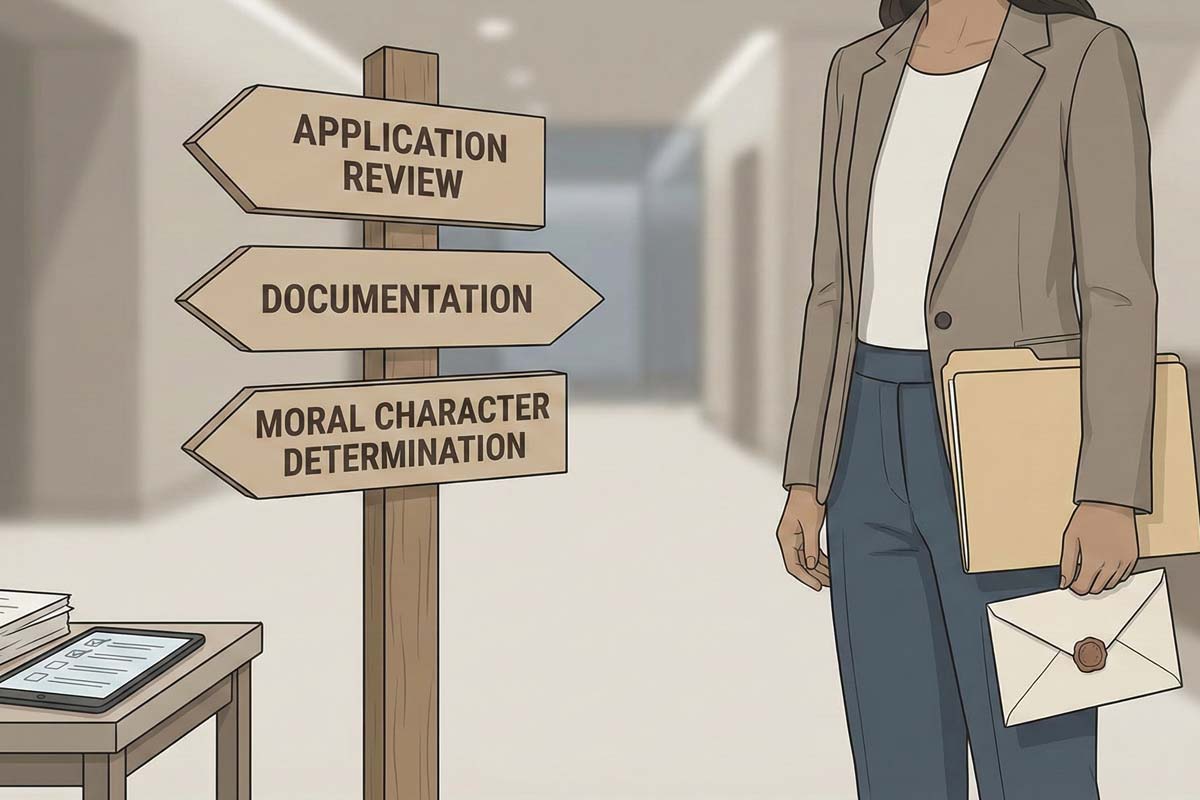
If you have a criminal record and you’re considering getting a California real estate license, you’re probably carrying a heavy question:
“Will my past prevent me from becoming an agent?” Read more...
If you have a criminal record and you’re considering getting a California real estate license, you’re probably carrying a heavy question:
“Will my past prevent me from becoming an agent?”
And if you’re anxious, confused, or even scared to begin, you’re not alone. In over 20 years of teaching real estate students in California, I’ve answered this question more times than I can count — usually from people who are motivated, hardworking, and trying to rebuild their lives.
Here’s the truth, stated plainly:
A criminal record does not automatically disqualify you.
But it also does not guarantee that you’ll be approved — even if the offense was long ago, even if it was expunged, and even if you’ve made significant progress in your life.
The California Department of Real Estate (DRE) reviews every applicant with a record through a detailed Moral Character Determination.
Some applicants are approved. Some are denied.
What determines the outcome?
Honesty, documentation, rehabilitation, and — importantly — the nature of the offense itself.
Before we get into the specifics, here’s one key distinction I tell all my students:
Eligibility rules and your government issued ID merely allow you to take the exam.
Moral character review determines whether you can actually receive the license after you pass.
You can start the process.
But whether or not you get the license depends on a thorough state review of your complete history.
How the DRE Evaluates a Criminal Record
“Moral Character” can sound vague or intimidating, but in practice it comes down to three things the DRE looks at:
1. Honesty
Did you disclose everything? Was it complete, accurate, and truthful?
2. Integrity
Does your conduct — past and present — demonstrate responsibility?
3. Trustworthiness
Can consumers trust you with confidential information, contracts, and money?
None of this is about perfection.
But it is about transparency and evidence of change.
The DRE’s review is strict.
Every applicant is fingerprinted, and the state receives full reports from both the DOJ and FBI. Nothing stays hidden. And the DRE expects disclosure of:
Every conviction ever — including DUIs, misdemeanors, and felonies
Convictions that were dismissed or expunged under Penal Code 1203.4
Any disciplinary action against a professional or business license
Any pending criminal charges
A conviction itself does not automatically lead to denial.
But failing to disclose often does.
If there’s one message I stress repeatedly, it’s this:
When in doubt, disclose. Every time.
A Realistic Understanding: Approval Is Possible — Not Guaranteed
Over the past two decades, I have had students with various criminal histories go on to become licensed real estate agents. I’ve also had students with similar histories get denied.
The difference usually comes down to:
The seriousness of the offense
The presence of fraud, dishonesty, or financial crimes
Time since the offense
Completion of probation
Documented rehabilitation
Consistency and truthfulness in disclosure
Whether the applicant took responsibility
To be clear:
Some offenses make licensure extremely difficult.
Crimes involving fraud, forgery, embezzlement, or financial misconduct carry significantly more weight because real estate involves handling money and sensitive documents.
Even with rehabilitation, these offenses may still result in denial.
I don’t say that to discourage you — I say it because you deserve accuracy, not false optimism.
The Fastest Path to Denial: Missing or Incomplete Disclosure
Let me be completely direct:
The DRE will find out everything, both before and after you are licensed.
Applicants are sometimes denied not because of the offense, but because:
Something wasn’t disclosed
A detail was incomplete
A conviction was “forgotten”
They assumed an expungement didn’t need to be listed
They relied on advice from friends or attorneys who said “don’t worry about it”
The DRE is crystal clear on this:
Failure to disclose is treated as an attempt to obtain a license by fraud or misrepresentation.
No school, no friend, and no online source can override what the DRE requires.
What You Should Do If You Have a Criminal Record
Over the years, I’ve developed a step-by-step approach I recommend to any student who is worried about their background. It doesn’t guarantee approval — nothing does — but it positions your application for the fairest review possible.
You can also contact the DRE at 877-373-4542 with other questions.
1. Obtain Your Complete Criminal Record
Do not guess.
Do not rely on memory.
Request:
DOJ criminal history
Court docket(s)
Final disposition records
Make sure you know the full picture:
The exact charges
Dates of arrest and conviction
Whether probation was completed
Whether fines were paid
Whether any part of the record was dismissed or reduced
The DRE will compare what you disclose to what the fingerprint report shows.
2. Prepare a Clear, Factual Statement of Explanation
Your Statement of Explanation matters — a lot.
A strong explanation includes:
What happened (factually, without minimizing)
Why it happened
What you learned
What’s changed in your life since
Why similar conduct won’t occur again
Avoid excuses. The DRE isn’t looking for justification — they’re looking for accountability.
3. Assemble Evidence of Rehabilitation
Rehabilitation is essential, especially for more serious offenses.
Evidence can include:
Letters of reference
Proof of stable employment
Documentation of treatment or programs completed
Community service records
Certificates from education or training
Court documents showing compliance
AA/NA attendance records (for substance-related offenses)
Counseling or therapy participation
The stronger and more organized this section is, the clearer your current character becomes.
4. Organize Your Documents for Submission
Think of this like preparing a professional portfolio.
Create a clean, organized packet containing:
All case information
All disclosures
Statement of Explanation
Rehabilitation documents
A chronological summary
Make it easy for the DRE reviewer to understand your history and see your progress.
If You Are Denied
If the DRE denies your application, the process does not necessarily end there.
You may:
Request reconsideration under Government Code 11521
Seek judicial review under Government Code 11523
Some applicants choose to consult an attorney experienced in administrative law to navigate deadlines and procedures.
Again — not a guarantee, but an available path.
The Bottom Line: Your Past Matters, but It Doesn’t Automatically Decide Your Future
A criminal record creates uncertainty in the licensing process — and you deserve a realistic understanding of that. Some applicants with records are approved. Some are denied. The outcome depends on honesty, documentation, accountability, and the specific facts of the offense.
But here’s what I can tell you after two decades of teaching:
You’re not disqualified from trying.
You’re not automatically denied.
And you’re not without a path forward at some point through the process.
If you approach the process carefully and truthfully, you give yourself the best chance at a fair review — and potentially, a career that can change your life.
When you're ready to take the next step or want help understanding the licensing process, we’re here to guide you every step of the way.
Q: Can I get a California real estate license with a felony?
A: Possibly. Felonies aren’t automatic denials, but the DRE reviews them under its moral character standards. Approval depends on disclosure, rehabilitation, and the specifics of the offense.
Q: Do I have to disclose expunged or dismissed convictions?
A: Yes. Even expunged or dismissed convictions must be disclosed. The DRE receives full DOJ/FBI fingerprint reports, and failing to disclose can lead to denial.
Q: What offenses make it hardest to get licensed?
A: Crimes involving fraud, dishonesty, theft, or financial misconduct face strict review and are the hardest to overcome. These may still result in denial even with rehabilitation.
Q: What does the DRE look at in a moral character review?
A: Honesty in disclosure, nature of the offense, completion of court requirements, time since the violation, and evidence of rehabilitation.
Q: What documents should I submit if I have a criminal record?
A: Court records, DOJ/FBI reports, a clear Statement of Explanation, and evidence of rehabilitation such as employment history and reference letters.
Q: Will the DRE find out if I don’t disclose something?
A: Yes. Fingerprint checks reveal all convictions, including expunged ones. Non-disclosure is one of the most common reasons for denial.
Q: What can I do if the DRE denies my application?
A: You may request reconsideration or pursue judicial review. Some applicants consult an attorney to navigate appeal deadlines.
Want even more information on getting your real estate license? Check out our comprehensive Real Estate License Guide.
|

AI Has Become the California Agent’s Competitive Edge
California real estate never slows down. Between lead generation, open houses, disclosures, deadlines, and client communication, most agents Read more...
AI Has Become the California Agent’s Competitive Edge
California real estate never slows down. Between lead generation, open houses, disclosures, deadlines, and client communication, most agents feel like they’re working three jobs at once.
In 2026, AI isn’t replacing agents—it’s amplifying them.
Top producers use AI not as a shortcut but as a force multiplier that handles repetitive tasks so they can focus on negotiation, relationships, and solving problems.
Below are 7 categories of AI tools that help California agents save hours every week—without crossing legal boundaries that could jeopardize a license.
1. AI-Powered CRMs & Lead Nurturing
What It Is
AI-enhanced CRMs automate follow-up, score leads, and guide you on when to call, text, or email.
Productivity Payoff
No more stale leads or forgotten tasks. AI organizes everything so you stay top of mind with buyers and sellers.
Tools to Explore
Follow Up Boss – Smart workflows
Chime – Predictive AI lead scoring
Sierra Interactive – Behavior-based follow-up
Pro Tip for California Agents
Segment your leads by micro-markets (Ontario ≠ Upland ≠ Rancho Cucamonga). AI tagging helps you tailor communication to hyper-local trends.
2. AI Listing Description & Marketing Copy Generators
What It Is
AI tools draft listing descriptions, social posts, ads, and open house scripts instantly.
Productivity Payoff
Save hours per listing while producing cleaner, more polished marketing.
Tools to Explore
ChatGPT – Listing copy, scripts, edits
Jasper – Persuasive marketing language
Copy.ai – Rapid-fire short-form copy
Pro Tip for California Agents
Fair Housing is non-negotiable.
AI may unintentionally generate biased phrases like:
“Great for families”
“Safe neighborhood”
“Walking distance to church”
Remove anything that could be interpreted as steering, preference, or demographic targeting.
3. AI for Visuals, Virtual Staging & Photo Enhancement
What It Is
AI generates virtual staging, enhances photos, and builds floor plans or digital twins.
Productivity Payoff
Turn raw photos into polished marketing immediately—no waiting on designers.
Tools to Explore
Matterport – 3D tours
REimagine Home – AI staging
Virtuance – AI image enhancement
Pro Tip for California Agents
Label virtual staging ON the photo, not just in the caption.
The DRE considers unlabeled virtual staging a form of “misleading advertising.”
4. AI Chatbots for Instant Lead Engagement
What It Is
Chatbots respond instantly to new leads, capture info, and schedule appointments—even when you’re at a showing.
Productivity Payoff
You never miss a lead, and automation boosts speed-to-lead dramatically.
Tools to Explore
ManyChat
Rechat
Drift
Pro Tip for California Agents
Treat chatbots like unlicensed assistants:
They can schedule, collect info, and greet prospects—but cannot:
Discuss price or terms
Explain contingencies
Compare properties
Suggest negotiation strategies
Anything crossing into “licensed activity” exposes you to DRE violations.
5. AI Market Analysis & Pricing Tools
What It Is
AI-enhanced CMA tools that digest thousands of data points to estimate value and trends.
Productivity Payoff
Better listing presentations, fewer pricing disputes, and faster CMAs.
Tools to Explore
CloudCMA – Dynamic CMA reports
RPR – MLS-linked property analytics
HomeByte – Predictive price modeling
Pro Tip for California Agents
AI is helpful, but California pricing is hyper-local.
A lot split, a new ADU, or an unpermitted conversion on one block may not exist on the next block. Always verify with public record.
6. AI Video Tools: Scripting, Editing & Personalized Outreach
What It Is
AI writes scripts, processes raw footage, and automates personalized video messages.
Productivity Payoff
Turn one hour of work into a month of video content.
Tools to Explore
Descript – Edit video by editing text
Loom – Personalized client explainer videos
Synthesia – AI-presenter video creation
Pro Tip for California Agents
Use 45-second AI-scripted updates for clients in competitive markets. Sellers and buyers care more about timeliness than cinematic production values.
7. NEW: AI for Risk Management & Disclosures
What It Is
AI tools that guide clients through complex disclosures and help agents avoid omission errors.
Productivity Payoff
Reduces back-and-forth, cuts risk of mistakes, and lowers liability exposure—especially in California where disclosure requirements are the strictest in the nation.
Tools to Explore
Glide – Smart TDS, AVID, SPQ workflows
DisclosureIO – Organized disclosure package sharing
Pro Tip for California Agents
Even with AI assistance, you must review every page of TDS, SPQ, AVID, and local disclosures.
AI is a helper, not a shield. Omission = lawsuits, not excuses.
8. AI Email & Communication Assistants
What It Is
AI improves email clarity, tone, and grammar.
Productivity Payoff
No more rewriting emails five times. Stay polished and consistent.
Tools to Explore
Grammarly
Lavender
Superhuman
Pro Tip for California Agents
Never paste sensitive client information (SSNs, tax returns, bank statements) into public AI tools.
Use encrypted assistants only.
Human vs. AI: What Each Does Best
AI Handles
Agents Handle
Drafting emails & scripts
Negotiation
Scheduling & reminders
Emotional intelligence
Draft CMA comparisons
Pricing strategy explanation
Data entry
Relationship-building
Photo editing & staging
Reading buyer/seller motivation
Initial lead engagement
Problem-solving & conflict management
Disclosure prep workflows
Final review & legal responsibility
AI is the assistant.
You are the fiduciary.
Why California Agents Are Still Irreplaceable
AI can stage a room.
AI can analyze comps.
AI can respond instantly.
But it cannot:
Understand probate nuances
Protect a client from a bad deal
Interpret a tricky local disclosure
Negotiate with a difficult seller
Read human intentions
Catch subtle red flags
Uphold a fiduciary duty
That skill set comes from education, training, and experience—not algorithms.
AI will define the next generation of California agents—but only those who pair technology with a strong foundation in California real estate law will thrive.
AI can draft a contract.
AI can organize your day.
AI can help prevent errors.
But AI cannot keep you out of court.
Only you can—if you fully understand the laws you’re practicing under.
At ADHI Schools, we prepare California agents to use modern tools safely, effectively, and confidently.
If you’re ready to build a career that blends technology with real-world expertise:
Explore our state-approved pre-license and continuing education courses today.
|

If you're thinking about starting a real estate career in California, one of the first questions you’ll have is: “Do I even qualify?” Maybe you’re unsure whether your background will affect your Read more...
If you're thinking about starting a real estate career in California, one of the first questions you’ll have is: “Do I even qualify?” Maybe you’re unsure whether your background will affect your chances, whether you need to live in California, or if an out-of-state ID will cause problems.
I say all this having been in the real estate education business for over 20 years and answering this question almost daily.
At the end of the day, California’s real estate license requirements are far more accessible than most people expect. To get started, you only need to meet four core eligibility standards set by the California Department of Real Estate (DRE).
Before we break them down, one important distinction:
Eligibility rules determine whether you can apply for and take the exam. As long as you meet these, the state will let you take the test.
License requirements (Live Scan + SSN/ITIN submission) happen after you pass and you’re applying for your actual real estate license
Understanding these DRE eligibility requirements upfront can save you time, money, and stress. Let’s explore exactly what the state requires — and what it doesn’t.
The Four Pillars of California Real Estate License Eligibility
1. Age and Citizenship Requirements
You Must Be 18 or Older
California requires all real estate salesperson applicants to be at least 18 years old. No exceptions.
This means, if you're 17, you can finish your courses early, but you cannot apply or take the exam until your 18th birthday.
No Citizenship or Residency Requirement
This is where most misconceptions come from. The DRE does not require:
U.S. citizenship
California residency
Proof of legal presence or immigration status
California does not check immigration status at any point in the licensing process.
You can become a real estate agent in California even if you are not a U.S. citizen or permanent resident. Many years ago, there was a proof of legal presence document, but this has been eliminated.
What Identification Is Required
To take the exam, you must present a valid, government-issued ID such as:
U.S. driver’s license (any state)
U.S. state ID card
U.S. passport or passport card
U.S. military ID
Foreign driver’s licenses are not accepted for the real estate exam.
Your ID must be current, contain your photo and signature, and match the name on your exam registration and license application exactly.
SSN/ITIN Rules
After you pass the exam, the DRE will require either:
a Social Security Number (SSN), or
an Individual Taxpayer Identification Number (ITIN)
This requirement is only for the license stage and is tied to tax reporting and identity verification — not immigration enforcement.
2. Education Requirements
You Must Complete Three College-Level Courses
Before the DRE will schedule your exam, you must complete:
Real Estate Principles
Real Estate Practice
One approved elective, such as
Real Estate Finance
Real Estate Economics
Real Estate Appraisal
Legal Aspects of Real Estate
Property Management
Escrow
Courses must be taken through:
A California community college
A DRE-approved real estate school, like ADHI Schools.
An accredited online program
Online courses are fully acceptable if the provider is DRE-approved.
No High School Diploma or GED Required
The DRE does not require a high school diploma or GED.
However, success in the coursework and on the exam requires:
strong reading comprehension
good grasp of the English language (the real estate license exam is in English)
the ability to understand contracts and disclosures
3. Background Check and Moral Character
Live Scan Fingerprinting
Every applicant must complete a Live Scan background check. Live Scan is California’s electronic fingerprinting system used to check criminal history.
When does Live Scan happen?
After you pass the exam, when applying for the license, or
With the combined exam + license application (recommended)
Fingerprinting fees include the FBI/DOJ fee (currently $49) plus vendor fees, which vary by location.
What “Moral Character” Really Means
The DRE evaluates whether an applicant demonstrates:
honesty
integrity
trustworthiness
This is the legal standard for protecting consumers in real estate transactions.
A Criminal Record Does Not Automatically Disqualify You
This is another major misconception. A conviction is not an automatic denial.
The DRE evaluates:
the nature and seriousness of the offense
how long ago it occurred
evidence of rehabilitation
whether the offense relates to real estate activities
overall behavior and conduct
Full Disclosure Is Mandatory
Failure to disclose a conviction is often treated more seriously than the offense itself.
Be completely honest in your application — transparency increases your likelihood of approval.
4. Identification Requirements for the Exam and License
To take the exam, you must present:
valid U.S. government-issued ID or
a valid foreign passport
The ID must be:
current
government-issued
include photo + signature
match your exam registration and license application exactly
Name mismatches (initials, hyphens, missing middle names, recent name changes) are the #1 cause of exam-day problems.
Update your ID before scheduling your exam if anything has changed.
Who Qualifies for a California Real Estate License?
Here is a quick summary of the four eligibility pillars:
Eligibility Requirement
What the DRE Requires
What the DRE Does Not Require
Age
Must be 18+
No exceptions
Citizenship
SSN/ITIN for licensing
No legal presence or citizenship verification
Education
3 approved courses
No high school diploma
Background
Live Scan + honesty
Not automatically barred with a record
ID
Valid U.S. ID or foreign passport
No residency requirement
Once you meet these four requirements, the DRE will authorize you for the exam. After you pass and complete Live Scan, you’ll be eligible for your California real estate license.
You can find a more thorough breakdown of this information in our Real Estate License Guide.
Frequently Asked Questions
Do I need to live in California to get licensed?
No. California residency is not required.
Can undocumented individuals get licensed?
Applicants with an ITIN can obtain a real estate license. No proof of legal presence is required.
Are online real estate courses accepted?
Yes. Online courses are accepted if they come from a DRE-approved provider, like ADHI Schools, or accredited college.
Can you get licensed with a background event?
Yes. Background does not automatically disqualify you. The DRE evaluates each case individually based on honesty, rehabilitation, and relevance to real estate.
Ready to Take the Next Step?
If you meet the four eligibility requirements, you’ve already cleared the biggest early hurdle. With the right preparation and courses, thousands of new agents earn their California real estate licenses every year.
You could be next!
|

For the last decade, technology evangelists have promised that virtual reality would make the traditional Sunday open house obsolete. They argued that 3D walkthroughs and high-definition drone footage Read more...
For the last decade, technology evangelists have promised that virtual reality would make the traditional Sunday open house obsolete. They argued that 3D walkthroughs and high-definition drone footage would allow buyers to purchase homes in San Francisco or San Diego without ever stepping foot inside.
As we move into 2026, the verdict is in: They were wrong.
While technology has revolutionized how we market homes, it has not replaced the physical experience of buying them. However, for aspiring agents and those looking to renew their licenses, the landscape has changed. We are no longer debating "virtual vs. physical." We are navigating a complex hybrid market where technology meets strict legal compliance.
If you are studying for your real estate license CA, understanding this balance isn't just about marketing—it's about staying out of court.
The Current Landscape — California Real Estate in 2025
In late 2024 and throughout 2025, we witnessed the "Comeback of the Open House." Despite the proliferation of VR headsets and Matterport tours, California buyers pushed back against a purely digital experience.
Why? Because pixels can’t convey reality.
A 3D tour cannot capture the faint smell of mildew in a basement. It can’t show you how difficult the parking situation is on a narrow street in Long Beach, or the sudden roar of a jet engine over a seemingly quiet Inglewood neighborhood. It misses the "micro-defects"—the sloping floor or the drafty window—that you only catch in person.
The Remote Buyer Exception
There is one major exception where virtual tours reign supreme: Relocation. In California, we see massive migration to Southern California and for these buyers, the virtual tour is the "first showing." It allows a tech worker in San Jose to shortlist homes in Orange County without a six-hour drive. But even then, the physical walk-through is almost always the condition for closing the deal.
What the Hybrid Model Means for Agents
Successful agents today utilize a hybrid real estate marketing strategy. Here is how the modern workflow functions:
Virtual Tours = Top of Funnel: High-quality digital assets filter out buyers who aren't a fit, saving you time.
Open Houses = Conversion: The physical visit builds trust and emotional connection.
Consistency is Key: Your digital marketing must match the physical reality to avoid liability.
For students currently enrolled in our California real estate school, the lesson is clear: Technology gets you to the plate, but emotional intelligence and physical presence hit the home run.
The Legal Minefield — Where Technology Meets Liability
This is the section that generic marketing blogs won't tell you, but as a broker and educator, I must. When you alter reality digitally, you invite liability legally. The California Department of Real Estate (DRE) is watching.
AB 723 and AI-Altered Images (Effective 2026)
California is taking a hard line on Artificial Intelligence in advertising. Under legislative measures like AB 723 California real estate regulations, transparency is mandatory.
Starting in 2026, agents must disclose if marketing materials have been AI-modified. This goes beyond simple color correction. If you use AI to:
Add a sunset to a gloomy day (Twilight Edits).
Green up a dead lawn during a drought.
Digitally "remove" power lines or neighborhood eyesores.
You are moving from "marketing" into "deception."
Puffing vs. Misrepresentation
In our real estate practice course, you learn a foundational concept that separates sales from fraud: Puffing vs. Misrepresentation.
Puffing: Subjective exaggeration that is legally permissible. Example: "This is the most beautiful view in the county!"
Misrepresentation: A false statement of fact (or concealment of a fact). Example: Digitally erasing a water stain on the ceiling.
If a 3D tour "stitches" a room together and accidentally smooths over a crack in the foundation, that is a material fact being hidden.
The Consequences: Under California Business & Professions Code §10140, misleading or deceptive advertising can trigger fines, license suspension, or revocation. This is a serious DRE advertising guidelines issue. Real estate ethics demand that we present the property as it truly is.
Key Takeaways:
Risks of virtual staging include creating false expectations that lead to lawsuits.
Digital alterations must not hide material facts.
"Truthful presentation" applies to pixels just as much as it applies to paper flyers.
The Educational Angle — Why Real Estate School Still Matters
Many new agents ask, "Why do I need to take a course to learn about virtual tours? Can't I just watch a YouTube tutorial?"
The answer is simple: YouTube teaches you how to use the software. Our California real estate school teaches you how to market properly.
Digital Media Is Now Part of the Real Estate Exam
The state exam is evolving. When you study California real estate license exam topics, specifically in the area of Practice of Real Estate and Disclosures, you are being tested on your ability to handle technology within the framework of the law.
The exam questions won't ask "How do you turn on a 360 camera?" As time evolves, tested concepts might look like:
"Does an agent have a duty to correct a third-party website that displays incorrect data about their listing?"
"Is it a violation of fiduciary duty to digitally stage a home without disclosure?"
These questions on blind advertising, digital disclosure, and misrepresentation are designed to weed out agents who don't respect the consumer protection laws of California.
Modern Agents Need More Than Sales Skills
To succeed in this market, proptech training is essential—but it must be grounded in license law. Real estate continuing education California requirements are increasingly focusing on these emerging technologies.
A modern agent must be part Marketer, part Compliance Officer. The right real estate school doesn't just help you pass the test; it prepares you for the liability of the real world. It bridges the gap between "what looks good" and "what is legal."
The Agent of the Future Isn’t a Robot, It’s You
Will virtual tours replace open houses in California?
No.
Will AI completely replace real estate agents?
No.
However, an agent who leverages technology ethically and understands the law will absolutely replace the agent who refuses to adapt.
The future of real estate belongs to the educated professional. It belongs to the agent who knows that while a drone shot looks great, fiduciary duty is what keeps the client for life.
This is why choosing the right California real estate school is no longer optional—it’s your first line of defense against liability. Whether you are looking for real estate exam prep or need to complete your license renewal, ensure your education covers the practice of real estate, not just the theory.
Don't just get licensed. Get educated.
|

California has always been a magnet for real estate professionals. Its market is vast, complex, and full of opportunity — from high-end coastal homes and bustling Los Angeles neighborhoods to the fast-growing Read more...
California has always been a magnet for real estate professionals. Its market is vast, complex, and full of opportunity — from high-end coastal homes and bustling Los Angeles neighborhoods to the fast-growing Inland Empire and tech-driven Silicon Valley. It’s no wonder that licensed agents from across the country often ask how they can bring their expertise to California and start working there.
But there’s one critical fact that every out-of-state agent needs to understand right away: California does not have real estate license reciprocity with any other state. No matter where you’re currently licensed — Nevada, Texas, Florida, or New York — you’ll need to go through the same process as a first-time applicant to become licensed here.
That may sound daunting at first, but the process is straightforward once you understand the California Department of Real Estate’s (DRE) requirements and how to navigate them efficiently.
This article is for informational purposes only. Licensing requirements and forms may change. Always verify details directly with the California Department of Real Estate (dre.ca.gov) before applying.
What “No Reciprocity” Really Means
Many states have reciprocity agreements, which allow agents to move between jurisdictions without having to repeat the entire licensing process. These arrangements recognize that an agent’s existing education and experience often meet the host state’s requirements.
California, however, is different. The DRE maintains its own set of standards for education, testing, and licensing, meaning every applicant — regardless of background — must satisfy them in full. There’s no fast track, no waiver, and no exemption for those who already hold a license elsewhere. In practical terms, this means that even if you’ve been selling homes in Arizona for a decade, you’ll still need to complete the same 135 hours of pre-licensing coursework, pass the California salesperson exam, and apply for your license just like any new entrant.
The Path to Getting Licensed in California
While there’s no shortcut to reciprocity, the steps are logical and accessible. The DRE requires that all applicants be at least eighteen years old, demonstrate honesty and integrity, and submit to a fingerprint-based background check . Residency in California isn’t mandatory — out-of-state applicants complete an extra form called the Consent to Service of Process
Education is the foundation of the process. California mandates 135 hours of approved coursework, divided into three 45-hour classes: Real Estate Principles, Real Estate Practice, and one elective such as Finance, Escrow, or Property Management.
ADHI Schools offers DRE-approved courses that can be taken online from anywhere in the country.
Once your coursework is complete, you’ll move on to the application phase. This is where many out-of-state agents make a small but important mistake. The DRE provides two ways to apply:
Form RE 400A, which is only for the state exam, or
Form RE 435, known as the Combination Exam and License Application, which allows you to apply for both the exam and the license at the same time.
For most applicants — especially those eager to get licensed quickly — the RE 435 “combo” application is the better choice. It saves several weeks of processing time by letting the DRE review your license paperwork while you’re preparing for or taking the exam. You’ll simply pay both the exam and license fees upfront, and once you pass the test, your license can be issued immediately after fingerprint clearance.
The California salesperson exam itself consists of 150 multiple-choice questions covering real estate law, agency, contracts, financing, property ownership, and disclosures. A passing score is 70 percent or higher.
When the DRE has processed your background check and verified your passing score, your California real estate license is activated — allowing you to officially begin working under a licensed broker.
The entire process can be tracked and managed through the DRE’s eLicensing portal , which allows you to submit forms, check exam dates, pay fees, and even schedule or reschedule your test online. Using eLicensing not only speeds up communication but also helps ensure that your application doesn’t get delayed in the mailroom queue, which is a common issue for paper submissions.
Experience Matters — But California Is Its Own Market
For out-of-state agents, experience is both a blessing and a challenge. Your background in real estate transactions, client service, and market analysis will serve you well — but California’s real estate landscape comes with its own set of rules and nuances.
Purchase agreements, disclosures, and agency laws in California are among the most detailed in the nation. The state also has unique consumer protection regulations and local ordinances that vary by county and city. That’s why, even for seasoned professionals, the real estate coursework isn’t just a formality — it’s an essential orientation to how business is done here.
Programs like ours at ADHI Schools help bridge that gap by tailoring instruction to out-of-state agents, emphasizing California-specific contracts and exam preparation. Because all of the coursework can be completed online, you can begin the process before relocating — saving months of waiting time.
A Note for Out-of-State Brokers
Brokers face a slightly higher bar. To qualify for the California Broker Exam, applicants must show at least two years of full-time licensed salesperson experience within the last five years and complete eight college-level real estate courses. Like salesperson applicants, out-of-state brokers are not exempt from these requirements. Each must apply, document their prior experience, and pass the California Broker Exam before conducting brokerage activities in the state.
This process ensures that all brokers operating in California understand local regulations, disclosure obligations, and the DRE’s stringent compliance framework — something that ultimately protects both consumers and licensees.
Clearing Up the Most Common Misunderstandings
There are several misconceptions that persist among agents seeking to transfer their real estate licenses to California. The first is the idea that prior licensing automatically waives the education requirement. It doesn’t — the DRE treats every applicant the same.
The second misconception is that California has some form of reciprocity or “mutual recognition” with nearby states. It does not. Every applicant must complete their California specific education and pass the state exam.
Finally, some assume that they can start practicing immediately upon moving to California. In reality, no real estate activity — marketing, advising, or representing clients — can occur until your California license is officially issued and hung with a broker.
Why California Is Worth It
The effort required to become licensed in California is well worth it. The state’s real estate industry is one of the most dynamic in the world, spanning everything from residential sales and new construction to commercial leasing and investment opportunities. Agents who build a foothold here gain access to a massive client base and some of the most sophisticated markets anywhere.
Out-of-state agents who complete the process often find that their broader perspective gives them a competitive edge. The key is preparation — and selecting a trusted education provider to ensure a smooth transition. Schools like ADHI Schools specialize in helping aspiring agents meet California DRE requirements efficiently, offering flexible schedules, instructor support, and comprehensive exam prep designed for busy professionals.
Final Thoughts
Relocating or expanding your real estate career to California isn’t as simple as transferring your existing license — but with clear guidance, it’s entirely achievable. Understanding that California operates without reciprocity allows you to plan correctly, meet the DRE’s expectations, and start building relationships in one of the most lucrative real estate markets in the country.
Whether you’re an agent from another state looking to get licensed or a seasoned broker ready to grow your business on the West Coast, the path begins with education. Start with your 135-hour pre-licensing courses through ADHI Schools , prepare for the state exam, and take the next step toward your California real estate career.
|

Is there a “best” age to launch a real estate career? The answer might shock you. While you only need to be 18 years old to get a real estate license, the truth is that every decade of life offers Read more...
Is there a “best” age to launch a real estate career? The answer might shock you. While you only need to be 18 years old to get a real estate license, the truth is that every decade of life offers a unique, decisive advantage. The “perfect” time to start is whenever you decide you’re ready. At ADHI Schools, we’ve helped students in their teens, 20s, 40s, 60s, and beyond pass the real estate exam and build careers that fit their lives.
The Legal Minimum: The Only Real Rule
Across most states, there’s just one hard requirement: you must be at least 18 to hold a real estate license.
Good news: many states allow you to start pre-licensing education earlier and then apply for your license once you turn 18. Rules vary, so check your state’s criteria—or ask ADHI Schools, and we’ll map your exact steps for how to get a real estate license in California.
Ages 18–25: The Hustler’s Edge
Your advantages
Energy & adaptability to outlearn and outwork competitors
Tech fluency with short-form video, social ads, and CRMs
Long runway to compound skills, reviews, and referrals
Winning strategies
Volume of activity: Open houses, strategic outreach, and neighborhood videos build skills fast.
Modern lead gen: Create TikToks/shorts on rent-vs-buy, local highlights, and first-time buyer tips—then funnel viewers to a simple lead form.
Join a team: Trade a higher split for mentorship and reps; you’ll accelerate faster than going solo.
How ADHI helps
At ADHI Schools, our pre-licensing course and study materials include modern digital marketing modules that demonstrate how to convert TikTok and Instagram views into real leads, set up a basic CRM, and follow up effectively.
Common worry for younger folks is “I don’t have a network.”
Reframe it: you’re building one with today’s tools. Weekly “market minute” videos, DM outreach with value (not spam), and consistent open houses grow a pipeline from zero.
This is the moment to pour a foundation for lifelong success. ADHI’s flexible online real estate school fits around classes or a first job and prepares you to pass the real estate exam on your first attempt.
Ages 26–50: The Networker’s Advantage
Your advantages
Established sphere: Friends, colleagues, fellow parents, alumni groups—your first 10–20 clients are likely already in your contacts.
Career skills transfer: Sales, marketing, ops, finance, and customer service map directly to real estate.
Credibility & stability clients trust.
Winning strategies
Activate your sphere: Announce your new path with value—free home-value reviews, “move-up math,” and buyer readiness checklists.
Specialize by life stage: “Young families near [School District],” “condo-to-house,” or “first-time investors.”
Systematize: Use a CRM, nurture emails, and a repeatable open-house cadence to stay top-of-mind without burnout.
How ADHI helps
A great real estate school like ADHI doesn’t just teach you to pass the test; our business-building webinars help you craft the perfect announcement strategy for your existing network, choose a niche, and structure your first 90-day action plan.
Common worry: “How do I juggle work and family?”
Real estate can offer you flexibility—once the necessary systems are in place. Time-block showings, batch content on weekends, and plan childcare for offer nights. Your schedule, your rules.
You already have the network—now get the license. ADHI’s proven curriculum and support help you pass the real estate exam and launch your “second act” confidently.
Ages 50+: The Advisor’s Advantage
Your advantages
Wisdom & calm: You’ve seen markets cycle; clients value steady, consultative guidance.
Deep relationships: Community ties fuel referral-driven business.
Financial flexibility: Choose part-time niches or higher-touch service models.
Winning strategies
Lead with advice, not pressure: Emphasize planning, risk reduction, and life-stage moves.
Niche where experience shines: Senior relocation, downsizing, probate/trust sales, or vacation and second-home markets.
Referral engine: Quarterly client check-ins, vendor partnerships (CPAs, attorneys, contractors), and educational workshops.
How ADHI helps
ADHI Schools offers self-paced, easy to understand education that respects your time and experience—giving you the confidence to launch a rewarding second act.
Your Age Advantage: At-a-Glance
.why-video-now-one-table {
border: 1px solid gray !important;
border-collapse: collapse !important;
margin: 10px !important;
padding: 10px !important;
}
.why-video-now-one-table th, .why-video-now-one-table td {
border: 1px solid gray !important;
border-collapse: collapse !important;
margin: 10px !important;
padding: 10px !important;
}
tbody, td, tfoot, th, thead, tr {
border-color: inherit;
border-style: solid;
border-width: 0;
border: 1px solid black !important;
padding: 5px;
text-align: center;
}
.table-wrapper{
max-width: 100%;
overflow-x: scroll;
}
th{
width: 20%;
padding: 10px;
}
Life Stage
Biggest Strength
Top Strategy
Common Hurdle
Mindset Shift
18–25
Energy & tech skills
Volume + team mentorship
Small sphere
You’re building a modern network from zero
26–50
Established sphere
Activate relationships + niche
Time constraints
Systems create flexibility and scale
50+
Credibility & patience
Advisory positioning + referrals
Aversion to “sales”
Serve and educate; let trust do the selling
Your Time Is Now
The market doesn’t ask your age; it asks for your value. Ultimately, your success is determined by passion, consistency, and preparation—not your birth year. Where you are right now isn’t a hurdle; it’s your unique advantage. The first step to leveraging it is to earn your real estate license.
The second is to choose the right partner for your education like ADHI Schools!
Quick FAQ
.accordion-button:not(.collapsed)::after {
background-image: url(/images/web_new_reskin/dash.svg) !important;
}
.accordion-button:not(.collapsed)::after {
background-image: url(/images/web_new_reskin/blogminus.svg) !important;
}
.accordion p,
.accordion br{
display: none;
}
.accordion-button::after{
left: 0% !important;
}
.accordion-body{
font-size: 15px;
color: gray;
}
button.accordion-button {
background-color: aliceblue !important;
}
.accordion-button:not(.collapsed) {
background-color: black !important;
color: white !important;
}
What’s the minimum age to get a real estate license?
In most states, you must be 18 years old to hold a license. Some states let you start pre-licensing courses earlier and apply once you turn 18 - California is one such state.
Am I too old to start a career in real estate?
No. Many top producers begin their careers in their 40s, 50s, or later. Your network and credibility are powerful advantages.
How long does it take to obtain a license?
It depends on your state’s pre-licensing course hours and exam schedule. With a focused plan, many students finish coursework in weeks, not months. ADHI Schools’ coursework can be finished in under 8 weeks!
How do I choose the best real estate school?
Look for state-approved courses, comprehensive real estate exam prep, flexible formats, and responsive support. (That’s our wheelhouse at ADHI Schools.)
I’m nervous about the real estate exam. What if I fail?
It’s a common concern! The key is choosing a real estate school with a proven track record. At ADHI Schools, our curriculum includes practice exams, comprehensive materials, and instructor support designed to help you pass the real estate exam on your first attempt. We build your confidence along with your knowledge.
Regardless of your age, a successful career in real estate begins with quality education. ADHI Schools provides the industry-leading curriculum, expert instruction, and flexible scheduling you need to pass your state’s real estate exam on the first try.
Contact us today to learn more about our real estate school programs and how we help you every step of the way to become a Realtor!
|
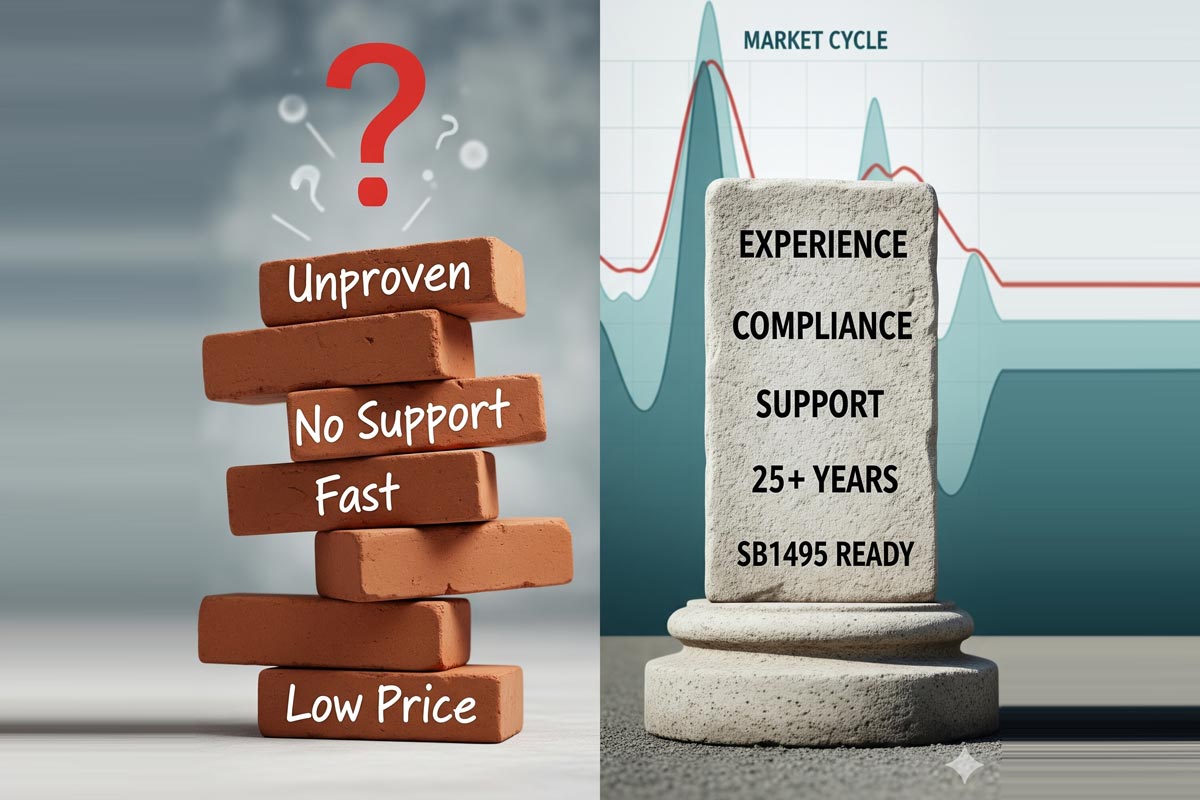
You’ve decided to pursue a real estate career in California. The dream is clear: earning your real estate license, passing the real estate exam, and stepping into a career with unlimited potential.
But Read more...
You’ve decided to pursue a real estate career in California. The dream is clear: earning your real estate license, passing the real estate exam, and stepping into a career with unlimited potential.
But here’s the truth most students don’t realize: your choice of real estate school can make or break that journey. Pick the wrong school, and you risk being stranded mid-course, with your investment gone and your momentum lost.
This is why stability matters. And in a market where schools come and go with every housing cycle, choosing the right partner is your first big career decision.
The Risk of Fly-By-Night Schools
The real estate education market is volatile, and many schools that launched during the COVID boom have already collapsed. With the housing slowdown and new regulations like SB1495’s Interactive Impact Bias requirement taking effect in 2024, countless websites have vanished overnight.
And when a school disappears, it’s not just their problem — it’s yours.
Students could be stranded mid-course with no way to finish.
Hard-earned credits don’t transfer to another provider.
Tuition money is gone — and so is your time.
Worst of all, your momentum toward a license and career vanishes in an instant.
The Market Context: How Real Estate Schools Rise and Fall
The business of real estate education has always mirrored the housing market itself. When homes are selling quickly and prices are climbing, interest in becoming an agent naturally spikes. That was true in the mid-1990s boom leading up to 2006, when real estate schools were filled with new students eager to ride the wave. But when the 2008 financial crisis hit and the market collapsed, many of those same schools shuttered their doors almost overnight.
We saw a similar pattern during the COVID-19 surge in 2020–2021. With people stuck at home and rethinking their careers, thousands rushed to get a real estate license. It felt like new schools were appearing online almost weekly, many with flashy websites and big promises. The barrier to entry was relatively low, and in a hot market, making quick money seemed easy.
But downturns always test the foundation of a school. When the 2023 market cooled and enrollments slowed, newer operators discovered what ADHI has known for decades: running a compliant, high-quality real estate school requires deep infrastructure, experienced staff, and the strength to withstand lean years.
Without that, thin margins and mounting compliance costs quickly push pop-up schools out of business — leaving students caught in the middle.
The Pillars of Our Resilience
At ADHI Schools, we’ve proven again and again that we’re built to last. Since 2003, we’ve not only survived market turbulence — we’ve helped thousands of students thrive through it.
Here are the pillars of our resilience:
Experience Through Every Cycle: From the Great Recession (2008–2012) to the 2023 slowdown, we’ve guided students through the toughest housing markets.
Regulatory Strength: We adapt promptly to new regulations, such as SB1495. Compliance is never an afterthought — it’s part of our DNA.
Full-Journey Support: From enrollment to exam day, our infrastructure ensures you’re supported at every step.
Proven Longevity: With nearly 25 years in business, we’re not here to make a quick profit. We’re here to launch real careers.
A Trusted Community: Thousands of working agents in California today started right where you are — with ADHI Schools.
This is the stability every aspiring real estate professional deserves.
A Safer Next Step
Your real estate career is too meaningful to gamble on a school that may not be here tomorrow. Choosing ADHI Schools means choosing security, expertise, and a clear path to your license.
|

Thinking about a career in real estate? You're not alone. The freedom, the income potential, the ability to help people make one of the most significant decisions of their lives—there's a lot to love.
Read more...
Thinking about a career in real estate? You're not alone. The freedom, the income potential, the ability to help people make one of the most significant decisions of their lives—there's a lot to love.
But here's the truth: success in real estate isn't luck, and it isn't automatic after you pass the real estate exam.
It's a professional discipline that rewards preparation, resilience, and consistent action.
A good real estate license school won't just teach you the state laws to pass your exam. It will equip you with the scripts, systems, and mindset to build a profitable business from your first day as an agent. That's the philosophy we built ADHI Schools on: rigorous pre-licensing courses, supportive learning, real-world practice, and a clear path from "student" to "producing agent."
This article is a positive, empowering guide to self-assessment. We'll explore the realities of a real estate career through a crucial question: who is truly a good fit for a license? If you see yourself in any of the archetypes below, it doesn't mean you should quit. It means you've identified a hurdle.
And hurdles are what training, coaching, and thoughtful planning are for.
The Self-Assessment: Four Archetypes (and How to Beat Them)
Each of these profiles comes with a harsh reality, followed by an encouraging reframe, and explains how a strong real estate license school—like ADHI Schools—can help you overcome it.
1) The Day-Job Dreamer
Harsh reality:
If you imagine real estate as a "no-sweat" side hustle with quick, easy money and zero impact on your evenings or weekends, the first months will be a shock. Real estate is flexible, but "flexible" isn't the same as "low-time." Showings happen when clients are available (often nights/weekends in residential real estate).
New agents win by establishing consistent lead-generation habits—such as prospecting, attending open houses, following up, writing offers, conducting inspections, obtaining price feedback, and nurturing their sphere. Those hours have to come from somewhere.
Typical signs:
You plan to "try it" with leftover time rather than schedule it.
You avoid open houses or weekend showings because they cut into leisure time.
You want commissions without committing to daily prospecting.
The reframe (and how ADHI helps):
Treat real estate as a professional sport: a flexible schedule with disciplined blocks of time. That means time-blocking and holding yourself accountable. At ADHI Schools, we teach time-blocking frameworks, how to prioritize money-making activities (such as conversations, appointments, and offers), and how to use simple daily scorecards to ensure you're on track.
What this looks like in practice:
A weekly cadence with 5–10 hours of prospecting, 2–4 open houses per month, and scheduled follow-ups.
A simple KPI mindset (e.g., "8 genuine real estate conversations per day").
Scripts and objection handlers to help your time produce appointments, not just activity.
2) The Lone Wolf
Harsh reality:
Real estate is a relationship business. You don't have to be ultra-extroverted, but you do need to build trust, follow up, and consistently show up. If you dislike networking, avoid asking for referrals, and resist collaborating with lenders, inspectors, escrow agents, and other professionals, your growth will likely stall. Even top solo producers operate inside a web of human relationships.
Typical signs:
You'd rather tinker with your website than call your past clients or open-house leads.
You skip brokerage events, team meetings, and community functions.
The idea of asking for referrals makes you uncomfortable.
The reframe (and how ADHI helps):
Treat networking as service, not self-promotion. Your role is to solve problems and reduce stress. At ADHI Schools, we use low-pressure conversation frameworks and referral-ask scripts that feel natural. We also simulate real-life situations—such as introductions, lender handoffs, and post-closing check-ins—so it's second nature when it counts.
What this looks like in practice:
A two-minute referral ask that sounds like you (not a robot).
A 30-day post-closing care plan so clients feel cared for (and refer you).
A simple "weekly relationships" checklist: 5 outreach texts, three coffee chats, one community event.
3) The Financially Fragile
Harsh reality:
Real estate income is irregular at the start. You'll have upfront costs (your licensing course , exam, and application fees, association/MLS dues, lockboxes, signs, and basic marketing), and it can take months to close your first transaction. If you need a steady paycheck immediately or you have no savings to cover several months of living expenses, the pressure can be overwhelming.
Typical signs:
No emergency fund; credit cards are already maxed out.
Dependents relying on your income with no runway.
Expectation of fast, guaranteed deals to pay the bills.
The encouraging reframe (and how ADHI helps):
Plan the launch like a business. Build a runway (ideally six months), or layer in a bright transition plan (e.g., a part-time bridge job with predictable hours) while you build your pipeline. This is precisely where your real estate license school can help beyond the test.
"This is why choosing a real estate license school that offers career guidance and business planning modules is critical. At ADHI Schools, our courses include units on financial planning for new agents so that you can create a realistic budget and runway." — Kartik Subramaniam, Founder
What this looks like in practice:
A detailed launch budget spreadsheet distinguishing essential costs (MLS, lockbox, signs, basic marketing) from optional ones (premium website, paid ads) so you don't overspend early.
A 90-Day Sprint Plan focused on high-probability, low-cost lead generation: host open houses every weekend, daily sphere-of-influence outreach, and consistent follow-up.
A short guide for finding a compatible bridge job (showing assistant, transaction coordinator, leasing consultant, or property management assistant) that provides income without conflicting with prospecting and client care.
"ADHI had us map out expenses and a realistic 90-day plan. I stopped guessing, stopped stressing, and started executing."— ADHI Schools Student.
4) The Rejection-Phobic
Harsh reality:
Even with great marketing, you will hear "no"—often. People will ghost you, choose their cousin, or decide to rent for another year. If you take rejection personally, avoid follow-up, or get derailed by the first objection, you'll struggle to keep consistent activity. Real estate rewards those who normalize rejection and stay pleasantly persistent.
Typical signs:
You dread calling back because the last person said no.
You avoid door knocking, open houses, or cold outreach.
You overthink every message, then send nothing at all.
The reframe (and how ADHI helps):
Rejection is data, not a verdict on your worth. The cure is reps with feedback. In strong real estate school programs, you'll do role-playing with scripts, objection handling, voicemail frameworks, and post-open-house follow-ups until it's muscle memory.
What this looks like in practice:
A simple follow-up cadence (Day 0, 2, 5, 10, then weekly).
Objection handlers for when the client says: "We already have an agent," "We're waiting," or "We're just looking."
Bonus Archetypes We See (And Fix)
5) The Shortcut Seeker
Harsh reality:
If you believe the real estate license itself equals clients, you'll be disappointed. The license is permission to practice—not a guarantee of success. Without daily lead measures (conversations, open houses, content that builds trust), the phone stays quiet.
Reframe with ADHI:
We emphasize execution. Yes, you'll be ready for the real estate exam and pass the test —but your training must extend into marketing, lead generation, and client experience. We provide you with starter scripts, an outline for planning your business, and a referral-first playbook, so the license becomes a revenue engine.
6) The Unstructured Self-Manager
Harsh reality:
If you need a manager to set your daily to-do list, real estate can feel disorienting.
Your results correlate with your calendar. Empty calendar = empty pipeline.
Reframe with ADHI:
We teach a weekly operating system:
Plan (Sunday 30-minute pipeline review)
Block (Prospecting first; admin later)
Execute (Daily scorecard: conversations, appointments, showings)
Reflect (Friday 15 minutes: wins, gaps, next moves)
7) The Ethics-Flexible
Harsh reality:
You're handling people's most significant assets and private data. Cutting corners, misrepresenting facts, or ignoring agency duties will end your career. Quickly.
Reframe with ADHI:
Long-term success is trust. Our courses emphasize compliance, disclosure, fiduciary duties, and how to protect clients (and your license). Ethical agents earn repeat and referral business because they tell the truth—even when it's inconvenient.
Are You Ready? Score Your Real Estate Readiness
Use this quick self-assessment to identify your strengths and areas for improvement. Answer Yes / No / I'm not sure:
Do you have at least six months of living expenses saved (or a clear, realistic transition plan)?
Will you time-block 10–15 hours per week for lead generation, open houses, and follow-up—even on some evenings/weekends?
Are you comfortable introducing yourself to new people and asking for referrals in a way that feels authentic?
Can you handle hearing "no" repeatedly without losing momentum—and keep following up politely?
Do you have a simple budget for your first year (including dues, MLS, signs, and basic marketing) and a plan to keep costs lean?
Are you willing to practice scripts and role-play until objection handling feels natural and comfortable?
Will you run your calendar like a business owner—with weekly planning, daily scorecards, and honest self-review?
Interpret your score:
If you answered **"No" or "I'm not sure" to 3 or more questions, you may need a real estate school that specializes in comprehensive career coaching and support to bridge those gaps. That's precisely the foundation ADHI Schools is built on. Our career‑focused curriculum is explicitly designed to turn those "not sures" into confident "yeses" before you even hit the field.
What Makes ADHI Schools Different (and Why It Matters)
A real estate school should prepare you for both the exam and for the work. Here's what our students value most:
Career Preparation, Not Just Test Prep: Our pre-licensing course is paired with practical training, including time-blocking, lead generation plans, open-house systems, and post-closing care.
Supportive Learning Environment: Live instruction, office hours, and study communities where you get feedback, not just lectures—authentic, supportive learning.
Role-Play and Real-World Scenarios: We practice the conversations that close the gap between "licensed" and "producing."
Business Planning Modules: Budget templates, runway planning, and "first 90 days" roadmaps so you can launch with confidence.
State Exam Prep That Works: Focused state exam prep resources and strategy so passing the real estate exam is a milestone, not a mystery.
Ethics and Compliance Emphasis: Protect clients and protect your real estate license—because long-term success is built on trust.
"I picked ADHI Schools for the exam, but I stayed for the business plan. The launch playbook and weekly rhythm made the difference." — ADHI Schools Graduate.
Bringing It All Together
So, who should not get a real estate license?
Not the person who refuses to plan their time, build relationships, save a runway, or practice resilience.
But if you recognize those risks and you're willing to do the work, none of them are deal-breakers.
Self-awareness is your edge. The right real estate license school won't ignore these hurdles—it will prepare you to clear them. That's what we do at ADHI Schools: we combine the knowledge you need to pass the test with the habits and systems you need to build a real estate business that lasts.
Ready to Move Forward—With Eyes Open and a Plan?
If this reality check has you excited about the challenge, the next step is to find a school that supports your entire journey. At ADHI Schools, we prepare you not just to pass your real estate exam, but to build a successful and sustainable career.
→ Explore our career‑focused pre‑licensing courses today. See the whole curriculum, upcoming class schedules, and discover how our supportive learning environment sets you up for real‑world success from day one.
TL;DR (for the skimmers)
Real estate is flexible, not effortless.
Your calendar, not your intentions, predicts your income.
Relationships win. Rejection is normal. Resilience is trained.
A runway + a plan beats "I'll wing it."
A great real estate school (like ADHI Schools) teaches the exam AND the business.
When you're ready to treat real estate like the professional path it is, we're prepared to train with you.
Love,
Kartik
|
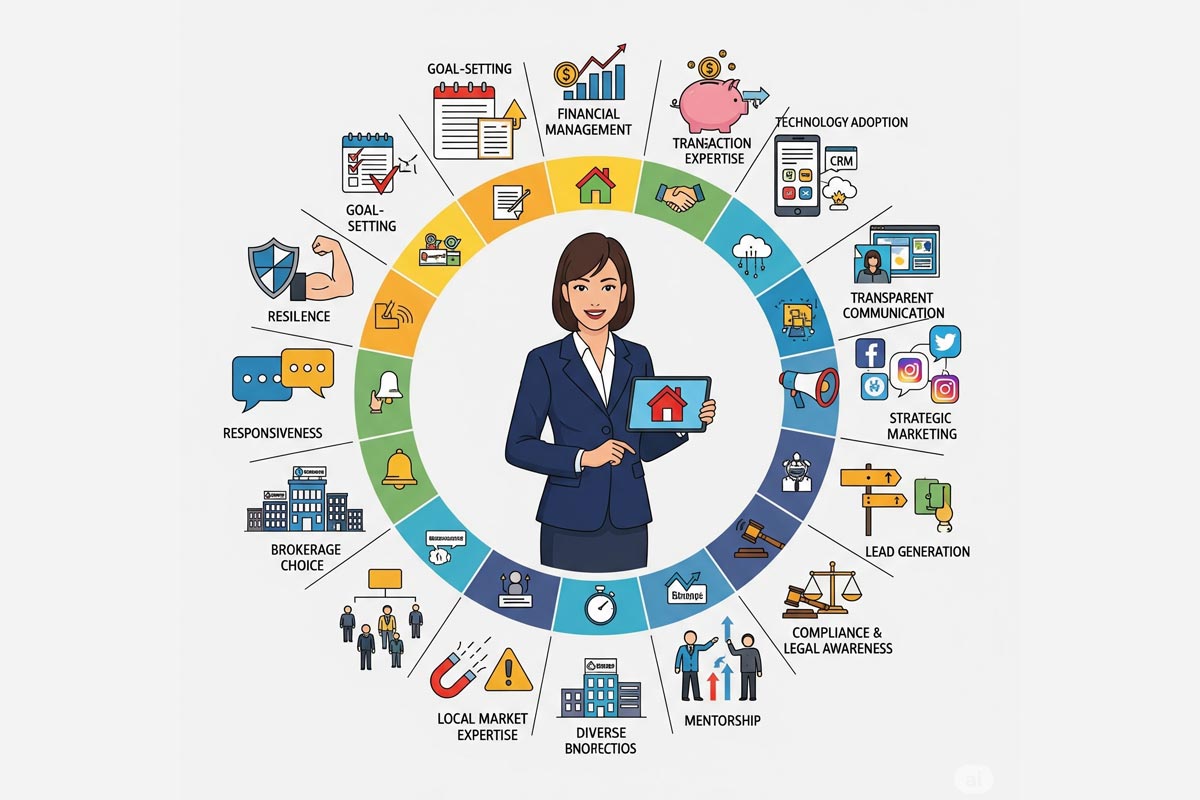
You've enrolled in our real estate license school, studied diligently and successfully passed your real estate exam —congratulations! Many people mistake this license for the finished product, but it’s Read more...
You've enrolled in our real estate license school, studied diligently and successfully passed your real estate exam —congratulations! Many people mistake this license for the finished product, but it’s more accurate to think of it as the plot of land on which you will build your career. It grants you the legal right to build, but the land is currently empty - Now, it's time to build the house.
Transitioning from a newly licensed professional to a fully thriving one requires shifting from a student's mindset to that of a business owner. The reality of real estate can be challenging, but with the right skills and strategies, you can position yourself for lasting success.
Here are 13 essential and actionable skills every new real estate agent should master.
1. Set Clear Goals and Action Plans
In a commission-only profession, you are your CEO. Without a boss setting deadlines or a guaranteed paycheck providing structure, it's easy to drift. Setting clear, measurable goals moves you from a reactive to a proactive state, giving you a roadmap and a way to hold yourself accountable. Establish specific targets for client outreach, open houses, and social media engagement, reviewing your progress regularly to make necessary adjustments.
Action Step: Utilize goal-setting tools, such as the SMART (Specific, Measurable, Achievable, Relevant, Time-bound) framework for setting goals and don’t be afraid to use technology to track your progress.
2. Build a Financial Cushion and Manage Income Wisely
Real estate commissions fluctuate dramatically, and it's not uncommon for a new agent to take 3-6 months to close their first transaction. A financial cushion is not a luxury; it's a foundational business tool that allows you to make decisions from a position of strength, not desperation. This prevents you from taking on bad clients or making poor long-term choices to get a quick commission check.
Action Step: Use budgeting tools and automate monthly deposits into a separate savings account to build your emergency fund.
3. Embrace Technology for Efficiency
As a solo agent, your time is your most valuable asset. Technology provides leverage, enabling you to automate repetitive tasks and manage more clients than would be possible manually. A good Customer Relationship Management (CRM) system acts as your digital assistant, reminding you who to call and when, while other tools can streamline your marketing, freeing you up for income-producing activities.
Action Step: Invest in free or low-cost online tutorials to master key real estate tech tools, such as your CRM and a social media scheduler.
4. Develop Emotional Resilience
Rejection is a daily reality in real estate—offers get denied, buyers change their minds, deals collapse in escrow, and potential clients choose a different agent. Resilience isn't about not feeling disappointment; it's about processing it quickly and not letting one setback derail your momentum for the entire week. Viewing each "no" as data or a learning experience is key to long-term survival and motivation.
Action Step: Regularly engage with resources—such as books, articles, or talks—that focus on building resilience and developing a growth mindset to persevere through challenges.
5. Acquire Transaction Process Expertise
Your licensing exam taught you the law, but it can’t teach you the practical flow of a deal. Actual expertise means understanding the intricate dance between lenders, appraisers, inspectors, title officers, and the opposing agent. Knowing what happens when, who is responsible for what, and how to anticipate and solve problems is what makes you an invaluable guide for your clients.
Action Step: Attend continuing education seminars and workshops, and establish relationships with experienced professionals in related fields who can provide answers to your questions.
6. Honest and Transparent Communication
Trust is the currency of real estate. Many new agents, to please, are tempted to overpromise on a home's potential sale price or understate the market's challenges. This strategy inevitably backfires. Setting realistic expectations from the beginning, even when the news is not what the client wants to hear, builds a foundation of trust and establishes your reputation as a credible, honest professional.
Action Step: Create scripts or templates for common communications, such as market updates and negotiation strategies, to ensure you are always transparent and consistent.
7. Strategic Marketing on a Limited Budget
Effective marketing isn't about having the most significant budget; it's about having the most innovative strategy. The goal is to establish your brand as a knowledgeable, trustworthy local authority. Consistently providing value—through neighborhood highlight videos, blog posts on the buying process, or community event updates—attracts clients to you, shifting the dynamic from chasing leads to creating inbound opportunities.
Action Step: Plan your marketing with a quarterly content calendar and track your results using analytics tools to see what resonates with your audience.
8. Master Quick Responsiveness
In a world of on-demand everything, clients expect prompt communication. A quick response, even if it's to say, "I've received your message and will get back to you with details this afternoon," signals that you are professional, attentive, and that they are a priority. In a competitive situation, your responsiveness can be the single factor that makes a client choose you over another agent.
Action Step: Enable smartphone notifications for business inquiries and use apps like WhatsApp Business or Slack for efficient client interactions.
9. Understand Your Local Market Deeply
Online portals can provide anyone with data; your value lies in offering insight. Deep market knowledge means understanding the nuances that algorithms can't—why one side of the street is more valuable than the other, the reputation of local builders, upcoming zoning changes, or the traffic patterns around a specific school. This is the irreplaceable expertise that clients are paying for.
Action Step: Subscribe to local news alerts, regularly review new MLS listings and recent sales, and attend local open houses to deepen your firsthand expertise.
10. Choose the Right Brokerage
Your choice of brokerage is one of the most profound decisions for your career trajectory. This is your foundational support system. A brokerage isn't just a name on your sign; it dictates your training, access to mentorship, commission structure, and the overall culture you work in. Some larger brokerages offer brand recognition and extensive tools, while smaller boutique firms may offer more hands-on guidance.
Action Step: Conduct informational interviews with managers at multiple brokerages to evaluate their value proposition and identify the best fit for your career goals.
11. Master Lead Generation Techniques Lead generation is the engine of your business and the most direct income-producing activity you can perform. Successful agents do not passively wait for business to come to them; they build and work systems to make the phone ring. Whether you focus on your existing network (SOI), a specific neighborhood (geographic farming), or online ads, dedicating non-negotiable time to prospecting is essential.
Action Step: Schedule regular lead-generation activities into your calendar, like weekly SOI outreach calls, monthly neighborhood mailings, or regular participation in local community events.
12. Navigate Compliance and Legal Pitfalls
A real estate license gives you the power to handle what is often someone's most significant financial asset. That power comes with immense responsibility. A single mistake on a contract, a missed disclosure, or a violation of fair housing laws can result in a lawsuit that ends your career and damages your reputation. Meticulous attention to legal detail isn't optional; it's the bedrock of a professional practice.
Action Step: Regularly review your state's real estate regulations, participate in legal compliance workshops, and consult with your broker or an attorney for complex transactions as needed.
13. Find a Mentor or Join a Team
Real estate can be an isolating "every person for themselves" business, but it doesn't have to be. Joining a team or finding a mentor accelerates your learning curve exponentially. It allows you to learn from the successes and mistakes of others, provides a sounding board for difficult situations, and offers a collaborative environment to help you close your first deals with confidence.
Action Step: Actively seek mentorship through your brokerage or attend local real estate association events to connect with experienced professionals who are willing to share their knowledge.
By mastering these 13 actionable skills and strategies, you'll be far better equipped to overcome the inevitable challenges, build a sustainable and profitable business, and truly thrive as a real estate professional.
Love,
Kartik
|