If you have a criminal record and you’re considering getting a California real estate license, you’re probably carrying a heavy question:
“Will my past prevent me from becoming an agent?” Read more...
If you have a criminal record and you’re considering getting a California real estate license, you’re probably carrying a heavy question:
“Will my past prevent me from becoming an agent?”
And if you’re anxious, confused, or even scared to begin, you’re not alone. In over 20 years of teaching real estate students in California, I’ve answered this question more times than I can count — usually from people who are motivated, hardworking, and trying to rebuild their lives.
Here’s the truth, stated plainly:
A criminal record does not automatically disqualify you.
But it also does not guarantee that you’ll be approved — even if the offense was long ago, even if it was expunged, and even if you’ve made significant progress in your life.
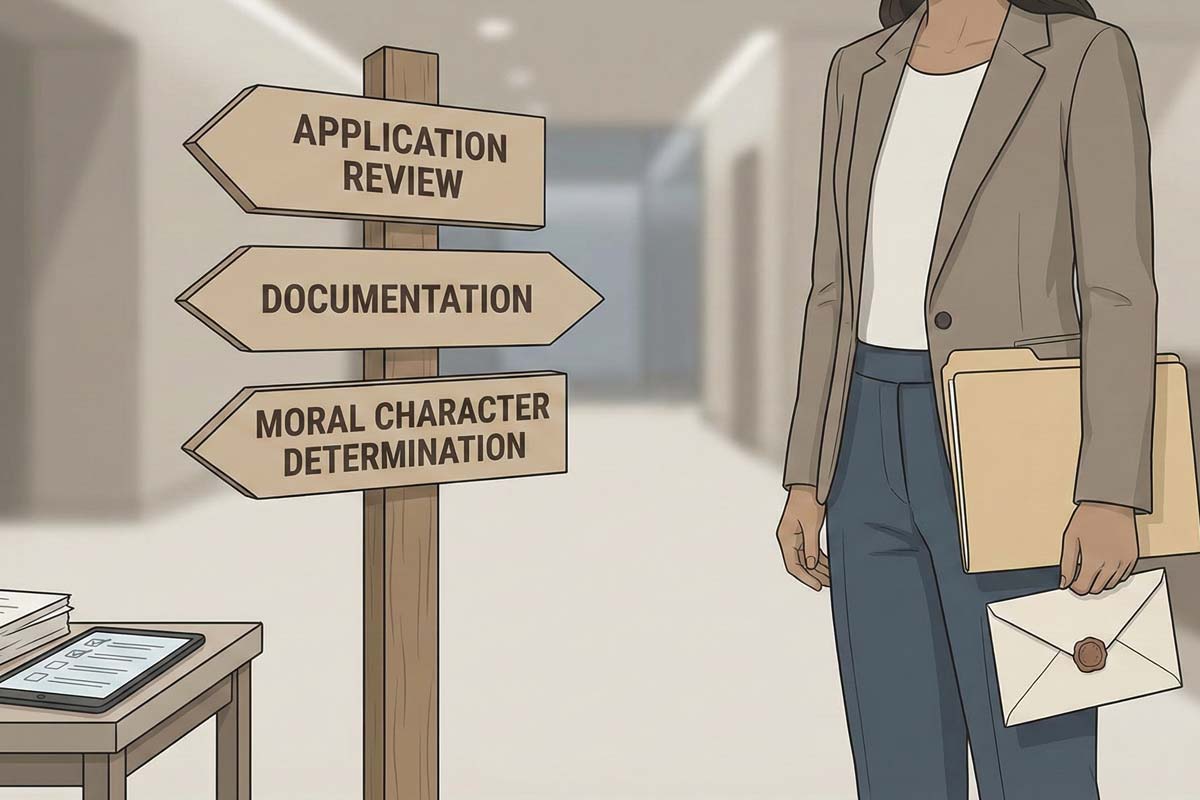
The California Department of Real Estate (DRE) reviews every applicant with a record through a detailed Moral Character Determination.
Some applicants are approved. Some are denied.
What determines the outcome?
Honesty, documentation, rehabilitation, and — importantly — the nature of the offense itself.
Before we get into the specifics, here’s one key distinction I tell all my students:
Eligibility rules and your government issued ID merely allow you to take the exam.
Moral character review determines whether you can actually receive the license after you pass.
You can start the process.
But whether or not you get the license depends on a thorough state review of your complete history.
How the DRE Evaluates a Criminal Record
“Moral Character” can sound vague or intimidating, but in practice it comes down to three things the DRE looks at:
1. Honesty
Did you disclose everything? Was it complete, accurate, and truthful?
2. Integrity
Does your conduct — past and present — demonstrate responsibility?
3. Trustworthiness
Can consumers trust you with confidential information, contracts, and money?
None of this is about perfection.
But it is about transparency and evidence of change.
The DRE’s review is strict.
Every applicant is fingerprinted, and the state receives full reports from both the DOJ and FBI. Nothing stays hidden. And the DRE expects disclosure of:
Every conviction ever — including DUIs, misdemeanors, and felonies
Convictions that were dismissed or expunged under Penal Code 1203.4
Any disciplinary action against a professional or business license
Any pending criminal charges
A conviction itself does not automatically lead to denial.
But failing to disclose often does.
If there’s one message I stress repeatedly, it’s this:
When in doubt, disclose. Every time.
A Realistic Understanding: Approval Is Possible — Not Guaranteed
Over the past two decades, I have had students with various criminal histories go on to become licensed real estate agents. I’ve also had students with similar histories get denied.
The difference usually comes down to:
The seriousness of the offense
The presence of fraud, dishonesty, or financial crimes
Time since the offense
Completion of probation
Documented rehabilitation
Consistency and truthfulness in disclosure
Whether the applicant took responsibility
To be clear:
Some offenses make licensure extremely difficult.
Crimes involving fraud, forgery, embezzlement, or financial misconduct carry significantly more weight because real estate involves handling money and sensitive documents.
Even with rehabilitation, these offenses may still result in denial.
I don’t say that to discourage you — I say it because you deserve accuracy, not false optimism.
The Fastest Path to Denial: Missing or Incomplete Disclosure
Let me be completely direct:
The DRE will find out everything, both before and after you are licensed.
Applicants are sometimes denied not because of the offense, but because:
Something wasn’t disclosed
A detail was incomplete
A conviction was “forgotten”
They assumed an expungement didn’t need to be listed
They relied on advice from friends or attorneys who said “don’t worry about it”
The DRE is crystal clear on this:
Failure to disclose is treated as an attempt to obtain a license by fraud or misrepresentation.
No school, no friend, and no online source can override what the DRE requires.
What You Should Do If You Have a Criminal Record
Over the years, I’ve developed a step-by-step approach I recommend to any student who is worried about their background. It doesn’t guarantee approval — nothing does — but it positions your application for the fairest review possible.
You can also contact the DRE at 877-373-4542 with other questions.
1. Obtain Your Complete Criminal Record
Do not guess.
Do not rely on memory.
Request:
DOJ criminal history
Court docket(s)
Final disposition records
Make sure you know the full picture:
The exact charges
Dates of arrest and conviction
Whether probation was completed
Whether fines were paid
Whether any part of the record was dismissed or reduced
The DRE will compare what you disclose to what the fingerprint report shows.
2. Prepare a Clear, Factual Statement of Explanation
Your Statement of Explanation matters — a lot.
A strong explanation includes:
What happened (factually, without minimizing)
Why it happened
What you learned
What’s changed in your life since
Why similar conduct won’t occur again
Avoid excuses. The DRE isn’t looking for justification — they’re looking for accountability.
3. Assemble Evidence of Rehabilitation
Rehabilitation is essential, especially for more serious offenses.
Evidence can include:
Letters of reference
Proof of stable employment
Documentation of treatment or programs completed
Community service records
Certificates from education or training
Court documents showing compliance
AA/NA attendance records (for substance-related offenses)
Counseling or therapy participation
The stronger and more organized this section is, the clearer your current character becomes.
4. Organize Your Documents for Submission
Think of this like preparing a professional portfolio.
Create a clean, organized packet containing:
All case information
All disclosures
Statement of Explanation
Rehabilitation documents
A chronological summary
Make it easy for the DRE reviewer to understand your history and see your progress.
If You Are Denied
If the DRE denies your application, the process does not necessarily end there.
You may:
Request reconsideration under Government Code 11521
Seek judicial review under Government Code 11523
Some applicants choose to consult an attorney experienced in administrative law to navigate deadlines and procedures.
Again — not a guarantee, but an available path.
The Bottom Line: Your Past Matters, but It Doesn’t Automatically Decide Your Future
A criminal record creates uncertainty in the licensing process — and you deserve a realistic understanding of that. Some applicants with records are approved. Some are denied. The outcome depends on honesty, documentation, accountability, and the specific facts of the offense.
But here’s what I can tell you after two decades of teaching:
You’re not disqualified from trying.
You’re not automatically denied.
And you’re not without a path forward at some point through the process.
If you approach the process carefully and truthfully, you give yourself the best chance at a fair review — and potentially, a career that can change your life.
When you're ready to take the next step or want help understanding the licensing process, we’re here to guide you every step of the way.
Q: Can I get a California real estate license with a felony?
A: Possibly. Felonies aren’t automatic denials, but the DRE reviews them under its moral character standards. Approval depends on disclosure, rehabilitation, and the specifics of the offense.
Q: Do I have to disclose expunged or dismissed convictions?
A: Yes. Even expunged or dismissed convictions must be disclosed. The DRE receives full DOJ/FBI fingerprint reports, and failing to disclose can lead to denial.
Q: What offenses make it hardest to get licensed?
A: Crimes involving fraud, dishonesty, theft, or financial misconduct face strict review and are the hardest to overcome. These may still result in denial even with rehabilitation.
Q: What does the DRE look at in a moral character review?
A: Honesty in disclosure, nature of the offense, completion of court requirements, time since the violation, and evidence of rehabilitation.
Q: What documents should I submit if I have a criminal record?
A: Court records, DOJ/FBI reports, a clear Statement of Explanation, and evidence of rehabilitation such as employment history and reference letters.
Q: Will the DRE find out if I don’t disclose something?
A: Yes. Fingerprint checks reveal all convictions, including expunged ones. Non-disclosure is one of the most common reasons for denial.
Q: What can I do if the DRE denies my application?
A: You may request reconsideration or pursue judicial review. Some applicants consult an attorney to navigate appeal deadlines.
Want even more information on getting your real estate license? Check out our comprehensive Real Estate License Guide.
|

AI Has Become the California Agent’s Competitive Edge
California real estate never slows down. Between lead generation, open houses, disclosures, deadlines, and client communication, most agents Read more...
AI Has Become the California Agent’s Competitive Edge
California real estate never slows down. Between lead generation, open houses, disclosures, deadlines, and client communication, most agents feel like they’re working three jobs at once.
In 2026, AI isn’t replacing agents—it’s amplifying them.
Top producers use AI not as a shortcut but as a force multiplier that handles repetitive tasks so they can focus on negotiation, relationships, and solving problems.
Below are 7 categories of AI tools that help California agents save hours every week—without crossing legal boundaries that could jeopardize a license.
1. AI-Powered CRMs & Lead Nurturing
What It Is
AI-enhanced CRMs automate follow-up, score leads, and guide you on when to call, text, or email.
Productivity Payoff
No more stale leads or forgotten tasks. AI organizes everything so you stay top of mind with buyers and sellers.
Tools to Explore
Follow Up Boss – Smart workflows
Chime – Predictive AI lead scoring
Sierra Interactive – Behavior-based follow-up
Pro Tip for California Agents
Segment your leads by micro-markets (Ontario ≠ Upland ≠ Rancho Cucamonga). AI tagging helps you tailor communication to hyper-local trends.
2. AI Listing Description & Marketing Copy Generators
What It Is
AI tools draft listing descriptions, social posts, ads, and open house scripts instantly.
Productivity Payoff
Save hours per listing while producing cleaner, more polished marketing.
Tools to Explore
ChatGPT – Listing copy, scripts, edits
Jasper – Persuasive marketing language
Copy.ai – Rapid-fire short-form copy
Pro Tip for California Agents
Fair Housing is non-negotiable.
AI may unintentionally generate biased phrases like:
“Great for families”
“Safe neighborhood”
“Walking distance to church”
Remove anything that could be interpreted as steering, preference, or demographic targeting.
3. AI for Visuals, Virtual Staging & Photo Enhancement
What It Is
AI generates virtual staging, enhances photos, and builds floor plans or digital twins.
Productivity Payoff
Turn raw photos into polished marketing immediately—no waiting on designers.
Tools to Explore
Matterport – 3D tours
REimagine Home – AI staging
Virtuance – AI image enhancement
Pro Tip for California Agents
Label virtual staging ON the photo, not just in the caption.
The DRE considers unlabeled virtual staging a form of “misleading advertising.”
4. AI Chatbots for Instant Lead Engagement
What It Is
Chatbots respond instantly to new leads, capture info, and schedule appointments—even when you’re at a showing.
Productivity Payoff
You never miss a lead, and automation boosts speed-to-lead dramatically.
Tools to Explore
ManyChat
Rechat
Drift
Pro Tip for California Agents
Treat chatbots like unlicensed assistants:
They can schedule, collect info, and greet prospects—but cannot:
Discuss price or terms
Explain contingencies
Compare properties
Suggest negotiation strategies
Anything crossing into “licensed activity” exposes you to DRE violations.
5. AI Market Analysis & Pricing Tools
What It Is
AI-enhanced CMA tools that digest thousands of data points to estimate value and trends.
Productivity Payoff
Better listing presentations, fewer pricing disputes, and faster CMAs.
Tools to Explore
CloudCMA – Dynamic CMA reports
RPR – MLS-linked property analytics
HomeByte – Predictive price modeling
Pro Tip for California Agents
AI is helpful, but California pricing is hyper-local.
A lot split, a new ADU, or an unpermitted conversion on one block may not exist on the next block. Always verify with public record.
6. AI Video Tools: Scripting, Editing & Personalized Outreach
What It Is
AI writes scripts, processes raw footage, and automates personalized video messages.
Productivity Payoff
Turn one hour of work into a month of video content.
Tools to Explore
Descript – Edit video by editing text
Loom – Personalized client explainer videos
Synthesia – AI-presenter video creation
Pro Tip for California Agents
Use 45-second AI-scripted updates for clients in competitive markets. Sellers and buyers care more about timeliness than cinematic production values.
7. NEW: AI for Risk Management & Disclosures
What It Is
AI tools that guide clients through complex disclosures and help agents avoid omission errors.
Productivity Payoff
Reduces back-and-forth, cuts risk of mistakes, and lowers liability exposure—especially in California where disclosure requirements are the strictest in the nation.
Tools to Explore
Glide – Smart TDS, AVID, SPQ workflows
DisclosureIO – Organized disclosure package sharing
Pro Tip for California Agents
Even with AI assistance, you must review every page of TDS, SPQ, AVID, and local disclosures.
AI is a helper, not a shield. Omission = lawsuits, not excuses.
8. AI Email & Communication Assistants
What It Is
AI improves email clarity, tone, and grammar.
Productivity Payoff
No more rewriting emails five times. Stay polished and consistent.
Tools to Explore
Grammarly
Lavender
Superhuman
Pro Tip for California Agents
Never paste sensitive client information (SSNs, tax returns, bank statements) into public AI tools.
Use encrypted assistants only.
Human vs. AI: What Each Does Best
AI Handles
Agents Handle
Drafting emails & scripts
Negotiation
Scheduling & reminders
Emotional intelligence
Draft CMA comparisons
Pricing strategy explanation
Data entry
Relationship-building
Photo editing & staging
Reading buyer/seller motivation
Initial lead engagement
Problem-solving & conflict management
Disclosure prep workflows
Final review & legal responsibility
AI is the assistant.
You are the fiduciary.
Why California Agents Are Still Irreplaceable
AI can stage a room.
AI can analyze comps.
AI can respond instantly.
But it cannot:
Understand probate nuances
Protect a client from a bad deal
Interpret a tricky local disclosure
Negotiate with a difficult seller
Read human intentions
Catch subtle red flags
Uphold a fiduciary duty
That skill set comes from education, training, and experience—not algorithms.
AI will define the next generation of California agents—but only those who pair technology with a strong foundation in California real estate law will thrive.
AI can draft a contract.
AI can organize your day.
AI can help prevent errors.
But AI cannot keep you out of court.
Only you can—if you fully understand the laws you’re practicing under.
At ADHI Schools, we prepare California agents to use modern tools safely, effectively, and confidently.
If you’re ready to build a career that blends technology with real-world expertise:
Explore our state-approved pre-license and continuing education courses today.
|

If you're thinking about starting a real estate career in California, one of the first questions you’ll have is: “Do I even qualify?” Maybe you’re unsure whether your background will affect your Read more...
If you're thinking about starting a real estate career in California, one of the first questions you’ll have is: “Do I even qualify?” Maybe you’re unsure whether your background will affect your chances, whether you need to live in California, or if an out-of-state ID will cause problems.
I say all this having been in the real estate education business for over 20 years and answering this question almost daily.
At the end of the day, California’s real estate license requirements are far more accessible than most people expect. To get started, you only need to meet four core eligibility standards set by the California Department of Real Estate (DRE).
Before we break them down, one important distinction:
Eligibility rules determine whether you can apply for and take the exam. As long as you meet these, the state will let you take the test.
License requirements (Live Scan + SSN/ITIN submission) happen after you pass and you’re applying for your actual real estate license
Understanding these DRE eligibility requirements upfront can save you time, money, and stress. Let’s explore exactly what the state requires — and what it doesn’t.
The Four Pillars of California Real Estate License Eligibility
1. Age and Citizenship Requirements
You Must Be 18 or Older
California requires all real estate salesperson applicants to be at least 18 years old. No exceptions.
This means, if you're 17, you can finish your courses early, but you cannot apply or take the exam until your 18th birthday.
No Citizenship or Residency Requirement
This is where most misconceptions come from. The DRE does not require:
U.S. citizenship
California residency
Proof of legal presence or immigration status
California does not check immigration status at any point in the licensing process.
You can become a real estate agent in California even if you are not a U.S. citizen or permanent resident. Many years ago, there was a proof of legal presence document, but this has been eliminated.
What Identification Is Required
To take the exam, you must present a valid, government-issued ID such as:
U.S. driver’s license (any state)
U.S. state ID card
U.S. passport or passport card
U.S. military ID
Foreign driver’s licenses are not accepted for the real estate exam.
Your ID must be current, contain your photo and signature, and match the name on your exam registration and license application exactly.
SSN/ITIN Rules
After you pass the exam, the DRE will require either:
a Social Security Number (SSN), or
an Individual Taxpayer Identification Number (ITIN)
This requirement is only for the license stage and is tied to tax reporting and identity verification — not immigration enforcement.
2. Education Requirements
You Must Complete Three College-Level Courses
Before the DRE will schedule your exam, you must complete:
Real Estate Principles
Real Estate Practice
One approved elective, such as
Real Estate Finance
Real Estate Economics
Real Estate Appraisal
Legal Aspects of Real Estate
Property Management
Escrow
Courses must be taken through:
A California community college
A DRE-approved real estate school, like ADHI Schools.
An accredited online program
Online courses are fully acceptable if the provider is DRE-approved.
No High School Diploma or GED Required
The DRE does not require a high school diploma or GED.
However, success in the coursework and on the exam requires:
strong reading comprehension
good grasp of the English language (the real estate license exam is in English)
the ability to understand contracts and disclosures
3. Background Check and Moral Character
Live Scan Fingerprinting
Every applicant must complete a Live Scan background check. Live Scan is California’s electronic fingerprinting system used to check criminal history.
When does Live Scan happen?
After you pass the exam, when applying for the license, or
With the combined exam + license application (recommended)
Fingerprinting fees include the FBI/DOJ fee (currently $49) plus vendor fees, which vary by location.
What “Moral Character” Really Means
The DRE evaluates whether an applicant demonstrates:
honesty
integrity
trustworthiness
This is the legal standard for protecting consumers in real estate transactions.
A Criminal Record Does Not Automatically Disqualify You
This is another major misconception. A conviction is not an automatic denial.
The DRE evaluates:
the nature and seriousness of the offense
how long ago it occurred
evidence of rehabilitation
whether the offense relates to real estate activities
overall behavior and conduct
Full Disclosure Is Mandatory
Failure to disclose a conviction is often treated more seriously than the offense itself.
Be completely honest in your application — transparency increases your likelihood of approval.
4. Identification Requirements for the Exam and License
To take the exam, you must present:
valid U.S. government-issued ID or
a valid foreign passport
The ID must be:
current
government-issued
include photo + signature
match your exam registration and license application exactly
Name mismatches (initials, hyphens, missing middle names, recent name changes) are the #1 cause of exam-day problems.
Update your ID before scheduling your exam if anything has changed.
Who Qualifies for a California Real Estate License?
Here is a quick summary of the four eligibility pillars:
Eligibility Requirement
What the DRE Requires
What the DRE Does Not Require
Age
Must be 18+
No exceptions
Citizenship
SSN/ITIN for licensing
No legal presence or citizenship verification
Education
3 approved courses
No high school diploma
Background
Live Scan + honesty
Not automatically barred with a record
ID
Valid U.S. ID or foreign passport
No residency requirement
Once you meet these four requirements, the DRE will authorize you for the exam. After you pass and complete Live Scan, you’ll be eligible for your California real estate license.
You can find a more thorough breakdown of this information in our Real Estate License Guide.
Frequently Asked Questions
Do I need to live in California to get licensed?
No. California residency is not required.
Can undocumented individuals get licensed?
Applicants with an ITIN can obtain a real estate license. No proof of legal presence is required.
Are online real estate courses accepted?
Yes. Online courses are accepted if they come from a DRE-approved provider, like ADHI Schools, or accredited college.
Can you get licensed with a background event?
Yes. Background does not automatically disqualify you. The DRE evaluates each case individually based on honesty, rehabilitation, and relevance to real estate.
Ready to Take the Next Step?
If you meet the four eligibility requirements, you’ve already cleared the biggest early hurdle. With the right preparation and courses, thousands of new agents earn their California real estate licenses every year.
You could be next!
|

For the last decade, technology evangelists have promised that virtual reality would make the traditional Sunday open house obsolete. They argued that 3D walkthroughs and high-definition drone footage Read more...
For the last decade, technology evangelists have promised that virtual reality would make the traditional Sunday open house obsolete. They argued that 3D walkthroughs and high-definition drone footage would allow buyers to purchase homes in San Francisco or San Diego without ever stepping foot inside.
As we move into 2026, the verdict is in: They were wrong.
While technology has revolutionized how we market homes, it has not replaced the physical experience of buying them. However, for aspiring agents and those looking to renew their licenses, the landscape has changed. We are no longer debating "virtual vs. physical." We are navigating a complex hybrid market where technology meets strict legal compliance.
If you are studying for your real estate license CA, understanding this balance isn't just about marketing—it's about staying out of court.
The Current Landscape — California Real Estate in 2025
In late 2024 and throughout 2025, we witnessed the "Comeback of the Open House." Despite the proliferation of VR headsets and Matterport tours, California buyers pushed back against a purely digital experience.
Why? Because pixels can’t convey reality.
A 3D tour cannot capture the faint smell of mildew in a basement. It can’t show you how difficult the parking situation is on a narrow street in Long Beach, or the sudden roar of a jet engine over a seemingly quiet Inglewood neighborhood. It misses the "micro-defects"—the sloping floor or the drafty window—that you only catch in person.
The Remote Buyer Exception
There is one major exception where virtual tours reign supreme: Relocation. In California, we see massive migration to Southern California and for these buyers, the virtual tour is the "first showing." It allows a tech worker in San Jose to shortlist homes in Orange County without a six-hour drive. But even then, the physical walk-through is almost always the condition for closing the deal.
What the Hybrid Model Means for Agents
Successful agents today utilize a hybrid real estate marketing strategy. Here is how the modern workflow functions:
Virtual Tours = Top of Funnel: High-quality digital assets filter out buyers who aren't a fit, saving you time.
Open Houses = Conversion: The physical visit builds trust and emotional connection.
Consistency is Key: Your digital marketing must match the physical reality to avoid liability.
For students currently enrolled in our California real estate school, the lesson is clear: Technology gets you to the plate, but emotional intelligence and physical presence hit the home run.
The Legal Minefield — Where Technology Meets Liability
This is the section that generic marketing blogs won't tell you, but as a broker and educator, I must. When you alter reality digitally, you invite liability legally. The California Department of Real Estate (DRE) is watching.
AB 723 and AI-Altered Images (Effective 2026)
California is taking a hard line on Artificial Intelligence in advertising. Under legislative measures like AB 723 California real estate regulations, transparency is mandatory.
Starting in 2026, agents must disclose if marketing materials have been AI-modified. This goes beyond simple color correction. If you use AI to:
Add a sunset to a gloomy day (Twilight Edits).
Green up a dead lawn during a drought.
Digitally "remove" power lines or neighborhood eyesores.
You are moving from "marketing" into "deception."
Puffing vs. Misrepresentation
In our real estate practice course, you learn a foundational concept that separates sales from fraud: Puffing vs. Misrepresentation.
Puffing: Subjective exaggeration that is legally permissible. Example: "This is the most beautiful view in the county!"
Misrepresentation: A false statement of fact (or concealment of a fact). Example: Digitally erasing a water stain on the ceiling.
If a 3D tour "stitches" a room together and accidentally smooths over a crack in the foundation, that is a material fact being hidden.
The Consequences: Under California Business & Professions Code §10140, misleading or deceptive advertising can trigger fines, license suspension, or revocation. This is a serious DRE advertising guidelines issue. Real estate ethics demand that we present the property as it truly is.
Key Takeaways:
Risks of virtual staging include creating false expectations that lead to lawsuits.
Digital alterations must not hide material facts.
"Truthful presentation" applies to pixels just as much as it applies to paper flyers.
The Educational Angle — Why Real Estate School Still Matters
Many new agents ask, "Why do I need to take a course to learn about virtual tours? Can't I just watch a YouTube tutorial?"
The answer is simple: YouTube teaches you how to use the software. Our California real estate school teaches you how to market properly.
Digital Media Is Now Part of the Real Estate Exam
The state exam is evolving. When you study California real estate license exam topics, specifically in the area of Practice of Real Estate and Disclosures, you are being tested on your ability to handle technology within the framework of the law.
The exam questions won't ask "How do you turn on a 360 camera?" As time evolves, tested concepts might look like:
"Does an agent have a duty to correct a third-party website that displays incorrect data about their listing?"
"Is it a violation of fiduciary duty to digitally stage a home without disclosure?"
These questions on blind advertising, digital disclosure, and misrepresentation are designed to weed out agents who don't respect the consumer protection laws of California.
Modern Agents Need More Than Sales Skills
To succeed in this market, proptech training is essential—but it must be grounded in license law. Real estate continuing education California requirements are increasingly focusing on these emerging technologies.
A modern agent must be part Marketer, part Compliance Officer. The right real estate school doesn't just help you pass the test; it prepares you for the liability of the real world. It bridges the gap between "what looks good" and "what is legal."
The Agent of the Future Isn’t a Robot, It’s You
Will virtual tours replace open houses in California?
No.
Will AI completely replace real estate agents?
No.
However, an agent who leverages technology ethically and understands the law will absolutely replace the agent who refuses to adapt.
The future of real estate belongs to the educated professional. It belongs to the agent who knows that while a drone shot looks great, fiduciary duty is what keeps the client for life.
This is why choosing the right California real estate school is no longer optional—it’s your first line of defense against liability. Whether you are looking for real estate exam prep or need to complete your license renewal, ensure your education covers the practice of real estate, not just the theory.
Don't just get licensed. Get educated.
|

California has always been a magnet for real estate professionals. Its market is vast, complex, and full of opportunity — from high-end coastal homes and bustling Los Angeles neighborhoods to the fast-growing Read more...
California has always been a magnet for real estate professionals. Its market is vast, complex, and full of opportunity — from high-end coastal homes and bustling Los Angeles neighborhoods to the fast-growing Inland Empire and tech-driven Silicon Valley. It’s no wonder that licensed agents from across the country often ask how they can bring their expertise to California and start working there.
But there’s one critical fact that every out-of-state agent needs to understand right away: California does not have real estate license reciprocity with any other state. No matter where you’re currently licensed — Nevada, Texas, Florida, or New York — you’ll need to go through the same process as a first-time applicant to become licensed here.
That may sound daunting at first, but the process is straightforward once you understand the California Department of Real Estate’s (DRE) requirements and how to navigate them efficiently.
This article is for informational purposes only. Licensing requirements and forms may change. Always verify details directly with the California Department of Real Estate (dre.ca.gov) before applying.
What “No Reciprocity” Really Means
Many states have reciprocity agreements, which allow agents to move between jurisdictions without having to repeat the entire licensing process. These arrangements recognize that an agent’s existing education and experience often meet the host state’s requirements.
California, however, is different. The DRE maintains its own set of standards for education, testing, and licensing, meaning every applicant — regardless of background — must satisfy them in full. There’s no fast track, no waiver, and no exemption for those who already hold a license elsewhere. In practical terms, this means that even if you’ve been selling homes in Arizona for a decade, you’ll still need to complete the same 135 hours of pre-licensing coursework, pass the California salesperson exam, and apply for your license just like any new entrant.
The Path to Getting Licensed in California
While there’s no shortcut to reciprocity, the steps are logical and accessible. The DRE requires that all applicants be at least eighteen years old, demonstrate honesty and integrity, and submit to a fingerprint-based background check . Residency in California isn’t mandatory — out-of-state applicants complete an extra form called the Consent to Service of Process
Education is the foundation of the process. California mandates 135 hours of approved coursework, divided into three 45-hour classes: Real Estate Principles, Real Estate Practice, and one elective such as Finance, Escrow, or Property Management.
ADHI Schools offers DRE-approved courses that can be taken online from anywhere in the country.
Once your coursework is complete, you’ll move on to the application phase. This is where many out-of-state agents make a small but important mistake. The DRE provides two ways to apply:
Form RE 400A, which is only for the state exam, or
Form RE 435, known as the Combination Exam and License Application, which allows you to apply for both the exam and the license at the same time.
For most applicants — especially those eager to get licensed quickly — the RE 435 “combo” application is the better choice. It saves several weeks of processing time by letting the DRE review your license paperwork while you’re preparing for or taking the exam. You’ll simply pay both the exam and license fees upfront, and once you pass the test, your license can be issued immediately after fingerprint clearance.
The California salesperson exam itself consists of 150 multiple-choice questions covering real estate law, agency, contracts, financing, property ownership, and disclosures. A passing score is 70 percent or higher.
When the DRE has processed your background check and verified your passing score, your California real estate license is activated — allowing you to officially begin working under a licensed broker.
The entire process can be tracked and managed through the DRE’s eLicensing portal , which allows you to submit forms, check exam dates, pay fees, and even schedule or reschedule your test online. Using eLicensing not only speeds up communication but also helps ensure that your application doesn’t get delayed in the mailroom queue, which is a common issue for paper submissions.
Experience Matters — But California Is Its Own Market
For out-of-state agents, experience is both a blessing and a challenge. Your background in real estate transactions, client service, and market analysis will serve you well — but California’s real estate landscape comes with its own set of rules and nuances.
Purchase agreements, disclosures, and agency laws in California are among the most detailed in the nation. The state also has unique consumer protection regulations and local ordinances that vary by county and city. That’s why, even for seasoned professionals, the real estate coursework isn’t just a formality — it’s an essential orientation to how business is done here.
Programs like ours at ADHI Schools help bridge that gap by tailoring instruction to out-of-state agents, emphasizing California-specific contracts and exam preparation. Because all of the coursework can be completed online, you can begin the process before relocating — saving months of waiting time.
A Note for Out-of-State Brokers
Brokers face a slightly higher bar. To qualify for the California Broker Exam, applicants must show at least two years of full-time licensed salesperson experience within the last five years and complete eight college-level real estate courses. Like salesperson applicants, out-of-state brokers are not exempt from these requirements. Each must apply, document their prior experience, and pass the California Broker Exam before conducting brokerage activities in the state.
This process ensures that all brokers operating in California understand local regulations, disclosure obligations, and the DRE’s stringent compliance framework — something that ultimately protects both consumers and licensees.
Clearing Up the Most Common Misunderstandings
There are several misconceptions that persist among agents seeking to transfer their real estate licenses to California. The first is the idea that prior licensing automatically waives the education requirement. It doesn’t — the DRE treats every applicant the same.
The second misconception is that California has some form of reciprocity or “mutual recognition” with nearby states. It does not. Every applicant must complete their California specific education and pass the state exam.
Finally, some assume that they can start practicing immediately upon moving to California. In reality, no real estate activity — marketing, advising, or representing clients — can occur until your California license is officially issued and hung with a broker.
Why California Is Worth It
The effort required to become licensed in California is well worth it. The state’s real estate industry is one of the most dynamic in the world, spanning everything from residential sales and new construction to commercial leasing and investment opportunities. Agents who build a foothold here gain access to a massive client base and some of the most sophisticated markets anywhere.
Out-of-state agents who complete the process often find that their broader perspective gives them a competitive edge. The key is preparation — and selecting a trusted education provider to ensure a smooth transition. Schools like ADHI Schools specialize in helping aspiring agents meet California DRE requirements efficiently, offering flexible schedules, instructor support, and comprehensive exam prep designed for busy professionals.
Final Thoughts
Relocating or expanding your real estate career to California isn’t as simple as transferring your existing license — but with clear guidance, it’s entirely achievable. Understanding that California operates without reciprocity allows you to plan correctly, meet the DRE’s expectations, and start building relationships in one of the most lucrative real estate markets in the country.
Whether you’re an agent from another state looking to get licensed or a seasoned broker ready to grow your business on the West Coast, the path begins with education. Start with your 135-hour pre-licensing courses through ADHI Schools , prepare for the state exam, and take the next step toward your California real estate career.
|

Is there a “best” age to launch a real estate career? The answer might shock you. While you only need to be 18 years old to get a real estate license, the truth is that every decade of life offers Read more...
Is there a “best” age to launch a real estate career? The answer might shock you. While you only need to be 18 years old to get a real estate license, the truth is that every decade of life offers a unique, decisive advantage. The “perfect” time to start is whenever you decide you’re ready. At ADHI Schools, we’ve helped students in their teens, 20s, 40s, 60s, and beyond pass the real estate exam and build careers that fit their lives.
The Legal Minimum: The Only Real Rule
Across most states, there’s just one hard requirement: you must be at least 18 to hold a real estate license.
Good news: many states allow you to start pre-licensing education earlier and then apply for your license once you turn 18. Rules vary, so check your state’s criteria—or ask ADHI Schools, and we’ll map your exact steps for how to get a real estate license in California.
Ages 18–25: The Hustler’s Edge
Your advantages
Energy & adaptability to outlearn and outwork competitors
Tech fluency with short-form video, social ads, and CRMs
Long runway to compound skills, reviews, and referrals
Winning strategies
Volume of activity: Open houses, strategic outreach, and neighborhood videos build skills fast.
Modern lead gen: Create TikToks/shorts on rent-vs-buy, local highlights, and first-time buyer tips—then funnel viewers to a simple lead form.
Join a team: Trade a higher split for mentorship and reps; you’ll accelerate faster than going solo.
How ADHI helps
At ADHI Schools, our pre-licensing course and study materials include modern digital marketing modules that demonstrate how to convert TikTok and Instagram views into real leads, set up a basic CRM, and follow up effectively.
Common worry for younger folks is “I don’t have a network.”
Reframe it: you’re building one with today’s tools. Weekly “market minute” videos, DM outreach with value (not spam), and consistent open houses grow a pipeline from zero.
This is the moment to pour a foundation for lifelong success. ADHI’s flexible online real estate school fits around classes or a first job and prepares you to pass the real estate exam on your first attempt.
Ages 26–50: The Networker’s Advantage
Your advantages
Established sphere: Friends, colleagues, fellow parents, alumni groups—your first 10–20 clients are likely already in your contacts.
Career skills transfer: Sales, marketing, ops, finance, and customer service map directly to real estate.
Credibility & stability clients trust.
Winning strategies
Activate your sphere: Announce your new path with value—free home-value reviews, “move-up math,” and buyer readiness checklists.
Specialize by life stage: “Young families near [School District],” “condo-to-house,” or “first-time investors.”
Systematize: Use a CRM, nurture emails, and a repeatable open-house cadence to stay top-of-mind without burnout.
How ADHI helps
A great real estate school like ADHI doesn’t just teach you to pass the test; our business-building webinars help you craft the perfect announcement strategy for your existing network, choose a niche, and structure your first 90-day action plan.
Common worry: “How do I juggle work and family?”
Real estate can offer you flexibility—once the necessary systems are in place. Time-block showings, batch content on weekends, and plan childcare for offer nights. Your schedule, your rules.
You already have the network—now get the license. ADHI’s proven curriculum and support help you pass the real estate exam and launch your “second act” confidently.
Ages 50+: The Advisor’s Advantage
Your advantages
Wisdom & calm: You’ve seen markets cycle; clients value steady, consultative guidance.
Deep relationships: Community ties fuel referral-driven business.
Financial flexibility: Choose part-time niches or higher-touch service models.
Winning strategies
Lead with advice, not pressure: Emphasize planning, risk reduction, and life-stage moves.
Niche where experience shines: Senior relocation, downsizing, probate/trust sales, or vacation and second-home markets.
Referral engine: Quarterly client check-ins, vendor partnerships (CPAs, attorneys, contractors), and educational workshops.
How ADHI helps
ADHI Schools offers self-paced, easy to understand education that respects your time and experience—giving you the confidence to launch a rewarding second act.
Your Age Advantage: At-a-Glance
.why-video-now-one-table {
border: 1px solid gray !important;
border-collapse: collapse !important;
margin: 10px !important;
padding: 10px !important;
}
.why-video-now-one-table th, .why-video-now-one-table td {
border: 1px solid gray !important;
border-collapse: collapse !important;
margin: 10px !important;
padding: 10px !important;
}
tbody, td, tfoot, th, thead, tr {
border-color: inherit;
border-style: solid;
border-width: 0;
border: 1px solid black !important;
padding: 5px;
text-align: center;
}
.table-wrapper{
max-width: 100%;
overflow-x: scroll;
}
th{
width: 20%;
padding: 10px;
}
Life Stage
Biggest Strength
Top Strategy
Common Hurdle
Mindset Shift
18–25
Energy & tech skills
Volume + team mentorship
Small sphere
You’re building a modern network from zero
26–50
Established sphere
Activate relationships + niche
Time constraints
Systems create flexibility and scale
50+
Credibility & patience
Advisory positioning + referrals
Aversion to “sales”
Serve and educate; let trust do the selling
Your Time Is Now
The market doesn’t ask your age; it asks for your value. Ultimately, your success is determined by passion, consistency, and preparation—not your birth year. Where you are right now isn’t a hurdle; it’s your unique advantage. The first step to leveraging it is to earn your real estate license.
The second is to choose the right partner for your education like ADHI Schools!
Quick FAQ
.accordion-button:not(.collapsed)::after {
background-image: url(/images/web_new_reskin/dash.svg) !important;
}
.accordion-button:not(.collapsed)::after {
background-image: url(/images/web_new_reskin/blogminus.svg) !important;
}
.accordion p,
.accordion br{
display: none;
}
.accordion-button::after{
left: 0% !important;
}
.accordion-body{
font-size: 15px;
color: gray;
}
button.accordion-button {
background-color: aliceblue !important;
}
.accordion-button:not(.collapsed) {
background-color: black !important;
color: white !important;
}
What’s the minimum age to get a real estate license?
In most states, you must be 18 years old to hold a license. Some states let you start pre-licensing courses earlier and apply once you turn 18 - California is one such state.
Am I too old to start a career in real estate?
No. Many top producers begin their careers in their 40s, 50s, or later. Your network and credibility are powerful advantages.
How long does it take to obtain a license?
It depends on your state’s pre-licensing course hours and exam schedule. With a focused plan, many students finish coursework in weeks, not months. ADHI Schools’ coursework can be finished in under 8 weeks!
How do I choose the best real estate school?
Look for state-approved courses, comprehensive real estate exam prep, flexible formats, and responsive support. (That’s our wheelhouse at ADHI Schools.)
I’m nervous about the real estate exam. What if I fail?
It’s a common concern! The key is choosing a real estate school with a proven track record. At ADHI Schools, our curriculum includes practice exams, comprehensive materials, and instructor support designed to help you pass the real estate exam on your first attempt. We build your confidence along with your knowledge.
Regardless of your age, a successful career in real estate begins with quality education. ADHI Schools provides the industry-leading curriculum, expert instruction, and flexible scheduling you need to pass your state’s real estate exam on the first try.
Contact us today to learn more about our real estate school programs and how we help you every step of the way to become a Realtor!
|
You’ve decided to pursue a real estate career in California. The dream is clear: earning your real estate license, passing the real estate exam, and stepping into a career with unlimited potential.
But Read more...
You’ve decided to pursue a real estate career in California. The dream is clear: earning your real estate license, passing the real estate exam, and stepping into a career with unlimited potential.
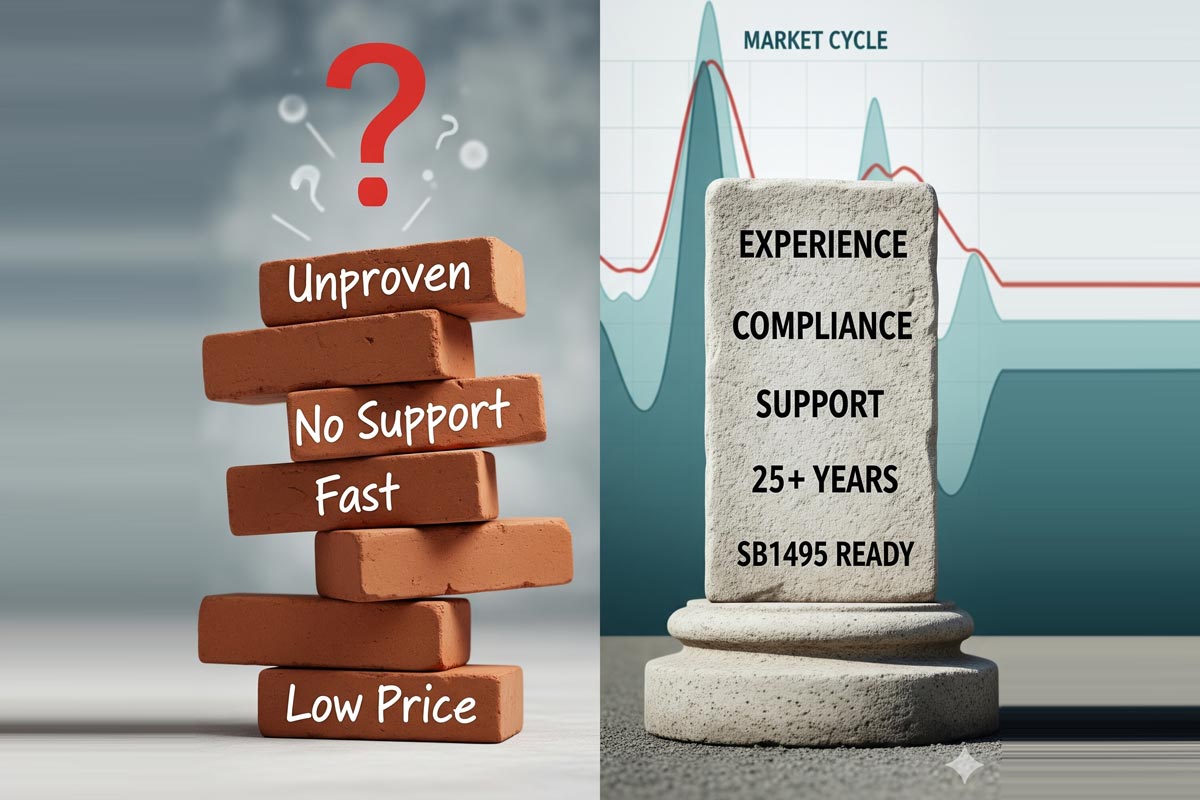
But here’s the truth most students don’t realize: your choice of real estate school can make or break that journey. Pick the wrong school, and you risk being stranded mid-course, with your investment gone and your momentum lost.
This is why stability matters. And in a market where schools come and go with every housing cycle, choosing the right partner is your first big career decision.
The Risk of Fly-By-Night Schools
The real estate education market is volatile, and many schools that launched during the COVID boom have already collapsed. With the housing slowdown and new regulations like SB1495’s Interactive Impact Bias requirement taking effect in 2024, countless websites have vanished overnight.
And when a school disappears, it’s not just their problem — it’s yours.
Students could be stranded mid-course with no way to finish.
Hard-earned credits don’t transfer to another provider.
Tuition money is gone — and so is your time.
Worst of all, your momentum toward a license and career vanishes in an instant.
The Market Context: How Real Estate Schools Rise and Fall
The business of real estate education has always mirrored the housing market itself. When homes are selling quickly and prices are climbing, interest in becoming an agent naturally spikes. That was true in the mid-1990s boom leading up to 2006, when real estate schools were filled with new students eager to ride the wave. But when the 2008 financial crisis hit and the market collapsed, many of those same schools shuttered their doors almost overnight.
We saw a similar pattern during the COVID-19 surge in 2020–2021. With people stuck at home and rethinking their careers, thousands rushed to get a real estate license. It felt like new schools were appearing online almost weekly, many with flashy websites and big promises. The barrier to entry was relatively low, and in a hot market, making quick money seemed easy.
But downturns always test the foundation of a school. When the 2023 market cooled and enrollments slowed, newer operators discovered what ADHI has known for decades: running a compliant, high-quality real estate school requires deep infrastructure, experienced staff, and the strength to withstand lean years.
Without that, thin margins and mounting compliance costs quickly push pop-up schools out of business — leaving students caught in the middle.
The Pillars of Our Resilience
At ADHI Schools, we’ve proven again and again that we’re built to last. Since 2003, we’ve not only survived market turbulence — we’ve helped thousands of students thrive through it.
Here are the pillars of our resilience:
Experience Through Every Cycle: From the Great Recession (2008–2012) to the 2023 slowdown, we’ve guided students through the toughest housing markets.
Regulatory Strength: We adapt promptly to new regulations, such as SB1495. Compliance is never an afterthought — it’s part of our DNA.
Full-Journey Support: From enrollment to exam day, our infrastructure ensures you’re supported at every step.
Proven Longevity: With nearly 25 years in business, we’re not here to make a quick profit. We’re here to launch real careers.
A Trusted Community: Thousands of working agents in California today started right where you are — with ADHI Schools.
This is the stability every aspiring real estate professional deserves.
A Safer Next Step
Your real estate career is too meaningful to gamble on a school that may not be here tomorrow. Choosing ADHI Schools means choosing security, expertise, and a clear path to your license.
|

Thinking about a career in real estate? You're not alone. The freedom, the income potential, the ability to help people make one of the most significant decisions of their lives—there's a lot to love.
Read more...
Thinking about a career in real estate? You're not alone. The freedom, the income potential, the ability to help people make one of the most significant decisions of their lives—there's a lot to love.
But here's the truth: success in real estate isn't luck, and it isn't automatic after you pass the real estate exam.
It's a professional discipline that rewards preparation, resilience, and consistent action.
A good real estate license school won't just teach you the state laws to pass your exam. It will equip you with the scripts, systems, and mindset to build a profitable business from your first day as an agent. That's the philosophy we built ADHI Schools on: rigorous pre-licensing courses, supportive learning, real-world practice, and a clear path from "student" to "producing agent."
This article is a positive, empowering guide to self-assessment. We'll explore the realities of a real estate career through a crucial question: who is truly a good fit for a license? If you see yourself in any of the archetypes below, it doesn't mean you should quit. It means you've identified a hurdle.
And hurdles are what training, coaching, and thoughtful planning are for.
The Self-Assessment: Four Archetypes (and How to Beat Them)
Each of these profiles comes with a harsh reality, followed by an encouraging reframe, and explains how a strong real estate license school—like ADHI Schools—can help you overcome it.
1) The Day-Job Dreamer
Harsh reality:
If you imagine real estate as a "no-sweat" side hustle with quick, easy money and zero impact on your evenings or weekends, the first months will be a shock. Real estate is flexible, but "flexible" isn't the same as "low-time." Showings happen when clients are available (often nights/weekends in residential real estate).
New agents win by establishing consistent lead-generation habits—such as prospecting, attending open houses, following up, writing offers, conducting inspections, obtaining price feedback, and nurturing their sphere. Those hours have to come from somewhere.
Typical signs:
You plan to "try it" with leftover time rather than schedule it.
You avoid open houses or weekend showings because they cut into leisure time.
You want commissions without committing to daily prospecting.
The reframe (and how ADHI helps):
Treat real estate as a professional sport: a flexible schedule with disciplined blocks of time. That means time-blocking and holding yourself accountable. At ADHI Schools, we teach time-blocking frameworks, how to prioritize money-making activities (such as conversations, appointments, and offers), and how to use simple daily scorecards to ensure you're on track.
What this looks like in practice:
A weekly cadence with 5–10 hours of prospecting, 2–4 open houses per month, and scheduled follow-ups.
A simple KPI mindset (e.g., "8 genuine real estate conversations per day").
Scripts and objection handlers to help your time produce appointments, not just activity.
2) The Lone Wolf
Harsh reality:
Real estate is a relationship business. You don't have to be ultra-extroverted, but you do need to build trust, follow up, and consistently show up. If you dislike networking, avoid asking for referrals, and resist collaborating with lenders, inspectors, escrow agents, and other professionals, your growth will likely stall. Even top solo producers operate inside a web of human relationships.
Typical signs:
You'd rather tinker with your website than call your past clients or open-house leads.
You skip brokerage events, team meetings, and community functions.
The idea of asking for referrals makes you uncomfortable.
The reframe (and how ADHI helps):
Treat networking as service, not self-promotion. Your role is to solve problems and reduce stress. At ADHI Schools, we use low-pressure conversation frameworks and referral-ask scripts that feel natural. We also simulate real-life situations—such as introductions, lender handoffs, and post-closing check-ins—so it's second nature when it counts.
What this looks like in practice:
A two-minute referral ask that sounds like you (not a robot).
A 30-day post-closing care plan so clients feel cared for (and refer you).
A simple "weekly relationships" checklist: 5 outreach texts, three coffee chats, one community event.
3) The Financially Fragile
Harsh reality:
Real estate income is irregular at the start. You'll have upfront costs (your licensing course , exam, and application fees, association/MLS dues, lockboxes, signs, and basic marketing), and it can take months to close your first transaction. If you need a steady paycheck immediately or you have no savings to cover several months of living expenses, the pressure can be overwhelming.
Typical signs:
No emergency fund; credit cards are already maxed out.
Dependents relying on your income with no runway.
Expectation of fast, guaranteed deals to pay the bills.
The encouraging reframe (and how ADHI helps):
Plan the launch like a business. Build a runway (ideally six months), or layer in a bright transition plan (e.g., a part-time bridge job with predictable hours) while you build your pipeline. This is precisely where your real estate license school can help beyond the test.
"This is why choosing a real estate license school that offers career guidance and business planning modules is critical. At ADHI Schools, our courses include units on financial planning for new agents so that you can create a realistic budget and runway." — Kartik Subramaniam, Founder
What this looks like in practice:
A detailed launch budget spreadsheet distinguishing essential costs (MLS, lockbox, signs, basic marketing) from optional ones (premium website, paid ads) so you don't overspend early.
A 90-Day Sprint Plan focused on high-probability, low-cost lead generation: host open houses every weekend, daily sphere-of-influence outreach, and consistent follow-up.
A short guide for finding a compatible bridge job (showing assistant, transaction coordinator, leasing consultant, or property management assistant) that provides income without conflicting with prospecting and client care.
"ADHI had us map out expenses and a realistic 90-day plan. I stopped guessing, stopped stressing, and started executing."— ADHI Schools Student.
4) The Rejection-Phobic
Harsh reality:
Even with great marketing, you will hear "no"—often. People will ghost you, choose their cousin, or decide to rent for another year. If you take rejection personally, avoid follow-up, or get derailed by the first objection, you'll struggle to keep consistent activity. Real estate rewards those who normalize rejection and stay pleasantly persistent.
Typical signs:
You dread calling back because the last person said no.
You avoid door knocking, open houses, or cold outreach.
You overthink every message, then send nothing at all.
The reframe (and how ADHI helps):
Rejection is data, not a verdict on your worth. The cure is reps with feedback. In strong real estate school programs, you'll do role-playing with scripts, objection handling, voicemail frameworks, and post-open-house follow-ups until it's muscle memory.
What this looks like in practice:
A simple follow-up cadence (Day 0, 2, 5, 10, then weekly).
Objection handlers for when the client says: "We already have an agent," "We're waiting," or "We're just looking."
Bonus Archetypes We See (And Fix)
5) The Shortcut Seeker
Harsh reality:
If you believe the real estate license itself equals clients, you'll be disappointed. The license is permission to practice—not a guarantee of success. Without daily lead measures (conversations, open houses, content that builds trust), the phone stays quiet.
Reframe with ADHI:
We emphasize execution. Yes, you'll be ready for the real estate exam and pass the test —but your training must extend into marketing, lead generation, and client experience. We provide you with starter scripts, an outline for planning your business, and a referral-first playbook, so the license becomes a revenue engine.
6) The Unstructured Self-Manager
Harsh reality:
If you need a manager to set your daily to-do list, real estate can feel disorienting.
Your results correlate with your calendar. Empty calendar = empty pipeline.
Reframe with ADHI:
We teach a weekly operating system:
Plan (Sunday 30-minute pipeline review)
Block (Prospecting first; admin later)
Execute (Daily scorecard: conversations, appointments, showings)
Reflect (Friday 15 minutes: wins, gaps, next moves)
7) The Ethics-Flexible
Harsh reality:
You're handling people's most significant assets and private data. Cutting corners, misrepresenting facts, or ignoring agency duties will end your career. Quickly.
Reframe with ADHI:
Long-term success is trust. Our courses emphasize compliance, disclosure, fiduciary duties, and how to protect clients (and your license). Ethical agents earn repeat and referral business because they tell the truth—even when it's inconvenient.
Are You Ready? Score Your Real Estate Readiness
Use this quick self-assessment to identify your strengths and areas for improvement. Answer Yes / No / I'm not sure:
Do you have at least six months of living expenses saved (or a clear, realistic transition plan)?
Will you time-block 10–15 hours per week for lead generation, open houses, and follow-up—even on some evenings/weekends?
Are you comfortable introducing yourself to new people and asking for referrals in a way that feels authentic?
Can you handle hearing "no" repeatedly without losing momentum—and keep following up politely?
Do you have a simple budget for your first year (including dues, MLS, signs, and basic marketing) and a plan to keep costs lean?
Are you willing to practice scripts and role-play until objection handling feels natural and comfortable?
Will you run your calendar like a business owner—with weekly planning, daily scorecards, and honest self-review?
Interpret your score:
If you answered **"No" or "I'm not sure" to 3 or more questions, you may need a real estate school that specializes in comprehensive career coaching and support to bridge those gaps. That's precisely the foundation ADHI Schools is built on. Our career‑focused curriculum is explicitly designed to turn those "not sures" into confident "yeses" before you even hit the field.
What Makes ADHI Schools Different (and Why It Matters)
A real estate school should prepare you for both the exam and for the work. Here's what our students value most:
Career Preparation, Not Just Test Prep: Our pre-licensing course is paired with practical training, including time-blocking, lead generation plans, open-house systems, and post-closing care.
Supportive Learning Environment: Live instruction, office hours, and study communities where you get feedback, not just lectures—authentic, supportive learning.
Role-Play and Real-World Scenarios: We practice the conversations that close the gap between "licensed" and "producing."
Business Planning Modules: Budget templates, runway planning, and "first 90 days" roadmaps so you can launch with confidence.
State Exam Prep That Works: Focused state exam prep resources and strategy so passing the real estate exam is a milestone, not a mystery.
Ethics and Compliance Emphasis: Protect clients and protect your real estate license—because long-term success is built on trust.
"I picked ADHI Schools for the exam, but I stayed for the business plan. The launch playbook and weekly rhythm made the difference." — ADHI Schools Graduate.
Bringing It All Together
So, who should not get a real estate license?
Not the person who refuses to plan their time, build relationships, save a runway, or practice resilience.
But if you recognize those risks and you're willing to do the work, none of them are deal-breakers.
Self-awareness is your edge. The right real estate license school won't ignore these hurdles—it will prepare you to clear them. That's what we do at ADHI Schools: we combine the knowledge you need to pass the test with the habits and systems you need to build a real estate business that lasts.
Ready to Move Forward—With Eyes Open and a Plan?
If this reality check has you excited about the challenge, the next step is to find a school that supports your entire journey. At ADHI Schools, we prepare you not just to pass your real estate exam, but to build a successful and sustainable career.
→ Explore our career‑focused pre‑licensing courses today. See the whole curriculum, upcoming class schedules, and discover how our supportive learning environment sets you up for real‑world success from day one.
TL;DR (for the skimmers)
Real estate is flexible, not effortless.
Your calendar, not your intentions, predicts your income.
Relationships win. Rejection is normal. Resilience is trained.
A runway + a plan beats "I'll wing it."
A great real estate school (like ADHI Schools) teaches the exam AND the business.
When you're ready to treat real estate like the professional path it is, we're prepared to train with you.
Love,
Kartik
|
You've enrolled in our real estate license school, studied diligently and successfully passed your real estate exam —congratulations! Many people mistake this license for the finished product, but it’s Read more...
You've enrolled in our real estate license school, studied diligently and successfully passed your real estate exam —congratulations! Many people mistake this license for the finished product, but it’s more accurate to think of it as the plot of land on which you will build your career. It grants you the legal right to build, but the land is currently empty - Now, it's time to build the house.
Transitioning from a newly licensed professional to a fully thriving one requires shifting from a student's mindset to that of a business owner. The reality of real estate can be challenging, but with the right skills and strategies, you can position yourself for lasting success.
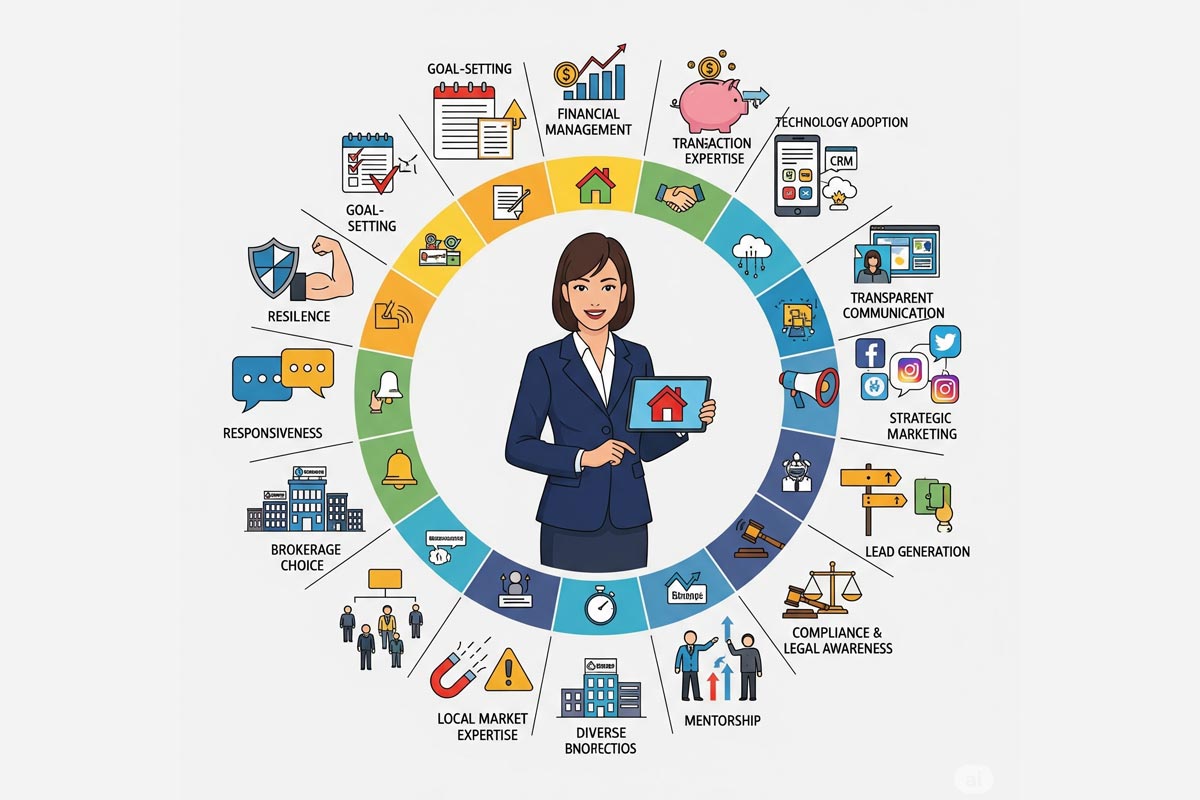
Here are 13 essential and actionable skills every new real estate agent should master.
1. Set Clear Goals and Action Plans
In a commission-only profession, you are your CEO. Without a boss setting deadlines or a guaranteed paycheck providing structure, it's easy to drift. Setting clear, measurable goals moves you from a reactive to a proactive state, giving you a roadmap and a way to hold yourself accountable. Establish specific targets for client outreach, open houses, and social media engagement, reviewing your progress regularly to make necessary adjustments.
Action Step: Utilize goal-setting tools, such as the SMART (Specific, Measurable, Achievable, Relevant, Time-bound) framework for setting goals and don’t be afraid to use technology to track your progress.
2. Build a Financial Cushion and Manage Income Wisely
Real estate commissions fluctuate dramatically, and it's not uncommon for a new agent to take 3-6 months to close their first transaction. A financial cushion is not a luxury; it's a foundational business tool that allows you to make decisions from a position of strength, not desperation. This prevents you from taking on bad clients or making poor long-term choices to get a quick commission check.
Action Step: Use budgeting tools and automate monthly deposits into a separate savings account to build your emergency fund.
3. Embrace Technology for Efficiency
As a solo agent, your time is your most valuable asset. Technology provides leverage, enabling you to automate repetitive tasks and manage more clients than would be possible manually. A good Customer Relationship Management (CRM) system acts as your digital assistant, reminding you who to call and when, while other tools can streamline your marketing, freeing you up for income-producing activities.
Action Step: Invest in free or low-cost online tutorials to master key real estate tech tools, such as your CRM and a social media scheduler.
4. Develop Emotional Resilience
Rejection is a daily reality in real estate—offers get denied, buyers change their minds, deals collapse in escrow, and potential clients choose a different agent. Resilience isn't about not feeling disappointment; it's about processing it quickly and not letting one setback derail your momentum for the entire week. Viewing each "no" as data or a learning experience is key to long-term survival and motivation.
Action Step: Regularly engage with resources—such as books, articles, or talks—that focus on building resilience and developing a growth mindset to persevere through challenges.
5. Acquire Transaction Process Expertise
Your licensing exam taught you the law, but it can’t teach you the practical flow of a deal. Actual expertise means understanding the intricate dance between lenders, appraisers, inspectors, title officers, and the opposing agent. Knowing what happens when, who is responsible for what, and how to anticipate and solve problems is what makes you an invaluable guide for your clients.
Action Step: Attend continuing education seminars and workshops, and establish relationships with experienced professionals in related fields who can provide answers to your questions.
6. Honest and Transparent Communication
Trust is the currency of real estate. Many new agents, to please, are tempted to overpromise on a home's potential sale price or understate the market's challenges. This strategy inevitably backfires. Setting realistic expectations from the beginning, even when the news is not what the client wants to hear, builds a foundation of trust and establishes your reputation as a credible, honest professional.
Action Step: Create scripts or templates for common communications, such as market updates and negotiation strategies, to ensure you are always transparent and consistent.
7. Strategic Marketing on a Limited Budget
Effective marketing isn't about having the most significant budget; it's about having the most innovative strategy. The goal is to establish your brand as a knowledgeable, trustworthy local authority. Consistently providing value—through neighborhood highlight videos, blog posts on the buying process, or community event updates—attracts clients to you, shifting the dynamic from chasing leads to creating inbound opportunities.
Action Step: Plan your marketing with a quarterly content calendar and track your results using analytics tools to see what resonates with your audience.
8. Master Quick Responsiveness
In a world of on-demand everything, clients expect prompt communication. A quick response, even if it's to say, "I've received your message and will get back to you with details this afternoon," signals that you are professional, attentive, and that they are a priority. In a competitive situation, your responsiveness can be the single factor that makes a client choose you over another agent.
Action Step: Enable smartphone notifications for business inquiries and use apps like WhatsApp Business or Slack for efficient client interactions.
9. Understand Your Local Market Deeply
Online portals can provide anyone with data; your value lies in offering insight. Deep market knowledge means understanding the nuances that algorithms can't—why one side of the street is more valuable than the other, the reputation of local builders, upcoming zoning changes, or the traffic patterns around a specific school. This is the irreplaceable expertise that clients are paying for.
Action Step: Subscribe to local news alerts, regularly review new MLS listings and recent sales, and attend local open houses to deepen your firsthand expertise.
10. Choose the Right Brokerage
Your choice of brokerage is one of the most profound decisions for your career trajectory. This is your foundational support system. A brokerage isn't just a name on your sign; it dictates your training, access to mentorship, commission structure, and the overall culture you work in. Some larger brokerages offer brand recognition and extensive tools, while smaller boutique firms may offer more hands-on guidance.
Action Step: Conduct informational interviews with managers at multiple brokerages to evaluate their value proposition and identify the best fit for your career goals.
11. Master Lead Generation Techniques Lead generation is the engine of your business and the most direct income-producing activity you can perform. Successful agents do not passively wait for business to come to them; they build and work systems to make the phone ring. Whether you focus on your existing network (SOI), a specific neighborhood (geographic farming), or online ads, dedicating non-negotiable time to prospecting is essential.
Action Step: Schedule regular lead-generation activities into your calendar, like weekly SOI outreach calls, monthly neighborhood mailings, or regular participation in local community events.
12. Navigate Compliance and Legal Pitfalls
A real estate license gives you the power to handle what is often someone's most significant financial asset. That power comes with immense responsibility. A single mistake on a contract, a missed disclosure, or a violation of fair housing laws can result in a lawsuit that ends your career and damages your reputation. Meticulous attention to legal detail isn't optional; it's the bedrock of a professional practice.
Action Step: Regularly review your state's real estate regulations, participate in legal compliance workshops, and consult with your broker or an attorney for complex transactions as needed.
13. Find a Mentor or Join a Team
Real estate can be an isolating "every person for themselves" business, but it doesn't have to be. Joining a team or finding a mentor accelerates your learning curve exponentially. It allows you to learn from the successes and mistakes of others, provides a sounding board for difficult situations, and offers a collaborative environment to help you close your first deals with confidence.
Action Step: Actively seek mentorship through your brokerage or attend local real estate association events to connect with experienced professionals who are willing to share their knowledge.
By mastering these 13 actionable skills and strategies, you'll be far better equipped to overcome the inevitable challenges, build a sustainable and profitable business, and truly thrive as a real estate professional.
Love,
Kartik
|

A New Chapter After the Force
After years of dedication to the beat, the badge, and the public, hanging up the duty belt for the last time is a monumental transition. The structure is gone, but the Read more...
A New Chapter After the Force
After years of dedication to the beat, the badge, and the public, hanging up the duty belt for the last time is a monumental transition. The structure is gone, but the drive to serve and protect remains. For a growing number of California's retired police officers, that drive is finding a powerful new outlet: real estate.
You've spent decades responding to calls, building cases, and keeping communities safe. Now, as you face retirement, the thought of endless fishing trips or becoming a mall security guard doesn't exactly light a fire in your belly. You want something more—a second career that offers both financial rewards and that familiar sense of purpose that comes from helping people during life's pivotal moments.
Real estate isn't just another retirement gig—it's a natural evolution of your service. The skills you've honed on the force—reading people, negotiating under pressure, knowing every street and alley in your jurisdiction—these aren't just transferable to real estate. They're your secret weapons in an industry crying out for professionals with integrity and street smarts.
I wanted to write an article as your mission briefing to transition from law enforcement to real estate success, starting with your first objective: obtaining your real estate license.
Why Retired Police Officers Excel in Real Estate: Your Tactical Advantages
Your police career has given you a skill set that most real estate newcomers would pay dearly to develop. Let's break down your tactical advantages in this new field.
Unmatched Community Knowledge
You didn't just patrol neighborhoods—you know their DNA. You know which streets flood during heavy rain, where the best coffee shops are for client meetings, and which areas are experiencing real transformation versus just hype.
In the Field: While other agents are pulling up crime statistics on their laptops, you're telling clients, "This neighborhood has really turned around since they put in that community center in 2018. I worked with residents to start their neighborhood watch program." When a client asks about safety, you don't just quote statistics—you provide the kind of nuanced, street-level intelligence that builds immediate trust and confidence.
Built-in Trust and Integrity
Your badge meant something. It represented integrity, protection, and service. That reputation follows you into real estate, where trust is the currency that closes deals.
In the Field: When you hand a client your business card and they see your law enforcement background, their guard drops. They know you've been background-checked, polygraphed, and held to the highest standards. While other agents struggle to establish credibility, your service record speaks volumes. Clients sleep better knowing their agent once took an oath to protect and serve.
Expert Negotiation and Crisis Management
Every domestic dispute you've mediated, every standoff you've de-escalated, every hostile interview you've conducted—it's all been training for real estate negotiations.
In the Field: When a home inspection reveals foundation issues and your buyer wants to walk, you employ the same calm presence you used during high-stress calls. "Let's take a breath and look at our options," you say, channeling years of crisis management. You know how to keep all parties talking when emotions run high. That seller threatening to kill the deal over a $2,000 repair credit? You've handled far worse with far higher stakes.
Investigation and Attention to Detail
Your investigative skills translate directly to due diligence in real estate. You've been trained to spot what others miss, ask the right questions, and dig deeper when something doesn't add up.
In the Field: While reviewing disclosures, you notice inconsistencies other agents might miss. That "minor water damage" mentioned in passing? Your investigative instincts kick in. You know to check permit histories and point your buyer in the direction to verify claims. Your clients benefit from the same thoroughness you brought to case files.
A Commitment to Service
Real estate, at its core, is about protecting people's interests during one of the biggest financial decisions of their lives. Sound familiar? You're not changing careers—you're expanding your definition of "protect and serve."
In the Field: When you help a young family find a safe neighborhood with good schools, you're still protecting. When you guide seniors through downsizing so they can age in place comfortably, you're still serving. The uniform is gone, but the mission continues.
Discipline and Work Ethic
The self-discipline that got you through the academy, helped you make rank, and kept you sharp through rotating shifts? That's exactly what separates successful agents from those who wash out.
In the Field: While other new agents sleep in because "they don't have showings until noon," you're up at 0600 prospecting, returning calls, and preparing market analyses. You understand that in a commission-based business, discipline equals dollars. No sergeant is watching, but your internal standards haven't changed.
Your New Mission Briefing: How to Get Your California Real Estate License
Consider this your ops plan for transitioning to real estate.
Step 1: Meet the Basic Requirements (Background Check)
Before considering enrolling in a real estate license school, you need to clear these basic requirements:
Age: 18 or older (check)
Residency: California residency not required
Background Disclosure: The Department of Real Estate in California requires background clearance.
Step 2: Complete Your Academy Training (Pre-License Education)
California mandates 135 hours of training from a DRE-approved institution like ADHI Schools. Think of it as a mini-academy focused on real estate. You'll complete three courses:
Real Estate Principles (45 hours) - Your foundation course
Real Estate Practice (45 hours) - Field training manual
One Elective (45 hours) - Choose from specialties like Real Estate Finance or Legal Aspects of Real Estate at ADHI Schools
After years of roll call training, policy updates, and continuing education, this structured learning will feel familiar. Many retired officers report that the discipline of regular study actually helps with the retirement transition.
Step 3: Pass Your License Exam
The California Real Estate Salesperson Exam consists of 150 multiple-choice questions. Topics include:
Property ownership and land use controls
Agency law and fiduciary duties
Valuation and market analysis
Financing and lending practices
Transfer of property and escrow
Practice of real estate and mandated disclosures
You've passed promotional exams, POST certifications, and countless training assessments. This is just another test—one where proper preparation from a quality real estate license school makes all the difference.
Step 4: Find Your New Department (Sponsoring Broker)
Unlike your independent authority as a sworn officer, new agents must affiliate with a licensed broker. Think of it as choosing which detective bureau to join—you want one that values your experience and provides solid backup.
Choosing Your New Academy: Selecting the Right Real Estate License School
Picking the right real estate license school is like choosing between agencies—the quality of your training directly impacts your success in the field.
DRE-Approved Schools (Legitimate Academies Only)
Just as you'd only attend a POST-certified academy, only consider schools approved by the California Department of Real Estate. No shortcuts, no diploma mills.
Flexible Learning Options (Fitting Your Transition)
Online courses: Perfect for self-directed learners who want to move at their own pace
Night/weekend classes: Ideal if you're working part-time security or consulting
Comprehensive Exam Prep (Range Qualification)
Look for schools offering:
Practice exams that mirror the real test
Comprehensive study materials
Instructor support when you're struggling with concepts like 'easements' or 'fiduciary duties'
Instructor Experience (Your Field Training Officer)
Don't just learn the law; learn the business. Seek out a real estate license school where instructors are or have been active, successful agents. They can provide the "street smarts" that aren't in the textbook—how to actually convert leads, handle difficult clients, and navigate the real-world challenges of building a successful practice.
Job Placement & Brokerage Connections (Your First Assignment)
Top-tier schools like ADHI Schools have relationships with local brokerages. They often provide resources to help you find a sponsoring broker that aligns with your values—a crucial step for launching your career. Some schools even have dedicated placement specialists who understand the unique value retired officers bring to real estate.
Ready to begin your new mission? Your first objective is clear: enroll in ADHI Schools and begin your transition to real estate success.
.reg-now{
text-align: center !important;
border-radius: 50px !important;
margin-top: 40px !important;
margin-bottom: 40px !important;
}
@media (max-width: 428px){
.reg-now{
width: 100% !important;
display: flex;
justify-content: center;
}
}
ENROLL NOW
The Payoff: Financial Freedom and a Flexible Lifestyle
Your law enforcement career provided stability and a pension. A career in real estate offers something different but equally powerful: autonomy and uncapped potential.
Unlimited Earning Potential
In real estate, there's no salary cap or pay grade. Your income is a direct result of your effort and discipline—a concept you already live by. After decades of rigid pay scales where a 3% raise was cause for celebration, you can now earn what you're truly worth. You can earn a modest supplemental income to enhance your pension or build a six-figure business. The choice—and the effort—is yours.
Be Your Own Boss
While you work under a broker, you are essentially an independent contractor. You set your own hours. If you want to take Tuesday mornings off to go fishing or attend a grandchild's school event, you can. No more shift bids, no more denied vacation requests, no more mandatory overtime ruining weekend plans. This flexibility is one of the most sought-after benefits for those transitioning from a rigid, shift-based career.
Build a Lasting Business
You're not just earning a commission; you're building a personal brand and a business asset that can grow over time. Every client you serve becomes part of your network and a potential source of future referrals. Unlike a job you leave behind at retirement, your real estate business can continue generating income as long as you choose to work—or even be passed on to family members.
Your Next Chapter of Service Awaits
Your career protecting the public has prepared you for this moment. The skills are there. The integrity is proven. The drive to serve is ingrained in your DNA. A career in real estate isn't a departure from your life's work—it's a continuation of it in a new uniform.
The transition from badge to business card might seem daunting, but thousands of retired California officers have already made this journey successfully. They're earning more than they ever did in uniform, working when they want to work, and finding deep satisfaction in helping families achieve their dreams of homeownership.
Your next mission is clear. Take that first decisive step. Enroll in ADHI Schools, begin your training, and get your real estate license. A new, rewarding, and prosperous chapter is waiting for you to write it.
The badge may be retired, but your commitment to service is just beginning a new chapter. Welcome to your next beat—California real estate.
Love,
Kartik
|