

There is a massive gap between the "Instagram version" of California real estate and the actual mechanics of the business. On screen, the job looks like high-end luxury tours and effortless commission checks. In reality, being a real estate agent is a rigorous exercise in small business management, psychological resilience, and relentless lead generation.
If you are researching this career, you probably aren’t looking for a sales pitch. You are looking for a framework to decide if this career is for you—not the "idea" of the career, but the actual day-to-day work.
This guide provides a clear-eyed assessment of the industry. We will look at the actual daily schedule, a scorecard to measure your personal fit, and the financial reality of starting out in the Golden State.
Becoming a real estate agent in California is a high-potential path for those who are disciplined self-starters, have a financial cushion, and possess a high tolerance for rejection. While the income ceiling is high due to California’s property values, it is not a "steady job." If you want a steady paycheck, this is the wrong job. It is, however, a fit for those who can navigate the first several months without a closing to build a long-term business.
Your next step: Use the scorecard below and run the 14-day test to help make a decision.
Most new agents fail because they reverse the ratio: they spend 90% of their time studying houses (or other non-lead-generating activities) and 10% of their time prospecting. This career operates on a simple, unforgiving law: no pipeline = no income.
The agents who build a career understand this and systemize lead generation, protecting daily time for outreach above all else.
Note: This is a typical structure, not a promise—some days blow up due to an emergency or a sudden listing opportunity.
Kartik’s Perspective: In real estate, your value is often tested during time-sensitive windows of a transaction—like during a contingency period. I’ve watched agents jeopardize significant deals by being unavailable when a pressing issue arose. It might not always be a 9 PM call, but if a client discovers a major repair issue and needs guidance, or an emotional buyer panics after an appraisal gap, your responsiveness can be what saves the transaction. You aren’t just selling houses; you’re managing high-stakes, time-sensitive problems. If you’re not reachable when critical questions come up, trust can erode and deals can fall apart.
Be honest. Score each statement: 0 (No), 1 (Somewhat), 2 (Yes).
If you won't do outreach, don't do real estate. You are starting a lead-generation business. If the idea of asking for business makes you recoil and you are unwilling to push past it, think carefully before committing to a full-time real estate career.
New agents often suffer from "pipeline lag." You might find a client in month two, get an offer accepted in month three, and close in month four.
Kartik’s War Story: An agent once worked for four months on a $1.2M deal. It died at the finish line and because the agent had already mentally "spent" the money, they were devastated. In California, the deal isn't done until recorded and closed.
Before you earn a commission, you must pay to "exist" in the industry:
For a granular look at take-home pay after splits and taxes, read: How Much Do New Real Estate Agents Make in California?

Licensing is just the entry fee. The real estate exam requires significant memorization of CA-specific law; many people fail because they underestimate the academic prep.
For the week-by-week specifics on getting licensed, see: The How Long Does It Take to Start a Real Estate Career?
To see if you match the psychological profile of a top producer, read: Personality Traits of Successful California Agents.
Starting part-time is possible, but it requires extreme discipline.
For strategies to bridge the gap, see: Should You Start Real Estate Part Time in CA?.
If you have completed the scorecard and the experiments, and you still feel the "pull," it’s time to move to the execution phase.
Your next step is to build a grounded, step-by-step plan. Here is how to Start a Real Estate Career in California.
Disclaimer: This article is for informational and educational purposes only. It is not legal, financial, or tax advice. Consult the appropriate professionals for your situation.
How much money should I save before starting real estate?
We recommend having 3 to 6 months of living expenses saved. Full-time agents often need closer to 6 to 9 months of runway to account for the "pipeline lag" before their first commission check clears.
Is the California real estate exam hard?
With roughly half of candidates failing on their first attempt, it can be a significant hurdle. It is a test of your knowledge of state-specific law and ethics, not your sales ability.
What’s the fastest way to get your first client in CA?
Focus on your "Sphere of Influence"—people who already know and trust you. For the full roadmap, see our guide on how to Start a Real Estate Career in California.
Why do so many agents quit within the first two years?
Attrition is high because many underestimate the "cost of existence" fees and the emotional toll of inconsistent income and rejection during the first 12 months.
Do I need a college degree to be an agent in CA?
No. You must be 18, legally present in the US, and complete 135 hours of approved education.

Founder, Adhi Schools
Kartik Subramaniam is the Founder and CEO of ADHI Real Estate Schools, a leader in real estate education throughout California. Holding a degree from Cal Poly University, Subramaniam brings a wealth of experience in real estate sales, property management, and investment transactions. He is the author of nine books on real estate and countless real estate articles. With a track record of successfully completing hundreds of real estate transactions, he has equipped countless professionals to thrive in the industry.

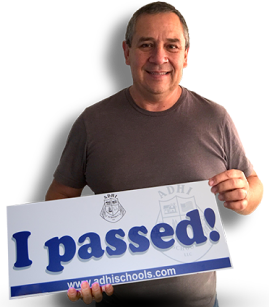
"Hey guys,
I took the exam today and passed!!!!
It only took me one try which was one of my goals. I took the online
classes and follow your suggestions so I took the crash course,
used the crash course app a lot, took 7 mock tests and went
confident to present the exam. Thank you for the great job you are
doing, you guys are awesome!!!! May God continue to bless you!"
Willie V.