
Jargon Paralysis Is Real
Every new agent fears the "Smartest in the Room"—that prospective buyer who walks into an open house with a question that rattles the rookie.
Their favorite weapon?
Technical Read more...
Jargon Paralysis Is Real
Every new agent fears the "Smartest in the Room"—that prospective buyer who walks into an open house with a question that rattles the rookie.
Their favorite weapon?
Technical jargon used in the wrong place. Imagine a visitor asking you about the status of contingencies and EMD increases before they’ve even toured the master bedroom.
The catch? There are no contingencies yet because there is no contract.
The truth is, terminology isn’t a measure of your intelligence; it’s simply a product of exposure, repetition, and usage. After 20+ years of coaching California agents at ADHI Schools, I’ve seen a consistent pattern: agents don’t fail because they lack ambition; they fail because they lack a system. To succeed, you must develop the Real Estate Agent Skills California agents need to handle contracts and conversations with poise. Mastering the language is the first step toward professional authority.
The Fastest Way to Learn Terms: “Definition → Context → Script”
Rote memorization is for passing the exam. Usage is for building a career. To master real estate terminology fast, stop reading a dry glossary and start using this 3-step framework:
Definition (Simple): What does it mean in plain English?
Context (Real Life): Where does this actually show up in a transaction?
Script (The "Say It Out Loud" Test): How do you explain it to a human being?
The 10-Second Rule
If you can’t explain a term in 10 seconds to a non-agent, you don’t “know” it yet. Your job isn’t to sound smart; your job is to help your clients understand.
The “Minimum Viable Vocabulary” (The 80/20 List)
You need to master the 20% of real estate vocabulary for beginners that drives 80% of real agent conversations. Focus on these clusters first:
1. Offers & Negotiation
Counteroffer: A rejection of the original offer with new proposed terms.
Liquidated Damages: A pre-agreed cap on how much of the buyer’s deposit the seller may retain if the buyer defaults.
Escalation Clause: A tool used in multiple-offer situations to automatically outbid competitors.
Client-safe sentence: : “Liquidated damages limit the seller’s claim on your deposit, even if a dispute arises, providing a layer of protection for both parties.”
2. Money & Financing
Pre-approval vs. Pre-qualification: Pre-approval is a verified commitment; pre-qual is often just a surface-level estimate.
Earnest Money Deposit (EMD): The "good faith" money a buyer puts down.
Points: Fees paid to the lender to "buy down" the interest rate. One point is one percent of the loan amount.
Client-safe sentence: “The earnest money deposit is your way of showing the seller you have skin in the game while we perform our due diligence.”
3. Escrow & Title (The California Reality)
In California, you’ll hear the phrase “opened escrow” constantly. In most California transactions, escrow, title, and recording are tightly sequenced, which is why agents who misuse these terms accidentally create false expectations around closing dates.
Escrow: A party holding funds and documents.
Preliminary Title Report: A report showing ownership history and liens.
Vesting: How the buyer legally holds ownership.
Client-safe sentence: “Escrow is the process that coordinates the paperwork and money until everything is ready to record with the county.”
4. Property & Valuation
Comps (Comparables): Recently sold homes used to determine value.
CMA: The report you create using those comps.
Appraisal: An official valuation required by the lender.
Client-safe sentence: “We look at 'comps'—homes similar to yours that sold recently—to ensure we're pricing your home to attract the best offers.”
Use-Case Learning: Stop Studying Terms Alone
Context is the ultimate teacher. If you want to learn the essential skills every new California agent must master, stop looking at terms in a vacuum.
The “Reading a Listing” Method: Pull terms from MLS remarks. If you see "as-is" or "probate," script an explanation for them immediately.
The “Offer Review” Method: Terms like "liquidated damages" appear in every negotiation. Practice explaining them before you ever open a contract with a client.
The “Escrow Timeline” Method: Map out a 30-day window. Which terms appear in Week 1 vs. Week 4?
Rapid Memorization Tools (No Corny Stuff)
Use these high-performance tactics to build your confidence as a new agent:
Digital Flashcards: Create your own deck using your "Definition → Context → Script" format.
The “Teach It Back” Method: Explain "Dual Agency" to a friend. If they look confused, your understanding isn't sharp enough.
“Term of the Day” Micro-habit: Pick one term from this real estate terms cheat sheet and use it in a conversation today.
The 7-Day Terminology Sprint
Day
Task
Day 1
Master 5 "Offer" terms + write scripts for each.
Day 2
Call a lender and ask them to explain "Points" and "Rate Locks."
Day 3
Read a full California Residential Purchase Agreement (RPA). Highlight unknowns.
Day 4
Focus on Escrow. Watch a video on the CA escrow process.
Day 5
"Teach it Back" day. Explain 10 terms to a non-agent.
Day 6
Practice the "Common Mistakes" section below. Say the fixes out loud.
Day 7
Review your personal glossary and add 3 new terms from local MLS listings.
Scripts: Sound Competent Without Faking It
Mastering the language is a core part of the communication skills that separate top agents from the rest.
When asked a definition: “The short version is [Definition]. The practical impact for you is [Context].”
When explaining a contract point: “Here is where that shows up in the contract. It’s a safeguard for your deposit.”
When you need to verify: “That’s an excellent technical question. Let me verify the latest escrow guidelines so I give you the most accurate answer.”
Common Terminology Mistakes New Agents Make
Even prepared agents trip up. High emotional intelligence for real estate agents means knowing when to slow down and clarify.
"Pre-qualified" vs. "Pre-approved": Never tell a seller your buyer is "pre-approved" if they only have a "pre-qual." It kills your credibility when the lender's deep dive finds an issue.
Misusing "Contingency": Don't say "the house is in contingency." Say "the contract is contingent upon [Inspection/Appraisal]."
Over-explaining: Don't give a 10-minute lecture. If they understand the term, move to the next step.
Master the Language, Master the Career
Terminology is the foundation of your professional house. Once you learn real estate terms quickly, you stop worrying about "sounding like a newbie" and start focusing on what matters: your clients.
FAQ
What are the most common real estate terms for new agents?
The most common terms revolve around the "Big Three": Financing (Pre-approval, EMD), Negotiation (Contingencies, Counters), and Closing (Escrow, Title).
How do I learn real estate terms fast?
Use the "Definition → Context → Script" method. Don't just memorize what a word means; practice how you will explain it to a client in 10 seconds or less.
What does ‘opening escrow’ mean in California?
In California, opening escrow means a neutral third party has received the signed purchase agreement and the buyer’s initial deposit, officially starting the closing process.
Pre-approval vs. pre-qualification—what’s the difference?
A pre-qualification is a surface-level estimate of what you might afford. A pre-approval is a formal commitment from a lender after they have verified your income, credit, and assets.
|
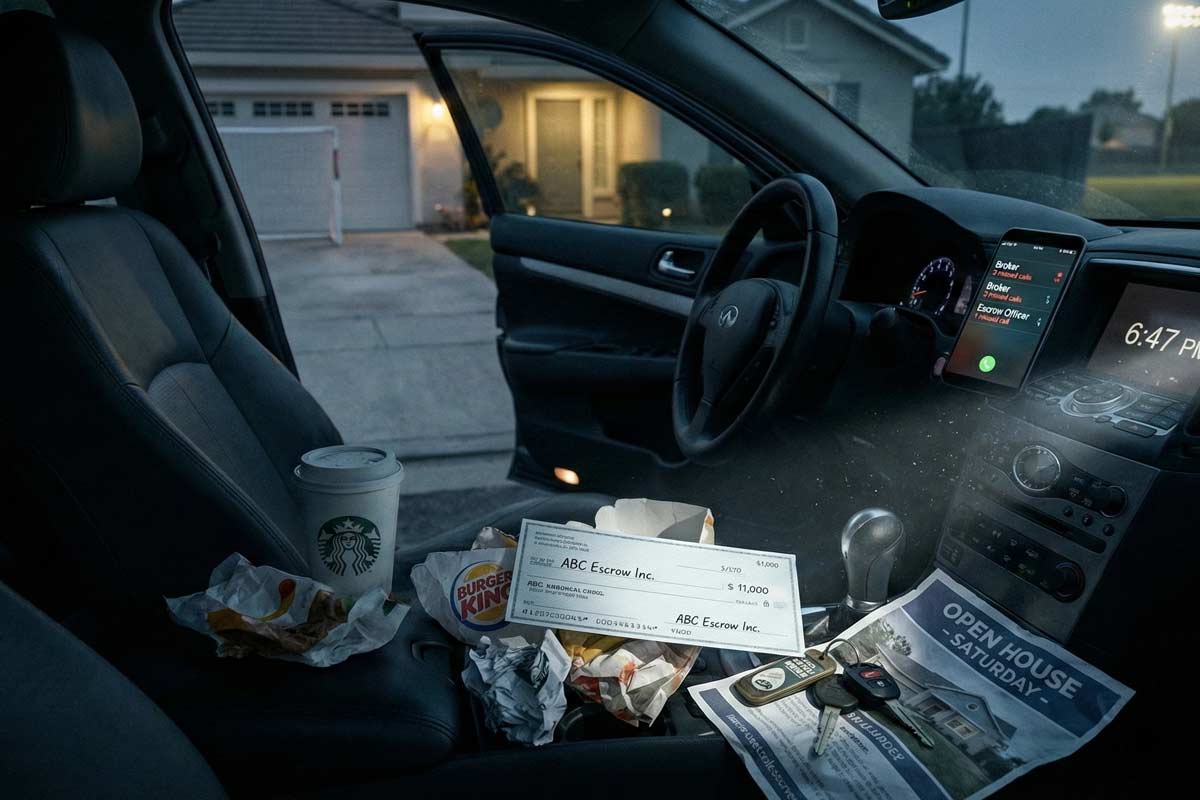
A $10,000 deposit from a client sits in your center console. You’re headed to a listing appointment, then a kid's soccer game, and you figure you’ll drop the check at the escrow office tomorrow morning. Read more...
A $10,000 deposit from a client sits in your center console. You’re headed to a listing appointment, then a kid's soccer game, and you figure you’ll drop the check at the escrow office tomorrow morning. It’s just 12 hours, right?
Many trust fund cases begin with a dispute—a deal falls apart, a buyer wants their EMD back, or an escrow officer denies receiving a check on time. When the finger-pointing starts, the DRE looks at the custody trail, not your "intent."
Do this now: In modern times, it’s true that agents are less likely to take checks directly, remember if you have client funds in your possession, call the escrow officer immediately to confirm their intake hours, document the receipt in the transaction file (send a timestamped email to escrow and your broker confirming you have it), and deliver the funds today.
Trust Fund Handling: The 2-Minute Summary
The Destination: Place funds in a neutral escrow depository or the broker’s trust account according to legally imposed timeframes.
The Risk Window: Brokers treat custody as starting the second you take possession of client money.
The Safest Practice: Maintain consistent, high-standard documentation for every cent received.
The Top Risks: Commingling and Conversion are the primary causes of disciplinary actions.
What Actually Counts as “Trust Funds”?
The most common trust funds agents handle are Earnest Money Deposits (EMD), Rents, and Security Deposits. While other items like advance fees can technically be trust funds, treat these as edge cases—never touch them without the broker’s written instruction.
From an operational standpoint, your safest practice is to maintain robust documentation across all price points. If a DRE auditor sees a gap in a small transaction, they can infer there are systemic failures in your system.
Where Trust Funds Go in a Clean File
Operationally, there are two standard paths used in California real estate to handle client money.
Neutral Escrow Depository: The safest and most common path. You deliver funds directly to the escrow company named in the contract.
Broker’s Trust Account: A specifically designated account maintained by the broker, titled as a trust account.
The 4 Violations That Actually Get People Disciplined
The DRE is surgical about auditing money. To audit-proof your career, you must understand the concrete actions that trigger an investigation.
1. Commingling (Mixing Funds)
Audit Trigger: An auditor finds client funds deposited into a broker’s operating account or an agent’s personal account.
Hard Control: Safest practice: All trust fund checks go unendorsed directly to escrow or the broker’s trust account.
Refuse physical cash: Direct the client to obtain a cashier's check instead.
Depository compliance: If your broker forbids mobile deposit (many do), deliver the physical instrument directly to the designated depository.
2. Conversion (Using Funds)
Audit Trigger: A trust account balance drops below the total amount owed to all beneficiaries, often discovered after a client complaint.
Hard Control: Never "borrow": : Never use a deposit for unauthorized purposes, even if you plan to reimburse it later. Totally illegal.
Build a "defense file": Create documentation in real time (not after the fact) that explains every dollar with matching receipts and the trust account should be reconciled monthly.
3. Failure to Account (Sloppy Records)
Audit Trigger: A broker or agent cannot provide a clear paper trail for a specific deposit during a routine file review.
Hard Control: Retain proof: Keep copies of every deposit confirmation, receipt, or proof of delivery.
Cross-reference: Identify every deposit with the specific property address and client name according to DRE rules.
4. Delay / Failure to Deposit
Audit Trigger: An auditor cross-references the date on the EMD check with the date on the Escrow Receipt.
Hard Control: Timestamped communication: Document the moment you receive funds.
Exposure limit: If the timeline exceeds 3 business days, your exposure spikes.
For more on how the state monitors these audit trails, see our guide on what the California DRE actually enforces.
The Clean Trust-Fund Handling Sequence
Follow this sequence to ensure your file is defensible from the moment you take custody:
Verify Payee: Confirm the payee is the correct legal entity before you accept custody.
Secure Receipt: Document receipt of check.
No Endorsement: Never sign the back of a client's deposit check.
Approved Custody: Do not hand checks to unapproved third parties (unlicensed assistants, TCs, etc.).
Physical Storage: Store checks in a locked, designated place in your office. Never leave trust funds in your car.
Deliver & Confirm: Deliver the funds same day whenever possible and obtain a signed receipt.
Chain-of-Custody Email: Send the timestamped email to your broker and escrow. This is a core professional standard in our California Real Estate Laws & Compliance Guide.
FAQ: High-Intent Questions
Can I hold the deposit check overnight?" Generally, yes, but the risk of loss or theft makes this a failure in most brokerage policies. Deliver it immediately.
Does my Transaction Coordinator (TC) count as me?" Yes. Delegation does not transfer responsibility. If your TC or assistant mishandles a check, the DRE holds you and your broker accountable for the lack of supervision.
What if the buyer gives me the check on a Friday night?" Document the receipt Friday night, store the check in a locked location (not your car), and deliver it per your broker's Monday morning intake process.
What about wire instructions and wire fraud?" Always verify wire instructions via a phone call to a known, verified number. Never accept last-minute changes via email.
The Clean File Standard
Trust fund handling is about creating a defensible file. By following these hard controls and maintaining a strict chain of custody, you ensure that even a surprise investigation results in a clean file. Understanding these operational rules is the first step in avoiding common DRE violations and how to avoid them.
For more on state requirements, return to our California Real Estate Laws & Compliance Guide.
Disclaimer: This article provides general best practices and does not constitute legal advice. Always confirm your broker’s written policy.
|

An expired real estate license is a total freeze on your ability to earn commissions.
If your license isn’t active, you can’t represent clients—period.
The goal of this guide is to move you Read more...
An expired real estate license is a total freeze on your ability to earn commissions.
If your license isn’t active, you can’t represent clients—period.
The goal of this guide is to move you from "almost expired" to "renewed" with the cleanest submission possible. This is your operational roadmap.
Before You Hit Submit: The 4 Gatekeepers
Do not start your application for license renewal on eLicensing until these four things are true. Most renewal delays happen because agents submit before their records or documents are actually ready.
Confirm Your Eligibility Window: The DRE opens renewal only within an eligible window (typically 90 days before expiration). The eLicensing portal is the source of truth—if the "Renew" option isn't available in your profile, you aren't eligible to submit yet. Keep in mind that you can complete the CE courses anytime in the four years preceding expiration, but the application can’t be submitted until at least 90 days prior to expiration.
CE Proof in Hand: Have your Continuing Education (CE) completion certificates ready. You must verify that the provider numbers, course identifiers, and completion dates match exactly what you will enter. When you take the courses through ADHI Schools, the course completion certificates will start with 6404 for each CE course. For a full list of required courses, refer to our Checklist for Renewing a California Real Estate License.
Record Alignment: Ensure your legal name and contact details on file match your current identification. Even small mismatches (name formatting, address changes, or a stale email) can slow the file and trigger a manual review.
Broker Readiness (Salespersons Only): Confirm your broker or office manager knows they must approve the renewal inside their own portal. Your application is not considered "complete" by the DRE until your broker takes this step.
At-a-Glance Submission Checklist
✅ Eligible window visible in eLicensing
✅ CE completion certificates (PDFs) open on screen
✅ Name and contact details match your DRE record
✅ Salespersons: Broker notified and ready to approve
Takeaway: If any of these are off, fix them first. Submitting incorrect data is the fastest way to get your license stuck in the DRE’s manual review pile. See our guide on California Renewal Mistakes to avoid common "stuck points."
The Clean Submission Sequence
Step 1: Gather Your Renewal Packet
Organize these inputs before opening the eLicensing portal:
Your CA license number: Use the number exactly as shown in your DRE profile.
CE Certificates: Specifically the provider numbers and course identifiers exactly as shown on your certificates.
Payment Method: A valid credit or debit card. (To plan your budget, see How Much Does It Cost to Renew a CA Real Estate License?).
Broker Info (Salespersons): Your responsible broker’s license number and email.
Step 2: Choose Your Channel
Online (eLicensing): The standard path. Provides the fastest processing and immediate confirmation.
Mail Submission: Use only when the portal requires supporting documentation or your situation is not supported online. If you mail it, use a trackable service (USPS Tracking, FedEx, or equivalent).
Step 3: The Portal Walkthrough
Access: Log into eLicensing.
Data Entry: Do not retype from memory. Copy the identifiers and provider numbers directly from your PDF certificates. Even a minor typo in a course ID can stall verification and trigger a deficiency or manual review.
Validation: Review the summary page carefully before clicking through to payment.
Salesperson Alert: Your renewal is NOT complete until your broker signs in to their own portal and approves your application. Confirm with your broker or office manager that this step is finished immediately after you submit.
Step 4: Payment and Recovery
The DRE portal can be temperamental. To avoid double charges:
Click "Submit" only once.
If the screen freezes, wait a couple of minutes before refreshing.
Recovery Step: If you are unsure if it went through, log out, log back in, and check for a confirmation or receipt before attempting a second payment.
Step 5: Your Paper Trail (Non-Negotiable)
Portals glitch and emails disappear. Your paper trail is your insurance policy if there’s ever a question about what you submitted and when.
Screenshot the final confirmation page with the transaction ID.
Download the PDF summary of the application you just filed.
Archive the email receipt. You may need these while waiting for the record to update. See How Long Does It Take to Process a CA Renewal? for typical wait times.
What Happens After You Submit
Tracking Status: Use eLicensing as your primary status tracker to see if the application is "Pending" or "Processed."
Downstream Confirmation: Use the Public License Lookup as the final confirmation once the record officially updates with your new expiration date.
Your goal state is a "renewed/processed" status in eLicensing and an updated expiration date on the public lookup.
When to Escalate
If you are >14 days from expiration: Check eLicensing every 48 hours. It is normal for the update to take a week or more.
If you are
|

Your hand hovers over the dial. The script is pulled up on your screen, but the words feel unnatural and obvious at the same time.
In your head, you already sound like a telemarketer.
You’re terrified Read more...
Your hand hovers over the dial. The script is pulled up on your screen, but the words feel unnatural and obvious at the same time.
In your head, you already sound like a telemarketer.
You’re terrified of blanking mid-sentence or, worse, getting hit with a question that knocks you off your path.
Here is the field-tested truth:
Top-producing agents aren't "naturals."
They’re just prepared.
Whether you are working a buyer lead, a social media inquiry, or a guest at an open house, scripts are your foundation. This isn't about memorization; it's about building the muscle memory required to stop worrying about your next word and start listening to the client’s needs.
The Core Thesis: Scripts aren't lines to memorize. They are reps to build automaticity. You are training your brain to handle the structure of a deal so your mind is free to think and lead.
The 3-Level Progression: From Memorization to Mastery
In my 20+ years coaching California agents, I’ve seen thousands try to "wing it." They fail because they have no floor. Use this ladder to build your skills.
Level 1: Memorize the FRAME (The "GPS" of the Call)
Most agents fail because they try to memorize a script word-for-word. The moment a prospect goes off-script, the agent’s brain reboots.
The Goal: Know the structural milestones of the interaction.
The Drill: Summarize your script into three "anchor" points.
Example Frame (Universal Buyer Lead):
Connection: "I saw you were looking at the Main Street property—what was it about that home that caught your eye?"
Motivation: "Are you looking for something with that specific layout, or just that neighborhood?"
The Ask: "I’m seeing a few others in that pocket with similar features; would you like to see those this weekend?"
Level 2: Drill for Fluency (Diagnostic Reps)
Note: These characters are diagnostic tools to help you find your "natural" baseline; they are not your final delivery voice.
The Goal: Pacing and tonal control.
The Drill: Set a 60-second timer. Say your script 5 times, changing your "character" each rep:
Whispering: Focuses on crisp enunciation.
Over-excited: Highlights where you sound too "salesy."
Calm/Bored: Helps you find a neutral, professional baseline.
Fast-paced (Stress Test): Tests your ability to keep words fluid under pressure.
Final Rep: The "Curiosity" voice—slow, helpful, and inquisitive.
Level 3: Pressure-Test with Chaos
In the real world, people interrupt. They say, "I'm busy," or "Who is this again?"
The Goal: Progressive recovery.
The Drill: Have a partner interrupt you mid-sentence with a random objection. Your goal isn't to be perfect—it's to see how quickly you can get back into the "Frame."
The Target: Aim for a 7-second recovery initially, working your way down to a 3-second pivot back to the conversation.
The ADHI 10-Minute Daily Script Workout
This is your non-negotiable morning habit. Like a pre-flight checklist, it must be done before you touch the phone.
Min 1–2: Warm-Up. Read your script aloud. Just get used to the sound of your own voice in the room.
Min 3–5: Record & Replay. Use a voice memo. Listen for "um", "like", and "you know." Fix one verbal tic per session.
Min 6–8: Objection Reps. Pick one objection and drill the response 5 times using the Level 2 diagnostic characters.
Min 9–10: The Coffee Shop Test. Say the core message as if you were explaining it to a friend. If it sounds like a lecture, simplify the language.
The “Don't Sound Robotic” Fix: The 1-1-1 Method
Robotic agents deliver monologues. Professionals lead dialogues. Use this formula to stay human:
1 Consistent Opening Line: Your anchor. (e.g., "Hi [Name], this is [Your Name] with [Brokerage].")
1 Personalized Sentence: Use a specific observation. "I noticed you were looking at that listing on Main Street—that specific layout is quite rare for this pocket of the city."
1 Clean Question: This shifts the energy. "Is that the specific style of home you're looking for, or are you open to other layouts?"
The Big 5 Objections: Recovery Drills
"We already have an agent."
Response: "That's great. It's so important to have someone you trust in this market."
Pivot: "If anything ever changes, what's the best way for me to stay in touch with you?"
"I'm just looking."
Response: "Of course, most of my best clients started out just browsing."
Pivot: "Are you looking for a 'forever home' or more of an investment opportunity?"
"How did you get my number?"
Response: "I’m an agent with [Brokerage] and I’m following up on your inquiry regarding the property on [Address/Area]."
Pivot: "I apologize if I caught you at a bad time—were you still looking for information on that home, or has your search changed?"
"Will you cut your commission?"
Response: "I understand that the fee is a factor in your net return. I’m curious, is your priority the cost of the service, or the net amount you walk away with at closing?"
Pivot: "Would you be open to seeing how our specific marketing and negotiation services are designed to protect that net return?"
"Send me an email."
Response: "I'd be happy to. I have a lot of data I can send."
Pivot: "To make sure I don't clutter your inbox with things you don't need, which two or three things are most important to you right now?"
The Bridge: From Practice to Production
Fluency equals authority. When you don't fumble for words, you look like a seasoned professional who understands the market.
The "Messy" Middle: To stay calm and lead the conversation when escrow hurdles arise, master the Negotiation Basics for New California Agents.
Securing the Listing: Knowing your frame keeps you in control when you learn How New Agents Should Handle Their First Listing Appointment with confidence.
The Buyer Consultation: Fluency is your best tool for answering tough questions during your How to Prepare for Your First Buyer Consultation.
Building Credibility: You can learn How to Avoid the “New Agent Mistakes” That Hurt Credibility simply by sounding like a peer to the veteran brokers you'll be negotiating against.
The 7-Day Challenge
Commit to the 10-Minute Daily Workout for exactly seven days. Do not skip a morning. By Day 8, the phone won't feel like a 500-pound weight. You are building a system that turns "fear of the phone" into a reliable, professional skill.
If you’re ready to master the skills that separate the top earners from the rest, the next step is building your professional foundation. Our Start Real Estate Career in California guide is where your journey begins—start it with a system designed for success.
FAQ Section
What scripts should I learn first? Focus on the "Lead Follow-up" script. Most agents lose money not because they can't find leads, but because they don't know how to handle the first 60 seconds of a return call.
How do I practice scripts without a partner? Use the "Record & Replay" method. Record yourself on your phone, wait 10 minutes, and listen back as if you were the client. You will immediately hear where you sound "salesy" or unsure.
How long should I practice scripts daily? 10 to 15 minutes of high-intensity practice is better than an hour of casual reading over a script. Quality of focus matters more than the clock.
What is the #1 practice mistake? Practicing in your head. If the words aren't physically coming out of your mouth, you aren't training your vocal cords or your brain for the "live" environment.
|

The “license high” is real.
You finish your real estate courses, pass the California state exam, and hang your license with a reputable brokerage. For a few weeks, adrenaline carries you. Then the Read more...
The “license high” is real.
You finish your real estate courses, pass the California state exam, and hang your license with a reputable brokerage. For a few weeks, adrenaline carries you. Then the silence hits. Your phone doesn’t ring. Your inbox is empty. The Instagram-ready office you built feels like a stage set for a play that never starts.
This is the Motivation Collapse—the predictable emotional drop-off that occurs when licensing ends and the tactical reality of real estate begins.
In my 20+ years of training and supervising thousands of California agents across multiple market cycles, I’ve learned that the ones who survive aren’t the most “inspired.” They are the ones who realized that motivation is not the problem; the lack of a structure is.
Diagnosis: Why New Real Estate Agent Motivation Dies
Before you can fix your motivation, you must understand why it’s failing. It isn’t a character flaw; it’s a structural misalignment.
Delayed Feedback Loops: Real estate has no immediate payoff. You can work 60 hours a week for three months and have $0 to show for it.
The “No Scoreboard” Problem: Without a boss or a clock-in system, you have no objective measure of success. If you didn’t close a deal today, you feel like you failed, even if you did the right work.
Toxic Social Comparison: You see "Top Producers" on social media posting about $10M listings. Comparing your "Chapter 1" to their "Chapter 20" leads to immediate FOMO.
Identity Whiplash: You went from being a "Student" with clear goals to a "Business Owner" with total ambiguity.
If this sounds like your current daily reality, you aren't failing; you're just operating without a scaffold.
This transition is one of the core reasons Why Most New Agents Quit in the First Year. If you’re still orienting yourself, start with our complete guide on how to Start a Real Estate Career in California before trying to optimize your mindset.
The Reframe: Discipline Over Feelings
Motivation is a feeling, and feelings are unreliable. If you only prospect when you "feel" like it, you don't have a business; you have a hobby.
The Trap of Productive Procrastination
I see this constantly: A new agent spends three weeks tweaking hex colors on a logo, another rewrites their bio for the tenth time, and another sits with ten CRM tabs open but makes zero calls.
None of those actions risk rejection—still the brain labels them as “work.”
In reality, this is just fear dressed up as an office task. To survive, you must pivot to discipline—doing the high-value, high-fear work precisely because you don’t feel like doing it. This is a foundational element I cover when teaching How to Create a Real Estate Business Plan (New Agents).
5 Survival Systems to Combat Real Estate Burnout
To stay in the game, stop chasing "inspiration" and implement these five operational systems.
Activity-Based Scoreboards: Stop tracking income; you can't control it yet. Start tracking inputs. Create a daily scoreboard for things you 100% control: outbound calls, hand-written notes, and face-to-face meetings scheduled. If you hit your numbers, you won the day—regardless of your bank balance.
Calendar-First Discipline: Your calendar is your only boss. Block 8:00 AM to 11:00 AM for lead generation. No email, no "office chatter," and no social media scrolling. If it isn't on the calendar, it doesn't exist.
Lead Generation Before Branding: You cannot brand a business that has no clients. I’ve watched agents spend thousands on lifestyle photography before they could even explain a California RPA. Priority 1 is direct outreach. Branding Tips for New California Agents should support your outreach, not replace it.
Energy Management (Not Hustle): The "24/7 hustle" narrative is a recipe for a short career. Identify your "Peak Energy" times for negotiations and "Low Energy" times for administrative tasks. Burnout is a system failure, not a lack of effort.
The Isolation Kill Switch: Isolation is where doubt festers. When you are a new agent, your own head is a "bad neighborhood"—don't go in there alone. Mandate a weekly meeting with your broker. Also, learn How New Agents Should Use Social Media in 2026 to build a professional community, not just to compare yourself to influencers.
Tactical Reality Check: What “Normal” Actually Looks Like
Many agents quit because they have a distorted view of the timeline. Here is the non-glamorous reality of a successful first year in the California market:
Timeline
The Reality of Progress
Months 1–3
Invisible Skill-Building. You are learning how to talk and handle rejection. Expect $0.
Months 4–6
The Pipeline Phase. Initial leads are warming up. You might enter your first escrow.
Months 7–12
The Stabilization Phase. Consistent daily activity starts to yield predictable closings.
Most agents quit in Months 2–4. This isn't because they failed at the job; it's because they failed to realize that "nothing happening" is often just invisible competence-building.
Zoom Out to the Career Arc
Motivation is a spark, but systems are the fuel. As you move through your first 18 months, you will find that "staying motivated" becomes less of a struggle because you are becoming competent. Confidence is simply the byproduct of repeated, disciplined action.
If you want to shorten the painful part of this curve, your next step isn’t finding more motivation—it’s choosing structure over motivation. Start with the fundamentals, then layer on the tactics.
FAQ: Staying Motivated as a New Agent
Q: How long does it take for a new real estate agent to get their first lead?
A: In California’s competitive market, a lead can be generated on Day 1 through your sphere of influence, but a "cold" lead typically requires 30–60 days of consistent daily prospecting before a pipeline begins to form.
Q: How many hours should a new agent spend on lead generation?
A: You should spend 70% of your work week on lead generation until you have at least three active escrows. In a standard 40-hour week, that is roughly 28 hours of direct outreach.
Q: What is the best way to handle the "slow periods" in real estate?
A: Shift your focus from "results" to "refinement." Use the slow periods to audit your systems, update your CRM, and increase your outbound volume to ensure the next peak arrives sooner.
|

Disclaimer
This article is for educational purposes only and does not constitute legal advice. California real estate practices are governed by state law, evolving MLS rules, and Read more...
Disclaimer
This article is for educational purposes only and does not constitute legal advice. California real estate practices are governed by state law, evolving MLS rules, and specific brokerage policies. Always follow the direction of your broker, counsel or manager, before advising clients, submitting files, or sending notices.
The Escrow Avalanche
Your offer was just accepted. Within minutes, your inbox is flooded with a dozen PDFs, a timeline from escrow, and a frantic text from your client.
Welcome to the Escrow Avalanche.
For a new agent, the volume of paperwork in a real estate transaction can feel like a mountain of red tape. However, these documents are your protective gear. As I often remind our students:
“Amateurs see forms; professionals see a timeline of protection.”
To survive your first two years, you don't need to memorize every form in the library—you need to understand the "usual suspects" and the proof they provide.
The Big 3 Ecosystem
1. The Contractual Foundation: The RPA
The Residential Purchase Agreement (RPA) is the master blueprint. It defines the price, the Close of Escrow (COE), and the contingency periods.
Rookie Pain: If you don't master this, a single missed checkbox could cost your client their deposit or result in your file being kicked back by compliance. Start here: Purchase Agreement Basics (CAR RPA Explained).
2. The Disclosure Shield: TDS, SPQ, and AVID
The Transfer Disclosure Statement (TDS) is the seller’s statutory disclosure document. The Seller Property Questionnaire (SPQ) is a widely used C.A.R. disclosure supplement that often adds detail beyond the TDS.
The AVID: This form documents your visual inspection and what you observed. It doesn’t replace other legal duties—but it can become critical evidence of your standard of care.
Rookie Pain: If you saw something obvious (stains, cracks, water marks) and your file has no documentation, you and your broker become easy targets later when someone claims “the agent must have known.”
3. The 2025 Standard: Buyer Representation (Two Rules, One Deadline)
There are two overlapping requirements—MLS rules (post-settlement) and California law.
MLS rule (post-settlement, effective Aug 17, 2024): If you are an MLS Participant “working with” a buyer, you must have a written buyer agreement BEFORE you “tour” a home with them (in-person or live virtual).
California law (AB 2992 / Civ. Code §1670.50, effective Jan 1, 2025): A buyer-broker representation agreement must be executed as soon as practicable, but no later than the buyer’s execution of an offer to purchase.
Rule of thumb: Treat “before touring” as your default deadline unless your broker requires something even earlier. Also note: AB 2992 limits initial term length (commonly 90 days) and restricts renewals—so don’t use open-ended buyer agreements.
The Transaction Timeline: Protection + Proof
Phase 1: Pre-Touring & Engagement
Form AD (Agency Disclosure): Explains agency relationships and should be delivered early—and no later than the timing required before a buyer signs a representation agreement and/or executes an offer, consistent with broker policy. You must know How to Explain Agency Disclosure Form AD clearly to prevent implied agency disputes and buyer misunderstandings.
Buyer’s Investigation Advisory (BIA): Explicitly reminds the buyer that they—not the agent—are responsible for investigating the property’s condition.
Protection: Clarifies legal roles and inspection duties before the search begins.
Proof: Signed and dated Form AD and BIA in your transaction folder.
Phase 2: The Offer & Acceptance
The RPA: Sets the "clocks" for the entire deal.
Wire Fraud Advisory (WFA): Warns clients not to trust emailed “changes” to wire instructions and to verify all instructions using a known, independently verified phone number.
Protection: Establishes the contract and guards against cyber-scams.
Proof: Fully executed contract with DocuSign completion certificates + platform audit trails (ZipForm/Glide).
Phase 3: Disclosures & Investigation Window
While often 17 days, never assume—always read the negotiated timeline in your specific contract.
TDS, SPQ, and NHD (Natural Hazard Disclosure): Plus any required statutory or local disclosures for your specific area.
Protection: Creates a documented disclosure record and helps establish what was known and when—but it does not eliminate the buyer’s duty to investigate or the agent’s duty to disclose material facts.
Proof: A platform audit trail showing the exact date and time of delivery.
Phase 4: Negotiations & Repairs
Request for Repair (RR) / Seller Response (RRRR): The formal exchange for property fixes.
Amendment of Existing Agreement (AEA): Used if terms like price or credits change after the original contract was executed.
Protection: Moves repair discussions from verbal promises to written, enforceable terms.
Proof: Fully executed forms with platform audit trails. Note: Your brokerage may use different labels; always use the specific repair/amendment forms your broker requires.
Phase 5: If the Deal Starts Dying
If a client misses a deadline or a party wishes to exit, you must understand Cancellation Rights in California Transactions to protect the deposit. Always confirm the correct notice with your broker or TC before sending.
Notice to Buyer to Perform (NBP): The "warning shot" for missed deadlines.
Protection: Prevents the deal from sitting in legal limbo.
Proof: Timestamped email with full headers or platform-generated delivery report.
Phase 6: Closing Week
Verification of Property (VP):The final walkthrough.
Protection: Confirms the home is as promised before the buyer commits to loan funds.
Proof: Form VP signed by the buyer prior to the Close of Escrow.
Kartik’s Compliance Corner
The "Passive" Myth: Contingencies do not automatically expire. You must secure a written Contingency Removal (CR) form. While some brokerages use different labels, the goal is a clear, written record of removal.
The Evidence Log: In a dispute, "I sent it" is not enough. To defend against fraud and disputes, read our guide on California Anti-Fraud Rules in Real Estate and ensure your file contains DocuSign completion certificates or platform audit trails.
The "Backdate" Trap: If a client or another agent asks you to backdate a signature to "save a deadline," stop. This is a major ethical violation. Call your broker immediately.
[ROOKIE MISTAKE] Don't rely on verbal agreements for repair credits. If a credit isn't documented on an Amendment or Seller Response, it is extremely difficult to enforce and creates a dispute magnet for your broker.
Actionable Checklist: Your Compliance System
Consistent File Naming: Save PDFs as PropertyAddress_FormName_Date.
Standard Proof Artifacts: Ensure your file includes DocuSign completion certificates, platform audit trails, or emails with full headers and timestamps for every mandatory disclosure.
Avoid Blanks: Unfilled lines on an RPA create ambiguity. Always consult your manager on how to mark sections that do not apply to your specific deal.
If you can control your delivery and your deadlines, you can control your risk.
We recommend you save this checklist, build a "Proof" folder template in your email, and run your first few files past your broker. For a deeper dive into the regulations shaping your career in 2025, visit our California Real Estate Laws & Compliance Guide.
Frequently Asked Questions
Q: Do I need a buyer agreement to show houses in California now?
Per MLS policies tied to the 2024 settlement, MLS participants are generally required to have a written agreement before "touring" a home (including in-person and live virtual tours). This typically does not apply to visitors walking into an open house. California law (AB 2992) also requires a signed agreement as soon as practicable, but no later than the execution of a buyer’s offer.
Q: Can a seller cancel if contingencies aren’t removed on time?
In residential property in California, contingencies do not typically expire automatically. If a deadline is missed, a seller typically delivers a Notice to Buyer to Perform (NBP), giving the buyer a short cure period (governed by the terms of the notice) to perform before the seller gains the right to cancel.
Q: How often does C.A.R. update their forms?
C.A.R. updates forms on a regular release cycle (commonly mid-year and year-end), and additional revisions can occur when industry rules change. Best practice: always pull forms from the current library in zipForm®/Glide and confirm your brokerage is using the latest release notes.
|

TL;DR: The Negotiation Mindset
Preparation > Personality: You don’t win by being the loudest person in the room; you win by having the best data and a cleaner file.
Trade, Don't Cave: Read more...
TL;DR: The Negotiation Mindset
Preparation > Personality: You don’t win by being the loudest person in the room; you win by having the best data and a cleaner file.
Trade, Don't Cave: Never give a concession (like a price drop) without getting something in return (like a shorter contingency period).
The Silence Protocol: State your position, then stop talking. The first person to fill the silence usually loses leverage.
Negotiation isn’t about "winning" a fight; it’s about navigating a series of high-stakes trade-offs to reach a closing. For most new agents, the first counteroffer feels like a personal attack or a sudden emergency.
Negotiation is one piece of your first-year system—right alongside client consultations, scripts, and credibility. If you want the full roadmap for your first 12 months, start here: Start Your Real Estate Career in California.
Phase 1: Prep the File (Don’t Negotiate From Vibes)
New agents often enter negotiations with "hope" as their primary strategy. Professional negotiators use data. Before you pick up the phone to discuss an offer, you must be the most informed person in the transaction.
The Three-Point Data Anchor
The Comps: Have the 3 most relevant sales ready (closest match, most recent; expand the radius/time if the area is thin).
The Motivation: Why is the other party moving? A seller who already bought their next home has a different "pain point" than one testing the market.
The Broker's Pulse: Call the listing agent before writing the offer. Ask: "What is most important to your seller besides price?" Sometimes it’s a specific closing date or a rent-back period.
Phase 2: Set the Frame (The Pre-Negotiation)
The biggest mistake is starting the negotiation when you receive the counteroffer. The negotiation actually starts at your first client meeting. If you haven't managed your client's expectations, you’ll spend more time negotiating against them than against the other agent.
This is exactly why your first buyer consultation matters—your negotiation leverage is built before you ever write an offer. See: How to Prepare for Your First Buyer Consultation.
The Script: Managing the "Lowball" Urge
"I understand you want a deal, but in this market, an insulting offer doesn't start a negotiation—it ends the conversation. If we want them to take us seriously, we need to show them we are a serious, qualified buyer."
Phase 2B: Listing Appointments Are Where Negotiation Leverage Is Created
Most new agents think negotiation starts at the counteroffer. On the listing side, it starts when you set pricing strategy, condition expectations, showing windows, and how you’ll handle repairs and credits. If you can’t frame that conversation confidently, you’ll “give away” leverage later in escrow.
Read this before you take your first seller meeting: How New Agents Should Handle Their First Listing Appointment.
Phase 3: Make Clean Moves (State, Reason, Silence)
When it’s time to deliver an offer or a response, brevity is your best friend. In California's competitive market, "clean" offers move to the top of the pile.
Clean offers come with proof: a fully underwritten approval, verification of funds, and a timeline that matches the seller’s reality. A clean offer has a strong price, a solid lender, and minimal "clutter" (unnecessary personal property requests).
The Script: Delivering a Response
"My clients have reviewed your counter. We are coming up to [Price], but we are keeping the inspection period at 10 days to ensure a fast move for your seller. This is our best move to keep the deal together."
State your number. State your reason. Stop talking. If you want these to come out calm under pressure, you don’t “read” scripts—you drill them. Use this system: How to Practice Real Estate Scripts Effectively.
Phase 4: Trade, Don't Cave
A "concession" is a gift. A "trade" is a business move. If the seller asks for a $5,000 credit for repairs, don't just say yes or no. Use it to improve your client's position elsewhere.
The "If/Then" Strategy
"If we agree to the $5,000 repair credit, then we need the buyer to xxxxx." (Note: High-stakes moves like removing contingencies should only be done if your buyer is fully informed and your broker supports the strategy based on the specific file.)
"If we move the closing date up by two weeks, then we need the seller to leave the appliances."
The "Silence Protocol": 3 Rules for High-Stakes Calls
Strategic silence is the hardest skill for new agents to master because they feel the need to "sell" their position.
Deliver the "Hard" News: State the price or the refusal clearly.
Count to Ten (Internally): Do not add "I know it's a lot" or "My clients were thinking...".
Wait for the "Blink": Let the other agent respond first. They will often reveal their client's true bottom line just to fill the quiet.
Avoid These "New Agent Mistakes"
Most negotiation failures are really credibility failures. If you want the full “don’t look new” checklist, read: How to Avoid the “New Agent Mistakes” That Hurt Credibility.
The "Don't Say This" Table
Instead of saying...
Say this...
Why?
"My clients are really nervous."
"My clients are very focused on the inspection results."
Avoids sounding weak; stays focused on the contract.
"I'm new, so I'm not sure if..."
"I'll double-check the current market data and get back to you."
Protects your authority.
"They'll probably take $X."
"We are prepared to discuss terms that reflect current market value."
Never give away your client's bottom line without a formal counter and consent from your client.
Real-World Scenarios: From Battle to Close
Scenario A: The Multiple Offer Bidding War
The Situation: You represent a buyer. There are 5 other offers. The listing agent says, "Bring your highest and best."
The Play: Don't just raise the price. Negotiate on terms.
Script: "We’ve tightened our timelines and provided a full underwritten approval from the lender. We aren't just the highest offer; we are the most certain to close."
The Logic: Sellers take a slightly lower price if it means 100% certainty they won't have to go back on the market in three weeks.
Scenario B: Inspection Repair Credit Without Killing the Deal
The Situation: Buyer wants a $7,500 credit. Seller says no—“we’re not fixing anything.”
The Play: Offer two clean options (not a fight).
Script: “Totally understood. To keep momentum, we can do Option A: $X credit and we release inspection immediately, or Option B: no credit and we adjust price to reflect the defect based on contractor bids. Which is better for your seller?”
Logic: You’re trading certainty and speed for dollars—cleanly.
FAQ: California Negotiation Essentials
How do I negotiate if I’m a brand-new agent?
Lean on the data, not your tenure. When you cite specific comps and market trends, the other agent is negotiating against the market, not your experience level.
What matters most besides price in California negotiations?
Certainty and speed. In a high-demand market, sellers prioritize offers that limit contingencies (if safe), offer a fast closing, or provide a "rent-back" period that lets them move without stress.
How do I ask the listing agent what the seller wants?
Be direct. "Besides the price, what are the two most important things to your seller in an ideal offer?" This often reveals needs regarding the closing date or specific repairs.
Should I waive contingencies to win a bidding war?
Only under the guidance of your broker and after a thorough discussion with your buyer. It is a high-risk move that can lead to a lost deposit if the deal falls through. I would only recommend this is in a narrow set of scenarios where all parties are going into it with eyes wide open and fully understand the consequences.
Pre-Negotiation Checklist (Understand This Before Every Negotiation)
Before you counter, confirm you have:
3 Comps + Data Sentence: Why is your number justified?
The Motivation Matrix: Timeline, rent-back needs, and certainty.
Concession Menu: What will you trade (not give away) to get the deal?
Broker Approval: Direct guidance on high-stakes terms (contingencies/timing).
|

You’ve passed the real estate exam, hung your license with a broker, and got your first box of business cards.
Then, the silence hit.
Most new agents in California fall into the "motivation spiral." Read more...
You’ve passed the real estate exam, hung your license with a broker, and got your first box of business cards.
Then, the silence hit.
Most new agents in California fall into the "motivation spiral." You start with high energy, realize you don't have a boss telling you what to do, and quickly drift into "research" (scrolling Instagram) or "branding" (tweaking a logo no one has seen). Before long, the excitement turns to dread.
In my experience coaching thousands of new agents through ADHI Schools, I’ve seen this pattern over and over. Failure in this business rarely comes from a lack of talent; it comes from a lack of a plan and a measurable scoreboard. If you want to survive your first year, you need an operational field manual, not a 40-page theoretical document.
A business plan is not a static document. It’s a weekly operating system you should execute on even when you’re tired.
The 1-Page Real Estate Business Plan (Copy/Paste This)
A business plan is simply a set of decisions made in advance so you don’t have to "think" when you wake up.
The 60-Minute Build Checklist
Open a blank document and answer these points. If you spend more than an hour on this, you’ve drifted into procrastination.
Target Client: Pick two zip codes or one demographic (e.g., first-time buyers in Riverside).
Your Offer: Pick one "rookie-safe" value prop (see below).
Your ONE Lead Pillar: SOI, Open Houses, Cold Outreach, or Social Media.
Weekly Calendar: Set fixed blocks for prospecting and follow-up.
Weekly Activity Scoreboard: Define your "Input" numbers.
Budget & Runway: How much cash is in the bank today?
Tech Setup: Is your MLS, CRM, and e-signature software active?
14-Day Proof: Define what “working” looks like in two weeks (e.g., 20 conversations + 1 appointment held).
5 Rookie-Safe Offers (Choose One)
New agents often struggle with "positioning" because they lack a track record. Instead of selling "experience," sell a specific process:
The Hyper-Local Listing Concierge: "I run a pricing + prep timeline so sellers don’t guess—want me to walk you through it?"
The First-Time Buyer Roadmap: "I’ve mapped out the local lender and grant programs for first-timers; should I send you a copy?"
The Condo Seller Packet: "I have a pre-listing kit for this building with the HOA requirements and recent comps; want to see it?"
The Open House Matchmaking Offer: "I’ll send you the top 3 deals in your specific price range every Tuesday; want on the list?"
The Pricing & Prep Walkthrough: "I can give you a 30-minute walkthrough with a repair/ROI checklist to maximize your net; are you free Tuesday?"
To refine how you present these, review these Branding Tips for New California Agents.
The Scoreboard: The Numbers That Control Your Motivation
New agents quit because they focus on "closings," which are lagging indicators. You can’t control when a deal closes, but you can control how many people you talk to today.
When you feel the "dread" setting in, look at your scoreboard. In my experience, if the numbers
Activity (Input)
Weekly Target
Daily Target (Mon-Fri)
Why It Matters
New Conversations Logged
50
10
Finding "hand-raisers."
Follow-Ups
75
15
Most closings come from the 4th+ contact.
Appointments Held
2
—
Face-to-face (or Zoom) builds trust.
Contacts Added + Notes
50
10
If it isn't in the CRM, the lead doesn't exist.
are high, your progress becomes predictable. This is the secret to How to Stay Motivated as a New Agent.
Your Example Weekly Calendar (Copy/Paste)
You cannot manage what you do not schedule. Use this as your baseline:
Mon–Fri 9:00 AM – 11:00 AM: Lead pillar activity (Calls, Invites, DMs).
Mon–Fri 11:00 AM – 12:00 PM: Follow-up + CRM notes.
Tue/Thu 4:00 PM – 6:00 PM: Preview homes (Inventory research).
Sat/Sun: Open House (Host if possible; attend if you can't get one yet) + Sunday night prep.
Sun 7:00 PM – 7:20 PM: The 20-Minute Reset. Clean CRM, set follow-ups, and schedule next week’s prospecting blocks.
The 90-Day Execution Plan: A Brutally Specific Grind
Weeks 1–2: The Launch Phase
Build Your SOI List: Export your phone and email contacts. Goal: 120 names.
The Outreach Script: Call 5 people and text 5 people per day. "I’m with [Brokerage] now and I specialize in [Offer]. If you hear anyone mention buying or selling this year, I’d be grateful if you’d connect us."
The CRM: Log every single interaction.
Weeks 3–8: The System Phase
Implement 1-3-7-21: Follow up with every new lead on Day 1, Day 3, Day 7, and Day 21.
Market Knowledge: Preview 5 homes per week in your target zip codes.
Weeks 9–12: The Review & Diagnostic
The Scoreboard Audit:
If 0 conversations: You have a discipline/system issue.
If conversations but no appointments: You have an offer/script issue.
If appointments but no clients: You have a follow-up/conversion issue.
The Reset Rule: If you miss a day, don't spiral. Reset the clock to zero and start fresh tomorrow morning.
Choose Your ONE Lead Pillar (Stop the Chaos)
1. SOI/Referrals (Sphere of Influence)
Daily Actions: 5 calls, 5 texts, 5 social media interactions.
Success Metric (14 Days): 50 outreaches + 5 coffee meetings or consultations.
2. Open Houses
The Offer: "I’ll send you the 3 best buys in this neighborhood this week—text me your price range."
Daily Actions: Mon-Wed: Secure a listing. Thu-Fri: Prepare "Invite Lists." Sat-Sun: Host the event.
Success Metric: 10 guest sign-ins via QR code + 10 follow-up calls made by Monday noon.
3. Cold Outreach (Expireds/FSBOs)
Daily Actions: 2 hours of morning calls to homeowners who failed to sell or are trying to sell alone. Follow your brokerage policy and DNC rules; don't freestyle.
Success Metric (14 Days): 100 contacts + 10 real conversations + 1 appointment held.
4. Social Media Machine
Daily Actions: 3 short videos per week, 10 DMs to local followers, 1 weekly "market update" text to your SOI. Use these Social Media Best Practices for Realtors to ensure you’re actually creating leads.
Budget & Runway (The Part Everyone Avoids)
California is an expensive state for real estate professionals. You must know your "burn rate."
The Formula: Runway = (Savings / Monthly Burn)
Startup Estimate: DRE Fees, MLS dues, Association Dues (NAR/CAR), and E&O insurance. Treat $2,000–$4,000 as a planning estimate.
The Reality Check: If you don't have 6 months of savings, you probably need a "paid runway"—a side job, savings, partner income, or a brokerage lead source. Desperation is when agents start cutting corners on disclosure, honesty, and compliance. This financial pressure is a major reason Why Most New Agents Quit in the First Year.
“Busywork Traps” to Identify and Avoid
If a task doesn’t involve a conversation with a human, it’s likely a trap.
The Training Loop: Watching endless YouTube videos instead of prospecting.
Logo/Website Tinkering: Nobody cares about your font if you don't have a listing.
The CRM Perfection Trap: Rebuilding your CRM tags and pipelines instead of actually using it to call people.
The Checklist Rule: If the task doesn't directly create a conversation or an appointment, it's not a priority today.
Mini Case Studies: The Plan in Action
The "Passive Poster"
The Problem: Posted on Instagram daily but had 0 leads.
The Fix: Switched to the "Social Media Machine" pillar. They added 10 DMs per day to local residents.
Result: They secured two serious buyer consultations and a warm listing lead within 60 days.
The "Timid Rookie"
The Problem: Afraid to call their SOI.
The Fix: Used the "First-Time Buyer Roadmap" offer. It gave them a reason to call ("I have a new map for first-time buyers, want a copy?").
Result: Logged 50 CRM notes in a week and set their first "Appointment Held" by Friday.
Your Next 3 Steps
Fill out the one-page plan now. Don't wait for "perfect" clarity.
Set your weekly calendar. Use the template above to block your time.
Start your scoreboard. Log your first 10 conversations tomorrow morning.
Want the full roadmap?
Read our comprehensive guide: Start a Real Estate Career in California
It lays out the timeline, exact costs, and what to do first.
FAQ: Real Estate Business Planning
What should my real estate business plan include?
At a minimum, it must include your target market, your primary lead generation pillar, a daily activity scoreboard, and a budget for California-specific dues and fees.
Do I need a business plan to join a brokerage?
Technically, no. Most brokerages will hire anyone with a license. However, without one, you’re relying on hope instead of a system.
How many hours a day should a new agent prospect?
In my experience, a new agent should spend at least 2 hours every morning on lead generation and 1 hour on follow-up.
How much money do I need to start?
Aim for 6 months of living expenses. If you can’t, ensure you have a "paid runway" (side income) so you don't make desperate decisions out of financial fear.
How long should a business plan be?
One page. If it’s longer, you won't look at it. If you won't look at it, you won't follow it.
|

Disclaimer: This article is for educational purposes. It is not legal advice. Always consult your managing broker and/or attorney for guidance.
The "30-Second Elevator Pitch" for Clients
In the Read more...
Disclaimer: This article is for educational purposes. It is not legal advice. Always consult your managing broker and/or attorney for guidance.
The "30-Second Elevator Pitch" for Clients
In the high-speed environment of California real estate, paperwork can feel like an obstacle to a deal. However, the Agency Disclosure (Form AD) is not just "another form"—it is a consumer protection shield. For a new agent, the goal is to present this document as a tool for clarity.
Agent Script: "This form answers one question: Who do I work for? It’s not about commission—it’s about loyalty. It explains your options—buyer’s agent, seller’s agent, or dual agency—so you know exactly where my loyalty sits before we go any further."
What Is the AD Form? (And What It’s Definitely Not)
The sole purpose of Form AD is transparency. It educates the consumer on the types of real estate agency relationships available and the "fiduciary duties" (utmost care, integrity, and loyalty) that brokers owe their clients.
Where You’ll See This Form: Agency disclosure rules apply to transactions covered by the statute’s definitions—commonly 1–4 residential sales/leases, and they also extend to commercial real property transactions under the Civil Code definitions.
California licensing law and brokerage policy still require clear disclosure and consent when your role changes—especially regarding dual agency.
Myth vs. Reality
Myth: "If I sign this, I’m officially hiring you as my exclusive agent."
Reality: This is a disclosure, not a contract. It does not "lock" a client into a representation agreement or guarantee payment.
Myth:"It’s just a formality; I can sign it at the end of the escrow."
Reality: Missing this form is a statutory compliance problem. It is the kind of file defect that shows up when a deal blows up: commission disputes, client complaints, or someone picking apart your paperwork. It weakens your file if a fee dispute or complaint ever erupts.
The 3 Agency Relationships Demystified
As we emphasize in our training courses, you must be able to explain the "Big Three" relationships without hesitation.
Agency Type
Who is the Client?
What You Owe
What You Cannot Do
One-Sentence Client Explanation
Seller’s Agent
The Seller
Utmost care, integrity, honesty and loyalty.
Cannot disclose the client’s confidential bargaining position (bottom line, motivations, price flexibility) without permission.
"I represent the Seller's interests exclusively to get them the best terms possible."
Buyer’s Agent
The Buyer
Utmost care, integrity, and loyalty.
Cannot disclose the client’s confidential bargaining position (bottom line, motivations, price flexibility) without permission.
"I am your advocate, focused solely on finding you the right home and protecting your interests."
Dual Agency
Both Parties
Fiduciary duty (utmost care, integrity, honesty, loyalty) to both parties; honest and fair dealing/good faith; reasonable skill and care; disclosure of known material facts; and required confidentiality.
Cannot disclose the client’s confidential bargaining position (bottom line, motivations, price flexibility) without permission.
"I facilitate the deal for both sides, but I cannot use one side's confidential info to advantage the other."
Legal Timing for Agency Disclosure Form AD in California
These are three separate legal requirements. Treat them like three boxes you must check—for every file.
AD Delivery (Civ. Code §2079.14)
Seller: The listing agent must provide the disclosure before entering into the listing agreement.
Buyer: The buyer’s agent must provide it as soon as practicable before (i) a buyer-broker representation agreement is signed and (ii) execution of the buyer’s offer.
Refusal Protocol (Civ. Code §2079.15)
|

The Cancellation Moment: From Panic to Procedure
It is 4:45 PM on a Friday. You are heading out for the weekend when a text hits your phone. It’s your buyer: “I can’t do this. My job situation Read more...
The Cancellation Moment: From Panic to Procedure
It is 4:45 PM on a Friday. You are heading out for the weekend when a text hits your phone. It’s your buyer: “I can’t do this. My job situation just got shaky, and I need to get out of the deal. Now.” Or perhaps it’s a seller, frustrated that the buyer is two days late on contingency removals, demanding you “cancel the deal and take the backup offer.”
In these moments, your value as an agent isn’t in your salesmanship; it’s in your ability to remain the calmest person in the room. Having coached agents through thousands of transaction crises over the last 20 years at ADHI Schools, I can tell you that successful cancellations aren’t just about emotions—they are about the clock and the contract.
In California, cancellation is a procedure, not a vibe. Your license, your reputation, and your buyer’s deposit depend on your ability to stop the panic and start the process.
Quick Answer: In California, most cancellations fall into three buckets: (1) active contingency exit, (2) disclosure-related rescission windows (when applicable), or (3) default/breach workflows that require written notice and a cure period. Your job is to identify which bucket you’re in, then build a clean paper trail that protects the client and your license.
The 60-Second Triage: Diagnose the Right to Cancel
Before you touch a single form, you must diagnose which "world" the cancellation lives in. Most disputes happen because an agent used a "breach" workflow for a "contingency" problem. To stay within the California Real Estate Laws & Compliance Guide, you must categorize the situation immediately.
The Three-Worlds Model:
World A: Contractual Exit Paths (Contingencies): The buyer is within their active contingency period and chooses to exit based on findings (e.g., an inspection report or loan denial).
World B: Statutory/Disclosure-Based Rescission: Rights that may be triggered by the delivery of specific disclosures (like the TDS or NHD) after the contract has been signed.
World C: Default & Breach Workflows: One party has failed to perform a contractual obligation. This requires a formal notice and a cure period before anyone can walk away.
The Agent’s Script:
"I understand you want to cancel. To protect you and your deposit, I need to know: Is this about an inspection issue, a loan problem, a disclosure you just received, or something the other side didn’t do?"
Buyer's Playbook: The Procedural Exit Paths
Buyers often have the cleanest exit paths, but only while the clock and contingencies still protect them. To protect your buyer, you must master Purchase Agreement Basics, specifically how contingencies function as a safety net.
Operational Examples:
Inspection Findings: A buyer discovers a foundation issue during their investigation period and decides the repair is cost prohibitive.
Loan Denial: A buyer's lender issues a formal denial letter before the loan contingency is removed.
The Contingency Exit Checklist
Identify the Active Contingency: Ensure the specific contingency has not been waived or removed in writing. Be cautious, as commercial transactions might have “passive” contingency removal.
Check the Clock: Verify the deadline in the contract. Even if a deadline has passed, if the seller hasn't given the buyer a formal “notice to perform”, the buyer may still have an exit path—consult your broker immediately.
Document the Basis: The buyer should be able to document a contingency-related basis consistent with the contract and brokerage standards.
Serve Written Notice: Use the appropriate cancellation and release of deposit forms found in your current brokerage library.
Notify Escrow: Ensure a copy of the signed cancellation is delivered to the escrow holder.
Material Change Trigger: If the issue changes money, timing, possession, or legal rights, pause and escalate to your broker before sending notices.
Seller's Playbook: Rights Are a Process, Not a Power
Sellers often feel trapped, and in some ways they are. In California, a seller cannot simply cancel because they found a better offer or "changed their mind." You must use the CAR Forms Every New Agent Should Know to create a defensible paper trail.
Operational Example:
Missed Deposit Deadline: The buyer fails to deposit the Earnest Money Deposit (EMD) within the three-day contractual window. The seller serves a written Notice to Perform. If the buyer fails to "cure" within the specified timeframe, the seller may proceed to cancel.
What a Seller Generally CANNOT Do:
Cancel because the buyer is slightly late (without first serving a formal notice).
Cancel because they want to sell to a different party.
Unilaterally take the deposit from escrow without mutual instructions or a legal directive.
The Seller’s Escalation Sequence:
Notice to Perform: This is the formal warning. It gives the buyer a specific cure period (often 2 days, but check the contract) to perform the required action.
Wait the Cure Period: You cannot cancel while the clock is running.
Cancel for Default: If the buyer still hasn't performed after the cure period ends, the seller may move to cancel.
The contract may include a seller's contingency allowing them to cancel if they cannot find a new home within a set period. However, even with a Seller's Contingency, they must strictly adhere to the timelines in the SPRP (Seller Purchase of Replacement Property) addendum.
The Earnest Money Matrix: Reality vs. Theory
The contract may suggest who should receive the deposit, but in practice, the money often does not move until there are mutual written instructions or a legal resolution. This is a key point to emphasize when you explain Agency Disclosure Form AD to your clients.
Scenario
What the contract often suggests
What happens in practice
Why it gets stuck
Buyer is Inside Contingency Period
Full refund to Buyer
Escrow holds funds
Seller may dispute the buyer’s basis or timing and refuse to sign a release.
After Removal
Seller (Liquidated Damages)
Given to Seller but may result in a prolonged dispute
Liquidated damages require a properly formed clause and specific statutory limits.
Late Disclosure
Full refund to Buyer
Generally released to Buyer if contract permits
If the seller feels the buyer used the disclosure as a "pretext" to exit.
Seller Default
Full refund to Buyer
Escrow holds funds
Seller may dispute that a default actually occurred.
The Deposit Script:
"Escrow typically requires mutual written instructions or a legal directive to release funds. My goal is to make our paperwork so clean and our timelines so defensible that the other side is pressured to sign the release."
Disclosure Rescission: The Rescission Window
A common myth is that every buyer has a universal "3-day cooling-off period." This is false. This right is typically triggered only when certain statutory disclosures (like the TDS) are delivered after the contract is signed. Failure to handle these correctly can lead to claims involving California Anti-Fraud Rules in Real Estate.
Operational Steps for Rescission:
Confirm Delivery: Note the exact timestamp and method (email, hand-delivery, etc.).
Calendar the Deadline: Rescission periods vary, for example with the TDS based on if it is an entirely new disclosure form or a modification to an already delivered TDS.
Send Notice Promptly: If the buyer chooses to rescind, delivery must happen before the window closes.
The Crisis Checklist
If you are facing a potential cancellation right now, follow these steps in order:
Identify the Bucket: Work with your broker/manager to determine whether this a Contingency exit, a Statutory Rescission, or a Default?
Pull Contract Deadlines: What was the original date for performance?
Confirm Contingency Status: Has a formal contingency removal been signed in writing?
Confirm Disclosure Timestamps: When was the disclosure delivered and how?
Decide Workflow: Do you need a Cancellation form or a Notice to Perform first?
Write + Deliver Notice: Use the contractual method and loop in your broker per office policy.
Notify Escrow: Send the signed documents immediately to stop the clock.
The Paper Trail Rule: Summarize all verbal conversations in a follow-up email. "Per our phone call at 2:00 P.M..."
Compliance Traps: Where Good Agents Get Disciplined
The Backdate Trap: Never backdate a signature to make a deadline look met. This is fraud.
The Verbal Authorization Trap: Never sign a cancellation for a client because they "told you to" over the phone.
The Disclosure Hide Trap: If a buyer cancels because of a negative inspection report, that report generally must be disclosed to the next buyer.
The Pressure Tactic Trap: Threatening a buyer with the loss of their deposit to force them into a deal is high-risk behavior.
Your System Is Your Shield
In California real estate, the difference between a veteran and a novice is how they handle a "dead" deal. A novice sees a crisis; a veteran sees a checklist. By leaning on a strict compliance framework, you turn a high-stakes emotional event into a routine administrative procedure.
Document, Deliver, and Disclose.
Disclaimer: This article is for educational purposes only and does not constitute legal advice. California real estate laws and C.A.R. forms are subject to frequent change. Always consult with your broker or a qualified real estate attorney regarding specific transaction disputes or legal interpretations.
|