
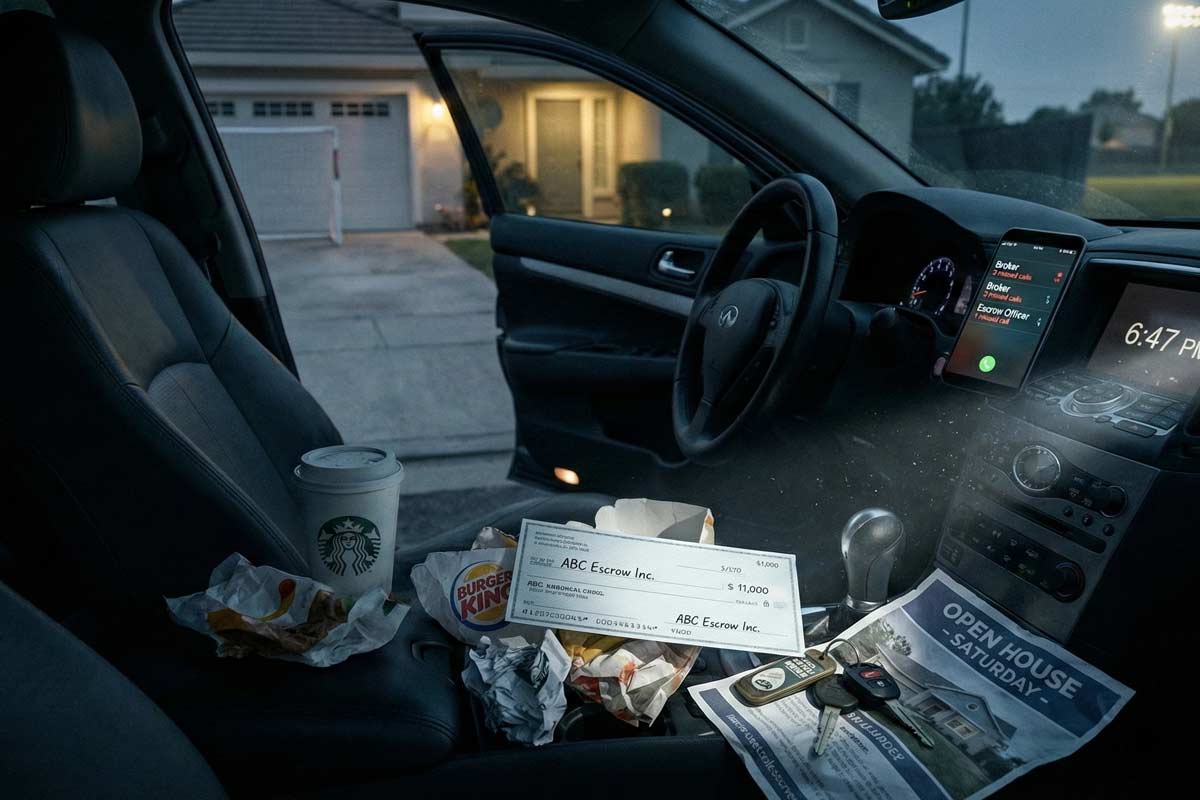
A $10,000 deposit from a client sits in your center console. You’re headed to a listing appointment, then a kid's soccer game, and you figure you’ll drop the check at the escrow office tomorrow morning. It’s just 12 hours, right?
Many trust fund cases begin with a dispute—a deal falls apart, a buyer wants their EMD back, or an escrow officer denies receiving a check on time. When the finger-pointing starts, the DRE looks at the custody trail, not your "intent."
Do this now: In modern times, it’s true that agents are less likely to take checks directly, remember if you have client funds in your possession, call the escrow officer immediately to confirm their intake hours, document the receipt in the transaction file (send a timestamped email to escrow and your broker confirming you have it), and deliver the funds today.
The most common trust funds agents handle are Earnest Money Deposits (EMD), Rents, and Security Deposits. While other items like advance fees can technically be trust funds, treat these as edge cases—never touch them without the broker’s written instruction.
From an operational standpoint, your safest practice is to maintain robust documentation across all price points. If a DRE auditor sees a gap in a small transaction, they can infer there are systemic failures in your system.
Operationally, there are two standard paths used in California real estate to handle client money.
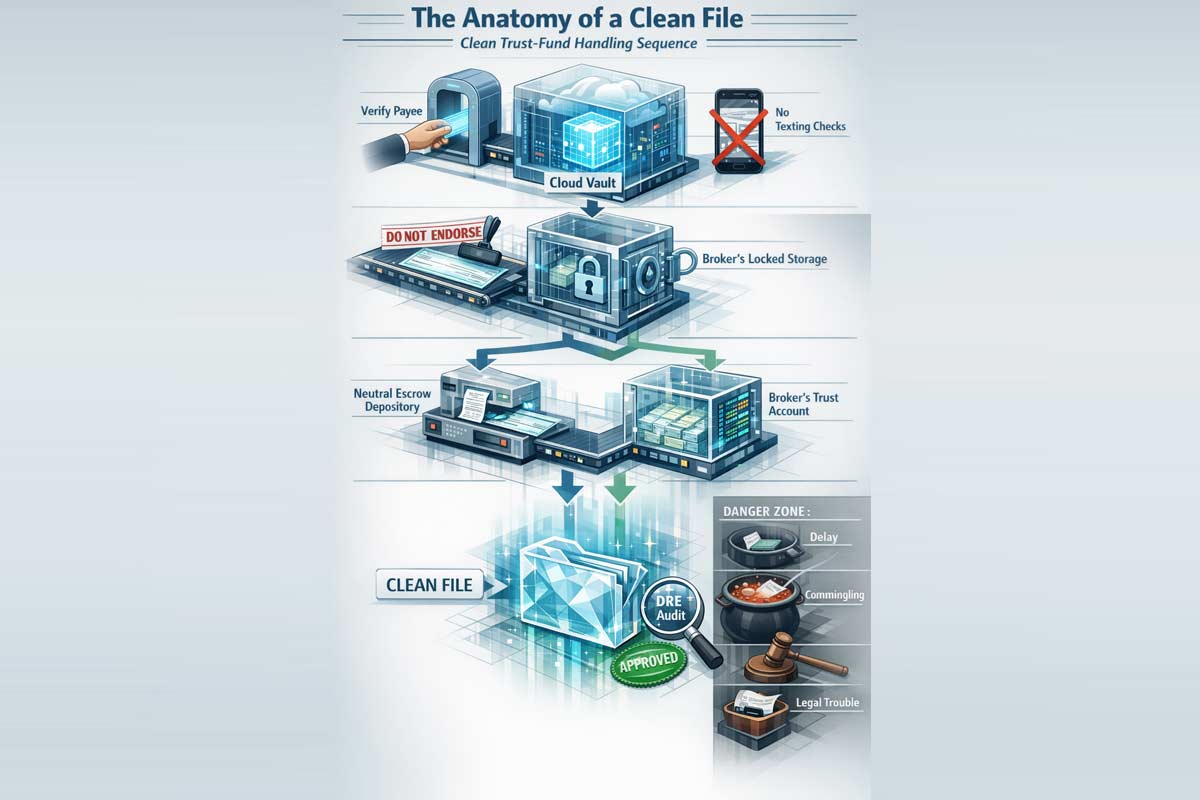
The DRE is surgical about auditing money. To audit-proof your career, you must understand the concrete actions that trigger an investigation.
Audit Trigger: An auditor finds client funds deposited into a broker’s operating account or an agent’s personal account.
Hard Control: Safest practice: All trust fund checks go unendorsed directly to escrow or the broker’s trust account.
Audit Trigger: A trust account balance drops below the total amount owed to all beneficiaries, often discovered after a client complaint.
Hard Control: Never "borrow": : Never use a deposit for unauthorized purposes, even if you plan to reimburse it later. Totally illegal.
Audit Trigger: A broker or agent cannot provide a clear paper trail for a specific deposit during a routine file review.
Hard Control: Retain proof: Keep copies of every deposit confirmation, receipt, or proof of delivery.
Audit Trigger: An auditor cross-references the date on the EMD check with the date on the Escrow Receipt.
Hard Control: Timestamped communication: Document the moment you receive funds.
For more on how the state monitors these audit trails, see our guide on what the California DRE actually enforces.
Follow this sequence to ensure your file is defensible from the moment you take custody:
Can I hold the deposit check overnight?" Generally, yes, but the risk of loss or theft makes this a failure in most brokerage policies. Deliver it immediately.
Does my Transaction Coordinator (TC) count as me?" Yes. Delegation does not transfer responsibility. If your TC or assistant mishandles a check, the DRE holds you and your broker accountable for the lack of supervision.
What if the buyer gives me the check on a Friday night?" Document the receipt Friday night, store the check in a locked location (not your car), and deliver it per your broker's Monday morning intake process.
What about wire instructions and wire fraud?" Always verify wire instructions via a phone call to a known, verified number. Never accept last-minute changes via email.
Trust fund handling is about creating a defensible file. By following these hard controls and maintaining a strict chain of custody, you ensure that even a surprise investigation results in a clean file. Understanding these operational rules is the first step in avoiding common DRE violations and how to avoid them.
For more on state requirements, return to our California Real Estate Laws & Compliance Guide.
Disclaimer: This article provides general best practices and does not constitute legal advice. Always confirm your broker’s written policy.

Founder, Adhi Schools
Kartik Subramaniam is the Founder and CEO of ADHI Real Estate Schools, a leader in real estate education throughout California. Holding a degree from Cal Poly University, Subramaniam brings a wealth of experience in real estate sales, property management, and investment transactions. He is the author of nine books on real estate and countless real estate articles. With a track record of successfully completing hundreds of real estate transactions, he has equipped countless professionals to thrive in the industry.

"Hey guys,
I took the exam today and passed!!!!
It only took me one try which was one of my goals. I took the online
classes and follow your suggestions so I took the crash course,
used the crash course app a lot, took 7 mock tests and went
confident to present the exam. Thank you for the great job you are
doing, you guys are awesome!!!! May God continue to bless you!"
Willie V.