Renewing your California real estate license is a high-stakes administrative task. A single oversight—a mismatched name, an incomplete CE certificate, or a missed deadline—can trigger a deficiency Read more...
Renewing your California real estate license is a high-stakes administrative task. A single oversight—a mismatched name, an incomplete CE certificate, or a missed deadline—can trigger a deficiency notice or halt your ability to work legally. Your goal isn’t just to submit; it’s to achieve a clean, provable, and on-time renewal that avoids manual review and a potential late fee.
This checklist distills decades of experience into a direct, phase-by-step action plan. It is designed to steer you clear of the common data and documentation errors that cause renewal problems, helping to ensure that your submission is seamless from the moment you start your continuing education to the final confirmation.
The 30-Second "If You Do Nothing Else" Checklist
Verify expiration date via the DRE Public License Lookup today.
Finish CE early (target at least 15–30 days before your deadline).
Confirm CE requirements for your specific cycle (First-time vs. Subsequent).
Submit via eLicensing (renewals open 90 days before expiration).
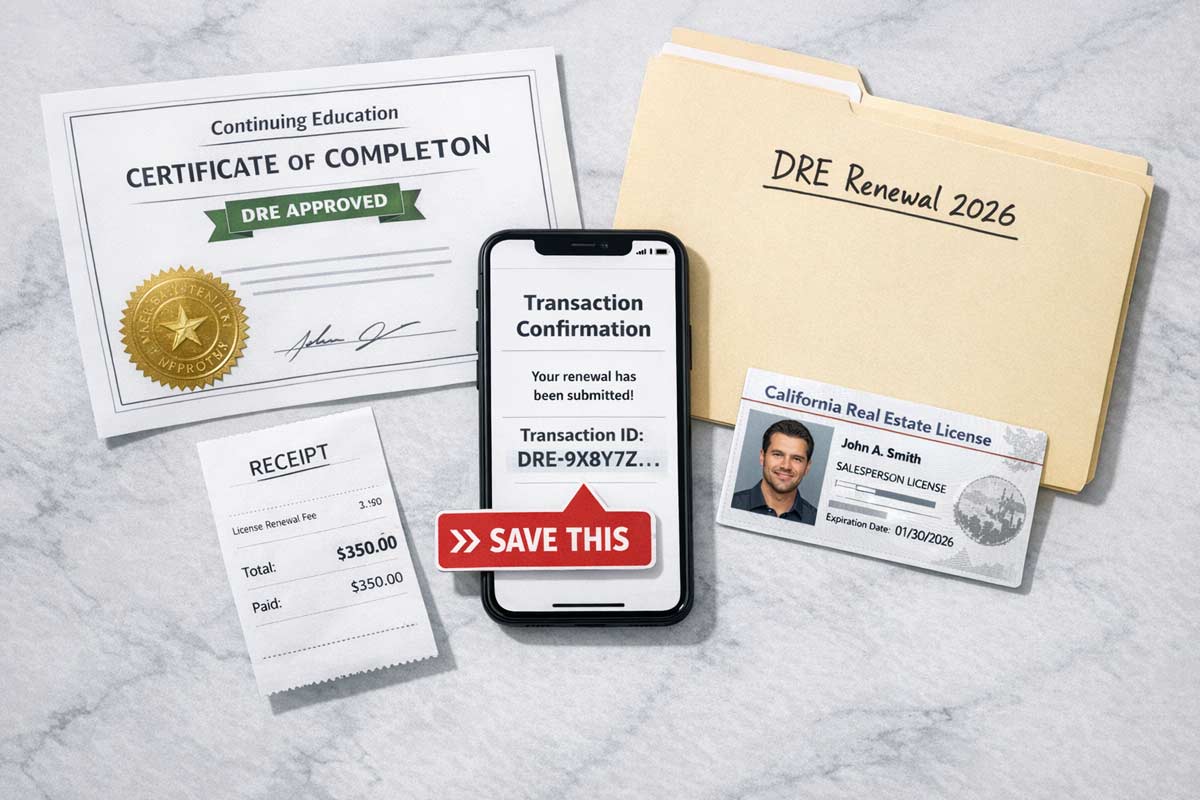
Save proof immediately: Transaction ID + confirmation page PDF + timestamped screenshot.
The Phased Renewal Checklist
Phase 1: Prep (90–60 Days Out)
Audit Your DRE Profile
Why it matters: Your name should match across elicensing and CE records closely enough to avoid a manual review (same first/last; consistent format).
Common mistake: An old mailing address means you’ll miss critical DRE deficiency notices in the event you get mailed a letter.
Proof to save: Screenshot of your current “Licensee Information” page.
Verify CE Mix & Exemptions
Why it matters: Ensure your CE includes the required topic mix for your renewal cycle (mandated topics include agency, ethics, fair housing, implicit bias and others). Some licensees may qualify for a 70/30 exemption (age 70+ and 30 years in good standing) if applicable to you.
Common mistake: Taking a package that misses required topic coverage for your cycle.
Phase 2: Execution (60–30 Days Out)
Complete DRE-Approved CE
Why it matters: Only courses with valid DRE approval/provider info count. Finishing early gives you a buffer for provider or portal issues.
Common mistake: Assuming a course is DRE-approved without verifying the current approval status and provider number at the time of your completion.
What to check: Before you enroll or start a course, verify it is currently approved using the DRE’s Approved Courses Lookup.
Budget for Fees
Why it matters: Know your on-time vs late fee and keep your payment method ready.
(On-time renewal fees: $350 salesperson / $450 broker; late renewal within 2 years: $525 salesperson / $675 broker.)
Common mistake: Using a debit/credit card that is near its limit, has expired, or has new billing information the bank’s fraud filter flags, causing the transaction to fail.
How to fix: 2-3 days before submitting: confirm it’s not expired, has sufficient available credit, and its billing address matches your bank’s record.
Phase 3: Submission (30–10 Days Out)
Enter CE Details in eLicensing
Why it matters: Accurate entry of CE details prevents delays. Use the DRE-approved course/provider 8-digit identifiers exactly as shown on your certificate—don’t guess, don’t retype from memory if you can copy/paste.
Common mistake: Inverting digits in course approval numbers.
Proof to save: Screenshot of the “Review Information” page before you click submit.
Refer to: How to Submit Your CA License Renewal Application
Capture Submission Proof
Why it matters: I’ve seen agents see a “spinning wheel” and close the tab. Without a Transaction ID, you have no proof of filing if the system crashes.
Common mistake: Closing the browser before the “Success” page loads.
Proof to save (all three): Transaction ID, PDF of the confirmation page, and the confirmation email.
🚩 RED FLAG: PAUSE SUBMISSION IF...
You have new criminal charges or convictions since your last renewal (may require disclosure/review).
Your CE certificates haven’t been issued yet.
Submitting with these issues often triggers a deficiency notice. Review Common Renewal Mistakes Agents Make before you hit submit.
Phase 4: Monitoring & Escalation
Verify Status & Track Timeframes
Why it matters: Check the Public License Lookup after 24–48 hours to confirm the record is moving the right direction. These time frames are important so you are aware how long it takes to process a California real estate license renewal.
Escalation Protocol: If it doesn’t update, compare against published DRE renewal processing timeframes; if you’re beyond published dates, contact the DRE with your Transaction ID ready.
Proof to save: PDF printout/screenshot of your updated license record once it updates.
Handle Deficiency Notices (Don’t Panic-Resubmit)
Why it matters: When you get a deficiency notice, sloppy “resubmits” can create duplicate transactions and confusion.
Do this instead:
Match the deficiency line-item to your proof (certificates, receipt, Transaction ID).
Respond using the method the notice specifies.
Save a copy of everything you send + the date sent.
STEP 1 — VERIFY
Confirm your facts before you do anything else
Check license expiration date
Confirm renewal window is open (90 days before expiration)
Verify name + address match across DRE & CE records
Goal: No profile mismatches → no manual review
STEP 2 — COMPLETE
Finish the right CE, early
Complete DRE-approved CE for your renewal cycle
Confirm required topics are included (Agency, Ethics, Fair Housing, Implicit Bias, etc.)
Download final CE certificates (with provider + course numbers)
Goal: CE finished 15–30 days early
STEP 3 — SUBMIT
Enter data once, carefully
Enter CE details into eLicensing (copy/paste — don’t retype)
Submit renewal application + fee
Wait for the success confirmation screen
Goal: One clean submission, no errors
STEP 4 — PROVE
Lock in your paper trail immediately
Save Transaction ID
Download confirmation PDF
Take a timestamped screenshot of success page
Save confirmation email
Goal: You can prove on-time filing instantly
(Optional but Recommended)
STEP 5 — MONITOR
Verify it actually moved
Check license status after 24–48 hours
Save screenshot once status updates
Respond carefully if a deficiency notice appears
Goal: Catch problems early, avoid downtime
FAQ
How early can I renew?
You can renew via eLicensing starting 90 days before your expiration date.
Can I practice while my renewal is “Pending”?
If you renew on time, California law may allow continued operations after expiration unless the DRE notifies you of a deficiency. Practically: confirm your transaction is complete, watch for deficiency notices, and follow your broker’s compliance policy.
What if I miss the deadline?
Your license becomes expired and you cannot practice while expired. California generally allows late renewal for up to two years after expiration, but you’ll pay the late renewal fee (e.g., $525 vs $350 for salesperson; $675 vs $450 for broker).
Does my broker get notified?
Often, brokers monitor status through internal systems—but don’t rely on it. You are responsible for your own status.
This checklist ensures you don’t miss a step. For the full deep dive on requirements, fee schedules, and legal updates, visit our California Real Estate License Renewal Guide.
|
The phrase “135 hours” sounds simple enough—until you realize that doing it wrong can cost you months of delays and hundreds of dollars in wasted fees.
Many aspiring agents assume the California Read more...
The phrase “135 hours” sounds simple enough—until you realize that doing it wrong can cost you months of delays and hundreds of dollars in wasted fees.
Many aspiring agents assume the California 135-hour real estate course requirement is a single marathon class or a weekend workshop. Others worry that if they choose the wrong elective or an unapproved provider, the Department of Real Estate (DRE) will reject their application entirely.
I have spent over 20 years helping students navigate these exact hurdles. Whether you are a busy parent, working a 9-to-5, or moving from out of state, the mission is the same: get your hours done right the first time so you can get to the exam.
Key Takeaways
The Magic Number: You must complete three 45-hour college-level courses with an approved course provider like ADHI Schools.
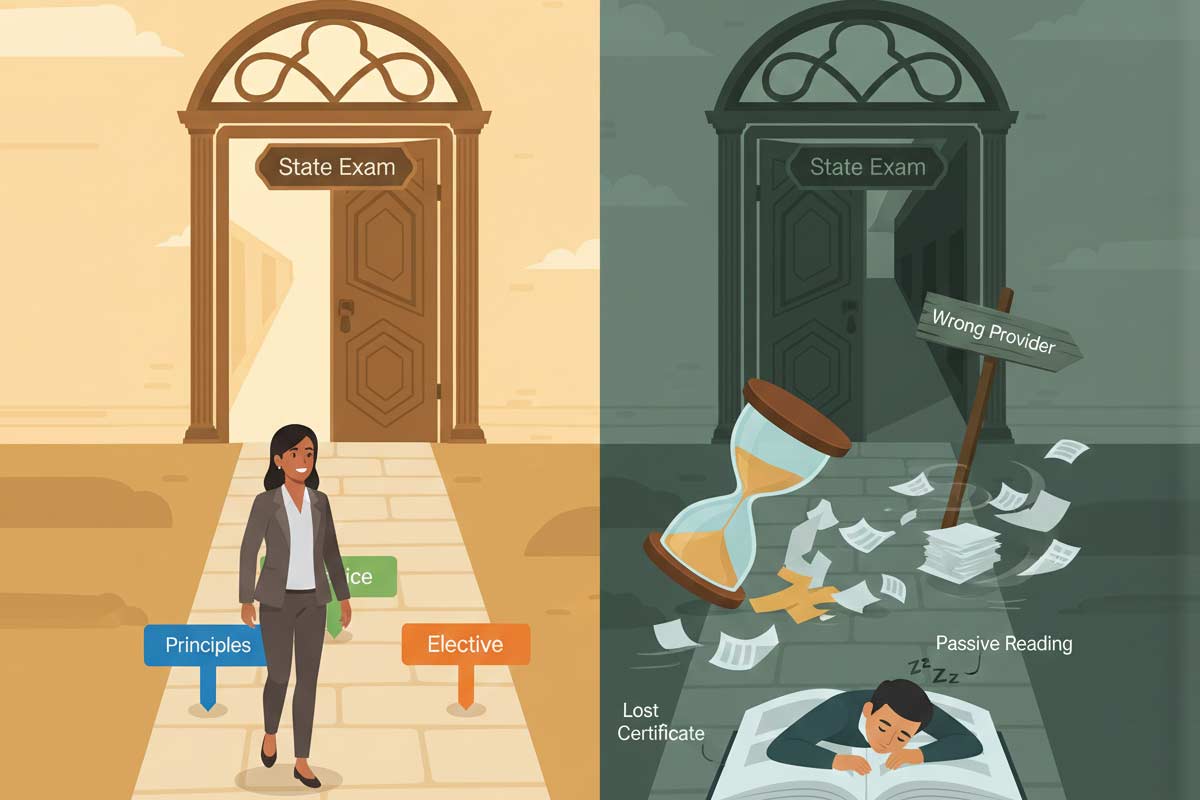
The Lineup: Real Estate Principles, Real Estate Practice, and one elective.
The Requirement: All courses must be completed through a DRE-approved provider.
The Goal: These hours are the mandatory prerequisite for your salesperson application.
Definition: The California 135-hour real estate course consists of three 45-hour, DRE-approved pre-licensing classes: Real Estate Principles, Real Estate Practice, and one elective.
The Quick Breakdown: What Makes Up the 135 Hours?
To qualify for a salesperson license in California, the DRE requires 135 hours of pre-licensing education.This is strictly divided into three specific buckets:
Real Estate Principles (45 Hours)
Real Estate Practice (45 Hours)
One Approved Elective (45 Hours)
You don’t just "sit in a room" for 135 hours straight. You complete these three distinct courses, pass a final exam for each, and receive a course completion certificate for your records.
Why California Requires 135 Hours
This isn't just "busywork" or a regulatory hurdle. The 135-hour requirement serves several critical purposes:
Baseline Competency: It ensures every agent understands the legal and ethical framework of the industry.
Consumer Protection: It teaches the complex disclosure laws designed to protect California homeowners.
Exam Readiness: Each course domain maps directly to sections of the State Exam. If you skip the depth here, the exam will likely find your weak spots.
What Exactly Counts Toward the 135 Hours?
In the eyes of the DRE, "hours" are a measure of curriculum coverage. To ensure your education counts, follow this checklist:
DRE-Approved Provider: Check the school’s DRE statutory sponsor ID number before enrolling. For context the ADHI Schools sponsor ID is S0348.
Course Completion: You must complete the required material and pass a school-level final exam for each 45-hour course.
Digital Records: Keep your completion certificates saved as PDFs; you will need to upload (preferred) or mail these with your exam and license application.
Deep Dive: The 3 Course Requirements
1. Real Estate Principles (45 Hours)
This is your foundation. It covers the "language" of the industry—titles, deeds, encumbrances, and financing. This isn't just about passing a test; it’s about understanding the legal framework of every transaction.
2. Real Estate Practice (45 Hours)
If Principles is the "what," Practice is the "how." This course covers agency relationships, disclosures, and the actual mechanics of a real estate transaction. This is where most students realize real estate is about lead generation, contracts and consumer protection.
3. The Elective (45 Hours)
You must choose one additional 45-hour course from a DRE-approved list. Here is how to choose:
If you want to learn about loans → Choose Real Estate Finance.
If you want to learn about loans → Choose Legal Aspects of Real Estate.
If you want to learn about loans → Choose Real Estate Appraisal.
ADHI Schools offers a wide variety of elective courses.
Common Mistakes That Trigger Delays
Don't let a simple clerical error or a lapse in planning stall your career. While speed is a priority for most, you should focus on the fastest way to complete the 135-hour CA real estate course without taking shortcuts that lead to rejection. Avoid these common "landmines":
Common Pitfalls to Avoid:
The "Cram" Trap: Trying to rush the last 45 hours in a weekend. Most DRE-approved programs have pacing controls and required unit progression, so rushing usually backfires. Remember that the state requires 18 days per course before you can take the final exam and obtain the certificates of completion.
Using Non-Approved Providers: Ensure the school is licensed for pre-licensing specifically.
Passive Reading: Treating the course like "background noise." If you don't engage, you'll finish the hours but will have a tough time with the state exam.
Missing Documentation: Not having your three certificates organized when you are ready to apply for the exam.
Setting Realistic Expectations: Timelines and Formats
Understanding the curriculum is only half the battle; you also need to know how long it takes to finish CA real estate classes based on your current lifestyle. Highly disciplined students might finish in under two months, while students with less urgency often take four to six.
Your pace is often dictated by the medium you choose. When deciding between online vs. in-person CA real estate classes: pros & cons, consider whether you need the structure of a classroom or the 24/7 flexibility of a digital portal. Both can satisfy the online 135-hour real estate course California standards, provided the school maintains its DRE approval.
Avoiding the Risk of Failure
Is it actually difficult to pass these initial hurdles? Many students ask, "can you fail California real estate school?" While the school-level exams are manageable, failing to respect the 135-hour requirement can lead to "timing out" of your enrollment (all courses must be finished within one year) or failing to retain enough information to pass the state exam on your first try.
Mini FAQ
Do I need to finish all 135 hours before applying for the exam?
Yes, the California Department of Real Estate requires that all 135 hours are complete before applying for the real estate exam.
Is the 135-hour requirement the same for a Broker's license?
No. Broker applicants generally need eight college-level courses. The 135-hour (3-course) requirement is specifically for the Salesperson license.
Can I take the three courses in any order?
While you technically can, we strongly suggest starting with Practice. Taking them out of order can lead to confusion when you hit advanced topics in Legal Aspects of Real Estate or other Electives.
Do my course hours expire?
Under the current regulations of the Real Estate Commissioner the certificates never expire.
Your Next Steps
Understanding the 135-hour real estate course requirements California mandates is just the first hurdle. Once you’ve started your classes, you need to know how they fit into the larger picture of fingerprints, background checks, and the state exam itself.
To ensure you don't miss a single detail in the process, follow our comprehensive California Real Estate License Guide to take your career from the classroom to the closing table.
|
An expired real estate license is a total freeze on your ability to earn commissions.
If your license isn’t active, you can’t represent clients—period.
The goal of this guide is to move you Read more...
An expired real estate license is a total freeze on your ability to earn commissions.
If your license isn’t active, you can’t represent clients—period.
The goal of this guide is to move you from "almost expired" to "renewed" with the cleanest submission possible. This is your operational roadmap.
Before You Hit Submit: The 4 Gatekeepers
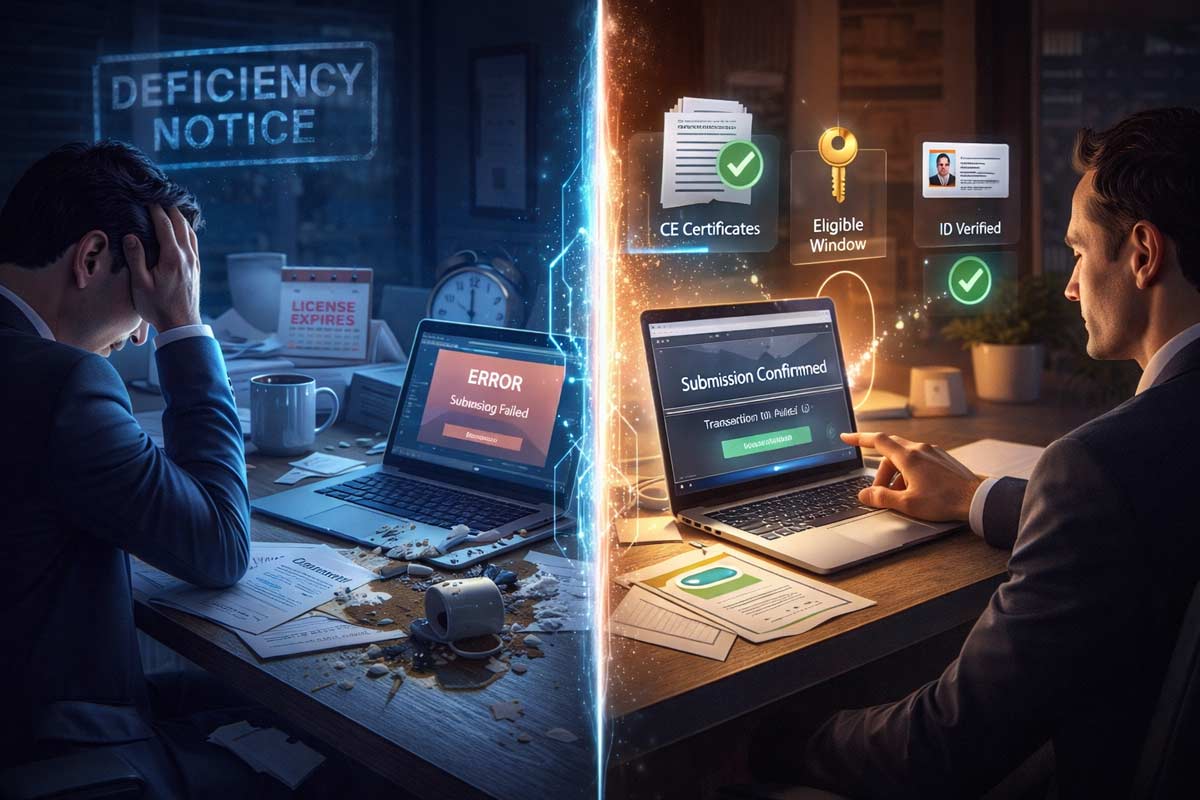
Do not start your application for license renewal on eLicensing until these four things are true. Most renewal delays happen because agents submit before their records or documents are actually ready.
Confirm Your Eligibility Window: The DRE opens renewal only within an eligible window (typically 90 days before expiration). The eLicensing portal is the source of truth—if the "Renew" option isn't available in your profile, you aren't eligible to submit yet. Keep in mind that you can complete the CE courses anytime in the four years preceding expiration, but the application can’t be submitted until at least 90 days prior to expiration.
CE Proof in Hand: Have your Continuing Education (CE) completion certificates ready. You must verify that the provider numbers, course identifiers, and completion dates match exactly what you will enter. When you take the courses through ADHI Schools, the course completion certificates will start with 6404 for each CE course. For a full list of required courses, refer to our Checklist for Renewing a California Real Estate License.
Record Alignment: Ensure your legal name and contact details on file match your current identification. Even small mismatches (name formatting, address changes, or a stale email) can slow the file and trigger a manual review.
Broker Readiness (Salespersons Only): Confirm your broker or office manager knows they must approve the renewal inside their own portal. Your application is not considered "complete" by the DRE until your broker takes this step.
At-a-Glance Submission Checklist
✅ Eligible window visible in eLicensing
✅ CE completion certificates (PDFs) open on screen
✅ Name and contact details match your DRE record
✅ Salespersons: Broker notified and ready to approve
Takeaway: If any of these are off, fix them first. Submitting incorrect data is the fastest way to get your license stuck in the DRE’s manual review pile. See our guide on California Renewal Mistakes to avoid common "stuck points."
The Clean Submission Sequence
Step 1: Gather Your Renewal Packet
Organize these inputs before opening the eLicensing portal:
Your CA license number: Use the number exactly as shown in your DRE profile.
CE Certificates: Specifically the provider numbers and course identifiers exactly as shown on your certificates.
Payment Method: A valid credit or debit card. (To plan your budget, see How Much Does It Cost to Renew a CA Real Estate License?).
Broker Info (Salespersons): Your responsible broker’s license number and email.
Step 2: Choose Your Channel
Online (eLicensing): The standard path. Provides the fastest processing and immediate confirmation.
Mail Submission: Use only when the portal requires supporting documentation or your situation is not supported online. If you mail it, use a trackable service (USPS Tracking, FedEx, or equivalent).
Step 3: The Portal Walkthrough
Access: Log into eLicensing.
Data Entry: Do not retype from memory. Copy the identifiers and provider numbers directly from your PDF certificates. Even a minor typo in a course ID can stall verification and trigger a deficiency or manual review.
Validation: Review the summary page carefully before clicking through to payment.
Salesperson Alert: Your renewal is NOT complete until your broker signs in to their own portal and approves your application. Confirm with your broker or office manager that this step is finished immediately after you submit.
Step 4: Payment and Recovery
The DRE portal can be temperamental. To avoid double charges:
Click "Submit" only once.
If the screen freezes, wait a couple of minutes before refreshing.
Recovery Step: If you are unsure if it went through, log out, log back in, and check for a confirmation or receipt before attempting a second payment.
Step 5: Your Paper Trail (Non-Negotiable)
Portals glitch and emails disappear. Your paper trail is your insurance policy if there’s ever a question about what you submitted and when.
Screenshot the final confirmation page with the transaction ID.
Download the PDF summary of the application you just filed.
Archive the email receipt. You may need these while waiting for the record to update. See How Long Does It Take to Process a CA Renewal? for typical wait times.
What Happens After You Submit
Tracking Status: Use eLicensing as your primary status tracker to see if the application is "Pending" or "Processed."
Downstream Confirmation: Use the Public License Lookup as the final confirmation once the record officially updates with your new expiration date.
Your goal state is a "renewed/processed" status in eLicensing and an updated expiration date on the public lookup.
When to Escalate
If you are >14 days from expiration: Check eLicensing every 48 hours. It is normal for the update to take a week or more.
If you are
|
The “Order of Operations” Confusion
The path to a California real estate license is often clouded by outdated advice, social media "gurus," and aggressive brokerage recruiting scripts. This creates Read more...
The “Order of Operations” Confusion
The path to a California real estate license is often clouded by outdated advice, social media "gurus," and aggressive brokerage recruiting scripts. This creates a massive point of confusion: many aspiring real estate professionals believe they must be "hired" before they can even apply for the state exam.
Mistaking this sequence leads to lost momentum and unnecessary procedural errors.
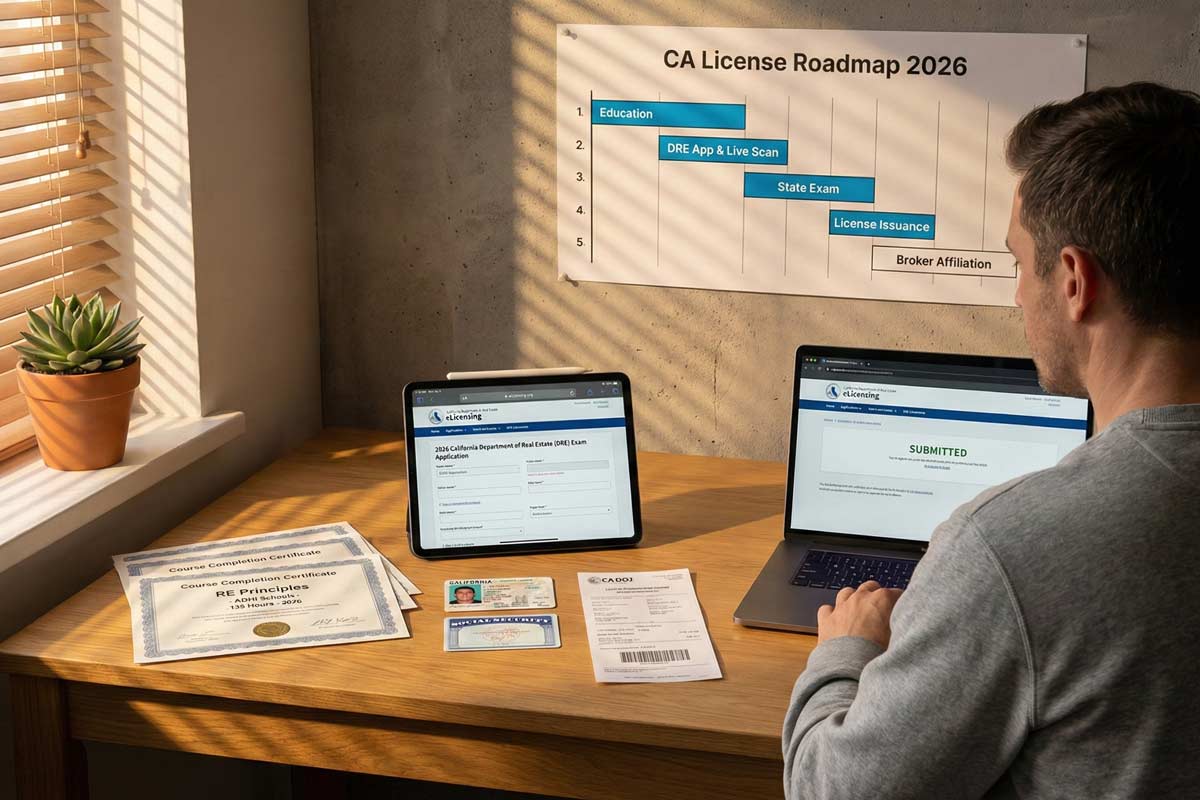
The typical order is: pre-license school → exam application → passing the state exam → license number issuance → brokerage affiliation.
In my 20+ years of guiding thousands of students at ADHI Schools, I’ve seen this confusion cause more delays than the exam itself. This guide provides the exact roadmap to avoid those traps.
Do You Need a Broker to Apply for a California Real Estate License?
No—you don’t need a broker to apply for or take the California real estate exam. You can complete the education and application without a sponsoring broker affiliation. But you can’t legally practice real estate or earn commissions until your license is placed with a supervising brokerage.
Do You Need a Broker to Take the California Real Estate Exam?
Absolutely not. The Department of Real Estate (DRE) allows any individual who has met the 135-hour education requirement to sit for the exam. You are applying as an individual, not as a representative of a firm. You can take the exam as an individual, regardless of brokerage affiliation.
The Correct California Timeline: A Step-by-Step Roadmap
Following the state-mandated order of operations is the only way to ensure you don’t waste time.
Complete Your 135 Hours of Pre-License Education: You must finish three college-level courses. Can You Take the Exam Before Completing All 135 Hours? No—you must have your certificates in hand first.
Apply for the State Exam & Submit Fingerprints: You submit your application and Live Scan fingerprints to the DRE. You do not need a broker’s signature for the exam application.
Note: The biggest avoidable delays are simple mismatches—your name, ID, and course certificates must match exactly.
Pass the California Real Estate Salesperson Exam: This is your primary hurdle.
Receive Your License Number from the DRE: The DRE issues your license number after clearing criminal background. You can complete this entire process independently and without broker affiliation.
Affiliate with a Brokerage to Practice (“Hang Your License”): Once you have a license number, you must place your license with a supervising broker so you can legally practice and earn commissions.
Pro Tip: If you want the full start-to-finish roadmap, use our California Real Estate License Guide.
Key Terms Demystified
Understanding DRE terminology prevents "bureaucratic paralysis."
“Applying for a License” vs. “Practicing”: Applying is between you and the State. Practicing is between you and a Broker. You can do the first without the second.
“Hanging/Placing Your License”: This means officially associating your license with a Broker of Record. This is what moves your license into a status that allows for commissions.
Independent Contractor Reality: You are a 1099 contractor. The broker supervises your licensed activity; however, you generate your own business unless the brokerage specifically provides leads.
What Happens After You Get Your California Real Estate License? The focus shifts from "passing the test" to "building a business."
When (and Why) to Talk to Brokerages Early
Research is smart; commitment is premature. You should interview brokerages while you wait for your exam date to assess:
New Agent Training: Does the broker have a formal mentorship program?
Commission Splits & Fees: What is the actual "take-home" after all fees?
Lead Generation Support: Do they provide leads or just "coaching"?
Compliance Support: Who reviews your contracts to keep you out of court?
Costly Mistakes to Avoid
Waiting to Apply Until You Find a Broker: I’ve watched students wait 90 days "shopping brokerages" while their exam eligibility window and motivation evaporated. Don't wait. Apply the moment you have your certificates.
Choosing a Brand Over Training: I once spoke to an agent who picked a famous global brand for the "vibe," but quit after 4 months because no one showed them how to actually get business. Top Reasons People Fail to Get Licensed in California often trace back to a lack of early support.
Losing Momentum After the Exam: The gap between passing the exam and finding a broker should be days, not months.
Your 7-Day Action Plan
Day 1-2: Finish your current education course module.
Day 3: Draft a shortlist of 3-5 local brokerages to research.
Day 4: Prepare 8 questions to ask future brokers (focus on training and splits).
Day 5: Double-check your DRE exam/license application for errors (name match, IDs, and certificates).
Day 6-7: Submit your application to the DRE.
Frequently Asked Questions (FAQ)
Can I apply for the CA real estate exam without a brokerage?
Yes. Affiliation is not required to apply for or take the exam.
Do I need a sponsor broker for the exam?
No. Sponsoring brokers are required for practicing, not for taking the exam.
Can I interview brokerages before I’m licensed?
Yes, and you should. Most brokers are happy to speak with prospective agents who are currently in school.
What if I join a brokerage now—does it speed up the DRE?
No. The DRE processes applications in the order received, regardless of which brokerage you intend to join.
What if I pass the exam but don’t pick a brokerage?
You will have a license number, but you cannot legally represent clients or collect a penny in commission until you associate your license with a broker.
Can my license expire if I don’t join a brokerage right away?
Your license remains valid once issued, but you must still meet renewal requirements and continuing education deadlines every four years, regardless of whether you are affiliated with a broker.
Next Steps on Your Licensing Journey
The brokerage choice is critical for your success in the field, but it is not a prerequisite for the state exam. Focus on your 135 hours and your application first.
For the complete, step-by-step licensing roadmap (start to finish), use our California Real Estate License Guide.
|

It starts with a burst of energy. You decide to take control of your career, enter a new industry, and prepare to get your first clients.
But then, life happens. The 135-hour requirement feels like Read more...
It starts with a burst of energy. You decide to take control of your career, enter a new industry, and prepare to get your first clients.
But then, life happens. The 135-hour requirement feels like a mountain. The DRE website looks like a maze of 1990s-era forms. Suddenly, six months have passed, and you haven’t even scheduled your exam.
This is the "Licensing Spiral": a cycle where administrative confusion and life interruptions kill your momentum until your goals disappear entirely.
In my 20+ years of coaching thousands of candidates at ADHI Schools, I’ve realized that failing to get licensed is rarely about a lack of intelligence. It is almost always a result of predictable, procedural friction points. If you fix the one friction point you’re stuck on, the rest becomes straightforward.
Key Takeaways
Process > Intelligence: Administrative errors kill more careers than the actual exam does.
Timelines Matter: Processing times and scheduling delays can quietly derail you.
Momentum is King: If you aren't moving forward, you are moving backward. Use the rescue checklist below to restart.
The 60-Second Licensing Map
To get your license, you must follow this exact sequence. If you are currently stalled, you are stuck at exactly one of these five steps:
Complete 135 Hours: Finish three approved college-level courses.
Apply & Schedule: Submit your Combined Exam/License Application to the DRE.
Pass the State Exam: Score 70% or better on the 150-question test.
Submit License Application: Ensure background checks and fees are finalized.
Affiliate with a Broker: Find a sponsoring broker to "activate" your license.
For a complete, step-by-step blueprint of the licensing journey, see the California Real Estate License Guide.
10 Reasons People Fail (And How to Fix Each)
1. The "Casual Study" Fallacy
The Mistake: Picking up the material only when you "have time."
The Consequence: You lose continuity and momentum, making it harder to retain complex legal concepts as you move through the modules.
Fix Today: Open your calendar and block out exactly 90 minutes for tomorrow morning. Consistency beats intensity every time.
2. Misunderstanding the Application Window
The Mistake: Waiting until you have "mastered" every page of the material before looking at the DRE application.
The Consequence: DRE processing can take weeks. Waiting to “feel like you’re ready” before applying adds a massive "dead zone" where your knowledge goes cold.
Fix Today: Understand the nuances of the timeline by reading Can You Take the Exam Before Completing All 135 Hours? to see when you should actually apply.
3. The "Name Mismatch" Error
The Mistake: Using a nickname or maiden name on your Live Scan (fingerprints) that doesn’t match your official DRE application.
The Consequence: This creates a manual "flag" in the DRE system, potentially delaying your eligibility by 30–60 days while they reconcile your files.
Fix Today: Look at your government-issued ID. Ensure every form you sign matches that ID character-for-character.
4. The Memorization Trap
The Mistake: Taking the same practice quiz 50 times until you "know the answers."
The Consequence: You aren’t learning the law; you’re learning the pattern of a quiz. When the DRE rephrases the question on exam day, you will fail.
Fix Today: Do mixed sets of questions and track wrong answers by topic. If you can’t explain the logic of the correct answer out loud, you don’t know it yet.
5. The "Post-Pass" Momentum Kill
The Mistake: Celebrating the passing score but failing to file the final paperwork or pay the licensing fees.
The Consequence: Your passing score has an expiration date. If you don't file the application for your license promptly, you will have to retake the entire state exam.
Fix Today: Decide whether you are going inactive vs. active, and complete the post-pass steps immediately. Follow our guide on What Happens After You Get Your California Real Estate License? to ensure you cross the finish line.
6. Paralysis by Analysis (The Research Trap)
The Mistake: Spending weeks in online forums asking "Which school is best?" instead of starting.
The Consequence: Research is often just a sophisticated form of procrastination used to mask the fear of starting a new career.
Fix Today: Start with ADHI Schools—ideally today—and finish Lesson 1 of your first course. Clarity comes from action.
7. Distraction by Brokerage Interviews
The Mistake: Interviewing 10 different brokerages before you even have an exam date.
The Consequence: You are focusing on Step 5 when you are still at Step 1. This drains the mental energy you need for the state exam.
Fix Today: Realize you don't need a broker to get the process started. Get the facts here: Do You Need to Join a Brokerage Before Applying for a License?
8. Underestimating Logistics & Fees
The Mistake: Failing to budget for the multi-step fee structure.
The Consequence: You pass the exam but "wait for the next paycheck" to pay the licensing fee, which turns into a multi-month delay.
Fix Today: Set aside the DRE exam/license fees plus Live Scan vendor fees now so money never becomes a stall point.
9. Trusting Forum Myths Over DRE Facts
The Mistake: Following advice from "someone on Reddit" regarding current DRE regulations.
The Consequence: Regulations change. Relying on outdated anecdotes can lead to rejected applications or missed deadlines.
Fix Today: Only trust official DRE publications or ADHI Schools that handles these filings daily.
The 10-Minute Rescue Checklist
If you are here...
Your next 60 minutes...
The Momentum Builder...
Haven't started courses
Enroll in ADHI Schools.
Complete Chapter 1 immediately.
Stuck mid-course
Audit your calendar; identify the "leak."
Block 90 mins for tomorrow; no excuses.
Finished courses, no exam date
Submit your application (eLicensing preferred).
Verify your ID name matches exactly.
Waiting for DRE processing
Establish a "Study Retention" schedule.
Keep studying 20–30 min/day to prevent decay.
Passed, but no license yet
Check your status on eLicensing.
If not a combo app, submit the license app quickly.
FAQ: Common Licensing Questions
Can I take the California real estate exam before finishing my 135 hours?
You must complete the three required courses to be eligible for an exam date. However, you can often save time by understanding exactly when to submit your application and what documentation to send so you don’t create a "dead zone" while the DRE processes your file. See our 135-hour timing guide for the specific strategy.
Do I have to use eLicensing for my application?
No, but the DRE states that eLicensing is significantly faster for processing. If you choose to use paper (Form RE 435), it must be mailed with original signatures.
What’s the most common reason people fail the California real estate exam?
Over-thinking. Candidates often try to apply "real world" logic or stories they heard from friends rather than relying on the specific legal definitions found in the textbook.
The Path Forward: Stop Stalling
Stalling is a normal part of the process, but it doesn't have to be the end of your story. The difference between a "former student" and a "top producer" is simply the willingness to fix these procedural errors and keep moving.
For the step-by-step map: Start with the California Real Estate License Guide.
For the "After-Pass" plan: Read What Happens After You Get Your California Real Estate License?
For a proven system: If you want the courses, the structure, and the veteran coaching to avoid these mistakes entirely, ADHI Schools is built for exactly that.
Let’s get to work.
|
The "License Cliff": Why Agents Can Stall in the First 30 Days
You pass the state exam, celebrate, and then the email arrives from the DRE: "Your license is active." Suddenly, the guided path of mandatory Read more...
The "License Cliff": Why Agents Can Stall in the First 30 Days
You pass the state exam, celebrate, and then the email arrives from the DRE: "Your license is active." Suddenly, the guided path of mandatory courses and proctored exams ends. You are no longer a student with a syllabus; you are a business owner with a blank canvas.
If you aren’t careful, you can end up on the wrong side of what we call the “License Cliff”.
Without guidance or deadlines, new agents can drift into "luxury cosplay"—spending weeks on logos and business cards while their momentum evaporates. Here’s what to do after you get your California real estate license in the first 30 days to move from "licensed" to "in business."
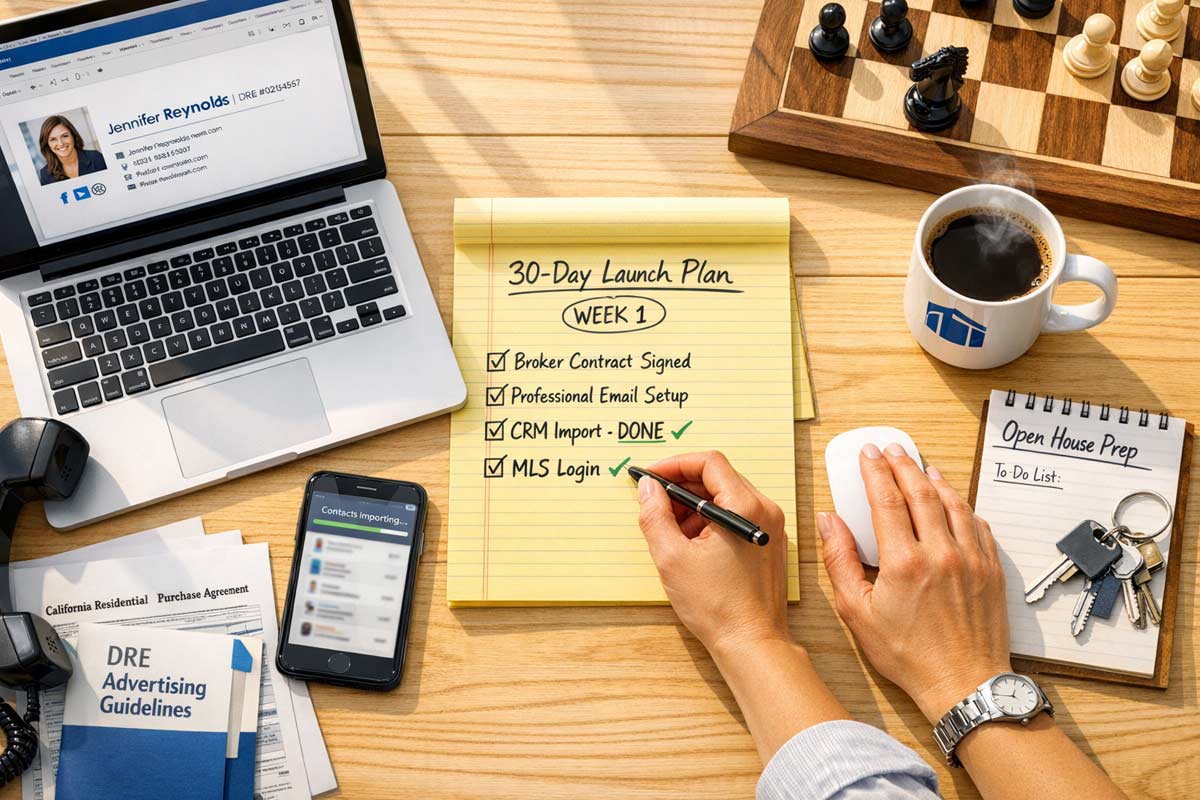
The 30-Day Launch Sequence
✅ The Day 1–2 Checklist: Immediate Momentum
Identify 3 Brokerages: Do not over-analyze. Pick three based on proximity and reputation.
Call the Managers: Request a "New Agent Interview." Do not wait for an "opening."
Audit Your Finances: Make sure you can cover 3–6 months of dues + basic expenses.
Phase 1: The Mandatory First Step – Hang Your License
Practically speaking, you can’t operate solo in California. Your license becomes usable when it’s placed under a supervising broker. Your broker sponsors your license and provides the supervision and compliance umbrella that lets you practice.
Who is this for?
The Solo Agent: You want to build your own brand from Day 1 and keep a higher split.
The Team Agent: You want provided leads and high accountability.
ADHI Recommendation: For most brand-new agents, training beats split—by a lot. A training-heavy team environment provides the systems you need to survive Year 1.
The Brokerage Interview Scorecard
Onboarding: Is there a structured 30-day plan or just a desk?
Costs: What are the monthly tech, desk, and E&O (Errors & Omissions) fees?
Live Training: Can you shadow a listing presentation or an inspection this week?
Directive: Schedule 3–5 interviews. Your goal is a qualified launchpad for your first 12–24 months. If you’re still navigating the timing of your application, read Do You Need to Join a Brokerage Before Applying for a License?.
Phase 2: Setup Week – Activating Your Toolkit
Once sponsored, your first week is about technical setup. Avoid the "Branding Black Hole" and focus on permission-to-play tasks.
Your First 7-Day Setup Checklist
Task
Action Item
Compliant Signature
Include your Name, DRE License #, and Brokerage info (required for compliant advertising).
CRM Import
Export your phone and social media contacts. This is your "Sphere of Influence."
MLS & Supra
Get your MLS login and set up your Supra key for lockbox access.
The "Ask" Rule
Bookmark your broker's guidelines. When unsure on a disclosure, pause and ask your broker.
Phase 3: Your First 30 Days – The "Conversation Engine"
In real estate, Activity > Results. You cannot control a closing, but you can control your scoreboard.
Your First 30-Day Activity Scoreboard
10 New Conversations: Direct, two-way dialogues about the market.
5 Value-Add Follow-Ups: Sending a useful report or link (not just "checking in").
1 Hosted/Shadowed Open House: Your field laboratory for meeting neighbors.
1 Practice RPA: Write a mock Purchase Agreement using your broker’s templates.
Reality Snapshots
The “Ghost” Agent: I’ve seen students pass the exam but wait 60 days to pick a broker. By then, their momentum is dead. The knowledge from the exam has a half-life; use it immediately.
The Branding Trap: One agent spent $500 on a custom logo before their first sphere call. Six months later, they were out of the business with a beautiful, empty website.
The Open House Win: A new agent hosted an open house for a top producer. They didn't sell that house, but met a neighbor who listed with them four months later. That one conversation turned into a $25k commission.
The Top 3 Post-License Traps
"I need a perfect brand first": Your brand is competence and responsiveness. Use your brokerage's templates for 6 months while you learn the contracts.
Tool Overload: You will be pitched "guaranteed leads" by dozens of vendors. The Fix: Use only what your brokerage provides for the first 90 days.
The Expert Fear: You don't need to know everything. Your script is: "That's a great question. Let me confirm this with my broker/manager so I give you the exact answer."
FAQ
"Can I get my license first and choose a broker later?"
Technically yes, but you are losing momentum. Read Top Reasons People Fail to Get Licensed in California to see why delay is the enemy of success.
"What if I feel unprepared?"
The exam proves you know the law; the first 30 days prove you can follow a system. If you haven't finished your hours yet, check Can You Take the Exam Before Completing All 135 Hours? to speed up your timeline.
"What does my broker actually do?"
They are your regulatory partner. They review your files for compliance, provide legal contracts, and pay your commissions. They are the "adult in the room" for your professional liability.
Your Next Step
Getting licensed was the "license to learn." Now, you must execute. If you are still navigating the pre-license requirements, solidify your foundation with our complete California Real Estate License Guide.
Open your calendar now and block 9:00 AM – 11:00 AM tomorrow for "Brokerage Research and Outreach." Treat it like an appointment.
|
TL;DR: The Bottom Line
The Answer (in plain English): No — you can’t be authorized to schedule or take the California real estate exam until the Department of Real Estate Read more...
TL;DR: The Bottom Line
The Answer (in plain English): No — you can’t be authorized to schedule or take the California real estate exam until the Department of Real Estate (DRE) verifies you’ve completed all 135 hours (three 45-hour courses).
The Risk: Submitting your application while you’re “still finishing” your last course is the fastest way to trigger a DRE deficiency notice and delay.
The Solution: Finish your courses, secure your certificates, and follow the "clean-file sequence" to move from candidate to licensee without bureaucratic friction.
Most confusion comes from mixing up applying to the DRE with scheduling an exam date—scheduling your state exam can only happen after DRE approval.
The Truth Table: What You Can (and Can’t) Do Right Now
Action
Possible before 135 hours?
Outcome / Practical Advice
Submit DRE application
Yes (don’t)
Triggers a deficiency notice and adds weeks of delay.
Get Authorization to Schedule
No
The DRE won’t issue an exam invite until your file is 100% complete.
Choose an exam date
No
You can’t access the eLicensing calendar until you’re approved.
Study & exam prep
Yes
Recommended — this is the only “shortcut” that actually works.
The Speed Trap: Why "Almost Done" Is Still a "No"
In my 20-plus years of training thousands of agents at ADHI Schools, I’ve seen one mistake repeat more than any other: the Speed Trap.
It usually starts with a highly motivated candidate who is halfway through their third course. They look at the DRE’s current processing times—which fluctuate—and think they’ve found a loophole. They decide to mail their exam application today, assuming that by the time a DRE processor actually opens their envelope, they will have finished the course and can just "send in the final certificate later."
This is a high-stakes gamble that almost nobody wins. The DRE does not "hold" your spot in line while you finish your homework. If a processor opens your application and the course completion certificate is missing, the process doesn’t pause—it breaks. You won’t just lose time; you’ll lose your momentum and you'll be waiting for a deficiency notice and a new review cycle before you can fix it.
The DRE’s system is built to verify eligibility first — clean files move faster than hopeful ones. In practice, the fastest candidates aren’t the ones who rush—they’re the ones who submit a file with nothing for the DRE to question.
The 135-Hour Rule, Explained Simply
To qualify for the California real estate salesperson exam, state law requires the completion of three DRE-approved pre-licensing courses, totaling 135 hours:
Real Estate Principles (45 hours)
Real Estate Practice (45 hours)
An Elective Course (45 hours—most of our students choose Finance, Appraisal, or Legal Aspects)
Enrollment in these courses is subject to California’s minimum time-in-course rules (usually enforced as a minimum number of days per course). You cannot "crash" these courses in a weekend; the regulatory framework is designed to ensure a minimum level of exposure to the material before you are given the ability to test out.
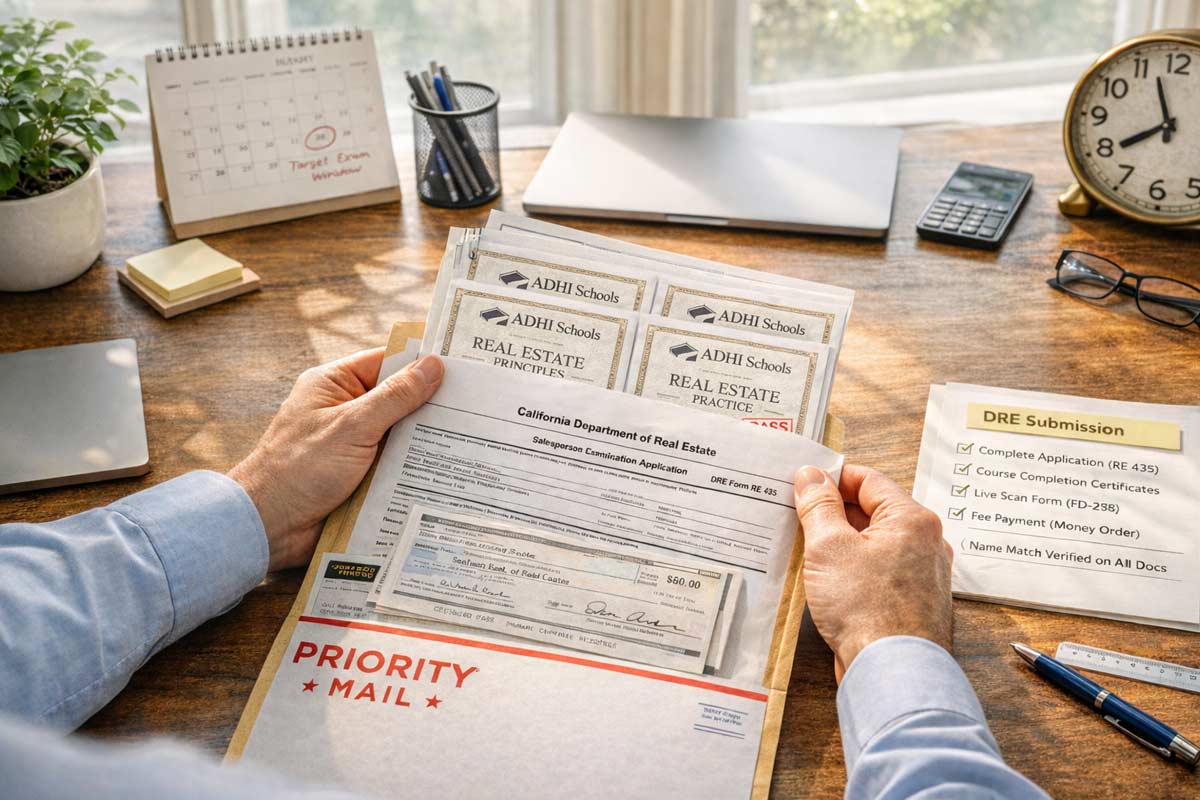
The "Completed" Checklist
The DRE only considers a course "complete" when you have checked these three boxes:
Time Requirement: You have spent the mandated number of days enrolled in the course (18 calendar days typically).
Examination: You have passed the final exam for that specific course with a score of 60% or higher with ADHI Schools.
Documentation: You have received a formal course completion certificate or transcript showing the exact course title and your legal name as it appears on your government-issued ID.
Until you have all three certificates in your possession, you are not an eligible candidate for the state exam.
The Real Answer: "Exam Before Hours" Scenarios
Let’s break down the specific scenarios candidates use to try and bypass the timeline.
Can I schedule the exam before finishing 135 hours?
No. In California, you don’t simply call a testing center and pick a date like you would for a haircut. You must first apply to the DRE. They review your education proof, and only then do they issue an Authorization to Schedule (also known as an Exam Invite). Until you’re approved, you’re not “in line” for an exam seat.
Can I take the state exam before finishing 135 hours?
No. There is no "provisional" testing. The education is a statutory prerequisite. Without the 135 hours, you aren't a candidate; you're just someone with an incomplete application.
What if I’m 90% done with my last course?
No. The DRE does not recognize partial credit. Whether you have 0 hours or 134 hours, the result is the same: Ineligible. You must wait until the final certificate is issued before mailing your application packet.
What if my course is done, but I’m waiting for my certificate?
No. Do not mail your application with a note saying "Certificate coming soon."
What if I finished courses years ago?
Only If. In many cases, older course completion records can still be usable, but the safest move is to verify your course titles and the provider's approval status to make sure you're applying under current DRE rules. If you are unsure if your older classes still count, check our California Real Estate License Guide to ensure your education aligns with today’s standards.
The Fastest Path: The "Clean-File" Sequence
If you want to get licensed as quickly as possible, stop looking for shortcuts and follow this proven sequence. This is the timeline we see work most efficiently for our students.
Complete the 135 Hours: Finish Principles, Practice, and your Elective.
Gather Your Proof: Secure all three course completion certificates. Ensure your name matches your government-issued ID exactly.
Submit the "Combined" Application: Use form RE 435 (Salesperson Exam/License Application). Most first-time applicants should use the combined path so you don’t create a second processing cycle after passing.
The Waiting Window: Once your application is mailed, the DRE enters a review period where they process your file.
Pro-Tip: If you want the full, granular step-by-step from choosing your courses to passing the state exam, start with our California Real Estate License Guide.
What You Should Do While Waiting for Your Exam Date
The period between mailing your application and receiving your Authorization to Schedule is not "dead time." If you just sit and wait, you are actually slowing yourself down. Use this window to handle the "back-office" of your new career:
Live Scan Fingerprints:You don't have to wait until you pass the exam to do your background check. Doing it now means your license can be issued almost immediately after you pass.
Master the Material: The 135 hours of pre-licensing education is the "what." Now you need to learn the "how" of passing the exam. This is when you should be high-quality exam prep tools.
Brokerage Interviews: You can't actually sell real estate without a broker. Use this time to interview different firms. You can learn more about this by reading: Do You Need to Join a Brokerage Before Applying for a License?.
Planning Your Launch: And if you’re trying to plan the first 30 days after activation, read: What Happens After You Get Your California Real Estate License?.
Name Matching Audit: Double-check that your certificates, your application, and your driver’s license all use the same name. If one says "Jim" and the others say "James," fix it now.
3 Costly Mistakes That Will Slow You Down
1. The "In-Progress" Application
As discussed, mailing your application while still enrolled in a course is a guaranteed delay. The DRE is a high-volume government agency; they do not have the resources to "match" a late certificate to an existing file easily. Your file will be set aside, a DRE deficiency notice will be generated, and you will likely have to start the waiting clock all over again.
2. Using the Wrong Application Form
Candidates often use the "Exam Only" form (RE 400) because it's shorter. However, this means after you pass the exam, you have to submit another application for the license itself. This can add significant time to the total process. Always use the combined exam and license application to bypass that second wait.
3. Underestimating the State Exam
I've seen students finish their 135 hours, wait for an exam date, and then fail the exam because they thought the state test would be as easy as the course quizzes. If you fail, you have to reschedule and pay the fee again. This is one of the Top Reasons People Fail to Get Licensed in California.
FAQ: Your Timeline Questions, Answered
Can I apply to the DRE before finishing classes?
Technically, you can mail the form, but it will be treated as a deficient file and you’ll receive a deficiency notice. The DRE requires all three course completion certificates to be included in the initial packet to prove eligibility.
What is an "Authorization to Schedule"?
This is the document the DRE sends you once they have approved your 135 hours and your application. It grants you access to the eLicensing system where you can finally pick your date, time, and location for the exam.
How long are the course certificates valid?
Currently, there is no expiration date on pre-licensing course completions in California.
Is there any way to skip the 135 hours?
Only if you are a member of the California State Bar.
What happens if I pass the exam but haven't picked a broker?
Your license will be issued in "Inactive" status. You won't be able to perform any acts requiring a license or earn commissions until you officially "hang your license" with a broker. See What Happens After You Get Your California Real Estate License? for the next steps.
Speed Comes From Sequence, Not Shortcuts
In the world of California real estate, "slow is smooth, and smooth is fast." The desire to rush the process is understandable—this is a career that offers incredible freedom and income potential. But trying to take the California real estate exam before completing 135 hours is a tactical error that almost always backfires.
True efficiency is found in the "clean-file" sequence: complete your courses, gather your proof, and submit a perfect application. By doing the work correctly the first time, you ensure that once you pass the exam, you are ready to hit the ground running.
Next step (don’t guess):
Start here: California Real Estate License Guide
Ready to begin your courses? → ADHI Schools Pre-Licensing Packages
Choosing a broker next? → Do You Need to Join a Brokerage Before Applying for a License?
|
In my 20+ years helping candidates navigate the California Department of Real Estate (DRE), I have seen perfectly prepared students wait longer than needed for an exam date because of a minor clerical Read more...
In my 20+ years helping candidates navigate the California Department of Real Estate (DRE), I have seen perfectly prepared students wait longer than needed for an exam date because of a minor clerical error. The DRE is a high-volume agency that requires precision; a single mismatch between your ID and your application can lead to a delayed status that halts your progress until the error is corrected.
This guide is your operator’s manual for the DRE application process. Follow these steps to avoid preventable delays and move as efficiently as possible toward your exam date.
The "Fast Path" California Real Estate Exam Checklist
Use this checklist to verify your readiness before logging into the eLicensing system.
Verify Course Completion: Secure your three completion certificates from a DRE-approved provider like ADHI Schools.
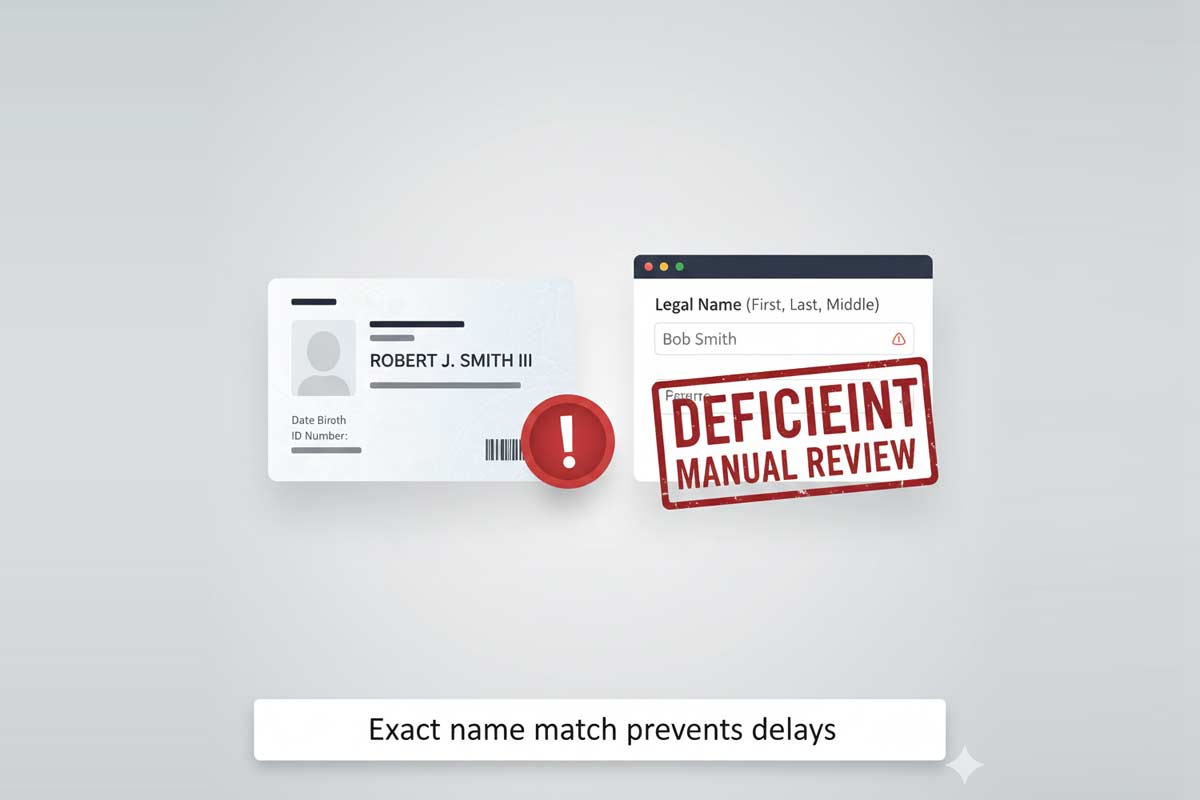
Match Your ID Exactly: Your application name and certificates must mirror your government-issued ID (including middle names, hyphens, and suffixes like Jr. or III).
Select Your Path: Choose "Exam Only" (not recommended) or "Combined Exam and License" (recommended).
Create eLicensing Account: Register your profile on the official DRE website.
Live Scan (Path Dependent): Complete fingerprints upfront if choosing the Combined path (recommended).
Prepare Disclosures: If you will be answering "Yes" to any background questions, gather relevant court records now.
Set Up Communication: Use a consistent email address and add the DRE domain to your "safe sender" list to avoid missing updates in your spam folder.
Review and Submit: Perform a final screen-by-screen review for typos before paying.
Note: Requirements change—always confirm current DRE fees and document standards in your eLicensing account.
Step 1: Confirm Your Eligibility
Before applying for the California real estate exam, ensure you meet the basic requirements:
Age: You must be 18 or older.
Integrity: You must be truthful on your application.
Education: You must have completed three DRE-approved courses: Real Estate Principles, Real Estate Practice, and one elective.
Don’t guess. Ensure your certificates are from a DRE-approved provider. If your document doesn’t clearly list the provider name and course titles exactly as shown on your completion certificate/transcript, contact your school before you apply.
Step 2: Choose Your Application Path
Selecting the wrong path is a major source of confusion for new applicants.
Salesperson vs. Broker: Most candidates begin with the Salesperson application. Broker forms are for those with two years of full-time experience or a qualifying degree as defined by DRE broker qualification rules.
Exam Only vs. Combined:
Exam Only: This allows you to schedule the test. You apply for the actual license only after you pass the exam.
Combined Exam and License: This is generally the most efficient route, but it requires you to have your fingerprints and documents perfectly organized upfront. Once you pass, the DRE can often move straight to the license issuance process.
Do I need Live Scan before I apply? If you choose the "Exam Only" path, no. If you choose the "Combined" path, yes—you must complete the Live Scan before submitting.
Step 3: Document Preparation and Name Consistency
In my experience, one of the most common causes of a Deficient application is a name mismatch. If your ID says "Robert J. Smith III" but your application says "Bob Smith," the DRE system may flag your file for manual review.
Have these ready:
Government-issued ID: Your government issued identification must mirror your course completion certificates.
Course Completion Certificates: You need the course titles and completion dates exactly as they appear on your certificates.
Background Documentation: Answer every background question on the application exactly as asked. If you answer "Yes" to any question regarding prior criminal convictions or charges (such as a DUI or expunged item), have the certified court records ready to avoid delays.
Step 4: Submit the Application in eLicensing
Using the eLicensing portal is significantly faster and more trackable than a paper application.
Login: Access the DRE eLicensing portal.
Select Application: Choose your path (Salesperson Exam or Combined).
Data Entry: Input your course details carefully.
Uploads: Attach clear, right-side-up PDF copies of your documents. Blurry photos or upside-down scans can trigger manual review delays.
Payment: Use a credit or debit card for immediate fee processing.
STOP: The Pre-Submit Review
Before you click "Submit," perform this quick check of the Common mistakes applicants make on DRE forms. This review is your best defense against avoidable delays.
Verify these points:
Is your Social Security Number or ITIN correct?
Did you upload all three required certificates?
Is your name an exact match for your ID and certificates?
Are your "Yes/No" background answers fully transparent and truthful?
Step 5: Fingerprints and Background Checks
For the Combined Path, you must complete a Live Scan at a participating service provider. The Live Scan operator must use the exact DRE-specific form and codes. If your name is misspelled on the fingerprint form, the DRE may not be able to link the results to your application, delaying approval until the results can be manually matched.
Step 6: What Status Changes Mean in eLicensing
Once submitted, your application enters the DRE queue. You can track progress via your portal. You may see statuses such as:
Processing: The DRE has received your application but has not yet reviewed it.
Additional information needed: Information is missing or incorrect. Check your email (and spam folder) immediately for a deficiency notice.
Exam Eligibility / Ready to Schedule: You are approved and can now select your exam date and location.
Pro Tip: Monitor the DRE Processing Timeframes page online. If their current processing date passes your submission date and you haven't heard anything, it's time to follow up.
Step 7: Fixing Problems Fast
If the DRE flags your application as Deficient, speed and precision are vital.
Missing Documentation: If a certificate failed to upload, log in and add the correct PDF immediately.
Specific Requests: If the DRE requests a name clarification or a document to explain a name change, provide exactly what they ask for without delay.
Incomplete Disclosures: If the DRE requests more info on a prior background issue, provide the certified records immediately.
Rushing is the primary cause of errors. Take ten extra minutes during the initial application to avoid the frustration of a pended file.
FAQ
How long does it take to get an exam date? Wait times fluctuate based on DRE volume. Check the "Current Processing Timeframes" on the DRE website for the most accurate estimate.
Can I change my exam date? Yes, you can reschedule via eLicensing. Rules and potential fees depend on how close you are to the exam date; confirm these details within your eLicensing account.
What happens if I fail the exam? You can apply for a re-take through eLicensing. You do not need to redo your education, but a re-examination fee will apply.
Secure Your Most Efficient Path
Don't let bureaucracy stand between you and your career. By being precise with your paperwork now, you ensure the cleanest possible path to the exam room.
For a complete look at the entire licensing process—from your first course to your first day at a brokerage—use our California Real Estate License Guide.
|
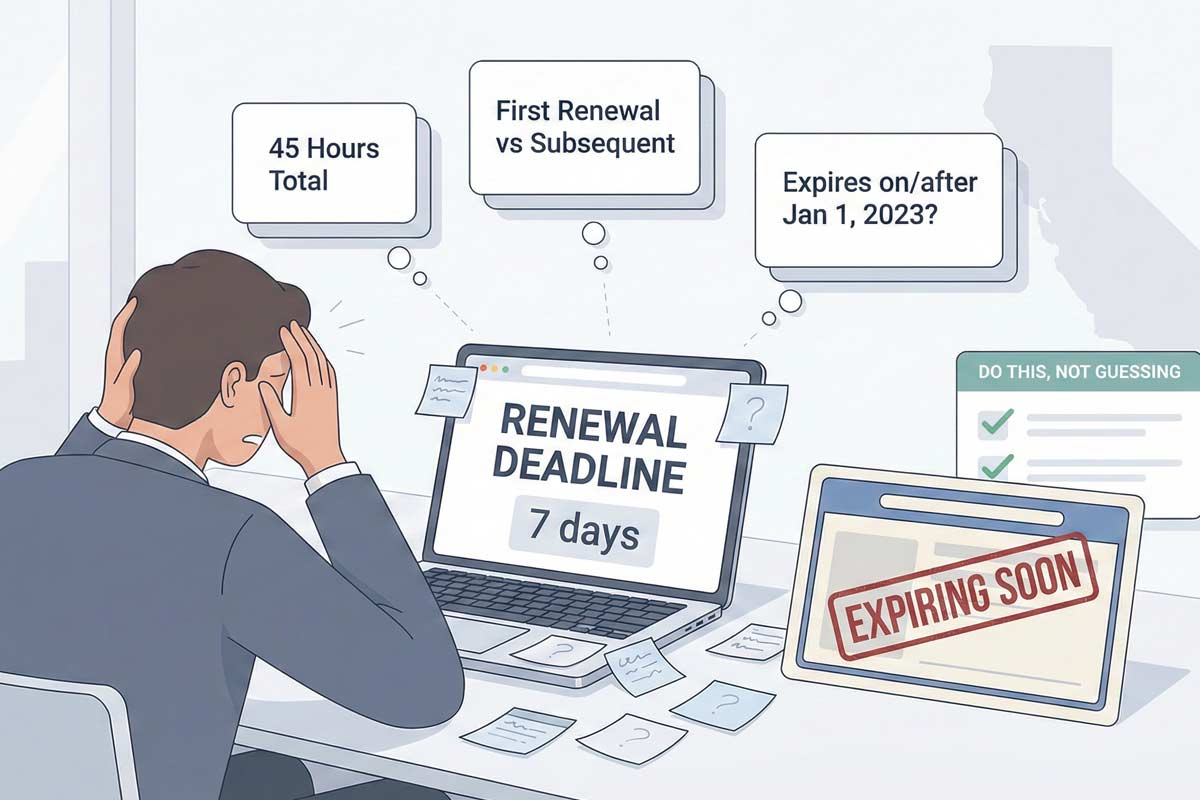
It starts with a notification or a glance at your license. The expiration date is looming—maybe next month, maybe next week—and the panic sets in.
You know you need "Continuing Education," but Read more...
It starts with a notification or a glance at your license. The expiration date is looming—maybe next month, maybe next week—and the panic sets in.
You know you need "Continuing Education," but the rules seem to change every time you check. Do you need the 9-hour survey or separate courses? Is implicit bias required this year? What happens if you take the wrong bundle?
If you are staring at a renewal deadline, stop guessing. Taking the wrong courses can result in a rejected application and a lapsed license—meaning you literally cannot practice real estate until your expired license is renewed.
Here is the no-fluff, compliance-grade breakdown of exactly how many hours you need and, more importantly, which hours count.
Fast Answer: How Many CE Hours Are Required?
The short answer: All California real estate licensees (salespersons and brokers) must complete 45 hours of DRE-approved Continuing Education to renew their license.
The critical nuance: You cannot just take "any" 45 hours. The DRE strictly regulates how those 45 hours are broken down based on three factors:
Your License Type (Salesperson vs. Broker)
Your Renewal Status (First-time renewal vs. Subsequent renewal)
Your Expiration Date (Whether your license expires on/after January 1, 2023, or you are renewing late after that date)
If you just buy the cheapest "45-hour bundle" without checking these factors, you risk taking courses that the DRE will not accept.
Bottom Line: Everyone needs 45 hours. But the composition of those hours changes depending on where you are in your career.
The 45-Hour Breakdown (Make It Simple)
To get your renewal approved, your 45 hours must be stacked correctly. The DRE divides CE into three specific buckets.
Mandatory Subjects: These are the "core" legal topics (like Ethics and Agency). You cannot skip these.
Consumer Protection: You must take a minimum of 18 hours in this category. These courses might cover technical skills like energy efficiency, land use, or valuation.
Consumer Service: These are "elective" topics (like sales skills or marketing).
First Renewal vs. Subsequent Renewals (Where People Get Burned)
This is the #1 source of confusion. The DRE requires first-time renewers to take "separate" courses to ensure they truly learn the basics. Veterans get to choose to take either a "survey" course or each course individually.
Scenario A: First-Time Renewal (Salesperson)
If you are renewing your salesperson license for the very first time, you cannot take the 9-hour survey. You must complete 5 separate 3-hour courses for the mandatory topics.
Your 45-Hour Stack:
Ethics (3 hours)
Agency (3 hours)
Fair Housing (3 hours, must include an interactive participatory component where you role-play as both a consumer and a real estate professional)
Trust Fund Handling (3 hours)
Risk Management (3 hours)
Implicit Bias Training (2 hours)
Consumer Protection (18 hours minimum)
Remaining Hours (Consumer Protection or Consumer Service)
Scenario B: First-Time Renewal (Broker)
Brokers have a higher standard of duty. If you are renewing a broker license for the first time, you have an extra mandatory topic: Management & Supervision.
Your 45-Hour Stack:
All 5 separate courses listed above
PLUS: Management & Supervision (3 hours)
Implicit Bias Training (2 hours)
Consumer Protection (18 hours minimum)
Remaining Hours (Consumer Protection or Consumer Service)
For a complete breakdown of every specific rule, bookmark our master California Real Estate License Renewal Guide.
Scenario C: Subsequent Renewals (All Licensees)
Once you have successfully renewed at least once, you graduate to "Subsequent Renewal" status. This applies to both salespersons and brokers.
Your 45-Hour Stack:
Individual courses or Survey Course: You can choose to take some of coursework either as a bundle or choose to take the courses individually.
Consumer Protection (18 hours minimum)
Remaining Hours (Consumer Protection or Consumer Service)
Warning: If you are a first-timer and you accidentally take the "9-Hour Survey" because it was cheaper or faster, the DRE will reject your renewal. You must take the separate courses.
Do Brokers Have Different CE Requirements?
Yes, but primarily on that first renewal.
As mentioned above, brokers typically need to complete the Management & Supervision course as a standalone 3-hour requirement during their first renewal cycle. The DRE expects brokers to understand how to manage offices and supervise agents from day one.
On subsequent renewals, brokers and salespersons are in the same boat—both can take the survey course, which includes the Management & Supervision module.
For a deeper dive into broker-specific nuances, read Do Brokers Have Different CE Requirements in CA?.
What Counts Toward CE Hours (And What Doesn’t)
Not every real estate class you take counts toward your 45 hours.
1. It Must Be DRE-Approved If you took a weekend seminar on "Luxury Home Marketing" at a hotel, or watched a YouTube series on sales tactics, those likely do not count. Only courses from a DRE-approved sponsor (like ADHI Schools) are valid, and you’ll enter the 8-digit CE course number in eLicensing to prove it.
2. Interactive Fair Housing (The "Interactive" Rule) Since 2023, you cannot just read a PDF on Fair Housing. If your license expires on or after January 1, 2023 (or you are renewing late after that date), your 3-hour Fair Housing course must include an interactive participatory component where you role-play as both a consumer and a real estate professional.
In-Person: This involves live role-play.
Online: This usually involves scenario-based questions where you "act" as the buyer or agent in a digital simulation.
For a full list of valid course types, check out What Courses Count Toward CE in California?
Realistic Time Planning (Stop the Last-Minute Crunch)
I see this happen every month: an agent realizes their license expires in 48 hours and tries to "cram" all 45 hours in one weekend.
This is physically impossible.
Why? Because of the 15-Hour Rule. This isn’t just an ADHI policy—DRE regulations limit correspondence CE to 15 credit hours of final exams in any 24-hour period, which is why true last-minute cramming often fails. These testing periods commence after the maximum of 8 hours per day of study time.
Day 1: Max 15 hours.
Day 2: Max 15 hours.
Day 3: Max 15 hours.
The Math: Including the study time, ADHI’s renewal package requires a minimum of just over 8 days to complete. This means if your license expires tomorrow and you haven’t started, you are going to expire.
My Advice: Start at least 30 days out. Do one course (3 hours) per evening. It’s stress-free, and you’ll actually retain the information rather than just clicking "Next" in a panic.
Common Mistakes That Delay Renewal
Over the last 20 years, we’ve seen thousands of renewals. Here are the most common reasons the DRE kicks them back:
Taking the "Subsequent" Package Too Early: First-time agents love the idea of a 9-hour survey. Don't do it. You need the separate courses.
Missing Implicit Bias: This is a newer requirement (effective 2023). If your bundle is old, check if it includes this. (Read more: Does California Require Implicit Bias Training for Renewal?)
Name Mismatch: If your CE certificate says "Bob Smith" but your license is under "Robert Smith," the eLicensing system might flag it. Ensure your profile matches your certificates.
Letting the license expire: You can renew during the two-year late renewal period, but you cannot perform licensed activity until the DRE renews you. To avoid any lapse, submit before your expiration date.
Assuming the "70/30 Exemption" Applies: Some agents think once they turn 70, they are exempt. You must be 70 AND have 30 years of continuous good standing. If you let your license lapse for a month 10 years ago, that clock might have reset.
To ensure you have the full checklist for this year, review California Real Estate License Renewal Requirements (2026).
Mini-Checklist: "Before You Hit Submit"
Before you log into eLicensing, ensure you have:
45 Hours Total on your certificates.
Correct Mandatory Topics (Separate courses for 1st timers; Survey or individual courses for subsequent).
Implicit Bias certificate (2 hours).
Interactive Fair Housing certificate.
At least 18 hours labeled "Consumer Protection."
Course Numbers (8-digit) ready to type in.
FAQ: California CE Hour Requirements
Is it always 45 hours to renew a California real estate license? Yes. Whether you are a salesperson or a broker, and whether it is your first or tenth renewal, the total requirement is 45 hours. The only exception is for licensees who qualify for the "70/30 Exemption" (70 years old with 30 years of continuous good standing).
Do brokers need more CE hours than salespersons? No, brokers also need 45 hours. However, for their first renewal, brokers must include a specific 3-hour course on "Management & Supervision," whereas salespersons do not. On subsequent renewals, both licensees typically take the same 9-hour survey course.
What if I’m renewing late—do I need extra CE? Generally, no. You can renew late for up to two years after expiration, but you cannot practice while expired. If you don’t complete late renewal within that two-year window, your renewal rights are forfeited.
Does implicit bias training count toward the 45 hours? Yes. The 2-hour Implicit Bias training is part of the 45-hour total. It is a mandatory course, meaning you cannot skip it, but the time spent on it counts toward your total requirement.
Can I finish all 45 hours in one day? No. DRE regulations limit you to completing 15 credit hours of final exams per 24-hour period. This means the fastest you can theoretically complete the 45 hours is over 3 to 4 days after the study period has lapsed.
|
Fast Answer: Your 2026 Renewal Snapshot
If you are staring at a real estate license renewal notice (or dreading its arrival), here is the bottom line. Most (there’s an exception I will discuss in Read more...
Fast Answer: Your 2026 Renewal Snapshot
If you are staring at a real estate license renewal notice (or dreading its arrival), here is the bottom line. Most (there’s an exception I will discuss in a bit) licensees cannot renew their California real estate license without checking these boxes.
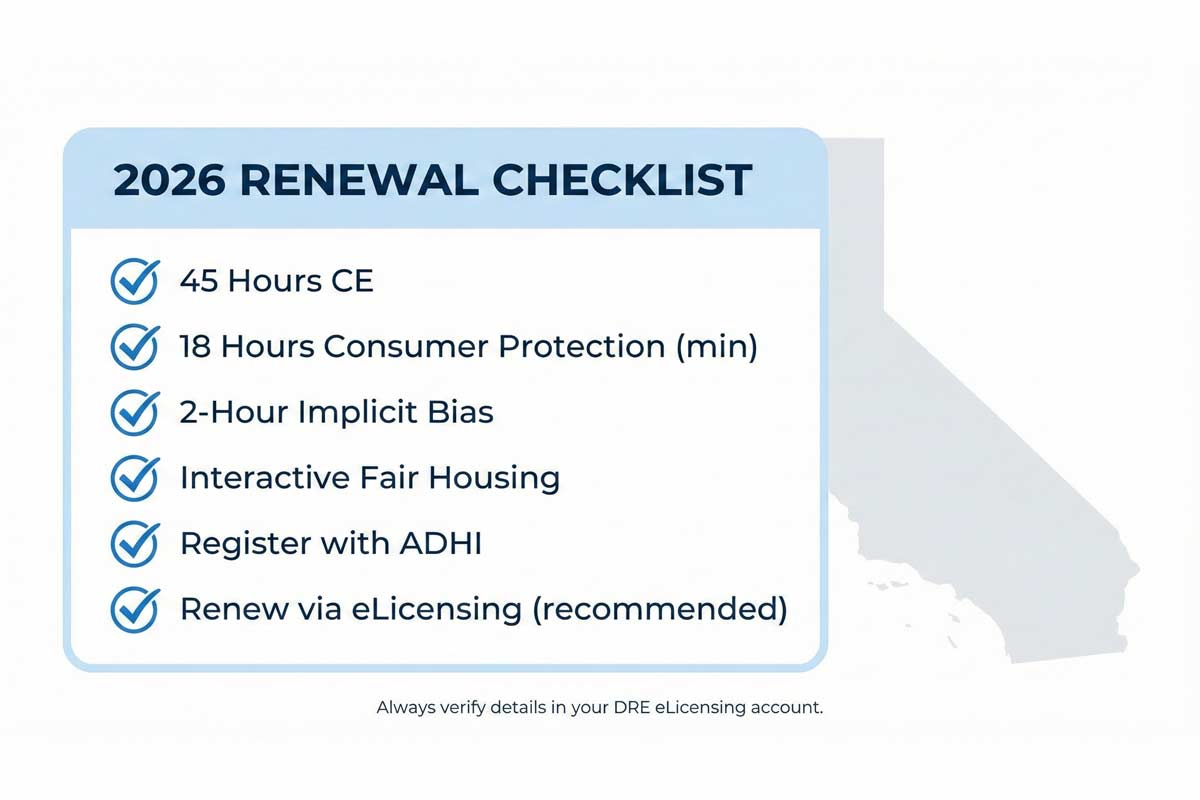
Total CE Hours: 45 hours (generally required, unless you qualify for the 70/30 exemption).
Renewal Cycle: Typically every 4 years.
The "New" Standards: If your license expires on or after Jan 1, 2023, you must have the 2-hour Implicit Bias course and the Interactive Fair Housing course. (Older certificates without these specific components will not satisfy current renewal requirements).
Submission Method: DRE eLicensing system (recommended and fastest) or mail (slower).
Earliest You Can Renew: Often about 90 days before expiration (check your eLicensing account for your specific window).
Absolute Minimum Time to Complete CE: ADHI Schools’ renewal program can be completed in about 8 days from the time of registration to completion. CE providers enforce a limit of 15 credit hours per 24-hour period to prevent "speed clicking" under DRE rules. This means you cannot cram 45 hours of course completion into a single weekend.
Who This Applies To (Read This First)
Before you buy a package, verify your status. The California real estate license renewal requirements for 2026 differ depending on where you are in your career.
First-Time Renewal vs. Subsequent Renewal
First-Time Salesperson: You cannot take the shortcut "Survey" course. You must take five separate 3-hour courses (Agency, Ethics, Trust Fund Handling, Risk Management, Fair Housing) plus the 2-hour Implicit Bias course, and at least 18 hours of Consumer Protection.
Subsequent Renewal (2nd, 3rd, etc.): You are eligible for the 9-hour Survey Course. Per DRE rules, this single course covers all 7 mandatory topics (the five above, plus Implicit Bias and Management & Supervision). It is streamlined, but you still must enter the completion details for the remaining hours.
Broker vs. Salesperson
Brokers: You must include "Management & Supervision" in the required subject set on your first renewal.
Salespersons: For subsequent renewals, Management & Supervision is effectively required because it is included in the standard 9-hour Survey Course.
Kartik’s Insider Note: "I’ve seen veteran agents assume they know the rules because they’ve renewed five times. Then they get flagged because they missed the Implicit Bias requirement or took a Fair Housing course that lacked the 'interactive' component. Don't coast on autopilot."
For a complete breakdown of the entire process from start to finish, bookmark our master California Real Estate License Renewal Guide.
The 2026 Renewal Requirements (Detailed Breakdown)
The DRE (Department of Real Estate) is strict about course validity. If your course completion dates or course numbers don't match the current requirements, your renewal may be flagged.
1. The 45-Hour CE Requirement
Most licensees must complete 45 hours of DRE-approved Continuing Education. These hours are broken down into Mandatory Subjects and Consumer Protection (with a limit on Consumer Service hours).
How Many CE Hours Are Required for CA License Renewal?
First-Time Salespersons: 5 separate 3-hour courses (Ethics, Agency, Fair Housing, Trust Funds, Risk Management) + 2-hour Implicit Bias + 18 hours Consumer Protection + remaining hours (Consumer Service max 27 hrs).
First-Time Brokers: 6 separate 3-hour courses (Adds Management & Supervision) + 2-hour Implicit Bias + 18 hours Consumer Protection + remaining hours.
Subsequent Renewals (All): 9-hour Survey Course or individual courses (covering mandatory topics) + 18 hours Consumer Protection + remaining hours.
2. The "Must-Have" Courses (Current Standard)
Two specific requirements trip people up the most:
Implicit Bias Training (2 Hours): This is non-negotiable. Does California Require Implicit Bias Training for Renewal? Yes, effective Jan 1, 2023.
Interactive Fair Housing: You cannot just read a PDF. The course must include an "interactive participatory component." While DRE mandates role-play, in online on-demand courses, this is typically built in as scenario-based interactions (you generally aren't performing live, but you must actively engage with the module).
3. Broker-Specific Rules
If you hold a broker license, you must ensure you are covered on "Management & Supervision."
Do Brokers Have Different CE Requirements in CA? Yes, specifically on the first renewal. Brokers must take "Management & Supervision" as a standalone 3-hour course. (On subsequent renewals, it is included in the 9-hour survey for everyone).
Timeline: When to Start (Don't Ignore This)
Real estate is stressful enough without losing your license because you forgot a deadline.
60 Days Out: Check your eLicensing account. Is your email address current? Do you have any citation fines outstanding?
45 Days Out: Purchase your CE package. Give yourself a buffer.
14 Days Out (The "Safe Zone"): Finish your exams. DRE systems can go down for maintenance. Certificates can get misplaced. Do not be the person finishing their exam at 11:30 PM on your expiration date.
Expiration Date: If you submit your renewal on time (before midnight), you can typically continue operating even if the processing takes a few days (under B&P Code 10156.2). However, if you miss the deadline, you are late. Once late, you cannot legally perform licensed activities until the renewal is fully processed.
Common Mistakes That Delay Renewal
After helping thousands of students, here are the real-world scenarios where I see agents get stuck.
Scenario A: The "Fast Reader" Trap
The Situation: Agent Mike waits until 3 days before his license expires. He buys a 45-hour package and tries to power through it in one weekend.
The Result: The renewal will be late. DRE rules require CE platforms to enforce a limit of 15 credit hours per 24-hour period once the exams are unlocked to prevent "speed clicking." Mike’s license expired because the platform physically wouldn't let him take the final exam in time.
Scenario B: The "Wrong Course" Disaster
The Situation: Broker Sarah takes a generic "Fair Housing" course from a cheap provider that wasn't updated for California's interactive requirement.
The Result: She submits her renewal. A week later, the DRE flags it: "Missing Interactive Component." She has to find a new course, pay again, and re-submit. What Courses Count Toward CE in California? Only those with specific DRE approval numbers that meet current legislative standards.
Step-by-Step: How to Renew Without Drama
Verify Your Expiration Date: Log into DRE eLicensing.
Complete Your 45 Hours: Ensure your provider gives you course completion certificates for each course. You will need the 8-digit Course Number for the next step.
Log in to eLicensing: Select "Renew License."
Enter Course Numbers: Use the 8-digit number printed on your CE completion certificate (the one eLicensing asks for) and the completion date exactly as they appear on your documents. Don’t share these secret codes with anyone.
Pay the On-Time Fee:
Salesperson: Check DRE fee schedule (approx. $350).
Broker: Check DRE fee schedule (approx. $450).
Print Your Receipt: If your application is on time and clean (no background issues), your status should update to "Licensed" with a new 4-year expiration date often immediately.
FAQ: Quick Renewal Answers
Q: Can I renew my license after it expires? A: Yes. You have a two-year "grace period" (Late Renewal). You must pay a higher late fee and you cannot practice real estate during this gap until the renewal is fully processed and your status shows "Licensed" again.
Q: Do I need to submit my printed certificates to the DRE? A: Usually, no. You enter the course numbers into eLicensing under penalty of perjury. However, the DRE can audit you. Keep your PDF certificates for at least 4 years.
Q: I am over 70 years old. Do I still need CE? A: Maybe not. If you are 70+ and have been licensed in good standing for 30 continuous years, you can apply for the "70/30 Exemption."
Q: How much does the renewal cost in 2026? A: Fees are subject to change. Always check the DRE fee schedule directly before paying.
Q: What is the difference between Consumer Protection and Consumer Service? A: Consumer Protection courses cover topics that directly protect the public (like laws and disclosures). Consumer Service courses focus on professional skills (like marketing). You must have at least 18 hours of Consumer Protection, meaning you are limited to a maximum of 27 hours of Consumer Service.
Don't Let a Paperwork Error Cost You a Commission
Renewal shouldn't be a guessing game. If you are approaching your deadline, get your CE done with a trusted provider like ADHI Schools, and get your application in early.
Need a deeper dive on the forms, fees, and reinstating a lapsed license? Read the full California Real Estate License Renewal Guide next.
|
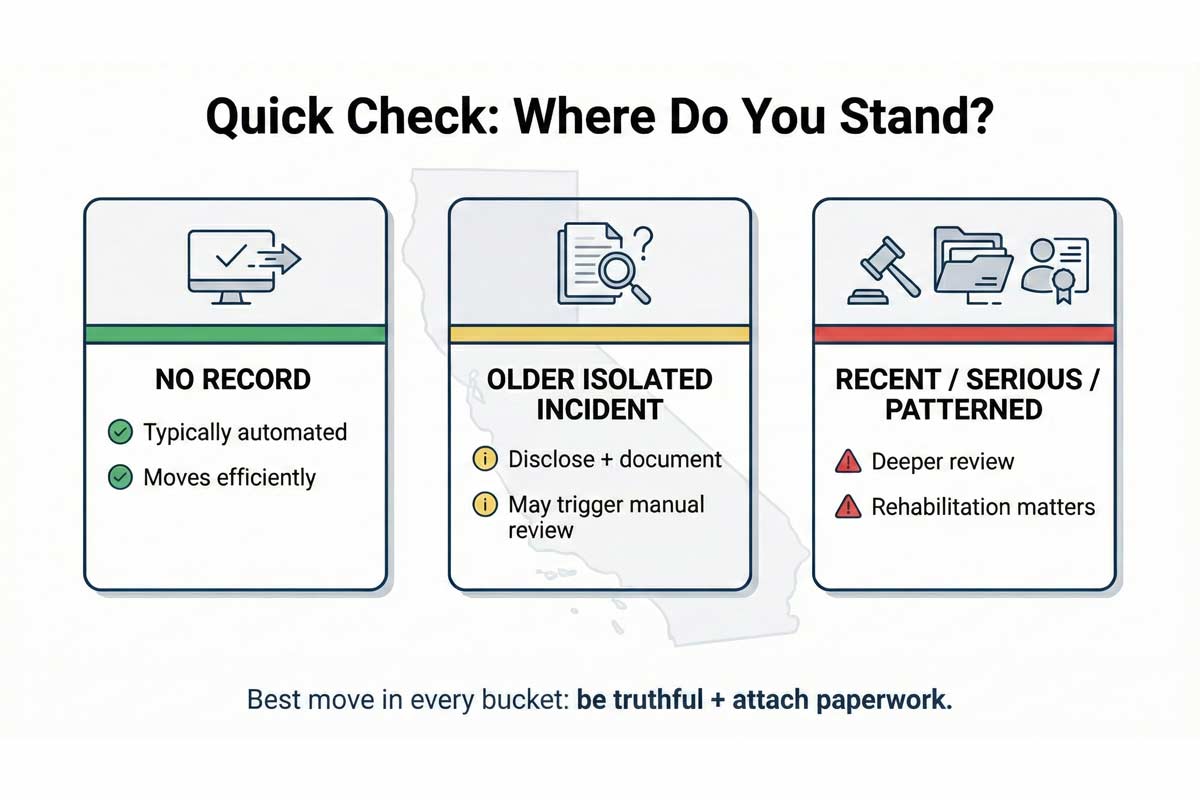
For many applicants, the most stressful part of getting a license isn’t the real estate license courses or the real estate exam—it’s the California real estate license background check.
The Department Read more...
For many applicants, the most stressful part of getting a license isn’t the real estate license courses or the real estate exam—it’s the California real estate license background check.
The Department of Real Estate (DRE) runs a fingerprint-based check on applicants as part of the licensing process. While many people with past infractions navigate this step successfully, others face delays or denials—often not because of the crime itself, but because of how they handled the application.
Disclaimer: I am a real estate educator, not an attorney. This article is for informational purposes only. If you have a complex criminal history, consider consulting a lawyer specializing in administrative law.
Quick Check: Where Do You Stand?
Before diving into the details, identify which "bucket" you likely fall into. This helps set your expectations.
No Record: If you have no criminal history, the process is typically automated and moves efficiently.
Older Isolated Incident: An incident from years ago often requires disclosure and may trigger a manual review, but outcomes depend heavily on the specific facts and documentation provided.
Recent, Serious, or Patterned Record: Felonies, crimes involving money/theft, or a pattern of repeat offenses will generally trigger a deeper review. Approval is not guaranteed and requires strong evidence of rehabilitation.
What "Background Check" Actually Means
The DRE uses a "Live Scan" service request. This digital fingerprinting process checks your prints against California Department of Justice (DOJ) and FBI databases.
It can surface criminal history information; what appears depends on record reporting and the specific questions being asked. The Live Scan system simply reports data—it does not make the decision. The DRE's Licensing Section reviews the results to determine if you meet the requirements for licensure.
If you are trying to time your application, understanding the logistics matters. You can learn more about the timeline here: How Long Does the CA Real Estate Fingerprinting Process Take?
The Core Metric: "Substantial Relationship"
The DRE evaluates whether a crime or act has a "Substantial Relationship" to the duties of a real estate licensee.
Because agents handle client funds, enter private homes, and negotiate binding contracts, conduct in these areas tends to draw more scrutiny because it relates to trust, money, and consumer protection:
Dishonesty: Theft, fraud, embezzlement, forgery, or tax evasion.
Money Handling: Financial mismanagement or passing bad checks.
Safety & Trust: Conduct suggesting consumer risk, impaired judgment, or danger to others.
Beyond the Charge: Your "Risk Profile"
The DRE considers contextual factors to build a risk profile:
Recency: The more time since the incident, the more it may be mitigated—especially with a clean record since.
Pattern:Repeated behavior suggests a habit rather than an isolated mistake.
Harm: Acts that caused financial loss or physical harm typically draw higher scrutiny.
Compliance: Outstanding court obligations (probation, fines, restitution) are major red flags.
Rehabilitation: Evidence of positive change, such as education or steady employment, is critical.
The #1 Application Killer: Non-Disclosure
The fastest way to complicate your application is to hide your history. If the form asks a question, answer that question—don’t answer the version you wish it asked.
If you check "NO" on a criminal history question when the correct answer is "YES," the DRE may view it as a new act of dishonesty. This can be grounds for denial even if the original offense was minor.
Crucial Warning: Consistency Matters
Your written explanation must match the official court paperwork. If you say an incident happened in 2015 but the court docket says 2017, or you list a different charge than what is on the record, it triggers follow-up questions. Double-check your dates and charges against the actual documents before writing your statement.
Operational Checklist: What to Do BEFORE You Apply
Don’t wait until you are filling out the form to start digging.
Request Court Dispositions: Contact the court clerk for certified copies of the final disposition for any incident.
Gather Proof of Compliance: Get written proof (completion letter/receipt), not just verbal confirmation.
Draft Your Statement: Use the facts from your court documents to write a concise explanation.
Review the Application Line-by-Line: Read the disclosure questions on the DRE form carefully to ensure you truthfully answer exactly what is asked.
Micro-Template: Personal Statement
Keep your explanation factual, accountable, and brief. Attach this to your application if required.
Incident: Date / Charge / Disposition / Completion status
Accountability: One clear sentence taking responsibility for the actions.
Rehabilitation: List steady employment and/or education since the incident.
Current Standard: One sentence affirming commitment to professional ethics.
Note: Attach your court paperwork to back this up. Don’t rely on memory.
What Happens If You Are Flagged?
If the background check triggers a review, the process typically follows these steps:
Manual Review: An analyst examines your history and documents.
Inquiry: The DRE may request additional information or clarification. Respond immediately to avoid delays.
Decision: Clearance OR a formal denial notice/Statement of Issues with options described in writing.
How to Position Your Application
Your goal is to show stability and honesty.
DO THIS
DO NOT DO THIS
Be direct. State the charge and date clearly.
Be vague. "I had a run-in with the law."
Show stability. Provide proof of steady work history.
Overshare. Avoid emotional stories or excuses.
Take ownership. "I made a poor decision."
Blame others. "The system was unfair."
Provide paperwork. Certified court docs are essential.
Make them hunt. Don't force DRE to search for your files.
Real-World Scenario:
I recall a student with a theft conviction from her early 20s who disclosed it fully, attached court records, and provided a character letter from her employer. Submitting documentation upfront can reduce follow-up requests compared to leaving the reviewer guessing.
Frequently Asked Questions
Will a misdemeanor stop me from getting licensed?
Not necessarily. The DRE looks at the nature of the crime (Does it relate to real estate duties?) and how much time has passed. A misdemeanor involving dishonesty is viewed differently than one that does not.
What if it was a long time ago?
Time is often a mitigating factor. A clean record for a significant period helps demonstrate rehabilitation and reduces the "risk profile."
Do arrests matter or only convictions?
Answer exactly what the DRE application asks. If the question asks for convictions, disclose them. Pending matters (arrests awaiting trial) may delay review until resolved.
Does expungement mean I don't have to disclose?
Some licensing processes still require disclosure even after dismissal/expungement—follow the instructions on the specific DRE form.
What if I forgot to list something?
If you realize you made an error after submitting, contact the DRE immediately to amend your application. Self-correcting is always better than letting them discover the omission on their own.
The Bottom Line
A background check is a standard part of protecting the public. If you own your past, provide the right documentation, and focus on your current qualifications, you improve your odds of a smooth process
Ready to map out the rest of your journey? Check out our complete Check out our complete California Real Estate License Guide.
|
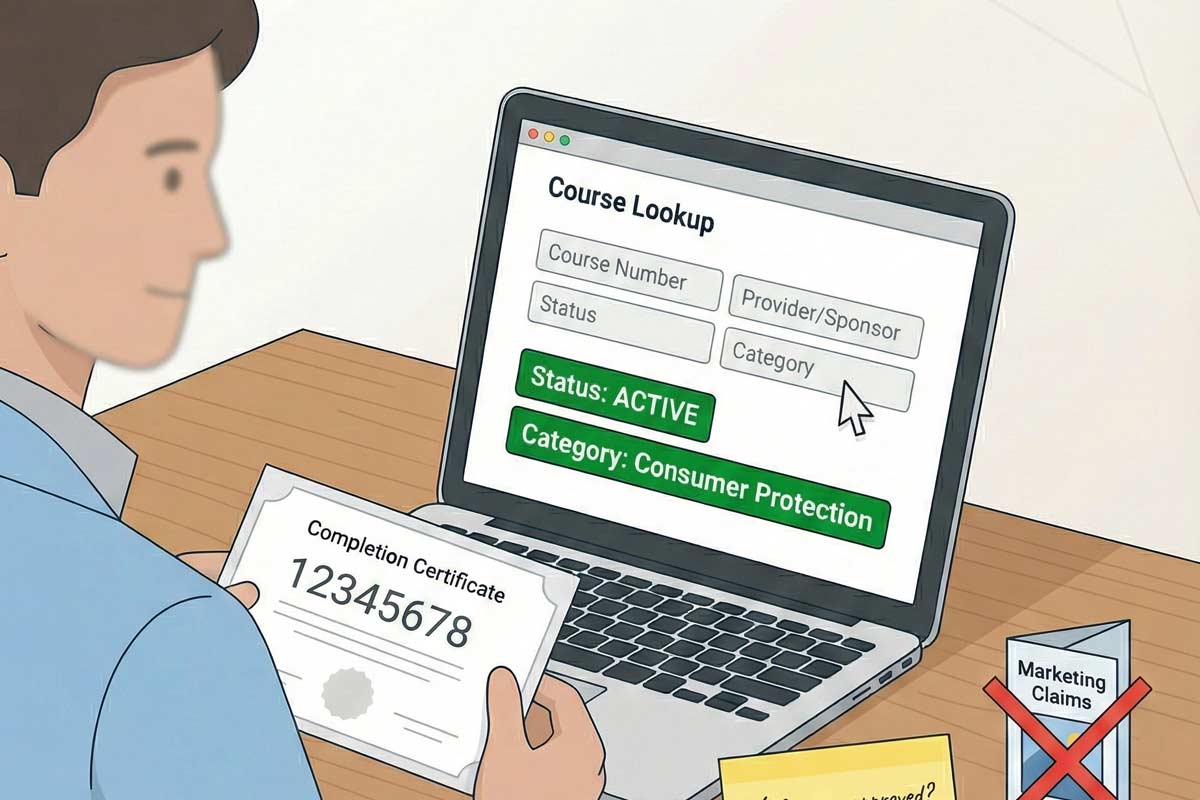
The single biggest mistake I see agents make during renewal isn’t failing a test—it’s finishing 45 hours of education only to realize none of it counts.
Just because a class is about real estate Read more...
The single biggest mistake I see agents make during renewal isn’t failing a test—it’s finishing 45 hours of education only to realize none of it counts.
Just because a class is about real estate doesn’t mean the California Department of Real Estate (DRE) accepts it for your license renewal. Your office sales training? Probably doesn’t count. That motivating weekend seminar? Likely doesn’t count.
If you rely on unapproved courses, you risk a lapse in your license status where you cannot legally conduct business.
Here is the no-nonsense guide to exactly what counts, what doesn’t, and how to verify your courses before you spend a dime.
The Fast Answer: What You Need to Know
If you are in a rush, here is the bottom line on course eligibility:
Only DRE-Approved Counts: If the provider doesn’t have a DRE Sponsor Number and the course doesn’t have a DRE Course Number, it does not exist in the eyes of the state.
The Math Matters: You must complete your Mandatory Subjects first, then a minimum of 18 hours of Consumer Protection. Only the remaining hours can be Consumer Service or Consumer Protection.
Interactive Rule: Your Fair Housing course must include an interactive participatory component where you role-play as both a consumer and a professional. A PDF-only read-through is not enough.
Implicit Bias is Mandatory: For licenses expiring on or after Jan 1, 2023, you must complete an Implicit Bias training course.
Verify First: Always check the course number in the DRE database before paying.
Start Here: If you are unsure about the big picture, bookmark our California Real Estate License Renewal Guide for the complete roadmap.
What Does “DRE-Approved” Actually Mean?
For a course to count toward your Continuing Education (CE), it must meet two criteria:
It is offered by a DRE-approved Sponsor (a school or provider).
The specific course has been reviewed and assigned a DRE Course Number.
The DRE measures education in “clock hours.” When we say you need 45 hours, we mean 45 credit hours approved by the state—not necessarily 45 hours of sitting in a chair if you are a fast reader, but the content must match that volume.
Crucial: You must receive an official Completion Certificate featuring an 8-digit certificate number. You should retain these certificates for four years after your renewal in case you are audited.
The 60-Second Decision Tree: What Counts for You?
What you need depends entirely on where you are in your career.
1. Are you a Salesperson renewing for the FIRST time?
What counts: You have a strict list. You need 5 separate three-hour courses in Ethics, Agency, Trust Funds, Fair Housing (with interactive role-play), and Risk Management.
Plus: You need a 2-hour Implicit Bias course and a minimum of 18 hours of Consumer Protection.
Warning: You cannot take the Survey Course yet. You must take separate, dedicated courses.
2. Are you a Broker renewing for the FIRST time?
What counts: Same as the salesperson list above, but you also need a course in Management & Supervision. For a deep dive on this, read Do Brokers Have Different CE Requirements in CA?
3. Is this your SECOND or SUBSEQUENT renewal (Broker or Salesperson)?
What counts: You have more flexibility. You can take a single Survey Course (which covers the mandatory subjects: Ethics, Agency, Trust Funds, Fair Housing, Risk Management, Management & Supervision, and Implicit Bias).
Plus: You need a minimum of 18 hours of Consumer Protection.
Remaining Hours: The rest of your 45 hours can be filled with either Consumer Protection or Consumer Service.
To check the exact math on totals, check out How Many CE Hours Are Required for CA License Renewal?
The Three Buckets: Mandatory, Consumer Protection, and Consumer Service
To build a valid 45-hour package, you need to prioritize the categories in this order:
1. Mandatory Subjects
These are the non-negotiables. The state requires you to stay updated on the laws that protect the public.
The List: Ethics, Agency, Fair Housing, Trust Fund Handling, Risk Management, Management & Supervision, and Implicit Bias.
The “Survey” Shortcut: If you are on a subsequent renewal, a 9-hour Survey Course counts as covering all these topics.
Note: Not sure if the new bias rules apply to you? Read Does California Require Implicit Bias Training for Renewal?
2. Consumer Protection (The "Primary" Elective)
This category is the gold standard for electives.
Requirement: You generally need a minimum of 18 hours in this category.
Definition: Courses that help you protect the client’s interest.
What Counts (Common Examples):
Real Estate Valuation/Appraisal
Property Management logic
Green Real Estate/Energy Efficiency
Real Estate Finance and Truth-in-Lending
Landlord/Tenant Relationships
3. Consumer Service (The "Leftover" Elective)
This is the most confusing category. These are courses that improve your skills but don't necessarily protect the public legally.
The Rule: Consumer Service hours only count after you have satisfied your Mandatory subjects and your 18 hours of Consumer Protection. You can fill the remaining gap with these.
What Counts (Common Examples):
Real Estate Marketing
Negotiation Skills
Computer Applications/Tech for Real Estate
General Sales Skills
My Advice: Stick to Mandatory + Consumer Protection. It’s the safest path to ensure you never accidentally short yourself on the required protection hours.
What Does NOT Count (Don’t Waste Your Money)
I have seen agents spend hundreds of dollars and weekends of time on things that count for zero hours toward renewal.
Training from your Broker: Unless your brokerage is an official DRE-approved CE sponsor and issued you a course number and certificate, that Tuesday morning sales training does not count.
Motivational Seminars: Tony Robbins is great, but the DRE doesn’t care. Personal development is not CE.
Pre-License Courses: You cannot retake “Real Estate Principles” and have it count for CE. Pre-license and Continuing Ed are two different legal buckets.
Out-of-State CE: Licensed in Nevada too? Your Nevada CE usually does not count for California unless that specific provider registered that specific course with the California DRE.
Expired Courses: If you took a CE course 5 years ago, you cannot use it for this renewal. It must be completed within your current four-year license term.
How to Verify a Course Counts (Step-by-Step)
Don’t trust the marketing on a website. Trust the database.
Get the Course Number: Ask the school for the 8-digit DRE course number.
Go to the Source: Visit the DRE’s Approved Continuing Education Courses lookup (on the DRE website).
Search: Enter the course number or the provider name.
Check the Status: Ensure the status is “Active.”
Check the Category: Make sure the category (e.g., Consumer Protection) matches what you need to fill your gap.
Verification Checklist:
Is the sponsor approved?
Is the course status "Active"?
Does the course category match my renewal requirements?
Will I receive a certificate with an 8-digit number immediately upon completion?
Real-World Scenarios: Where Agents Get Stuck
The “Cheap Bundle” Trap Agent Mark found a $30 renewal package online. He finished it in a weekend. When he uploaded it to eLicensing, he was rejected. Why? The bundle was old. The Fair Housing course lacked the required interactive participatory component (role-playing as both consumer and professional), and it was missing the Implicit Bias module entirely.
Lesson: Cheap often means outdated. Ensure the package is current for 2026 standards.
The “I Thought My Designation Counted” Trap Agent Sarah took a grueling 3-day course to get a luxury home designation. She assumed 24 hours of class time meant 24 hours of CE. It turned out the provider never registered the course with the California DRE. She got a nice pin for her lapel, but zero CE credits.
Lesson: Never assume. Check the DRE database.
Frequently Asked Questions
Do webinars count for CE? Yes, BUT only if the webinar provider is DRE-approved and they have a method to verify your attendance (like monitoring your login time or requiring exit quizzes). Live DRE-approved webinars are a valid way to knock out hours.
Can I repeat the same course every renewal? Generally, the DRE allows you to repeat courses in subsequent renewal cycles, provided the course material is still current and approved.
What is the difference between Consumer Protection and Consumer Service? Consumer Protection courses teach you how to protect the client (laws, disclosure, financing). Consumer Service courses teach you how to do your job better (marketing, computer skills). You must have at least 18 hours of Protection; Service hours only count toward the remaining balance.
How do I know if my Fair Housing course is “Interactive”? The course description should explicitly state it includes an "Interactive Participatory Component." The DRE requires this to include role-play as both a consumer and a real estate professional. If you just read a PDF and take a final exam, it likely does not meet the requirement.
What happens if my license expires before I renew? If you submit your renewal application and fees on time (before midnight of your expiration date), you can generally continue operating under B&P Code 10156.2 while the DRE processes it. However, if you are late, you enter a two-year grace period where you can still renew, but you cannot perform any licensed activity until your license is officially renewed.
What if I finish my CE early? That is great. You can upload your courses to the DRE eLicensing system up to 90 days before your expiration date. Do not wait until the last night.
Don’t Risk Your License
Renewing your license is not the time to experiment with unverified courses. The DRE audits renewals, and mistakes can delay your ability to work.
Make sure every hour counts. Stick to approved sponsors, verify your certificates, and get it done early so you can get back to selling.
Next Step: Ready to see the full roadmap? Go to our California Real Estate License Renewal Guide to get started.
|
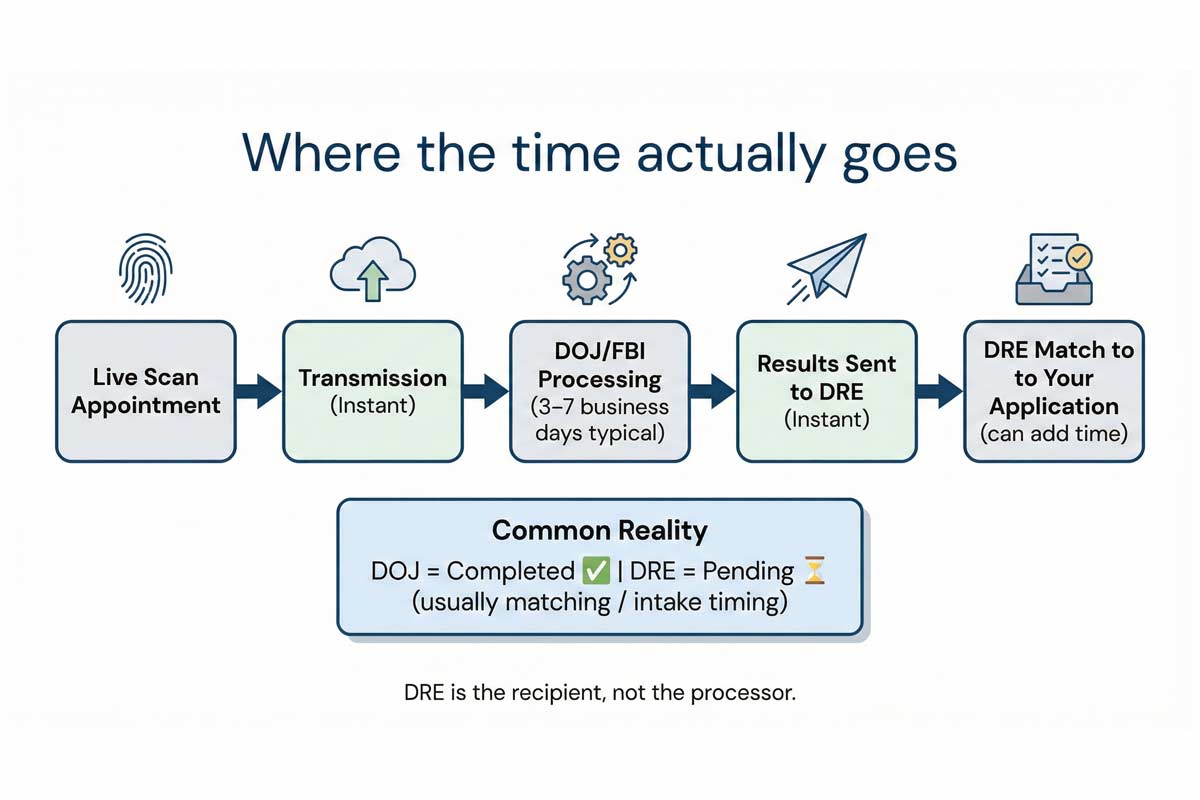
Key Takeaways
Common Live Scan Timing: DOJ often completes initial processing within 3–7 business days, though file matching at the DRE may add time.
The reader should treat all timelines as Read more...
Key Takeaways
Common Live Scan Timing: DOJ often completes initial processing within 3–7 business days, though file matching at the DRE may add time.
The reader should treat all timelines as highly variable: Estimates and always consult the DRE and DOJ websites for the most current official information.
Out-of-State Hard Cards: This process relies on mail and manual handling; plan for a timeline that can extend several weeks or longer.
Critical Dependency: The DRE cannot issue your license until they receive your fingerprint results and complete required review steps.
Common Delay Cause: Mismatched names (e.g., “Ben” vs. “Benjamin”) or using the wrong ORI code (A0075). The ORI code is input at the Livescan provider and must be input exactly as A0075 to ensure that the prints and background are transmitted to the DRE.
Waiting for your background check to clear can feel like the longest part of getting your real estate license. You’ve passed the real estate school exams, submitted your application, and now you’re stuck in limbo, wondering if something minor in your past is holding everything up.
Fingerprinting is a standard dependency step. While it can be nerve-wracking, delays are usually bureaucratic rather than catastrophic. For most applicants using Live Scan within California, the process is automated and relatively quick. For out-of-state applicants using physical fingerprint cards, a little more patience is required.
In my 20+ years of helping students navigate the California Department of Real Estate (DRE) system, we have found that most “stalled” applications aren’t actually stuck—they are simply moving through the standard queues. This guide breaks down exactly how long the process usually takes, why it might slow down, and how to keep it moving.
Disclaimer: This article is for informational purposes only and does not constitute legal advice. Processing times are estimates based on typical DRE and DOJ workflows. For individual eligibility questions, consult an attorney.
The 30-Second Answer: When Will My Fingerprints Be Processed?
If you are looking for a timeline to plan your career launch, here are the common benchmarks we see.
In-State (Live Scan): Often 3 to 7 business days.
Best case (sometimes): ~48 hours.
Standard: 1 week.
Buffer: It is wise to plan for 2 weeks to account for volume spikes or matching delays.
Out-of-State (Hard Cards): Can take several weeks to months.
Why: These often involve more manual handling and mailing time before they even reach the DRE.
The "Smart Applicant" Buffer: Do not schedule your “I’m a Realtor party!” until you have your license number in hand. Even after the DRE receives your results, they still need to process the file and complete issuance.
What "Fingerprinting" Actually Is
Many applicants think the DRE is scanning their prints personally. They don’t.
When you get fingerprinted, you are submitting your biometric data to the California Department of Justice (DOJ) (and, when applicable, FBI checks).
This is a "Live Scan." Your prints are digitized and cross-referenced against criminal records (arrests and convictions). The DOJ and FBI then generate a report—either "no record match" or a list of "Hits" (records found)—and transmit that report electronically to the DRE.
Important: The DRE is the recipient, not the processor. They are waiting on the DOJ just like you are.
Step-by-Step Timeline: From Scan to License
Understanding the invisible relay race helps you spot where things might be stuck.
Scheduling & Submission: You download Form RE 237(Live Scan Service Request) and visit a certified Live Scan provider (often a shipping center, notary, or law enforcement office). You pay the processing fee plus the operator’s rolling fee.
Transmission (Instant): The operator hits “send.” Your encrypted prints go directly to the DOJ and FBI.
Processing (Variable): The DOJ and FBI automated systems run the check (often within a few days, sometimes longer if a manual review is triggered).
Results Transmission (Instant): The system automatically sends the result code to the agency linked to the ORI code you used (specifically, the DRE).
DRE Match & Update (Variable): This is where delays often happen. Even if the DOJ status shows "Completed," the DRE’s system must receive that digital result and match it to your open license application.
Note on Delays: If DOJ shows "Completed" but DRE still says pending: it’s usually a matching or intake timing issue—not a denial.
The Biggest Reasons It Takes Longer (And How to Fix Them)
If it has been more than two weeks and you haven’t heard anything, one of these culprits is likely to blame.
1. The "Name Mismatch" Trap
Symptom: You passed your test and did Live Scan weeks ago, but the DRE still says "Pending."
Likely Cause: You applied for your license as "Michael Smith" but your driver's license (and thus your Live Scan) says "Mike Smith." The DRE’s computer system cannot automatically link the two files.
Fix: Ensure your name on Form RE 237 matches your DRE application character for character. If you suspect a mismatch, you may need to call the DRE to manually merge the files.
2. Wrong ORI Code
Symptom: Your results were sent to the wrong agency (like the Board of Nursing or a school district).
Likely Cause: The operator typed in a generic code or you used an old form.
Fix: Always use the pre-printed Form RE 237. The ORI Code for the CA DRE is A0075. If this was entered incorrectly, you may need to redo the Live Scan entirely to ensure the DRE receives the data.
3. Application Intake Volume
Symptom: DOJ completed days ago, but DRE status hasn't budged.
Likely Cause: Your application itself is still in the intake queue, or there is a backlog in manually associating results during peak seasons.
Fix: Call the DRE to confirm they have received the transmission and ask if your application is simply in the intake queue.
4. Poor Fingerprint Quality
Symptom: You receive a rejection notice or a request for a resubmission.
Likely Cause: Faint ridges due to manual labor, frequent hand-washing, or dry skin. The DOJ system couldn't read the prints.
Fix: Use a high-quality lotion for a few days before your rescan.
5. Manual Review (The "Hit" Delay)
Symptom: DOJ processing time drags on for 30+ days.
Likely Cause: A "Hit" (criminal record) or a name common enough to trigger a manual check against someone else's record. If you're worried about what a "hit" could mean for your license eligibility, this is a good read What the DRE Looks for in Your Background Check.
Fix: Patience is required here. The DOJ must manually verify that the record belongs to you (or clear you if it's a false match).
Live Scan vs. Out-of-State: Two Different Worlds
Track 1: Live Scan (California Residents)
This is the standard path. It is digital, efficient, and trackable. You walk into a participating Live Scan provider, put your hands on the glass, and you are done in 10 minutes. You get an ATI Number (Applicant Transaction Identifier) at the bottom of your form. Keep this number—it is your tracking ticket.
Track 2: Hard Cards (Out-of-State)
Live Scan is primarily available in California. Most out-of-state applicants must use physical fingerprint cards (FD-258) unless they travel to CA.
The Delay: The DRE has to physically receive the cards, process the payment, and then forward the cards to the DOJ. The DOJ then has to manually scan them. Hard-card timelines vary based on mail time, card quality, and backlog.
The Risk: Ink smudges easily. If your hard cards are rejected for quality after waiting several weeks, you often have to start over.
Pro Tip: If timing is critical, some applicants choose to travel to California to complete a Live Scan in person and reduce potential delays.
Delay-Proof Checklist
To minimize friction, treat the paperwork as seriously as the exam:
Download the correct form: Use the current RE 237 from the DRE website.
Verify the ORI: Check that Box 1 says A0075 and says "CA Department of Real Estate."
Match your ID: Ensure the name on the form matches your Driver's License and your exam application.
the receipt: Do not leave the operator without the ATI Number written on your copy.
Submit early: Do not wait until you pass the exam. You can (and should) submit fingerprints as soon as you apply for the exam to get the clock ticking.
If It’s Taking Too Long: Escalation Ladder
What to do today:
Check your ATI number.
Verify your name spelling on your receipt.
Check the online DOJ status tool.
If it has been longer than typical timeframes, follow this ladder:
Check the DOJ Status: Go to the California DOJ Background Check Status website. Enter your ATI Number and Date of Birth.
Note: This tool reflects DOJ processing status; it doesn’t guarantee the DRE has matched it to your application yet.
Status "In Process": The delay is at the DOJ/FBI level. The DRE cannot help you yet.
Status "Completed": The results were sent to the DRE. Now the ball is in their court.
Verify Your Info: Double-check your copy of the form. Did the operator transpose digits in your identifying information?
Contact the DRE: If the DOJ says "Completed" but the DRE status hasn't updated in 10 business days, call the DRE Licensing line. Have your ATI number ready and ask if there is a "matching issue" with your file.
Important Distinction: Processing vs. Evaluation
It is vital to understand that "processing" and "evaluation" are two different steps.
Processing is simply the DOJ confirming your identity and sending a list of records (if any) to the DRE.
Evaluation is the DRE reviewing those records to decide if you meet the standards of honesty and truthfulness required to hold a license. If you have a past conviction, the "processing" might finish quickly, but the "evaluation" could take weeks while a DRE review team examines your case.
Your Next Step
Fingerprinting is a hurdle, not a wall. While you wait for the results, focus on what you can control: preparing for your exam and interviewing brokerages.
Most delays are solvable, and the vast majority of applicants see their results clear without issue. If you are just starting your journey and want to ensure every step—from coursework to application—is handled correctly, check out our comprehensive California Real Estate License Guide.
|
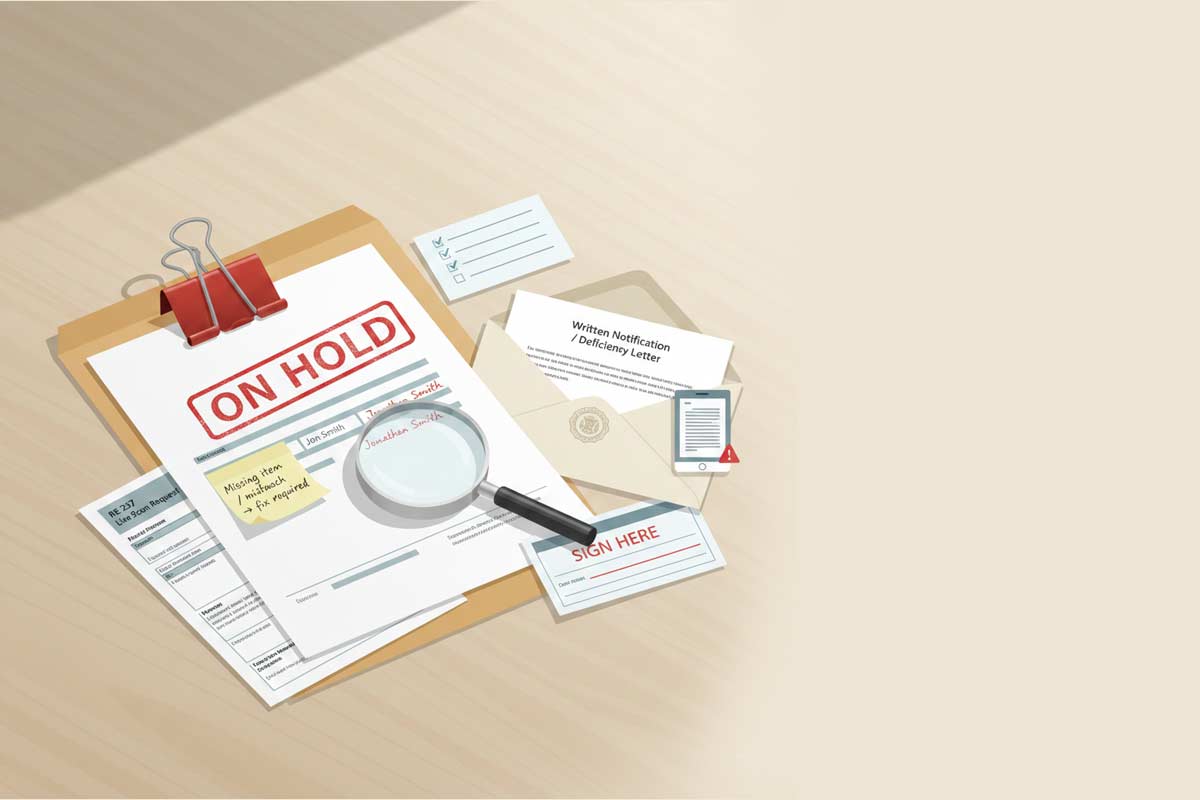
When the California Department of Real Estate finds a missing item, data mismatch, or unanswered question, your real estate exam or license application doesn’t “fail” — it simply stops moving forward Read more...
When the California Department of Real Estate finds a missing item, data mismatch, or unanswered question, your real estate exam or license application doesn’t “fail” — it simply stops moving forward until you provide what is requested. The DRE will send a deficiency letter if your application is incomplete or lacks required items when submitted.
You typically won’t be scheduled for your real estate exam until all requirements are met.
When it comes to applying for the real estate exam, you are not being graded on effort; you are being graded on completeness. Tiny issues — a name mismatch, unreadable certificates of completion, or incorrect fees — can turn into weeks of avoidable lag. The goal of this guide is to help you submit an application that avoids back‑and‑forth and keeps you on the most direct path to the real estate exam.
The Big 5: Highest‑Frequency DRE Form Mistakes
Mistake 1: Name Inconsistency Across Documents
The Error: Using a nickname or shortened name on the application while your transcripts or ID show a different variation.
Why DRE Flags It: DRE instructions (RE 435A/RE 400A) indicate you must use your legal name. If your application says “Jon Smith” but your transcripts and ID say “Jonathan Smith,” the DRE may ask for clarification to verify your identity.
The Fix: Use one consistent name across all three pillars: your application (RE 400A or RE 435), your certificates of completion, and your ID. If your transcripts include a middle name, include that middle name on all forms.
Verification Step: Lay your ID and transcripts next to your application. If there is a discrepancy in spelling or suffixes (Jr., III), edit the application to match your supporting documents before submitting.
Mistake 2: Combined Application Sequencing (Live Scan)
The Error: Choosing the Combined Exam + License path but failing to include the Live Scan paperwork.
Why DRE Flags It: DRE guidance for combined applications (RE 435) states that deficiencies — including a missing Live Scan Service Request (RE 237) — will delay processing. While fingerprints can be done later, a license cannot be issued until results are received.
The Fix: For the smoothest processing, include the completed RE 237 in your initial submission packet.
Verification Step: If submitting the RE 435 (Combined), ensure the RE 237 is the very next document in your physical or digital stack.
Mistake 3: Unacceptable Education Evidence
The Error: Submitting unofficial transcripts, portal screenshots, or blurry photos.
Why DRE Flags It: DRE requires official transcripts (or copies of official transcripts) or a credit certificate as evidence of completion. RE 435A explicitly states that unofficial transcripts are not accepted. Documents that are illegible or incomplete cannot be verified.
The Fix: Submit clear, high‑resolution scans of your official transcripts or credit certificates. Ensure the school name, student name, and completion dates are clearly visible.
Verification Step: Open your scanned PDF and zoom to 100%. If you cannot easily read the course titles or dates, rescan the document.
Mistake 4: Vague Background Explanations
The Error: Checking “Yes” to a disciplinary or criminal question but providing a brief or vague statement.
Why DRE Flags It: DRE instructions state that “insufficient or no explanations” to background questions will delay processing. Failure to disclose accurately can result in substantial delays or the denial of your application.
The Fix: For every “Yes” answer, provide a detailed written explanation. Include the specific charge, the date, the location, and the final disposition. Include court documents; providing certified copies can help avoid follow‑up requests.
Verification Step: Read your explanation. If it doesn’t clearly provide the context of the incident and the final outcome, it is likely to result in a deficiency letter.
Mistake 5: Fee Discrepancies
The Error: Submitting the wrong fee amount or an unsigned payment form.
Why DRE Flags It: Fees are non‑refundable and subject to change. An application cannot be processed until the correct fee is received.
The Fix: Verify the current fee schedule on the DRE website immediately before mailing. Ensure the Credit Card Payment (RE 909) or check is signed and matches the total for your selected application path.
Verification Step: Double‑check the total for “Exam Only” (RE 400A) vs. the combined application fee (RE 435). Ensure your payment matches the specific path you selected.
The “Death by Details” Mistakes (Rapid‑Fire List)
Original Signatures (Mail): If mailing the RE 400A or RE 435, use original wet signatures; faxes and photocopies of signatures are not accepted for mailed forms. (ADHI Schools recommends eLicensing not a physical mailed application.)
Form Choice: Verify you are using RE 400A for salesperson exam‑only or RE 435 for the combined path.
Unanswered Bubbles: Unanswered Bubbles: Every "Yes/No" bubble is mandatory. Skipping one can result in written notification of deficiency.
Outdated Revisions: Check the “Rev” date at the bottom of your form to ensure it matches the most recent version on the DRE website.
Non‑Resident Requirements: If you are not a California resident, you may be required to include a Consent to Service of Process (RE 234).
Cropped Scans: If page numbers or form borders are cut off in your PDF, it may be rejected as incomplete.
Missing Prerequisites: Do not submit until you have completed all three required courses (Principles, Practice, and an Elective).
Incomplete RE 909: If submitting by mail, a missing signature on the credit card authorization form is a common cause for administrative lag.
Submission Quality Control: 7‑Minute Pre‑Flight Checklist
Name Consistency: Is my name identical across my transcripts, ID, and application?
Path Selection: Did I use RE 400A for exam‑only or RE 435 for combined?
Evidence: Are my transcripts or certificates official and 100% legible?
Fingerprints: For combined applicants, is the RE 237 included in the packet?
Background: Is every "Yes" answer supported by a detailed statement and court docs?
Payment: Is the fee submitted online correct and the check or RE 909 signed in ink? (if submitting by mail)
Method: Have I reviewed the How to apply for the real estate exam guide to ensure my submission is organized correctly?
If You Receive a Deficiency Letter
If the DRE sends written notification, it means they need additional information before they can move you forward. To resolve this:
Follow Instructions Exactly: The letter will specify exactly what is missing. Provide only what is requested.
Submit a Unified Response: If multiple items are requested, send them all in one package to avoid further confusion.
Expect Additional Time: Once you respond, your file must be re‑reviewed. Check the DRE’s current processing timeframes online for an estimate of the updated wait.
Maintain Consistency: Ensure any new documents or signatures match the information provided in your original submission.
Get Back on the Fast Path
At ADHI Schools, Kartik Subramaniam’s 20+ years of helping California candidates has shown that success begins with the paperwork. The DRE is a high‑volume agency; they prioritize files that are complete, consistent, and easy to verify. Treat your application with the same level of focus as your studies.
For a full breakdown of every requirement you need to satisfy before the DRE ever sees your name, read our California Real Estate License Guide.
|
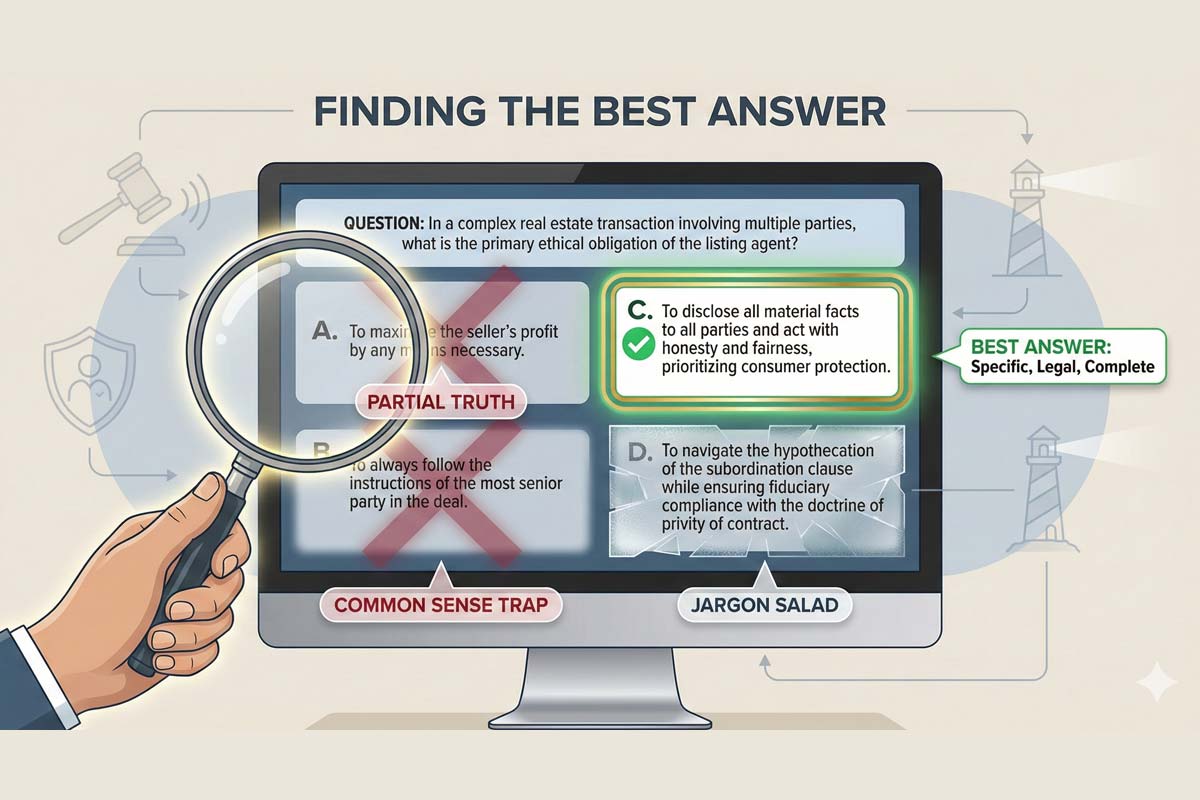
Deep knowledge of real estate principles is non-negotiable. However, even the most dedicated students can stumble if they rely on memorization alone.
That’s because the Department of Real Estate (DRE) Read more...
Deep knowledge of real estate principles is non-negotiable. However, even the most dedicated students can stumble if they rely on memorization alone.
That’s because the Department of Real Estate (DRE) isn’t simply checking your memory; the exam tests your professional judgment. They want to ensure you can protect a client in a complex scenario. To pass, you need to combine your command of the facts with a clear understanding of how the exam measures critical thinking.
This article teaches you how to think like the DRE—because passing is as much about mental process as it is about content.
What You Will Learn
The "Best Answer" Logic: Why two answers can be right, but only one aligns with DRE scoring.
The Keyword Radar: How to spot trap words like "Always" and "Must" that signal incorrect answers.
Scenario Mastery: How to filter out the irrelevant "noise" in complex story problems.
Psychometric Hacks: How to mathematically increase your guessing odds from 25% to 50%.
This article is the strategic companion to our California Real Estate Exam (2026 Complete Guide). If that guide is your roadmap, this article is your instruction manual for driving the car.
How to Outsmart DRE Multiple-Choice Logic
To beat the exam, you have to deconstruct the weapon formed against you. The DRE does not write random questions; they write questions that follow a specific hierarchy of correctness.
The “Best Answer” Theory
If you take nothing else from this article, take this: In the DRE world, correct is not enough.
This is where smart people fail. They read option (A), see that it is technically a true statement, mark it, and move on. They never read option (C), which was more specific or more applicable to the exact scenario described.
Insider Insight: The DRE almost never rewards the answer that is merely technically accurate—they reward the one that aligns with legal intent and consumer protection.
Insider Tip: Never mark an answer until you have read all four choices. Often, option (A) is a "Partial Truth"—a statement that is true in a vacuum but doesn't solve the specific problem in the question stem.
When Two Answers Look the Same
This is the #1 anxiety point for students. You will see two answers that both look "right." Usually, the difference comes down to scope.
Broad vs. Specific: If the question asks about a specific violation (e.g., commingling), the answer that cites the specific code or action is better than the answer that just says "unethical behavior."
The Scope Mismatch:
Question: "What is the primary duty of a property manager?"
Choice A: To keep the building fully occupied.
Choice B: To generate the highest net income consistent with the owner's objectives.
Analysis: Choice A is good. Choice B is better because it encompasses the owner's goals, not just occupancy. The DRE rewards precision.
Anatomy of a DRE Question
Let’s break down the components of the items you’ll face.
1. The Stem
This is the setup. It might be a direct question (“What is an easement?”) or a scenario (“Broker Bob lists a property…”).
Insider Tip: Read the last sentence of the stem first. This tells you exactly what they are looking for before you get bogged down in the story details.
Clarification: This is a preview technique. Once you know the goal, you must still read the full scenario. Do not skip the middle, or you will miss the twist.
2. The Distractors (The Traps)
These are the wrong answers. They aren’t random; they are designed to trap you.
The "Common Sense" Trap: An answer that sounds logical to a layperson but violates real estate law.
Example: "The broker should return the deposit because the buyer is sad." (Kind, but legally wrong).
The "Jargon Salad": An answer that throws in impressive words just to intimidate you.
Example: "The hypothecation of the subordination clause." (If it sounds like nonsense, it usually is).
Scenario-Based Question Mastery
Now that you understand distractors, let’s look at the DRE’s favorite testing style: long scenario questions.
The DRE loves to test whether you can separate signal from noise. They will give you a paragraph full of details, but often only one fact matters. This is why it’s important to not only understand the content of the real estate exam but also how to cut through the fluff to get to what the state is actually asking.
The "Red Herring" Technique:The exam writers will include facts that have nothing to do with the legal issue.
Example: "A buyer looks at a Victorian home built in 1977. It is painted blue, has a large swimming pool, and the seller is going through a messy divorce..."
The Trap: You focus on the pool, the color, or the seller's emotional state.
The Reality: The year "1977" is the only thing that matters (Lead-Based Paint Disclosure).
Beware of Details That Seem Important but Aren't :
Exact square footage.
Emotional descriptions ("distressed seller," "anxious buyer").
"Curb appeal" descriptions.
Rule: If the detail doesn't change the legal outcome, ignore it.
The Keyword Radar System
The English language is flexible. The law is not. The DRE uses specific qualifiers to signal whether an answer is likely right or wrong.
The "Always" and "Never" Trap (Absolutes)
Real estate is rarely black and white. There are exceptions to almost every rule. If you see these words, the answer is highly likely to be incorrect:
Always
Never
Must
Everyone
Example: "A broker must disclose a death on the property." (False. You only must disclose it if it occurred within 3 years or if the buyer asks. The absolute "must" makes this answer incorrect).
The Exception: When the law deals with Fair Housing, "Never" is often correct. You never discriminate based on race.
The "Generally" and "Most" Safety Net (Conditionals)
The DRE prefers answers that leave room for nuance. If you are forced to guess, these words often signal the correct answer:
Generally
Typically
Most likely
May
Example: "The agent must generally obey the client." (Safe, accurate, allows for exceptions).
The Skip-and-Return Strategy
Based on the number of questions on the real estate exam, it’s evident that time management is crucial. You have roughly 1.2 minutes per question on both the sales and broker exams.
Do not let your ego lose you points.
If you encounter a scenario question that is a paragraph long: Mark it for review and skip it.
Momentum: Answering 10 easy questions in a row builds confidence.
Subconscious Processing: Your brain will continue to work on the hard question in the background.
Process of Elimination (POE)
If you don’t know the answer, you can still manufacture a higher probability of passing.
Psychometricians intentionally design four-option items with two distractors that are easy to eliminate—because this increases reliability and makes POE mathematically powerful.
Blind Guess: 25% chance of success.
Eliminating 2 Distractors: 50% chance.
The Math of Passing: As detailed in our guide on How the California Real Estate Exam Is Scored, you need a 70% to pass. That means you can miss 45 questions. If you can use POE to get your guessing success rate up to 50% on the hard questions, you are mathematically on the path to passing.
Full-Question Reading Discipline
Speed is your enemy. The DRE writes questions that pivot in the middle.
The "Except" and "Not" Twist
The DRE loves negative stems:
"All of the following are necessary for a valid contract, EXCEPT..."
If you read too fast, your brain skips "EXCEPT." You mark option (A) because it is necessary, and you fail the question.
Technique: When you see "EXCEPT," mentally rephrase the question: "I am looking for the WRONG statement."
Stop Overthinking (The Anxiety Check)
Most test-takers sabotage themselves by letting adrenaline override logic—strategy is how you stay in control.
The Exam is Not Evil: It is designed to assess competence, not to prank you.
Trust Your First Instinct: Once you have used the Process of Elimination, your first instinct is statistically more likely to be correct. Second-guessing without new information usually leads to changing a right answer to a wrong one.
Default to Safety: If you are stuck, ask yourself: "Which answer best protects the consumer?" That is usually the direction the DRE wants you to go.
The 2026 Angle: What Has Changed?
While the core mechanics of multiple-choice psychometrics remain consistent, the DRE updates its exam with some regularity to ensure that the content of the real estate exam reflects the reality of the real estate landscape.
In 2026, we are seeing a continued emphasis on ethics and transparency.
What to Expect:
Scenario Questions: Testing whether you recognize when a disclosure is required or when a duty to a non-client arises.
Fair Housing Granularity: Expect questions that drill down into subtle discrimination, not just obvious bias.
Agency Duties: A shift away from "closing the deal" toward "fiduciary transparency."
Key Exam-Day Takeaways
Read the last sentence first to identify the goal of the question.
Eliminate absolutes (Always/Never) unless it's a Fair Housing question.
Identify the scope: If the question is specific, the answer must be specific.
Don't over-read: If the fact isn't in the paragraph, it doesn't exist.
Apply these four rules, and the exam becomes a formality rather than a hurdle.
Strategy is vital, but it cannot replace content mastery. You need to combine these test-taking tactics with a comprehensive study plan.
Start with the full roadmap here: California Real Estate Exam (2026 Complete Guide).
Inside, you'll find the complete content breakdown, registration steps, preparation timelines, and scoring explanations you need to pass on the first try.
FAQ: Cracking the DRE Code
Q: What is the "Best Answer" strategy for the CA Real Estate Exam?
A: "Best Answer" logic means ignoring options that are merely true and selecting the one that is most specific to the scenario. Based on how the DRE scores the exams, while two answers could “look” correct, choose the one that aligns with consumer protection and specific legal intent rather than a broad generalization.
Q: Are there specific "trap words" that signal a wrong answer?
A: Yes. Be suspicious of absolute words like "Always," "Never," "Must," and "Everyone." Since real estate law almost always has exceptions, these are usually incorrect. Exception: In Fair Housing questions, "Never" discriminate is often the right answer.
Q: How do I handle long, confusing scenario questions?
A: Use the "Last Sentence First" technique. Read the very end of the question prompt before reading the story. This tells you exactly what legal issue to look for so you can filter out "noise" like emotional descriptions or irrelevant house details.
Q: How can I improve my odds if I have to guess?
A: Use Process of Elimination (POE). The DRE includes two "distractors" (obvious wrong answers) in almost every question. By crossing these out, you mathematically double your chance of guessing correctly from 25% to 50%.
Q: What is the "Red Herring" technique on the exam?
A: A Red Herring is an irrelevant fact designed to distract you. For example, a question about Lead-Based Paint might mention a "messy divorce." The divorce is the Red Herring; the year the house was built is the only fact that matters.
Q: How should I handle "EXCEPT" or "NOT" questions?
A: These negative stems cause high failure rates due to speed reading. When you see "EXCEPT," mentally rephrase the question to: "I am looking for the FALSE statement." This prevents you from accidentally marking the first true statement you see.
|
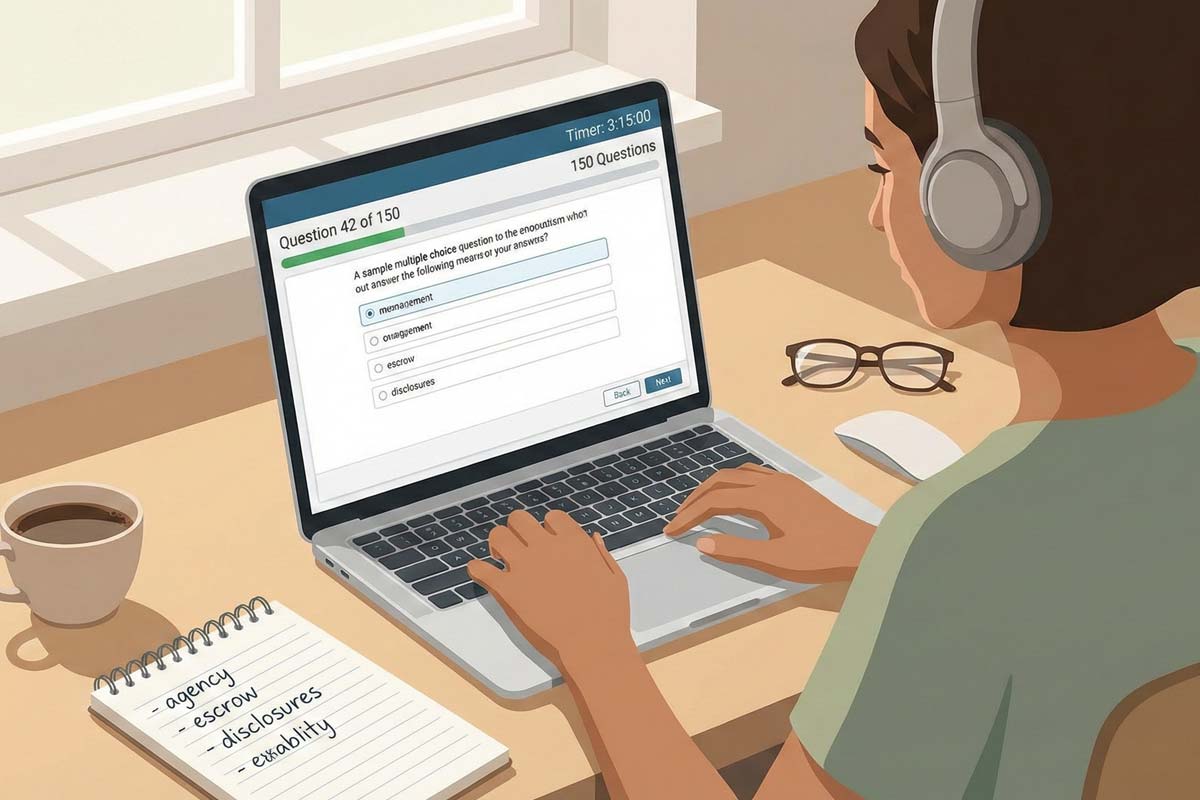
One of the most frequent questions we hear from students after they finish thceir statutory college-level courses is, "Okay, I’m done with the classes. Now, how long will it take me to actually prepare Read more...
One of the most frequent questions we hear from students after they finish thceir statutory college-level courses is, "Okay, I’m done with the classes. Now, how long will it take me to actually prepare for the state test?"
Valid.
The California Department of Real Estate (DRE) salesperson exam consists of 150 multiple-choice questions to be answered in 3 hours and 15 minutes. It covers everything from property ownership to mandated disclosures. Study too little, and you risk failing and waiting weeks for a re-test. Study too long, and you risk "information decay"—forgetting the material you learned at the start of your prep.
The broker exam is 200 questions and you are given up to 4 hours to complete it.
After over 20 years of teaching real estate in California and analyzing the habits of thousands of successful agents, I can tell you there is no single "magic number" that applies to every human being. However, by looking at data from our most successful students, we can identify a distinct "success window."
This guide will help you determine where you fall on that spectrum so you can build a study timeline that maximizes your chances of passing on the first try.
The Short Answer: The 40–90 Hour Rule
For the vast majority of students, the sweet spot for exam preparation lies between 40 and 90 hours of focused study after completing the three required pre-licensing courses.
The Full-Time Student (2–3 Weeks): If you can treat studying like a job (4–6 hours a day), you can be ready in just a few weeks. This immersion method is highly effective because the material stays fresh.
The Working Professional (4–6 Weeks): If you are balancing a full-time job and can only study 1–2 hours a day and more on weekends, you will need about a month to six weeks. This requires discipline to prevent the "forgetting curve" from eroding your progress.
The Crash Course Hybrid (1–2 Weeks): Students who combine independent review with a crash course often reduce their total necessary study hours because the instruction is condensed. Instructors help with pattern recognition and point out specific exam cues, which speeds up the learning process.
FAQ: Can you pass with less than 40 hours of study?
While outlier students with extensive legal or financial backgrounds sometimes pass with 20–30 hours of prep, we strongly advise against it. The DRE exam relies heavily on specific vocabulary and tricky syntax. Under-preparing significantly increases the risk of failing, which triggers a mandatory waiting period before you can re-test.
FAQ: How many weeks should you study for the California real estate exam?
Most successful candidates schedule their exam 4 to 8 weeks after finishing their college-level courses. Extending the process beyond 8 weeks often leads to diminishing returns, as you begin to forget early material while trying to learn new concepts.
Factors That Influence Your Study Timeline
1. Prior Industry Knowledge
If you have worked as an assistant to a broker or in property management, you might be familiar with terms like "escrow" or "fiduciary." However, be careful—real estate "street knowledge" is often different from the "book knowledge" the DRE tests. You still need to study, but you may grasp concepts faster.
2. Reading Comprehension Speed
The California real estate exam is a vocabulary and reading comprehension test. Questions are often complex scenarios spanning 2–4 sentences. If you have working memory limitations or cognitive bottlenecks that make it hard to hold multiple variables in your head while reading, you will need more time to practice deconstructing these questions.
3. Chronotypes and Study Habits
When do you study? Data suggests that aligning study blocks with your natural circadian rhythm (chronotype) can improve retention by 20–30%. A morning person studying at 8:00 AM retains significantly more than when they force themselves to study at 10:00 PM while exhausted.
4. Decision Fatigue
If you spend the first 15–20 minutes of every study session deciding what to study, you are wasting valuable cognitive energy. Students who use a structured syllabus or prep course move faster because they eliminate decision fatigue.
5. Study Environment and Distraction Levels
Are you studying in a quiet office or at a kitchen table with distractions? Studies show that multitasking and constant interruptions can reduce retention by up to 40%. A fragmented hour of study is worth only about 20 minutes of "deep work." Students with high-distraction environments inevitably push their timeline toward the 90-hour mark.
Recommended Study Timelines
Note: These timelines assume you have already completed the required 135 hours of statutory coursework. Your actual pace may shift depending on your learning environment and retention style.
Based on our experience at ADHI Schools, here are three structured plans. Choose the one that fits your life.
The "Standard" Plan (4 Weeks)
Ideal for: Working professionals.
Schedule: 90 minutes every weeknight; 4–5 hours on weekends.
Focus:
Week 1: Property ownership and land use controls.
Week 2: Law of agency and valuation/market analysis.
Week 3: Financing and contracts.
Week 4: Practice exams and review of weak areas.
The "Accelerated" Plan (2 Weeks)
Ideal for: Students between jobs or with open schedules.
Schedule: 4–5 hours daily.
Focus: This is an immersion technique. You will cover two major topics per day, utilizing spaced repetition in the evenings to reinforce what you learned in the morning.
The "Hybrid" Plan (Crash Course + Self Study)
Ideal for: Visual/Auditory learners who struggle with textbooks.
Strategy: You might wonder, should you take a crash course for the CA real estate exam
If you struggle with self-motivation or complex legal jargon, a crash course acts as a force multiplier. Instructors help identify the most frequently tested concepts, cutting down your self-study time.
Schedule: Review terminology for one week, attend a weekend crash course twice and schedule your exam for the following week while the information is peak-accessible in your short-term memory.
Note: Determining your timeline is just one step. To see how this fits into the broader roadmap of prerequisites and applications, refer to our comprehensive California Real Estate Exam Guide.
How Long Is Too Long?
While under-studying is dangerous, over-studying is a real trap. We generally advise against study timelines extending beyond 8 to 10 weeks.
If your prep stretches past three months, you encounter The Forgetting Curve. By the time you are studying Week 10's topic (e.g., Taxation), you have likely forgotten the nuances of Week 1's topic (e.g., Estates in Land).
Extended timelines also can lead to emotional fatigue and procrastination. The urgency to study fades, and confidence erodes as the material starts to feel stale rather than fresh. If life circumstances force a long timeline, you must dedicate specific days to reviewing older material to keep it active.
Signs You Are Ready to Take the Exam
How do you know when you have studied enough? It isn't a feeling; it's a metric. The biggest mistake students make is scheduling their exam date based on a hope rather than data. You are ready when:
You are consistently scoring 85% or higher: At ADHI, we recommend aiming for 85–90% on practice exams regularly. The actual state exam is stressful, and your score will likely drop a few points due to nerves. You need a buffer.
You have completed at least 3–5 full-length simulations: You need to know how to take practice exams for the California real estate license test properly. This means taking full-length, 150-question mock exams in one sitting without checking your phone or notes. If you haven't simulated the fatigue of the actual test, you aren't ready.
You understand the "Why": When you answer a question correctly, can you explain why the other three answers are wrong? If you can, you have mastered the concept.
Study Smarter, Not Longer: Methods That Compress the Timeline
You can brute-force your way through 100 hours of reading, or you can use learning science to get the same result in 50 hours.
In teaching thousands of students through ADHI Schools, I have found that those who pass fastest use these specific techniques:
Retrieval Practice (Active Recall): Instead of re-reading a chapter, look at the heading and force yourself to summarize the content out loud. This strengthens neural pathways far better than passive reading.
Strategic Topic Weighting: The DRE weights the exam heavily toward specific topics like Agency and Disclosures. Focusing your energy on these high-value areas is the best way to study for the California real estate exam, ensuring you don't waste time on low-yield topics like riparian rights.
Spaced Repetition: Instead of cramming vocabulary all at once, review terms in increasing intervals (1 day, 3 days, 1 week). This relies on memorization techniques that work for the CA exam to move data from short-term to long-term memory.
When You Should Not Schedule the Exam Yet
If you are eager to get your license, it is tempting to rush. However, postpone your exam date if:
You haven't taken a timed mock exam without pausing: If you are used to taking breaks every 20 questions, you will struggle with the 3+ hour endurance required for the real test.
You are relying on memorizing answer keys: If you are memorizing "C is the answer for the question starting with 'The Truth in Lending Act'," you will fail. The DRE changes question wording constantly.
You are scoring wildly inconsistently: Scoring 90% on one topic and 50% on another indicates a knowledge gap, not exam readiness.
Vocabulary is still a struggle: If you are tripping over terms like "hypothecation" or "alienation," you are not fluent enough in the language of real estate to pass.
Putting It All Together
There is no badge of honor for studying 200 hours if you could have passed with 60 hours of focused effort. Your goal is to reach a level of "unconscious competence" where the definitions and laws come to you naturally.
Start with a diagnostic practice exam to see where you stand.
Commit to a schedule. Bring the same discipline to studying that you plan to bring to the job, and this exam becomes just the first of many deals you close.
For a full understanding of the entire testing journey, see our comprehensive California Real Estate Exam Guide.
|
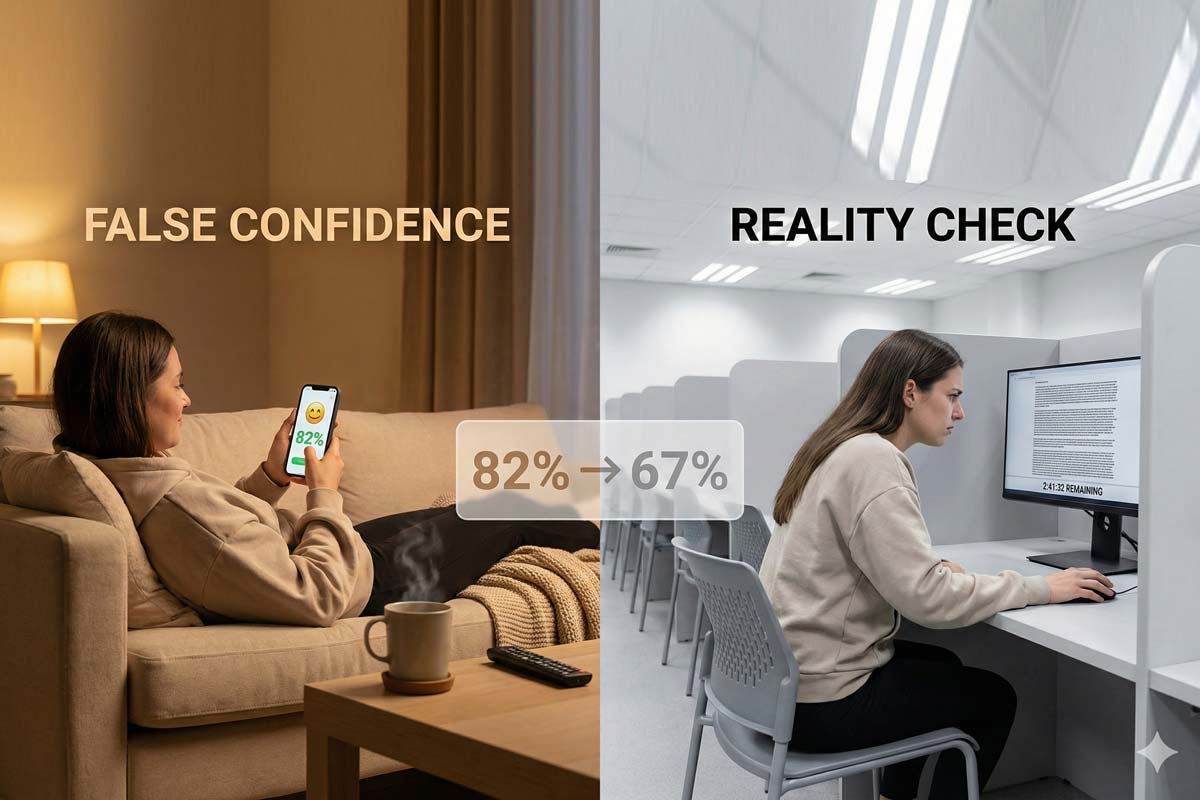
Most students use practice tests to measure what they already know. That is a fatal mistake.
To pass the California real estate exam, you must use practice tests to diagnose how you think under pressure.
After Read more...
Most students use practice tests to measure what they already know. That is a fatal mistake.
To pass the California real estate exam, you must use practice tests to diagnose how you think under pressure.
After twenty years of preparing students for the Department of Real Estate (DRE) exam, I have seen a consistent pattern. Students who score 85% on their couch often fail in the testing center.
Why?
Because the DRE doesn’t just test your memory. They test your ability to retrieve information while fighting decision fatigue. Understanding this disconnect is the key to designing a practice-exam strategy that actually prepares you for the conditions you’ll face at the DRE testing center.
This guide breaks down the exact system I’ve used to help thousands of California real estate students pass on their first attempt.
The False Confidence Trap (How Students Misuse Exams)
The most dangerous moment in exam prep isn’t when a student fails a practice test—it’s when they pass one too easily.
I see it constantly. A student taps through an untimed quiz on their phone while distracted. They score an 82% and assume they are ready.
But untimed success is an illusion.
The real exam is engineered to amplify pressure:
Questions are longer and often scenario-based.
Distractors are trickier and designed to catch skimmers.
The clock is always moving, creating constant pressure.
When you sit in a silent testing room with no phone, no breaks, and no instant feedback, that comfortable 82% quickly drops to a 67%.
To pass, you must stop "reviewing" and start "simulating." Before diving deeper into simulation strategy, if you’re still building your foundational study habits, I cover that process in much more depth in my guide on the best way to study for the California real estate exam.
Why Timed Exams Matter (The Neuroscience)
You need to train for the physical and neurological reality of a 3-hour exam.
The California real estate sales exam consists of 150 questions. You have 3 hours and 15 minutes. That is roughly 1 minute and 18 seconds per question.
For the broker exam it’s 200 questions over 4 hours.
Decision Fatigue
Cognitive science tells us that decision fatigue sets in significantly around the 90-minute mark. By question #75, your brain becomes less efficient at filtering out wrong answers. If you haven't trained for this endurance, you will make sloppy mistakes in the second half of the test. This is why students often miss easy vocabulary questions late in the exam—they're not fatigued intellectually, they're fatigued neurologically.
The Cognitive Switching Tax
Here is something most students ignore.
Every time you switch from an advertising to a vocabulary question to a legal scenario, your brain incurs a "switching cost." You lose about 3 to 9 seconds resetting your mental context. Over lots of questions, that "tax" adds up to 10–15 minutes of lost time. Only timed simulations can train your brain to reduce this lag.
Simulating the Environment
You cannot simulate a marathon by walking around the block. You must recreate the hostility of the testing environment.
Hard Surface, Hard Chair: Do not study in bed. Sit at a desk. Your brain needs to associate this posture with "focus mode."
Digital Silence: The testing center is quiet. Put your phone in another room. Close all browser tabs except the exam simulator.
Use a Monitor, Not a Phone: The DRE exam uses desktop screens with dense blocks of text. Your eyes need to train for that format. Scrolling on a phone creates a false sense of ease that disappears on a larger screen.
Testing Center Lighting: The testing center uses bright fluorescent lighting. If you normally study in soft or dim lighting, the contrast alone can increase eye strain. Practice under similar lighting conditions.
No Pausing: In the real exam, the clock doesn’t stop if you need a snack or a bathroom break. If you take a 150-question mock exam, sit for the full duration, or keep the clock counting down during your restroom break.
How to Analyze Your Results
Most students review their results incorrectly. They only check which letter they missed. A deep dive forces you to understand the thinking error behind each miss. Taking the test is only 50% of the work. The real learning happens here.
Here’s the framework my students use:
Error Type
The Cause
The Fix
Knowledge Gap
You simply didn’t know the definition or concept.
Go back to the textbook. Re-read the chapter.
Reading Error
You missed a key word like “NOT,” “EXCEPT,” or “buyer/seller.”
Slow down. Read the question twice before looking at answers and watch the video on our crash course website.
Logic Trap
You knew the facts but fell for a specific distractor.
Analyze why the wrong answer looked right.
If you find that you are constantly making Knowledge Gap errors, you need to revisit how you are absorbing data. If specific terms won’t stick, incorporate the memorization techniques that work for the CA exam—like mnemonics or active recall—before your next simulation.
Building a Study Rhythm
How often should you take a practice exam?
Your practice-test rhythm also depends on your overall study timeline—I outline typical timelines and prep durations in my breakdown of how long you should study for the CA real estate exam.
Generally, you want to align your testing with your body’s natural circadian rhythm. If your actual exam is scheduled for 8:00 AM, take your practice exams at 8:00 AM. Train your brain to be alert at that specific time.
The Loop:
Day 1: Full 150-question mock exam (Timed).
Day 2: The Autopsy. Deep review of missed questions.
Day 3 & 4: Targeted study on weak categories only.
Day 5: Repeat.
When students run this five-day loop even twice, their scores typically jump 10–15 points.
However, if you find that certain topics still aren’t clicking even after targeted review, that’s a sign you may benefit from structured instruction. Sometimes hearing me explain concepts like “hypothecation” or “amortization” is the only way to make it click. This is often why students decide they should take a crash course for the CA real estate exam.
When to Taper Off
A common mistake is cramming heavy mock exams right up to the finish line. This is counterproductive.
48 Hours Before the Exam: Take full simulated tests with caution. You risk burnout or shaking your confidence with a difficult outlier score.
The Final Day:
Review your glossary and Error Journal.
Mental Freshness: Your brain consolidates memory during sleep. The final 24 hours should be about reinforcing existing knowledge—not adding new material.
Circadian Reset: Go to bed and wake up at the exact same time you will on exam day. Even a small circadian shift can reduce recall by 10–12%.
Fuel Up: Focus on sleep and nutrition. Your brain consumes massive amounts of glucose during an exam; eat a solid meal with complex carbohydrates.
Action Plan: 7 Steps to Exam Success
Establish a Baseline: Take one timed exam early to see where you stand.
Isolate Weaknesses: Use the category breakdown to identify your worst subjects.
Simulate Reality: No music, no phone, hard chair, desktop monitor.
Respect the Clock: Get comfortable with the 1-minute-per-question pace.
Perform the Autopsy: Never waste a mistake; analyze the logic behind it.
Taper Down: Switch to light review 48 hours before the test.
Trust the Process: If you are consistently scoring 85-90% on timed simulations, you are ready.
Frequently Asked Questions
1. How many practice exams should I take before the real test?
I typically recommend students take at least 5 to 7 full, timed mock exams. You are looking for consistency. One passing score could be luck; three passing scores in a row is readiness.
2. How should I pace the exam to avoid timing out?
Aim to complete 50 questions every hour. This leaves you with roughly 15 minutes at the end to review flagged questions. If you aren’t at question #50 by the one-hour mark, you need to speed up slightly.
3. What percentage should I be scoring halfway through my prep?
Don't panic if you are scoring in the 50-60% range early on. That is normal. Your goal is to see a steady 5% increase with every "Autopsy" loop you complete.
4. How many questions should I expect to flag and return to?
On a healthy exam run, you should expect to flag about 15–25 questions. These are the ones where you narrowed it down to two answers but weren’t 100% sure. Flag them, guess, and move on. Do not let them stall your momentum.
5. Is the practice test harder or easier than the actual DRE exam?
Good practice exams for California real estate license test prep are designed to be slightly harder or equal to the difficulty of the real test. If a practice test feels easy, it’s likely not rigorous enough.
6. How does the DRE weight the content categories?
The exam covers seven major areas. “Practice of Real Estate” and “Agency” usually have the highest weight, often comprising 40-50 questions combined. There is no Real Estate Math on the test.
7. How do I handle “scenario” questions?
The DRE loves questions that start with “Broker A does X…” These test the application of law. Read the end of the question first to see what they are actually asking, then read the scenario to find the relevant facts.
8. What should I do if I keep failing my practice exams?
Stop testing and start studying. Repeated failure reinforces negative neural pathways. Go back to your course materials or try a different learning modality (like video or audio lectures) before testing again.
If you want to see how practice testing fits into the entire licensing journey, you can explore the full California Real Estate Exam Guide, which connects every stage of the process.
|

As the date of your California Department of Real Estate (DRE) exam approaches, a familiar panic often sets in. You’ve finished the mandatory 135 hours of pre-licensing coursework, but looking at Read more...
As the date of your California Department of Real Estate (DRE) exam approaches, a familiar panic often sets in. You’ve finished the mandatory 135 hours of pre-licensing coursework, but looking at a textbook filled with property codes and legalese can feel overwhelming.
Many students ask me, "Kartik, is it worth paying for a crash course, or should I just study on my own?"
It is a valid question. You have likely already spent money on the pre-license courses and application fees. However, the state exam is notorious for its difficulty—pass rates often hover around 50%. Students usually seek out crash courses because they feel unstructured, have run out of time, or simply don’t trust that their solo reading was enough to retain the information.
In my 20+ years of teaching real estate in California, I have seen crash courses save careers, but I have also seen students treat them like magic pills. A crash course amplifies existing knowledge; it doesn’t replace it. Let’s break down exactly what these courses offer, the learning science behind them, and whether one is right for you.
What Exactly Is a Crash Course?
A crash course is distinct from your statutory college-level courses (Real Estate Principles, Practice, and an Elective). It is not about satisfying a legal requirement; it is about pure exam performance.
Think of it as the difference between learning to play a sport and studying the playbook right before the big game. A crash course typically takes place over a weekend (or two full days) and provides accelerated instruction focused on:
High-Yield Topics: Focusing on the concepts the DRE tests most frequently (like Agency and Property Ownership) rather than obscure laws that rarely appear.
Because the DRE heavily weights topics like Agency and Disclosures, crash courses prioritize the sections that move your score the most.
Pattern Recognition: Learning to spot how the state constructs "distractor" answers designed to trick you.
Vocabulary Density: Rapid-fire review of the specific terminology used on the test.
Who Benefits Most?
Not every student needs a crash course. Some people are autodidacts who can read a glossary once and retain it perfectly. However, based on thousands of students I’ve observed, the following learner profiles benefit the most from live or livestreamed exam prep:
The Visual/Auditory Learner: If reading a 600-page textbook makes your eyes glaze over, hearing an instructor explain why a dual agency violation is risky makes the concept stick.
The “Rusty” Student: Perhaps you finished your certificates six months ago and life got in the way. You have forgotten the difference between a freehold and a less-than-freehold estate.
The Working Professional: You don't have hours to study every evening. You need a forced, immersive environment to clear your schedule and focus.
The Retaker: If you have failed once, you likely know the material but are falling for the DRE’s trick wording.
A crash course also acts as a litmus test for your timeline. If you sit through a weekend review and feel completely lost, it is a sign you need to push your exam date back. Conversely, if you are unsure how long should you study for the CA real estate exam, a crash course can serve as a final validation that you are ready to schedule your test immediately.
How Crash Courses Improve Exam Readiness
There is cognitive science at play in a good cram session. It isn't just about stuffing facts into your brain; it’s about retrieval practice.
When you study alone, you often suffer from "illusion of competence"—you read a chapter and think you know it. In a crash course, the instructor asks questions that force you to retrieve information under pressure. This highlights your blind spots immediately.
Furthermore, these courses reduce decision fatigue. When studying alone, you waste energy deciding what to study. In a structured review, the instructor curates the curriculum based on the DRE’s weighted content outline.
Most importantly, expert instructors teach you how to practice exams for the California real estate license test by decoding the structure of the questions themselves. They show you how to identify the "stem" of the question, eliminate the two obviously wrong answers, and navigate the subtle differences between the remaining two choices.
When a Crash Course Alone Is Not Enough
I want to be transparent: a crash course is a catalyst, not a replacement for foundational knowledge. It cannot teach you an entire semester’s worth of law in 16 hours.
A crash course will likely fail you if:
You have zero prior knowledge: If you skimmed through your online courses without reading, a crash course will move too fast for you.
Your reading comprehension is low: The exam is as much a reading test as it is a real estate test.
You expect a shortcut: You cannot passively listen to a lecture and expect to pass. You must actively engage.
If your grasp of the terminology is weak, you will need to spend time mastering specific memorization techniques that work for the CA exam — such as flashcards or mnemonics — before a weekend review can truly help you.
The Hybrid Approach (Best for Most Students)
The students who pass on the first try rarely use only self-study or only a crash course. They use a hybrid strategy.
In my experience, best way to study for the California real estate exam involves a specific sequence:
Foundation: Skim your textbooks and finish your qualification courses.
Immersion: Take the crash course 1–2 weeks before your test day to organize your mental filing cabinet while the content is still fresh.
Application: Spend the final week doing nothing but timed, challenging mock exams to build stamina.
This “sandwich” approach ensures you have the background knowledge to understand the crash course, and the practice time afterward to cement what you learned.
Is It Worth It?
Deciding whether a crash course is worth it starts with understanding the critical tradeoff between time saved and clarity gained.
From a cost-benefit perspective, consider the cost of failure. If you fail the exam, you have to pay the state re-application fee, but more importantly, you lose weeks of potential income and momentum.
A crash course provides clarity, and it reduces anxiety by demystifying the exam. It allows you to walk into the testing center knowing you didn’t leave your preparation to chance. If the course helps you answer just five or six difficult questions correctly that you otherwise would have missed, it has paid for itself in the form of a passing grade.
Ultimately, the decision to take a crash course depends on your learning style and your confidence level. If you are disciplined, organized, and testing above 85% on practice exams at home, you might be fine on your own. But for most students, the structure, expert guidance, and pattern recognition taught in a weekend review are the difference between a confusing failure and a confident pass.
Assess your timeline, be honest about your study habits, and use the course to amplify your existing knowledge.
If you want to see how a crash course fits into the full licensing timeline and find resources for the next step, check out our comprehensive guide:
➡ California Real Estate Exam Guide
FAQ
1. Is a crash course required to take the California real estate exam?
No. A crash course is optional and not required by the California Department of Real Estate (DRE). The mandatory requirement is completing the 135 hours of pre-licensing education. A crash course is simply a performance booster designed to improve exam readiness.
2. Will a crash course help me pass the CA real estate exam on the first try?
For most students, yes. Crash courses improve your chances by focusing on the highest-weighted exam topics, teaching test-taking patterns, and reinforcing retention through active recall. Many students say the review helped them answer tricky “distractor” questions they would have otherwise missed.
3. How do I know if I actually need a crash course?
You may benefit from a crash course if you feel unstructured, haven’t studied in weeks, struggle with vocabulary, or score inconsistently on practice exams. If you’re unsure how long you should study for the CA real estate exam, attending a review session can confirm whether you’re ready to schedule the test.
4. Can a crash course replace studying the textbooks?
No. A crash course amplifies what you already know—it does not substitute the foundational material in your Principles, Practice, and elective courses. If you haven’t mastered basic vocabulary or concepts, you should reinforce those first with memorization techniques that work for the CA exam.
5. Should I take a crash course right before the exam?
Yes. Most students benefit most when they take a crash course 1–2 weeks before test day, then follow it with a week of timed practice exams. This sequence helps the material stay fresh and improves endurance for the 3+ hour state test.
6. Will a crash course help if I already failed the exam once?
Absolutely. Retakers often know the content but struggle with the DRE’s tricky question structure. Crash courses teach pattern recognition, how to identify the question “stem,” and how to eliminate wrong answer choices—skills that improve second-attempt success rates.
7. Is a livestream or online crash course as effective as an in-person one?
For most students, yes. Online crash courses still allow for real-time Q&A, instructor interaction, and guided pattern recognition. If you prefer learning from home or have limited time, a remote session can be equally effective.
8. What should I do after finishing a crash course?
The most important next step is taking full-length, timed practice exams to cement what you learned. This builds stamina and exposes any weak areas. Continue reviewing high-yield topics until you consistently score 85% or higher.
|
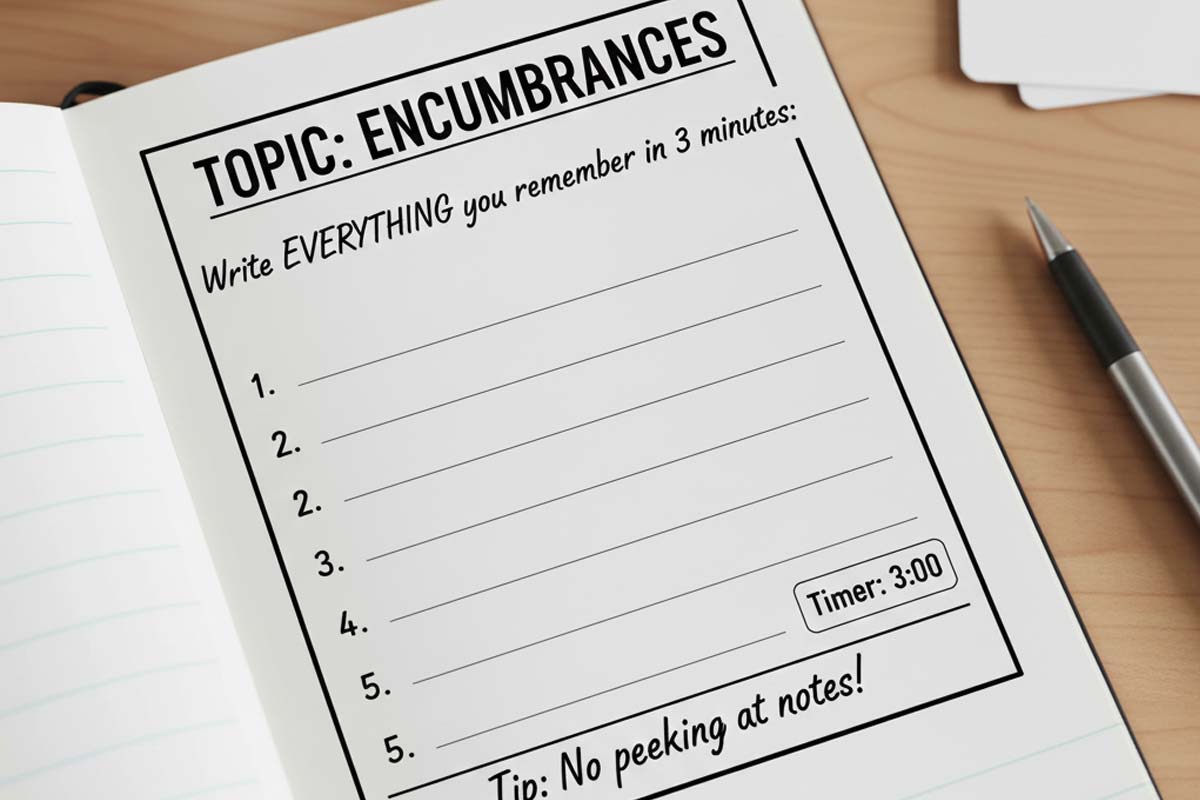
You’re staring at pages of California real estate law and you still can’t explain “constructive notice” five minutes later. If that feels familiar, you’re not alone — the DRE exam overwhelms Read more...
You’re staring at pages of California real estate law and you still can’t explain “constructive notice” five minutes later. If that feels familiar, you’re not alone — the DRE exam overwhelms thousands of students every month.
The reason is simple: the CA real estate exam doesn’t reward passive readers. It rewards students who use the right memory techniques designed for scenario-based questions.
I’m Kartik. For more than 20 years, I’ve taught students exactly how to retain DRE vocabulary, apply it under pressure, and avoid the traps baked into the exam. Everything below comes from real results — these are the techniques that consistently produce ADHI passers.
For the full roadmap of your licensing journey, start with our master guide:California Real Estate Exam Guide.
Why Simple Memorization Fails the CA Exam
Most students rely on rereading definitions, which creates a false feeling of familiarity. But the DRE exam doesn’t test direct recall.
Compare these:
Rote recall: “What is an easement appurtenant?”
Actual exam style: “A property owner grants permanent access to a neighbor. Which type of easement has been created?”
You can recognize the term and still get the question wrong. That is the trap.
Two things cause most CA test-takers to fail despite “studying”:
1. Recognition Illusion
You highlighted the page.
You nodded as you read.
You saw the term before.
But you can’t distinguish easement appurtenant from easement in gross when the DRE mixes them into four answer choices.
2. Category Confusion
The DRE doesn’t ask for definitions — it tests your ability to classify.
Examples:
Students mix up general liens vs. specific liens
Students misidentify estate types
Students confuse agency duties under pressure
If you want to avoid these traps, you need a system built for real estate exam thinking, not for a psychology class. These principles make far more sense once you see how they fit into a structured study routine, which I outline in Best Way to Study for the California Real Estate Exam.
The ADHI 4-Layer Memory Method (CA Exam Edition)
This is not abstract theory. This is the exact memory system ADHI students use to pass — built around how the DRE writes questions.
Layer 1: Vocabulary Compression (“Decluttering the Law”)
The DRE exam is vocabulary-heavy: encumbrances, estates, liens, agency, contracts — hundreds of terms that must be instantly recognizable.
We compress big concepts into tight, memorable anchors:
JT Unities → TTIPTime, Title, Interest, Possession
Bundle of Rights → DEEP CDisposition, Enjoyment, Exclusion, Possession, Control
These mnemonics accomplish two goals:
They shrink long definitions into manageable pieces
They help you recall terms correctly even when the exam twists the wording
Action Step: Pick a chapter (like Agency) and rewrite every major idea into a 3–5 letter mnemonic or short phrase.
Layer 2: Retrieval Cycles (“Training Your Exam Brain”)
Passive reading builds recognition — retrieval practice builds retention. The DRE exam rewards the latter.
Action Step: The Brain DumpChoose a topic (e.g., Encumbrances). Close your notes.
Write down everything you know — cold.
Most ADHI students see a 25–40% jump in recall after one week of doing this instead of rereading.
Retrieval, not rereading, is the reason ADHI students outperform passive readers.
Layer 3: Scenario Conversion (“Turning Definitions Into Answers”)
This is where the DRE separates passers from near-missers.
A definition alone won’t help you. You need to be able to apply it.
Action Step: Teaching-Back
Explain the difference between a Net Lease and a Gross Lease without looking at your notes.
If you can explain it, you own it.
If you stumble, the memory is incomplete.
Action Step: Build 1-Page Maps
Create a simple mind map for categories like:
Voluntary vs. involuntary liens
Freehold vs. less-than-freehold estates
These maps train your brain to identify categories — exactly what the exam demands. You’ll see how these category skills translate into higher accuracy on practice questions in our guide on How to Practice Exams for the CA Real Estate License Test.
Layer 4: Spaced Reinforcement (“Locking in Your Definitions”)
Cramming works for 24 hours.
Spacing works for 30 days.
This layer builds long-term exam recall.
Flashcard Triage System (A/B/C)
Sort your flashcards into:
A (Known Cold)
B (Shaky / Confused)
C (No clue yet)
Your schedule:
Review B every 1 hour → 1 day → 3 days → 7 days
Review C daily until it becomes a B
If you struggle with the time management needed for reinforcement, you’ll benefit from the structured study timelines we outline in How Long Should You Study for the CA Real Estate Exam?
Exam-Day Recall Simulation (Your Final Test Before the Test)
Before your official exam, test recall the same way the DRE will:
20-Question Sprint
Pick 20 practice exam questions
Answer them under time pressure
Explain why the correct answer is right
Explain why each wrong answer is wrong
If you can do this, you’re ready.
If you can’t, stay in Layers 2 and 3 until you can.
Stop These Common Memory Mistakes
These mistakes destroy DRE scores:
❌ Over-highlighting
You highlighted entire pages. That’s recognition, not retention.
❌ “I’ve read this” syndrome
If you can’t explain easement appurtenant out loud, you don’t know it.
❌ Marathon cramming sessions
They guarantee you will forget the material by test day.
❌Confusing categories
Without a mental map, the test’s scenario questions will crush you.
How a Crash Course Fits Into Memory Training
A crash course doesn’t replace memorization — it accelerates Layer 3.
During the crash course, we:
Convert definitions into real-world examples
Show you how the DRE twists vocabulary
Teach you to eliminate wrong answers quickly
Reinforce your category maps
It’s the difference between knowing a term and being able to use it under pressure. For help deciding if a crash course fits your study plan, read our guide on Should You Take a Crash Course for the CA Real Estate Exam?
FAQ
What is the best memorization technique for the CA real estate exam?
Retrieval practice (Layer 2). Nothing beats it.
How do I memorize real estate vocabulary faster?
Use mnemonics like TTIP and DEEP C to compress information.
Does the CA real estate exam require a lot of memorization?
Yes — but success comes from applying the vocabulary, not just knowing it.
Your 72-Hour ADHI Prep Protocol
72 Hours Out → Review TTIP, DEEP C, and your Pile A flashcards
48 Hours Out → Take a full 150-question timed exam
24 Hours Out → Review scenario maps only
Exam Morning → Quick review of B-pile only
Your Memory Is Your License
The California real estate exam is a test of application, not just recognition. If you walk into the testing center relying on passive reading, you will fall victim to the traps of Recognition Illusion and Category Confusion that defeat most test-takers.
The good news is that passing is a matter of strategy. By adopting the ADHI 4-Layer Memory Method, you shift your focus from simply reading the law to actively owning it.
Layer 1 (Compression): Use mnemonics like TTIP and DEEP C to declutter hundreds of terms into memorable anchors.
Layer 2 (Retrieval): Replace passive rereading with the Brain Dump technique to hardwire vocabulary into your long-term memory.
Layer 3 (Scenario Conversion): Build simple 1-Page Maps and practice Teaching-Back to master the crucial skill of classification.
Layer 4 (Reinforcement): Use the Flashcard Triage System and Spaced Reinforcement to lock in your knowledge until exam day.
Your success hinges on your ability to confidently move from knowing the definition of an easement to correctly classifying it in a complex scenario. Start implementing the Brain Dump today and begin turning your hard work into a guaranteed result.
|
You have spent months studying principles, practices, and finance. You’ve memorized the difference between a freehold estate and a leasehold estate. You’ve taken practice tests until your eyes Read more...
You have spent months studying principles, practices, and finance. You’ve memorized the difference between a freehold estate and a leasehold estate. You’ve taken practice tests until your eyes blurred. But there is one variable that textbooks cannot fully replicate: the environment of the testing center itself.
Anxiety often stems from the unknown. For many students, the fear isn’t just about the questions; it is about the logistics. Where do I park? What can I bring into the room? What does the computer interface look like? When do I find out if I passed?
At ADHI Schools, we believe that removing the mystery of the process allows your brain to focus entirely on the content. By understanding the flow of the day, you can walk in with confidence rather than apprehension. This overview is an essential component of our comprehensive California Real Estate Exam Guide, designed to help you navigate every step of the licensing journey.
The DRE Difference: Who Runs the Exam?
First, it is important to understand who is in charge. Unlike many other states that outsource their testing to third-party vendors like Pearson VUE or PSI, California does things differently. The California Department of Real Estate (DRE) both creates the exam and administers it.
This means that when you walk into the testing center, you are walking into a state-controlled environment. The proctors are state employees or contracted strictly by the state, and the security protocols come directly from the DRE.
Before You Leave Home
Your exam day strategy begins before you even start your car. The DRE is incredibly strict regarding punctuality and identification. If you are late, you may be denied entry and will forfeit your exam fee.
The Identification Rule: You must bring one current, valid (not expired), government-issued ID with a photograph and signature. This is usually a driver’s license, state ID, or passport. The name on your ID must exactly match the name on your exam registration. If you recently got married or changed your name and your ID doesn't reflect that yet, you will be turned away.
The "Car Strategy": Since you cannot bring personal items into the testing room, and locker space is sometimes limited or cramped, the best place for your phone, wallet, and study notes is often the trunk of your car. However, do not leave your ID and exam schedule notice in the car. Double-check that you have them in your hand before locking the vehicle.
Successful candidates often plan these logistics weeks in advance when they figure out how to schedule the California real estate exam through the eLicensing system, ensuring they have ample travel time buffered into their morning commute.
Arrival and Check-In Process
Plan to arrive at the testing site at least 30 to 45 minutes before your scheduled start time. This buffer is necessary for parking, locating the suite within the building, and the check-in line.
Once you enter the facility, the atmosphere shifts. It is generally quiet and sterile. You will approach the reception desk where a proctor will verify your ID. You can choose to place your belongings inside a locker for personal items like car keys. Do not try to sneak anything into the testing room. The proctors are vigilant, and the rules are generally uniform regardless of which of the California real estate exam testing centers you selected for your test.
Security Procedures
The security measures at DRE centers feel comparable to airport screening. This is to ensure the integrity of the state exam. Be prepared for the following:
Empty Pockets: You will likely be asked to turn your pockets inside out to prove they are empty.
Visual Inspection: You may be asked to roll up your sleeves or lift pant legs slightly to ensure no notes are hidden.
Jewelry and Accessories: Large jewelry, heavy coats, and brimmed hats are generally prohibited. You cannot wear a smartwatch or a Fitbit. Analog watches are also usually banned to prevent hidden cameras or timing devices.
Calculators: Since there is no longer any math on the real estate exam, no calculators can be brought into the exam site nor will the state provide you with one.
The Testing Room Environment
Once you pass security, you are escorted into the testing room. It is typically a room filled with cubicles, similar to a computer lab or a call center. You will be assigned a specific workstation.
Expect the First 5 Minutes to Feel Strange
It is completely normal to feel a surge of panic during these first few minutes. Most students report a spike in heart rate as they sit in the chair. This is a physiological response to stress, not a reflection of your preparation. Acknowledge it, take a deep breath, and trust that it usually fades once you answer the first five questions.
The Interface: The exam is taken on a computer. This is not a sleek or modern testing interface; it is functional, simple, and dated. You will use the mouse to select A, B, C, or D—there are no fill-in-the-blank or essay questions.
The Restroom Rule: You are permitted to use the restroom during the exam, but be aware that the exam timer does not stop. If you take a 10-minute break, that is 10 minutes less you have to answer questions. Plan your water intake accordingly.
It is important to remember that you must be physically present at the proctored center; current DRE regulations do not allow you to take the California real estate exam online remotely.
Top 5 Things That Surprise Students
The "Old School" Tech: The mouse might be clunky, and the screen resolution low.
Unpredictable Temps: The room might be freezing cold or uncomfortably warm. Dress in layers.
No Immediate Score: You won't see "PASS" on the screen the moment you finish (more on that below).
Ambient Noise: You will hear mouse clicks, coughing, and chairs shifting.
Small Lockers: If you bring a giant backpack, it might not fit.
Pacing, Fatigue, and Strategy
You have 3 hours to answer 150 multiple-choice questions for the salesperson exam and 4 hours and 200 questions for the broker test. This breaks down to roughly 1 minute and 12 seconds per question. However, this is an average, not a rigid rule. Some vocabulary questions will take you 10 seconds; some longer “story type” questions might take you 3 minutes.
The "Halfway" Landmark: A good rule of thumb for pacing is to check the timer when you are halfway through the questions. Based on where you are at the halfway mark you might need to speed it up.
The Fatigue Factor: The hardest part of the exam often isn't the difficulty of question #1, but the brain fog that sets in by question #115. Decision fatigue is real. Toward the end of the exam, your brain may try to rush you just to escape the uncomfortable environment.
Pro Tip: Watch out for "overthinking." As fatigue sets in, students often stare at simple questions and convince themselves there must be a trick. Usually, there isn't. If you know the definition, mark it and move on.
Recognizing your own biological clock is vital here; if you know your focus crashes after lunch, you should have considered the best time of day to take the California real estate exam to ensure you are testing during your peak mental performance window.
What Happens After You Click “Submit”
This is the moment that causes the most heart palpitations.
You do not see your result on the screen immediately in the testing cubicle. The screen typically goes blank or returns to a welcome page. You must gather your things and walk out to the proctor at the front desk.
The Result: The proctor will print a piece of paper, fold it, and hand it to you.
If you passed: The paper will typically say "CONGRATULATIONS" and provide instructions on how to apply for your license. It will not tell you your score. Whether you got 80% or 100%, a pass is a pass.
If you failed: The paper will show you your actual numerical score and a breakdown of the percentages you scored in each of the seven topic areas. This is diagnostic, helping you know where to study for the next attempt.
Final Exam-Day Checklist
To ensure a smooth experience, run through this mental checklist before walking out the door:
Valid ID: Check it twice.
Directions: Have the address loaded in your GPS.
Comfortable Clothing: Dress in layers to handle unpredictable room temps.
Keys and Wallet: Ready to be locked in the provided locker or your trunk.
Positive Mindset: Leave the panic at home.
Walk In Prepared
The California Real Estate Exam is designed to be rigorous, but it is not impossible. By knowing exactly what to expect when you walk through those doors, you eliminate the element of surprise.
Trust your preparation. You have put in the work, you understand the material, and now you understand the logistics. If you want a complete step-by-step walkthrough of the entire journey—from qualifying to scheduling to test day—the California Real Estate Exam Guide ties everything together to ensure you are ready to launch your new career.
FAQs
1. What identification is required to check in at the testing center? You must present one current, valid, government-issued ID with a photograph and signature (such as a driver’s license, state ID, or passport). The name on the ID must exactly match the name on your exam registration.
2. Can I bring a calculator into the exam room? No, there is no longer any math on the California real estate exam.
3. Will I see my pass/fail result on the computer screen immediately? No. After you click "Submit," the screen will typically return to a welcome page. You must exit the room to receive a printed report from the proctor. If you pass, it will not list a score; if you fail, it will provide your numerical score and a breakdown.
4. Can I use the restroom during the exam? Yes, you are permitted to use the restroom, but the exam timer does not stop. Any time taken for a break is deducted from your total testing time.
5. How many questions are on the exam and what is the time limit? The salesperson exam consists of 150 multiple-choice questions and you have up to 3 hours to complete. The broker exam is 200 multiple-choice questions and you get 4 hours to complete it.
|