
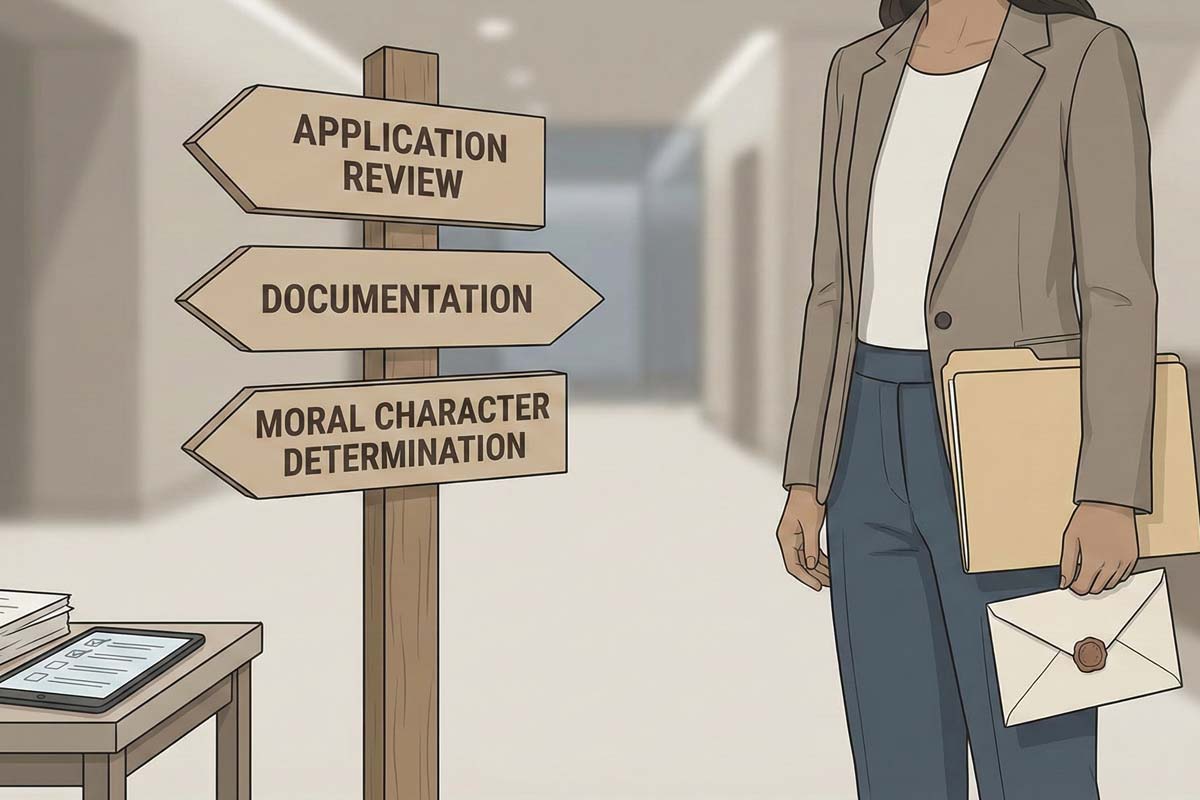
If you have a criminal record and you’re considering getting a California real estate license, you’re probably carrying a heavy question:
“Will my past prevent me from becoming an agent?”
And if you’re anxious, confused, or even scared to begin, you’re not alone. In over 20 years of teaching real estate students in California, I’ve answered this question more times than I can count — usually from people who are motivated, hardworking, and trying to rebuild their lives.
Here’s the truth, stated plainly:
A criminal record does not automatically disqualify you.
But it also does not guarantee that you’ll be approved — even if the offense was long ago, even if it was expunged, and even if you’ve made significant progress in your life.
The California Department of Real Estate (DRE) reviews every applicant with a record through a detailed Moral Character Determination.
Some applicants are approved. Some are denied.
What determines the outcome?
Honesty, documentation, rehabilitation, and — importantly — the nature of the offense itself.
Before we get into the specifics, here’s one key distinction I tell all my students:
Eligibility rules and your government issued ID merely allow you to take the exam.
Moral character review determines whether you can actually receive the license after you pass.
You can start the process.
But whether or not you get the license depends on a thorough state review of your complete history.
“Moral Character” can sound vague or intimidating, but in practice it comes down to three things the DRE looks at:
Did you disclose everything? Was it complete, accurate, and truthful?
Does your conduct — past and present — demonstrate responsibility?
Can consumers trust you with confidential information, contracts, and money?
None of this is about perfection.
But it is about transparency and evidence of change.
The DRE’s review is strict.
Every applicant is fingerprinted, and the state receives full reports from both the DOJ and FBI. Nothing stays hidden. And the DRE expects disclosure of:
A conviction itself does not automatically lead to denial.
But failing to disclose often does.
If there’s one message I stress repeatedly, it’s this:
Over the past two decades, I have had students with various criminal histories go on to become licensed real estate agents. I’ve also had students with similar histories get denied.
The difference usually comes down to:
To be clear:
Some offenses make licensure extremely difficult.
Crimes involving fraud, forgery, embezzlement, or financial misconduct carry significantly more weight because real estate involves handling money and sensitive documents.
Even with rehabilitation, these offenses may still result in denial.
I don’t say that to discourage you — I say it because you deserve accuracy, not false optimism.
Let me be completely direct:
The DRE will find out everything, both before and after you are licensed.
Applicants are sometimes denied not because of the offense, but because:
The DRE is crystal clear on this:
No school, no friend, and no online source can override what the DRE requires.
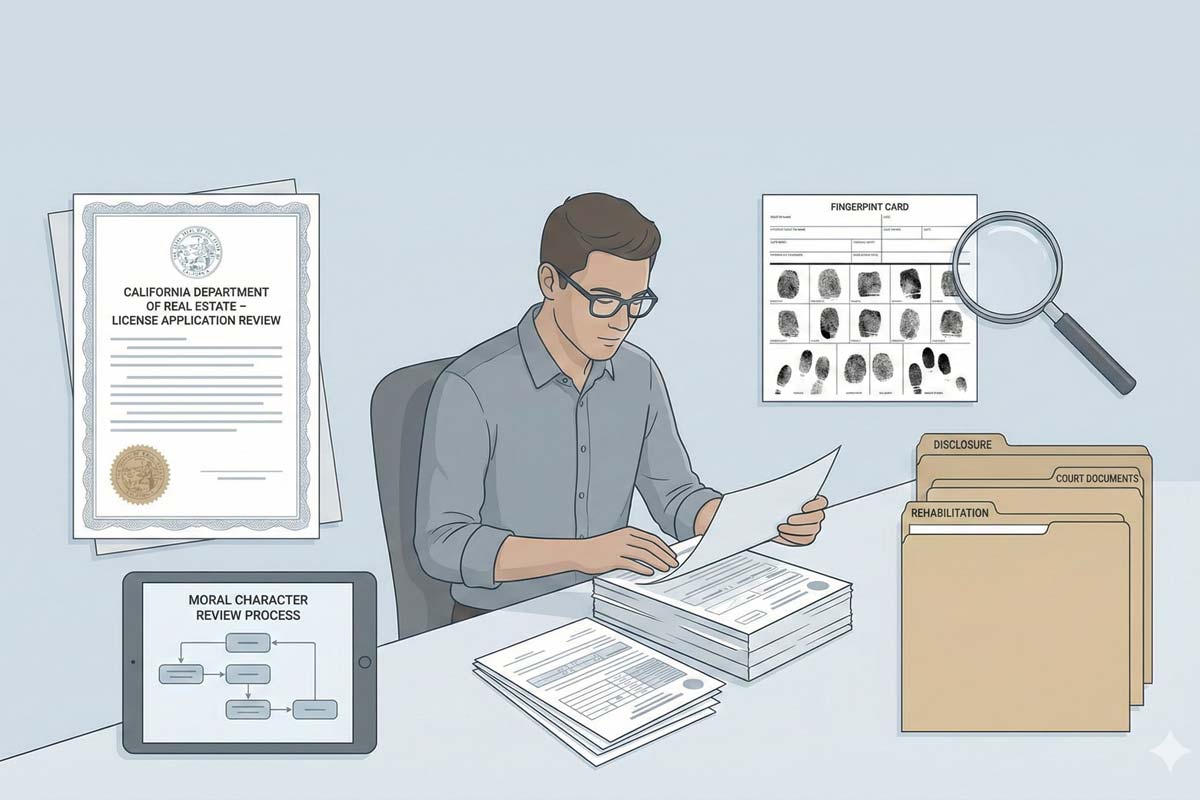
Over the years, I’ve developed a step-by-step approach I recommend to any student who is worried about their background. It doesn’t guarantee approval — nothing does — but it positions your application for the fairest review possible.
You can also contact the DRE at 877-373-4542 with other questions.
Do not guess.
Do not rely on memory.
Request:
Make sure you know the full picture:
The DRE will compare what you disclose to what the fingerprint report shows.
Your Statement of Explanation matters — a lot.
A strong explanation includes:
Avoid excuses. The DRE isn’t looking for justification — they’re looking for accountability.
Rehabilitation is essential, especially for more serious offenses.
Evidence can include:
The stronger and more organized this section is, the clearer your current character becomes.
Think of this like preparing a professional portfolio.
Create a clean, organized packet containing:
Make it easy for the DRE reviewer to understand your history and see your progress.
If the DRE denies your application, the process does not necessarily end there.
You may:
Some applicants choose to consult an attorney experienced in administrative law to navigate deadlines and procedures.
Again — not a guarantee, but an available path.
A criminal record creates uncertainty in the licensing process — and you deserve a realistic understanding of that. Some applicants with records are approved. Some are denied. The outcome depends on honesty, documentation, accountability, and the specific facts of the offense.
But here’s what I can tell you after two decades of teaching:
You’re not disqualified from trying.
You’re not automatically denied.
And you’re not without a path forward at some point through the process.
If you approach the process carefully and truthfully, you give yourself the best chance at a fair review — and potentially, a career that can change your life.
When you're ready to take the next step or want help understanding the licensing process, we’re here to guide you every step of the way.
A: Possibly. Felonies aren’t automatic denials, but the DRE reviews them under its moral character standards. Approval depends on disclosure, rehabilitation, and the specifics of the offense.
A: Yes. Even expunged or dismissed convictions must be disclosed. The DRE receives full DOJ/FBI fingerprint reports, and failing to disclose can lead to denial.
A: Crimes involving fraud, dishonesty, theft, or financial misconduct face strict review and are the hardest to overcome. These may still result in denial even with rehabilitation.
A: Honesty in disclosure, nature of the offense, completion of court requirements, time since the violation, and evidence of rehabilitation.
A: Court records, DOJ/FBI reports, a clear Statement of Explanation, and evidence of rehabilitation such as employment history and reference letters.
A: Yes. Fingerprint checks reveal all convictions, including expunged ones. Non-disclosure is one of the most common reasons for denial.
A: You may request reconsideration or pursue judicial review. Some applicants consult an attorney to navigate appeal deadlines.
Want even more information on getting your real estate license? Check out our comprehensive Real Estate License Guide.

Founder, Adhi Schools
Kartik Subramaniam is the Founder and CEO of ADHI Real Estate Schools, a leader in real estate education throughout California. Holding a degree from Cal Poly University, Subramaniam brings a wealth of experience in real estate sales, property management, and investment transactions. He is the author of nine books on real estate and countless real estate articles. With a track record of successfully completing hundreds of real estate transactions, he has equipped countless professionals to thrive in the industry.

"Hey guys,
I took the exam today and passed!!!!
It only took me one try which was one of my goals. I took the online
classes and follow your suggestions so I took the crash course,
used the crash course app a lot, took 7 mock tests and went
confident to present the exam. Thank you for the great job you are
doing, you guys are awesome!!!! May God continue to bless you!"
Willie V.