
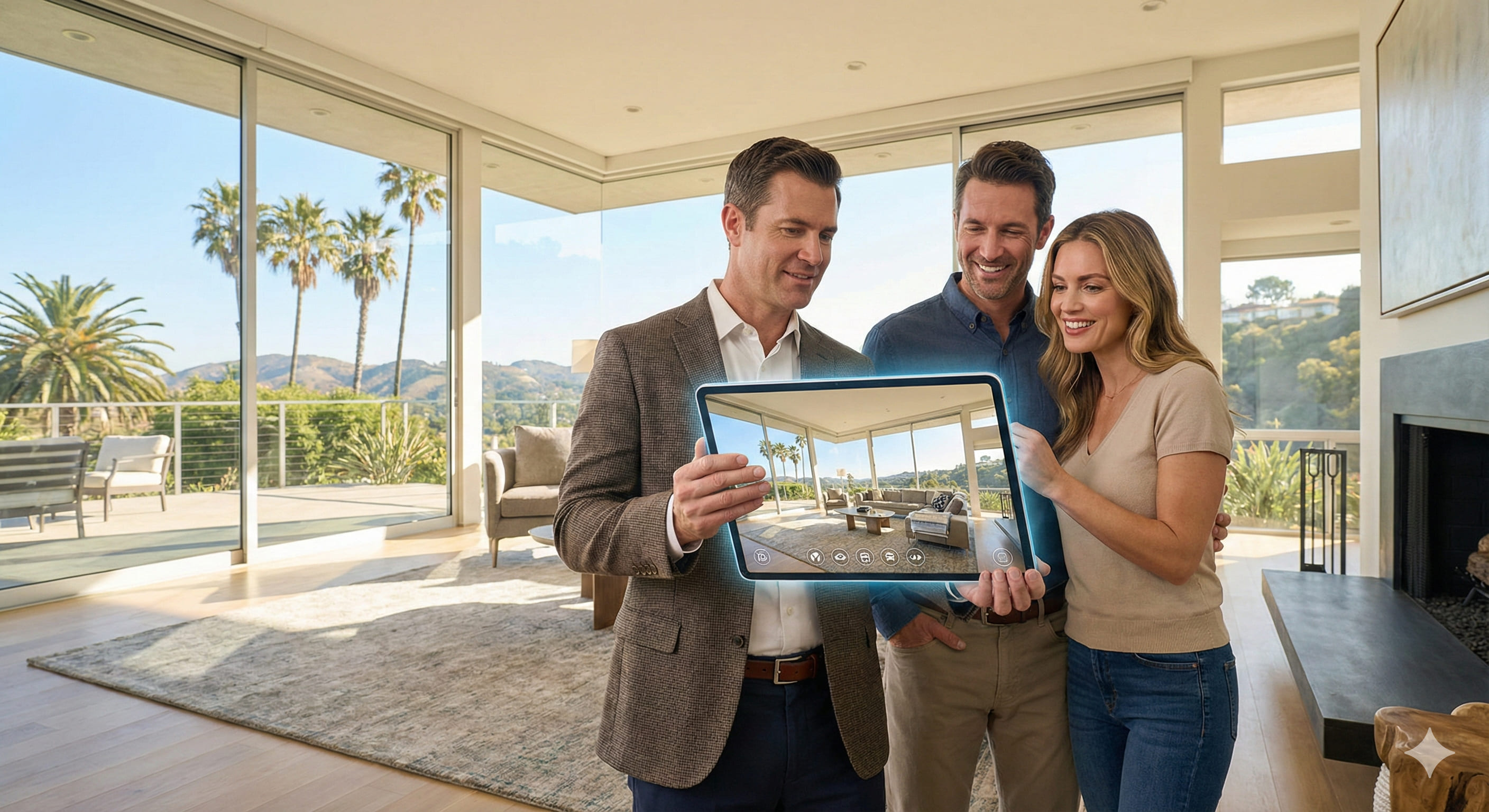
For the last decade, technology evangelists have promised that virtual reality would make the traditional Sunday open house obsolete. They argued that 3D walkthroughs and high-definition drone footage would allow buyers to purchase homes in San Francisco or San Diego without ever stepping foot inside.
As we move into 2026, the verdict is in: They were wrong.
While technology has revolutionized how we market homes, it has not replaced the physical experience of buying them. However, for aspiring agents and those looking to renew their licenses, the landscape has changed. We are no longer debating "virtual vs. physical." We are navigating a complex hybrid market where technology meets strict legal compliance.
If you are studying for your real estate license CA, understanding this balance isn't just about marketing—it's about staying out of court.
In late 2024 and throughout 2025, we witnessed the "Comeback of the Open House." Despite the proliferation of VR headsets and Matterport tours, California buyers pushed back against a purely digital experience.
Why? Because pixels can’t convey reality.
A 3D tour cannot capture the faint smell of mildew in a basement. It can’t show you how difficult the parking situation is on a narrow street in Long Beach, or the sudden roar of a jet engine over a seemingly quiet Inglewood neighborhood. It misses the "micro-defects"—the sloping floor or the drafty window—that you only catch in person.
There is one major exception where virtual tours reign supreme: Relocation. In California, we see massive migration to Southern California and for these buyers, the virtual tour is the "first showing." It allows a tech worker in San Jose to shortlist homes in Orange County without a six-hour drive. But even then, the physical walk-through is almost always the condition for closing the deal.
Successful agents today utilize a hybrid real estate marketing strategy. Here is how the modern workflow functions:
For students currently enrolled in our California real estate school, the lesson is clear: Technology gets you to the plate, but emotional intelligence and physical presence hit the home run.
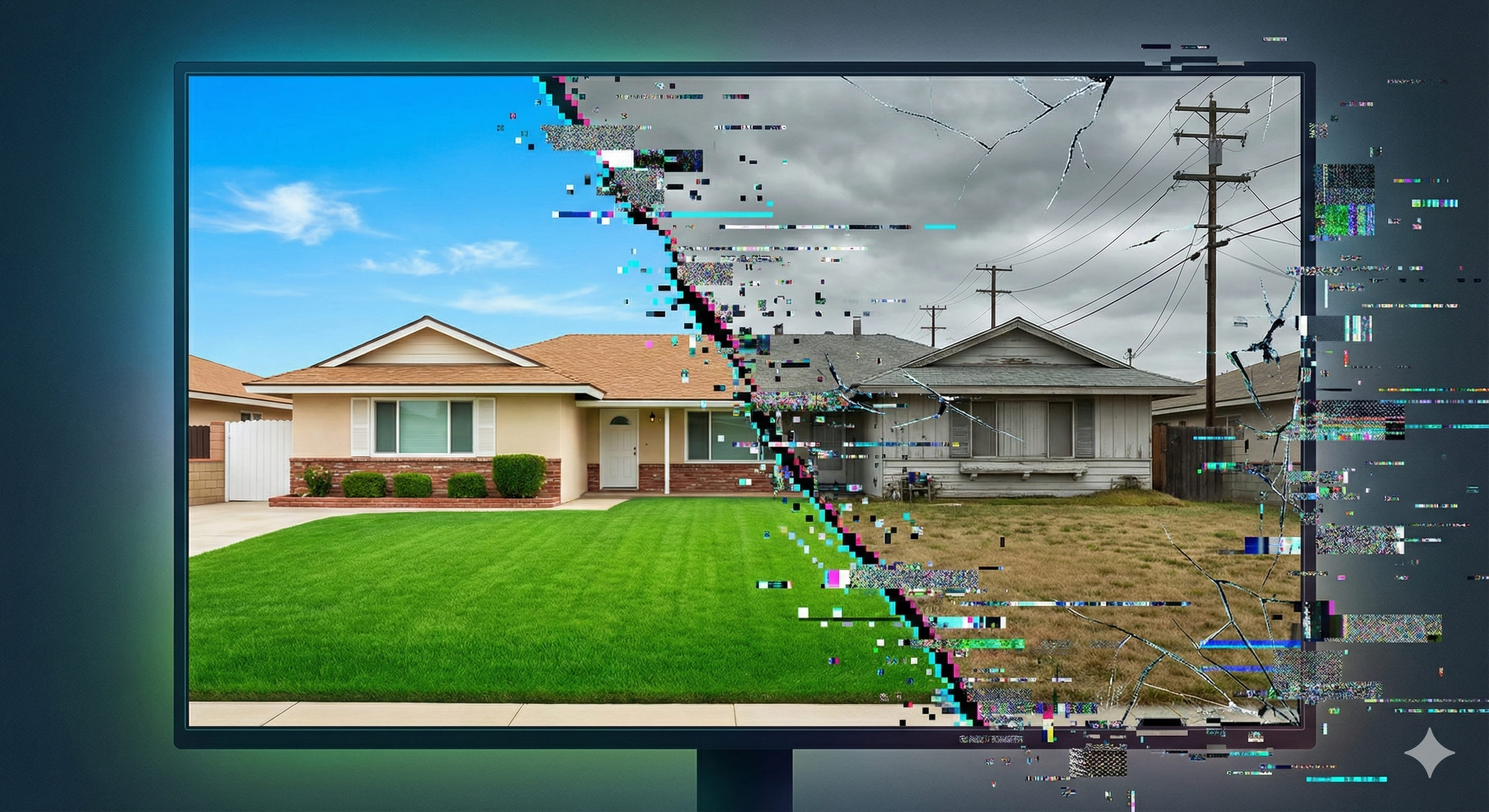
This is the section that generic marketing blogs won't tell you, but as a broker and educator, I must. When you alter reality digitally, you invite liability legally. The California Department of Real Estate (DRE) is watching.
California is taking a hard line on Artificial Intelligence in advertising. Under legislative measures like AB 723 California real estate regulations, transparency is mandatory.
Starting in 2026, agents must disclose if marketing materials have been AI-modified. This goes beyond simple color correction. If you use AI to:
You are moving from "marketing" into "deception."
In our real estate practice course, you learn a foundational concept that separates sales from fraud: Puffing vs. Misrepresentation.
If a 3D tour "stitches" a room together and accidentally smooths over a crack in the foundation, that is a material fact being hidden.
The Consequences: Under California Business & Professions Code §10140, misleading or deceptive advertising can trigger fines, license suspension, or revocation. This is a serious DRE advertising guidelines issue. Real estate ethics demand that we present the property as it truly is.
Key Takeaways:
Many new agents ask, "Why do I need to take a course to learn about virtual tours? Can't I just watch a YouTube tutorial?"
The answer is simple: YouTube teaches you how to use the software. Our California real estate school teaches you how to market properly.
The state exam is evolving. When you study California real estate license exam topics, specifically in the area of Practice of Real Estate and Disclosures, you are being tested on your ability to handle technology within the framework of the law.
The exam questions won't ask "How do you turn on a 360 camera?" As time evolves, tested concepts might look like:
These questions on blind advertising, digital disclosure, and misrepresentation are designed to weed out agents who don't respect the consumer protection laws of California.
To succeed in this market, proptech training is essential—but it must be grounded in license law. Real estate continuing education California requirements are increasingly focusing on these emerging technologies.
A modern agent must be part Marketer, part Compliance Officer. The right real estate school doesn't just help you pass the test; it prepares you for the liability of the real world. It bridges the gap between "what looks good" and "what is legal."
Will virtual tours replace open houses in California?
No.
Will AI completely replace real estate agents?
No.
However, an agent who leverages technology ethically and understands the law will absolutely replace the agent who refuses to adapt.
The future of real estate belongs to the educated professional. It belongs to the agent who knows that while a drone shot looks great, fiduciary duty is what keeps the client for life.
This is why choosing the right California real estate school is no longer optional—it’s your first line of defense against liability. Whether you are looking for real estate exam prep or need to complete your license renewal, ensure your education covers the practice of real estate, not just the theory.
Don't just get licensed. Get educated.
Founder, Adhi Schools
Kartik Subramaniam is the Founder and CEO of ADHI Real Estate Schools, a leader in real estate education throughout California. Holding a degree from Cal Poly University, Subramaniam brings a wealth of experience in real estate sales, property management, and investment transactions. He is the author of nine books on real estate and countless real estate articles. With a track record of successfully completing hundreds of real estate transactions, he has equipped countless professionals to thrive in the industry.

"Hey guys,
I took the exam today and passed!!!!
It only took me one try which was one of my goals. I took the online
classes and follow your suggestions so I took the crash course,
used the crash course app a lot, took 7 mock tests and went
confident to present the exam. Thank you for the great job you are
doing, you guys are awesome!!!! May God continue to bless you!"
Willie V.