

I have spent over 20 years as a broker in California, training and supervising thousands of new licensees. In that time, I’ve developed a sixth sense for the “Quiet Quit.”
It starts with a subtle avoidance. An agent might stop showing up for the Tuesday sales meetings because they don’t have any "wins" to report. They tell their family that “it’s just a slow season” while watching their credit card balance climb to cover local association dues.
Often there isn’t a dramatic resignation; they simply fade out of the industry, seeing that the new career touted on LinkedIn six months ago never actually materialized.
This isn’t just the loss of a job; it’s the identity built in front of everyone that withers.
In California, the first-year dropout rate is high because the industry sells a dream while the reality requires surgical discipline. Most agents don't quit because they lack talent—they quit because they were never told how to survive this compounding decline.
The biggest mistake I see is "productive procrastination." This is when an agent spends four days color-coding a CRM that contains zero leads or obsessing over the font on a business card.
This is where most agents fool themselves into thinking they are "building a business" when they are actually just maintaining an expensive hobby. If you don't have a daily lead-generation block—actual conversations with prospects, not administrative setup work—you are a tourist, not an agent yet. To stop the bleed, you must learn How to Create a Real Estate Business Plan (New Agents).
Invisibility is a death sentence in California's competitive markets. Many new agents hide behind their big-box brokerage’s logo, thinking the name on the building will do the heavy lifting. It won't.
The danger here is the lag factor. The damage of a weak brand isn’t felt today; it’s felt six months from now when the pipeline is bone-dry. The consequence is a phone that stays silent even when inventory shifts or interest rates drop. Essentially becoming a "secret agent," and secrets don't get paid. Overcoming this requires Branding Tips for New California Agents that force the agent into the public eye before the silence becomes entrenched.
Let's talk about the moment the "dream" hits the bank account. Between DRE fees, REALTOR® association dues, and marketing costs, you are likely thousands of dollars in before the first escrow even opens.
In California, a standard escrow is 30 to 45 days. If it takes you four months to find a client, you are six months away from a check. Most agents quit when they hit the "Panic Check"—the moment they realize they have to retreat to their old 9-to-5 and explain to their peers why they couldn't make it. Cash-flow shock is a public retreat that most egos can't survive.
I see new agents posting photos of their lunch or generic "Happy Monday" graphics and wondering why their DMs are empty. This random posting is actually worse than silence because it creates a false sense of accomplishment.
In the current market cycle, the public is too sophisticated for "guru" posturing. If your digital presence doesn't provide data or inventory insights, you are just adding to the noise. You need a strategy for How New Agents Should Use Social Media in 2026 that builds authority rather than just seeking "likes."
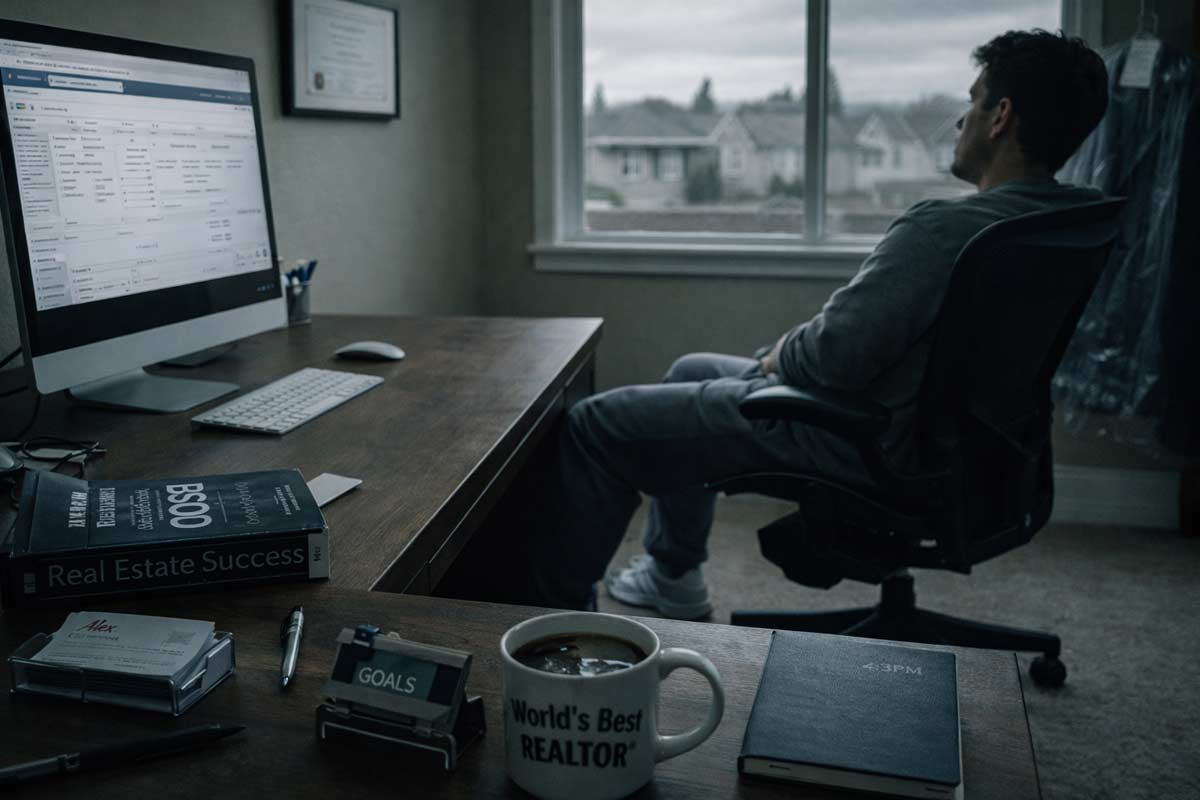
Real estate can be a lonely business. When a deal falls apart, the isolation leads to a rapid collapse in motivation.
But the real killer is shame. New agents often stop asking questions because they don't want to "look stupid" in front of the high-producers in the office. They isolate themselves to hide their lack of progress, which only accelerates the Quiet Quit. Breaking this cycle requires a specific strategy on How to Stay Motivated as a New Agent that acknowledges the psychological toll of the first year.
The California Department of Real Estate (DRE) exam ensures you know the basics of real estate law; passing does not guarantee you will make money. The industry’s onboarding narrative often suggests that "getting your license" is the hard part.
That is the Licensing Lie. Your license is merely a "permit to learn." The reality is that the first year is 10% real estate and 90% grueling lead acquisition. Lead acquisition isn't a chore you do to get to the real estate; lead acquisition is the real estate business.
The agents I’ve seen survive and thrive over the last two decades don't have "hustle" posters on their walls. They have boring consistency.
Survivors rely on observable behaviors:
If you are currently feeling the weight of the Quiet Quit, you are at a fork in the road. You can continue to fade out, or you can admit that your current "plan" isn't working and reset your systems.
The first year is an exercise in attrition. Survival depends on your willingness to stop "playing house" and start operating a business. To move past the danger zone and build something that lasts, you need to understand the full career arc. It’s time to stop guessing and learn how to properly Start a Real Estate Career in California with your eyes wide open.

Founder, Adhi Schools
Kartik Subramaniam is the Founder and CEO of ADHI Real Estate Schools, a leader in real estate education throughout California. Holding a degree from Cal Poly University, Subramaniam brings a wealth of experience in real estate sales, property management, and investment transactions. He is the author of nine books on real estate and countless real estate articles. With a track record of successfully completing hundreds of real estate transactions, he has equipped countless professionals to thrive in the industry.

"Hey guys,
I took the exam today and passed!!!!
It only took me one try which was one of my goals. I took the online
classes and follow your suggestions so I took the crash course,
used the crash course app a lot, took 7 mock tests and went
confident to present the exam. Thank you for the great job you are
doing, you guys are awesome!!!! May God continue to bless you!"
Willie V.