
Disclaimer: This is educational information, not legal advice. Your broker is your first stop for contract questions; for legal interpretation, consult a California real estate attorney.
TL;DR: The Quick Framework for Clarity
- The Goal: Translate "legalese" into "process." Do not interpret law; explain the mechanics of the transaction.
- The Rule: Use the "3-Layer Explanation" (Meaning, Risk, Next Step) or the "2-Sentence Rule" for high-pressure moments.
- The Limit: If a client asks for legal consequences or liability, refer them to your broker or an attorney immediately.
Contract Terms Clients Panic Over (Plain-English Index)
- Earnest Money Deposit (EMD): The initial deposit that secures the contract. It is held by a third-party escrow holder, not the seller, and its release is governed by the terms of the purchase agreement.
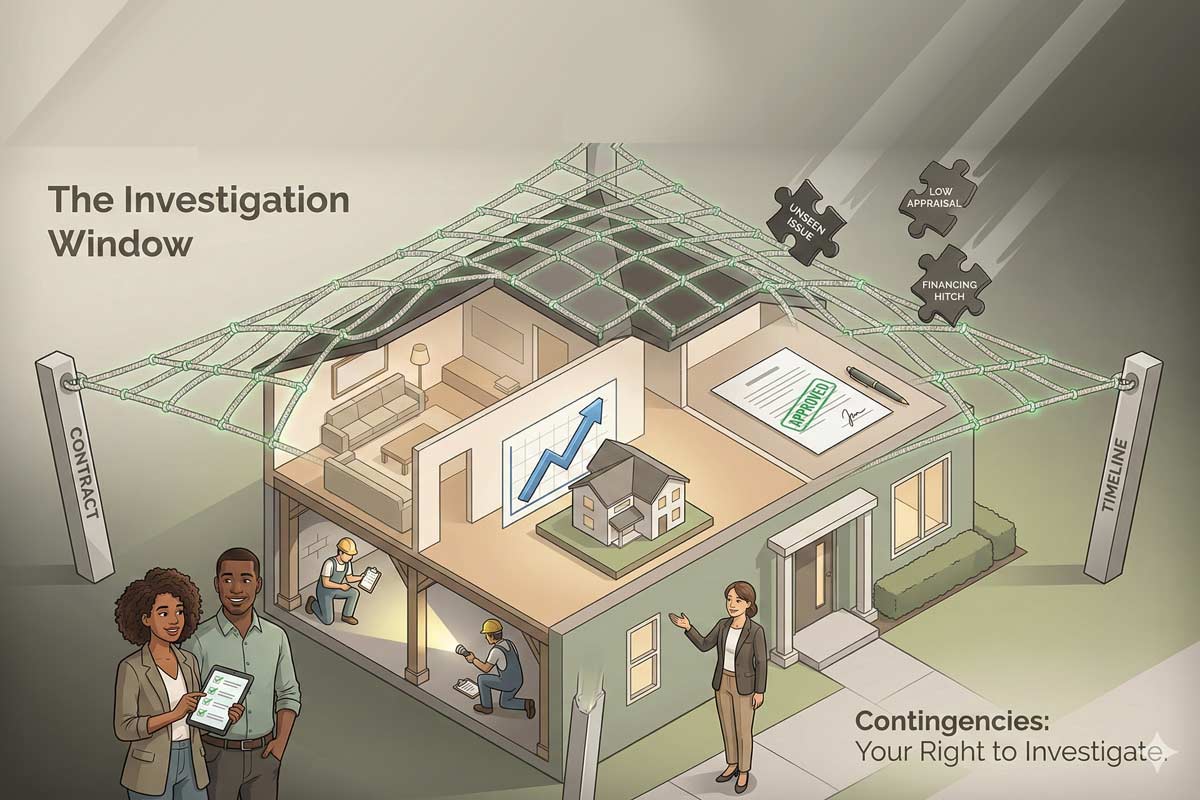
- Contingencies: The "safety hatches" that allow for investigation and cancellation.
- Deadlines / Notice to Perform (NTP): The "alarm clock" that keeps the deal moving.
- Removal of Contingencies (CR): The moment a buyer becomes fully committed to the purchase and risk losing their deposit after all contingencies have been removed.
- Repairs vs. Credits: The choice between physical fixes and financial concessions.
- Appraisal Gap: What happens when the appraised value doesn't match the purchase price.
- Arbitration: How disputes are handled outside of a courtroom.
- Liquidated Damages: The pre-set financial consequence (from the deposit) if a buyer fails to complete the purchase without a valid, contractual reason to cancel.
The Hook: The Contract Is Not the Product — Clarity Is
You’ve successfully deployed every negotiation tactic in the California agent’s playbook, and your client’s offer is finally accepted. You open the California Residential Purchase Agreement (RPA) with your client, and the atmosphere shifts. The client rereads the "Liquidated Damages" section and the panic sets in: "Wait, am I being sued? Is my deposit gone?"
In this guide, I’m not showing you how to “interpret” the RPA—I’m showing you how top California agents explain terms as process + timeline + decision points, and when to escalate to your broker.
As I have taught for over 20 years, your job isn't to sound like a lawyer—it’s to create calm through correct expectations. High-performing agents operate with a "clinical" energy. They don't get emotional about the fine print; they explain the machinery of the escrow so the client can make a rational decision. Mastery of these explanations is a foundational Real Estate Agent Skill for anyone moving from "licensee" to "professional operator."
The Frameworks: How to Explain Anything Clearly
The “3-Layer Explanation”
When a client asks about a specific term, structure your response this way:
- Plain-English Meaning: A one-sentence summary.
- Why It Matters (Risk/Benefit): How it protects them or what they are committing to.
- What Happens Next (Timeline + Decision): The specific action required.
The 2-Sentence Rule (For Nervous Clients)
When a client is spiraling, they don’t need a lecture. They need an anchor.

- Sentence 1: What it is.
- Sentence 2: What decision it controls / what happens next.
- Follow-up: "Want the deeper version?"
The 8 Terms That Cause 80% of Confusion
1. Earnest Money Deposit (EMD)
- The Fear: "Is the seller taking my money today?"
- The Script: "Your deposit is held in a neutral escrow account, not by the seller. What happens to it depends on timing, contingencies, and the paperwork. My job is to protect the timeline, document everything, and loop in my broker if we hit a cancellation question."
2. Contingencies (The "Safety Hatches")
- The Fear: "Am I locked in the moment I sign?"
- The Script: "Contingencies are your investigation window. If something doesn’t check out, there’s a contract process to respond, negotiate, or cancel—what’s available depends on timing and documentation."
3. Timelines and the Notice to Perform (The “Alarm Clock”)
- The Fear: "Are we being sued?"
- The Script: "This isn’t a lawsuit. It’s the deal’s alarm clock. It’s the seller saying, ‘Are we moving forward or not?’ Let’s look at what’s due, confirm our timeline, and then we’ll respond properly in writing."
- Note: Misunderstanding these deadlines is a leading cause of avoidable, deal-killing mistakes in California.
4. Removal of Contingencies (CR)
- The Fear: "What happens if I sign this?"
- The Script: "Once these are removed, you’ve reduced your ‘exit ramps,’ and cancellation risk increases—this is a broker-confirm moment if you’re unsure. Signing this means you are satisfied with your investigations and you are moving to 'committing’ and your deposit is generally no longer refundable.
5. Repairs vs. Credits
- The Fear: "Can I ask for anything if it's 'as-is'?"
- The Script: "We can ask for a credit—which is the seller paying some of your closing costs—so you have the cash to fix this after you move in. It’s often cleaner than asking a seller to do a rush repair. This is where strong negotiation tactics for California agents matter—because you’re trading certainty, timeline, and money."
6. Appraisal Gap Risk
- The Fear: "What if the bank says the house isn't worth the price?"
- The Script: "If the appraisal is low, the bank only loans based on that number. We then negotiate to bridge the gap. Knowing how to handle appraisal gaps in California before we start is how we protect your down payment."
7. Arbitration (The “Dispute Path”)
- The Fear: "Am I losing my rights?"
- The Script: "This section is about the process for resolving disputes if something goes sideways. I can explain what the clause is designed to do in the transaction, but for legal interpretation of your rights, we should confirm with an attorney."
8. Liquidated Damages (The “Deposit Risk Concept”)
- The Fear: "Do I automatically lose my deposit if I back out?"
- The Script: "This addresses potential deposit-related consequences if a buyer breaches after commitment. I can walk you through where this sits in the process, but for legal meaning and exposure, we should confirm with my broker or an attorney."

The Buyer vs. Seller Lens
| Term |
Buyer Lens (Protection) |
Seller Lens (Certainty) |
| EMD |
Shows you are a serious, qualified buyer. |
Shows buyer commitment and reduces flake risk. |
| Contingencies |
Your right to "look under the hood." |
The hurdles that must be cleared to get to a closed sale. |
| Appraisal Gap |
Protects you from overpaying/under-financing. |
The risk that the deal might fall apart late in escrow. |
The “Plain-English Summary” You Can Email Clients (Template)
- What you signed: (Summarize offer price + key terms)
- Your protections: (List inspection/appraisal/loan windows)
- Your deadlines: (EMD due date, inspection end date, appraisal date, CR date)
- Your next decision: (Remove contingencies vs. renegotiate)
- Broker/legal boundary: (We explain process; broker/attorney interprets liability)
Top-Producer Habit: The 3-Email System
- Email 1: "The Contract in Plain English" (Sent immediately after offer submission). Summarize the Big 3: Price, Contingency Periods, and Closing Date.
- Email 2: "The Timeline & Decision Points" (Sent at Day 1 of Escrow). A bulleted list of dates for EMD deposit, Inspection end, and Appraisal.
- Email 3: "Before You Remove Contingencies" (Sent 2 days before CR is due). A checklist of everything discovered so the client feels confident signing the CR.
The “Red Flag” Moment: When to Pause and Escalate
A professional operator knows the edge of their expertise. Stop explaining and route to your broker or an attorney if:
- The client asks: "What is the maximum I can be sued for if I breach this?"
- The client wants to add custom, "legal-sounding" language to an addendum.
- The deal involves complex tenant-occupied issues or probate laws.
- The client threatens litigation against the other party.
The "Safety" Script:
"That’s a great question regarding the legal interpretation of this clause. As your agent, I can explain how this usually works in the transaction process, but for a definitive legal opinion on your liability, I recommend we pause and you speak with an attorney."
FAQ: Common Client & Agent Questions
What does "contingency" mean in real estate?
In California, a contingency is a condition that must be met (or waived) for the deal to stay alive. Common ones include home inspections, the appraisal, and final loan approval.
What happens if I miss a deadline in escrow?
If a deadline is missed, the other party may issue a "Notice to Perform." This gives the lagging party a set amount of time (often around 48 hours—always check the actual notice) to complete the task or risk the other party cancelling the deal.
Why are there multiple offers and what do we do?
Multiple offers mean the market is highly competitive. To win, we need to focus on "clean" terms—shorter contingency periods and solid proof of funds. Mastery of how to present multiple offers in California is how we navigate this for sellers and buyers alike.
What is the “as-is” clause in California real estate?
“As-is” usually means the seller isn’t promising repairs, but it does not remove a buyer’s right to investigate or the duty of the seller to disclose known material facts.
What should I do if my agent/buyer/seller is confused about a clause?
Ask for the plain-English “meaning + timeline + next step,” then confirm anything involving liability, legal interpretation, or unusual addenda with your broker/attorney.
Clarity is the ultimate value-add in California real estate. If you can take a 25-page legal document and turn it into a clear, manageable roadmap, you aren't just an agent—you are a consultant.
Your ability to explain these terms safely and clearly protects the deal and your reputation. Ready to level up your full skill stack? Explore our comprehensive guide to Real Estate Agent Skills California.
Stay clinical. Stay clear. Close the deal.