
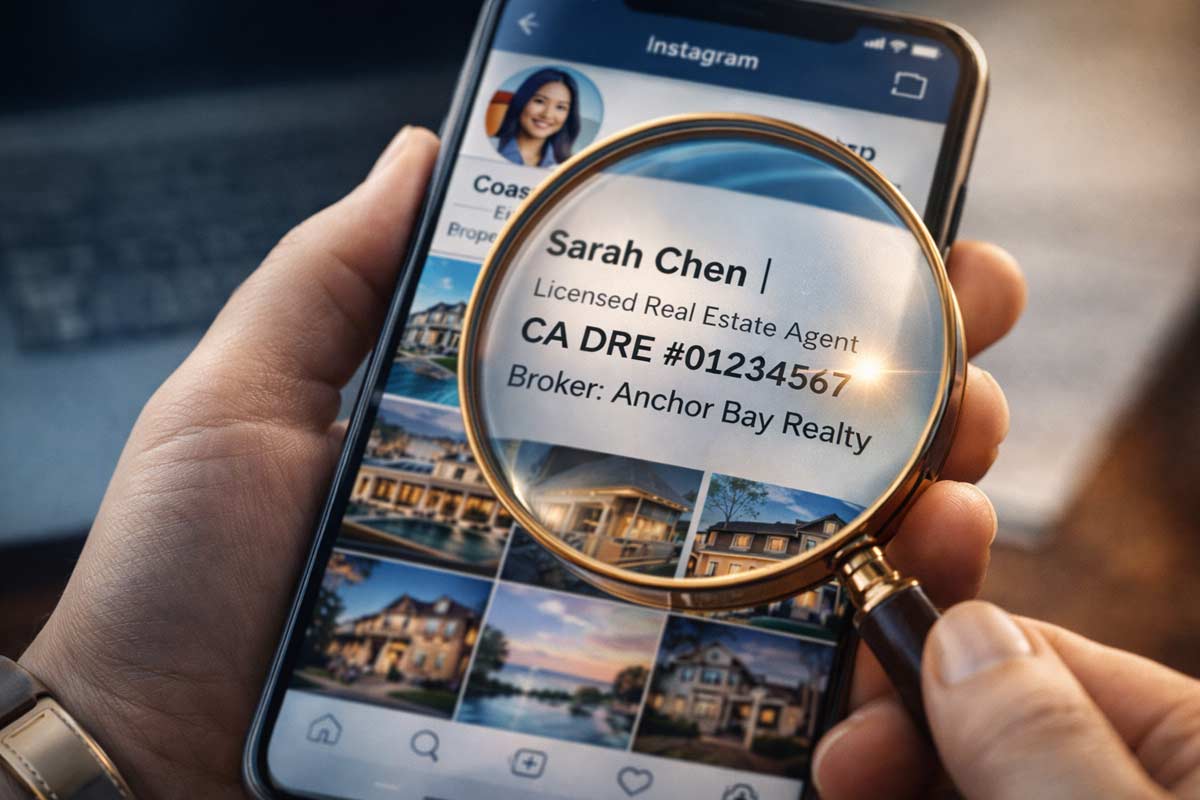
In my 20-plus years of educating California real estate professionals, I’ve seen thousands of agents move through the industry. Often what I notice is the ones who stay out of trouble aren't necessarily the ones who memorized the entire Business and Professions Code; they are often the ones with consistent systems.
Most California DRE violations aren't the result of "bad" people doing "bad" things. They are the result of "busy" people doing "sloppy" things. The Department of Real Estate (DRE) is a consumer protection agency. Their job is to ensure the public is protected, and they do that by enforcing transparency, supervision, and documentation.
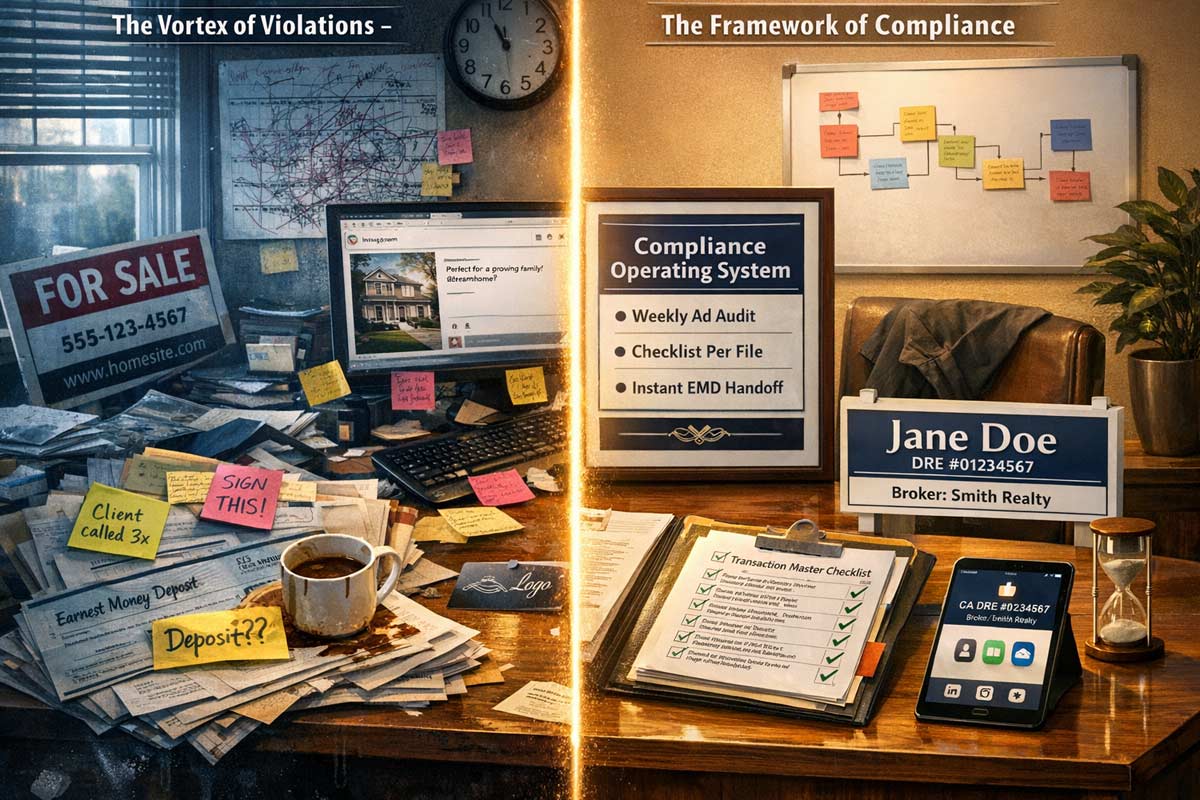
If you treat compliance as a "to-do" list rather than a "worry" list, you’ll find that the DRE isn't something to fear—it’s just the framework of your business.
A violation isn't always a dramatic headline. In the real world, enforcement is usually triggered by small, preventable issues that accumulate into compliance problems.
The DRE focuses on patterns of neglect. One typo on a flyer might result in a warning or a minor administrative penalty; a team of ten agents all advertising without license numbers suggests a broader failure of supervision.
What it looks like: Business cards, yard signs, or Instagram posts that look "clean" but omit the required license information.
The trigger: Public visibility. A "For Sale" sign or a digital ad without the agent's DRE number is easily flagged by the public or competing brokers.
How to avoid it: Every piece of "first point of contact" material must have your license number and your broker's name. Review our guide on Real Estate Advertising With Your License Number for specific visibility and legibility rules.
Quick self-check:
What it looks like: An agent receives an Earnest Money Deposit (EMD) check and keeps it in their car for a few days before handing it over.
The trigger: Delays in depositing or recording funds. If money isn't handled correctly, it raises flags for "commingling" or, in extreme cases, "conversion" (using funds).
How to avoid it: Per B&P §10145 and Reg 2832, a broker must generally deposit trust funds within three business days following receipt. As a salesperson, you must deliver funds to your broker or escrow immediately.Refer to Trust Fund Handling Rules for California Agents for timing nuances.
Quick self-check:
What it looks like: "The Premier Group" appears on a yard sign, but that name has not been submitted to and approved by the DRE as a Fictitious Business Name (DBA). This implies a separate brokerage and lacks a required licensee surname.
The trigger: The DRE or a member of the public sees advertising under a business name not listed on the agent's or broker's license. Audits specifically check for DBA approval.
How to avoid it: Any name used in your real estate business that is not your exact personal license name is a DBA and must be pre-approved by the DRE. To be approved, a DBA typically must include the surname of a licensee (e.g., broker or salesperson) and often uses a descriptor like "& Associates," "Group," or "Team." It cannot sound like a separate corporate entity (e.g., "Inc.," "Realty," "Properties" alone). You must have the DRE's approval letter on file before using the name.
What it looks like: A broker has 50 agents but hasn’t reviewed a transaction file in months or has no system for checking marketing materials.
The trigger: An agent makes a mistake, and the DRE discovers the broker had no oversight system.
How to avoid it: Brokers must establish written policies and "review points"—such as initialing all listings and accepted offers. If you are an agent, follow your brokerage’s SOP for every document.
Quick self-check:
What it looks like: Advertising "brand new electrical" without verification, or claiming "#1 Agent in the City" without citing a source.
The trigger: A buyer relies on an unverified claim (B&P §10140) that turns out to be false,leading to a fraud or misrepresentation complaint.
How to avoid it: Stick to the facts. If you can't verify it with a permit or a receipt, use qualifiers like "per seller" and cite the source for any "ranking" claims.
Quick self-check:
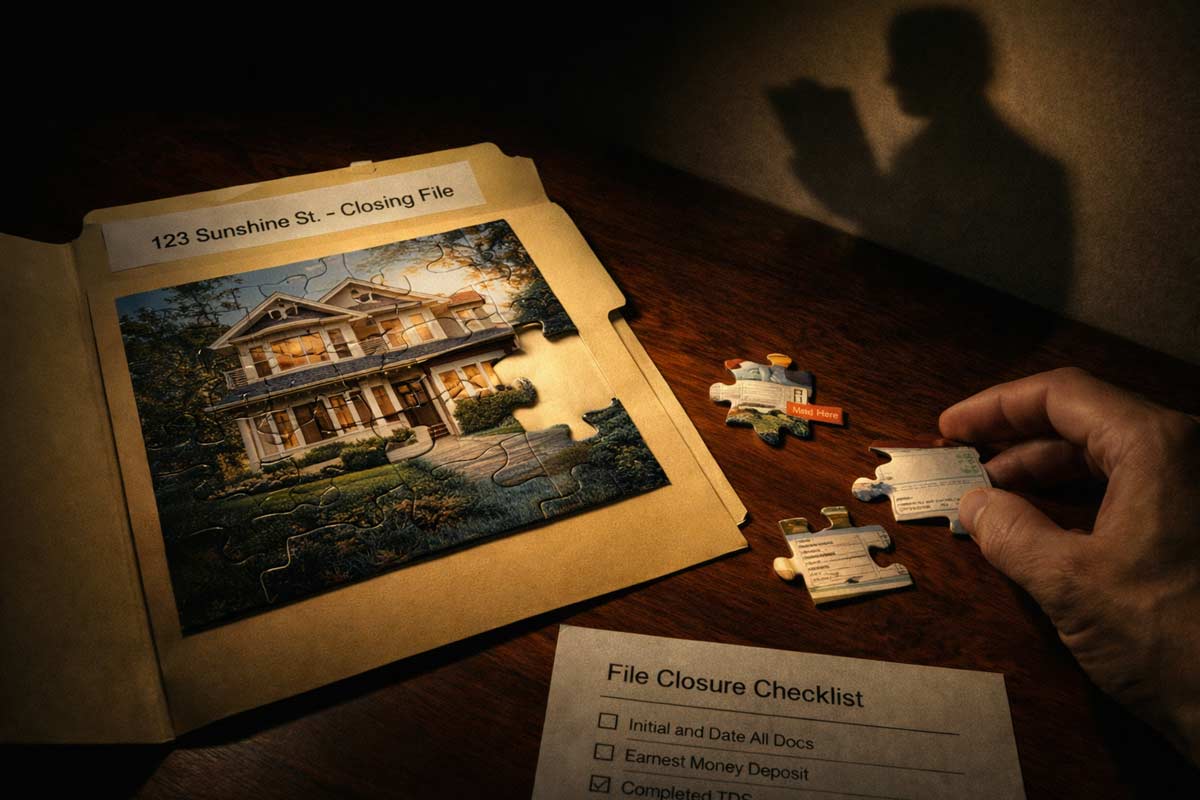
What it looks like: A file is "closed" in the system, but the Transfer Disclosure Statement (TDS) is missing the seller's signature or a date.
The trigger: During an audit, the DRE finds that while the documents exist, they are legally incomplete due to missing initials or dates.
How to avoid it: Use a closing checklist. Do not move a file to "completed" until every required field is populated.
Quick self-check:
What it looks like: A transaction closed three years ago, but the agent deleted the emails and cannot produce the file.
The trigger: Audit requests a file from the previous three years.
How to avoid it: Per B&P §10148, you must retain transaction records for at least three years from the date of closing (or the listing date if the deal fell through). This includes listings, deposit receipts, and all substantive correspondence.
Quick self-check:
What it looks like: An unlicensed assistant "hosting" an open house and answering questions about the roof or neighborhood.
The trigger: A client mentions the "assistant" discussed property features or terms, which requires a license.
How to avoid it: Know the line. Assistants can handle clerical tasks, schedule appointments, and courier documents, but they cannot show properties or negotiate terms. See What the California DRE Actually Enforces.
Quick self-check:
What it looks like: Using phrases like "adults only" or "perfect for young families" in property descriptions.
The trigger: Advertising that indicates preference or limitation based on protected classes (race, religion, familial status, etc.).
How to avoid it: Focus strictly on the property’s features, not the type of person you think should live there. Avoid references to neighborhood demographics or religious facilities.
Quick self-check:
You don't need to be a lawyer to stay compliant. You just need a framework.
What does the DRE actually enforce most often?
The DRE frequently cites issues related to trust fund mishandling, failure to supervise, and misrepresentation of material facts.
What triggers a DRE investigation?
Most investigations are reactive, triggered by consumer complaints or issues found during routine proactive office audits.
Can a first-time mistake get me disciplined?
Yes. While the DRE may issue a warning for minor technicalities, any violation of the Real Estate Law can lead to administrative penalties, license restriction, or suspension.
What’s the fastest way to clean up my advertising compliance?
Audit your social media "Linktree" and bio. Ensure your DRE number and broker’s name are visible without needing to click deep into your profile.
How long should I keep transaction records?
Per B&P §10148, you must keep records for at least three years. However, many brokerages require longer retention (5–7 years) for liability protection. Always follow your broker’s specific policy.
Compliance isn’t a personality trait; it’s a system you build into your business. By following these steps, you protect your license, your broker, and your clients. For a deeper dive into the specific statutes and requirements, visit our California Real Estate Laws & Compliance Guide.

Founder, Adhi Schools
Kartik Subramaniam is the Founder and CEO of ADHI Real Estate Schools, a leader in real estate education throughout California. Holding a degree from Cal Poly University, Subramaniam brings a wealth of experience in real estate sales, property management, and investment transactions. He is the author of nine books on real estate and countless real estate articles. With a track record of successfully completing hundreds of real estate transactions, he has equipped countless professionals to thrive in the industry.

"Hey guys,
I took the exam today and passed!!!!
It only took me one try which was one of my goals. I took the online
classes and follow your suggestions so I took the crash course,
used the crash course app a lot, took 7 mock tests and went
confident to present the exam. Thank you for the great job you are
doing, you guys are awesome!!!! May God continue to bless you!"
Willie V.