

AdhiSchools Blog

The Role of Instructors in CA Real Estate Education

Real estate instructor

Reading Time :  5 minutes

If you are currently researching how to get your real estate license, you’ve likely noticed that most programs look similar on the surface. They all offer the required 135 hours of pre-licensing curriculum, and they all promise to help you succeed. However, the biggest hidden variable in your success isn't the syllabus—it’s what happens when you get stuck.

In over 20 years of preparing students for the California Department of Real Estate (DRE) exam, I have seen a consistent pattern: students don’t usually fail because the material is "too hard." They fail because they encounter a confusing concept, can’t get a clear answer, and their momentum dies.

As a practicing real estate broker, I regularly see how academic theory meets the high-stakes reality of commercial and residential transactions. That bridge between the textbook and the "street" is built by your instructor.

While a DRE-approved real estate school is the baseline for legal compliance, high-quality instruction is the multiplier that turns "hours completed" into "exam-ready understanding." This guide provides an objective framework to help you evaluate instructor support before you spend a dime on tuition.

What California Real Estate Instructors Actually Do (Beyond "Teaching")

In a self-paced world, some believe an instructor’s only job is to read slides. In reality, an elite instructor functions as a bridge between dense legal text and a passing score. Their role includes:

  • Clarifying High-Stakes Concepts: Topics like agency relationships and trust fund handling are nuanced. An instructor should provide the "why" behind the law, often using a "Deal Autopsy" approach—breaking down exactly why a specific contract clause exists.
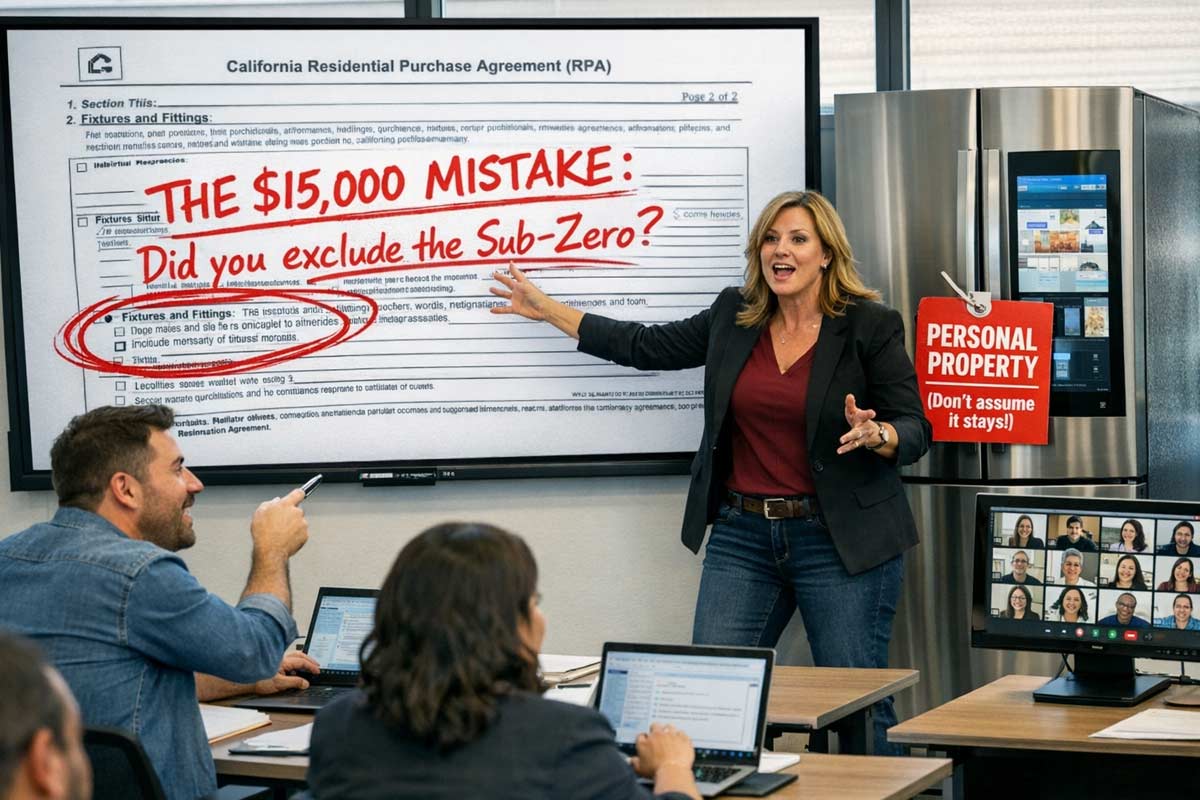
  • Correcting Misconceptions: It is common for students to "calcify" a wrong idea early. Instructors catch these errors—like the difference between a fixture and personal property—before they lead to missed questions on the state exam.
  • Teaching Exam Strategy: The DRE writes questions in a specific way. Instructors show you how to identify "distractor" answers and decode the logic of the exam.
  • Providing Real-World Context: Understanding how a $12 million lease negotiation hinges on a single "Exclusive Use" clause makes the theory of contracts much easier to memorize.
  • Maintaining Momentum: Knowing you have a lifeline reduces the friction of studying, making it more likely you’ll actually finish the 135-hour requirement.

The 5-Part “Instructor Quality Scorecard”

When you choose a real estate school in California, use this rubric to grade their support model:

Criteria What to Look For
Access Model Does the school offer live Q&A, scheduled office hours, or direct messaging?
Response Time Will you get an answer within 24–48 business hours, or do questions sit for a week?
Explanation Depth Do they provide a personalized explanation, or just point you to a page number?
Exam Alignment Can the instructor map your confusion to how the topic is framed on the state exam?
Consistency Is help available for all three required courses (Principles, Practices, and Elective)?

Verification Questions to Ask Before You Enroll

  • "If I don’t understand the math for a prorated tax question, who can I talk to?"
  • "Are your instructors active brokers with California-specific experience?"
  • "Can I see a sample of a recent Q&A session or instructor-led webinar?"

Identifying "Bad Support" Patterns

You should be wary of schools that treat instructional support as an afterthought. Common red flags include:

  • The Black-Hole Inbox: You email a question and receive no response, or a generic "read chapter 4" reply.
  • Technical-Only Support: The school is great at fixing login issues but has no one available to explain the "Rule against Perpetuities."
  • "Forum-Only" Help: You are forced to rely on other students in a forum who may be just as confused as you are.
  • No Support for Working Adults: If office hours are only held during business hours, they aren't helpful for students with full-time jobs.

Instructor Support vs. Self-Paced Learning

Self-paced models can work for students with a background in law or finance. However, you should prioritize a school with high instructor access if:
  • This is your first time taking a professional licensing exam.
  • It has been several years since you were in a traditional classroom setting.
  • English is your second language (ESL).

real_estate_instructor2

How Support Translates to Exam Readiness: Real Scenarios

To illustrate the difference, consider these real-world scenarios handled by instructors:

  1. The "Smart Fridge" Trap: A student is confused about the difference between fixtures and personal property. We share a real-world example where an agent wrote "All appliances included" instead of specifying the brand-new smart fridge, leading to a major dispute at closing. This story makes the "Method of Attachment" test (MARIA) unforgettable for the exam.
  2. The $15,000 Disclosure Error: We often discuss a scenario where a missing disclosure cost an agent $15,000 in a settlement because they lacked broker review. This emphasizes the "Agency" and "Disclosure" sections of the exam, showing students that these aren't just definitions—they are career-saving protocols.
  3. The Complex Lease: When students struggle with contract clauses, we look at how an "Exclusive Use" clause can make or break a commercial deal. Seeing how a high-stakes deal (like securing an art studio for an Academy Award winner) depends on contract clarity helps students master the "Contracts" portion of the pre-licensing curriculum.
  4. The "Crash Course" Factor: While a CA real estate exam pass guarantee sounds nice, the instruction leading up to the test is what sticks. Often, crash courses worth it in California are only effective if you’ve had solid instructor support during your initial 135 hours.

Final Thoughts on School Choice

DRE approval is the legal minimum; instructor access is the variable that determines whether you pass efficiently or get stuck in a cycle of retakes. As you evaluate the Best Real Estate Schools in California, don't just look at the price tag—look at the experience behind the curriculum.

Frequently Asked Questions

Q: Does the California DRE require schools to have instructors?

A: Yes, DRE-approved schools must have designated instructors, but the level of access varies wildly between "budget" schools and "full-service" schools.

Q: Can I talk to an instructor if I’m doing an online-only course?

A: In a quality program, yes. Online courses should still offer "office hours" or a dedicated messaging system where licensed instructors answer questions.

Q: How much does instructor support usually cost?

A: At most reputable schools, it is built into the tuition. Be cautious of schools that charge "per question" or require a secondary subscription for access to live help.

Kartik Subramaniam

Founder, Adhi Schools

Kartik Subramaniam is the Founder and CEO of ADHI Real Estate Schools, a leader in real estate education throughout California. Holding a degree from Cal Poly University, Subramaniam brings a wealth of experience in real estate sales, property management, and investment transactions. He is the author of nine books on real estate and countless real estate articles. With a track record of successfully completing hundreds of real estate transactions, he has equipped countless professionals to thrive in the industry.

Enjoy what you read?

Sign up for our newsletter and get weekly updates on our latest articles