
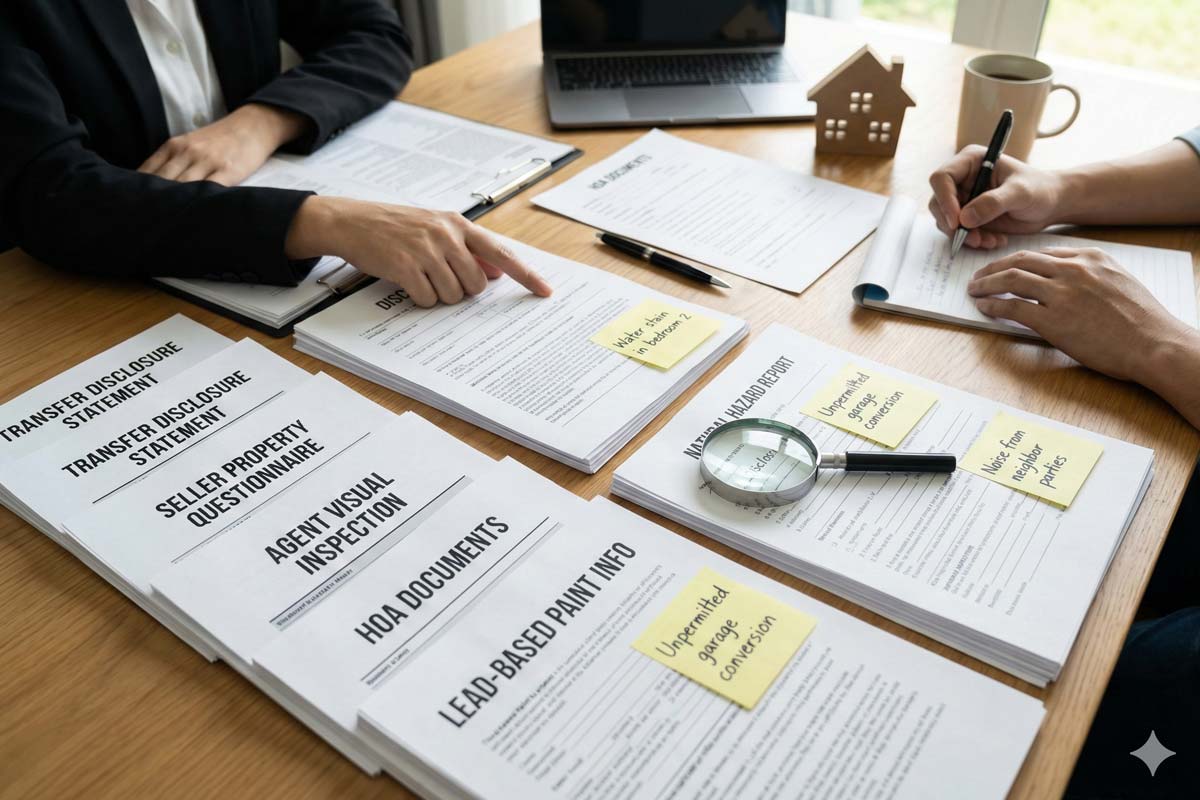
In the high-stakes world of California real estate disclosure laws, lawsuits rarely happen because a house was sold for $5,000 less than asking. They happen because the garage floods every January, the seller knew about it, and nobody told the buyer.
For most new agents, the first serious risk of a lawsuit or DRE complaint comes from inaccurate and incomplete disclosures—not from writing a weak offer.
You might be terrified of missing a checkbox, "forgetting" a document, or getting dragged into court because your seller hid an active leak behind a fresh coat of paint. I’ve been teaching real estate for over 20 years at ADHI Schools, and I’m also a practicing broker who has watched real disclosure disputes play out in the real world
I tell my students constantly: Disclosures aren’t busywork. They are your shield.
When done correctly, they protect your client, your paycheck, and your license. This guide is a practical, street-level breakdown of real estate disclosure requirements in California, the forms you must master, and the scripts you need to stay out of trouble.
(Disclaimer: This article is for educational purposes only. If you are facing a specific legal situation or complex transaction, always consult your managing broker or a qualified real estate attorney.)
In plain English, a disclosure is the formal act of revealing material facts about a property.
California is a strict "consumer protection" state. Unlike "Caveat Emptor" (Buyer Beware) states where the buyer is on their own, California places a heavy burden on the seller and the agents to reveal what they know.
A material fact is any information that would affect the value or desirability of the property to a reasonable person.
To understand "desirability," consider this scenario: I once saw a deal where the seller didn’t mention a neighbor who hosted loud backyard parties every single weekend. The buyer called the listing agent at 11:30 p.m. on their first Saturday in the home, furious.
Was the house physically broken? No. Was the desirability affected? Absolutely. If you find yourself wondering, "Should we mention this?" the answer is almost always yes.
While there are dozens of forms, these are the heavy hitters that form the backbone of California disclosure rules.
The TDS is the holy grail. It is a statutory form where the seller must list items included in the sale, whether they work, and any significant defects (walls, fences, electrical, plumbing).
While the TDS is law, the SPQ is a standard C.A.R. form used by most brokerages to expand on the disclosures in the TDS. It asks pointed questions about deaths on the property, insurance claims, pets, and neighborhood nuisances, among others.
This is your duty. California Civil Code requires real estate agents to conduct a "reasonably competent and diligent visual inspection" of accessible areas.
California is beautiful but high-risk from a natural hazard standpoint. The NHD report tells the buyer if the home sits in flood, fire, or earthquake zones.
If you are selling a condo or a home in an HOA, the standard forms aren't enough. You must provide the CC&Rs, bylaws, financial statements, and meeting minutes.
If the home was built prior to 1978, federal and state law requires this disclosure and the provision of the "Protect Your Family from Lead in Your Home" pamphlet.

A common source of confusion is figuring out who is "on the hook" for specific information.
The seller must disclose known material facts. They don't have to hire inspectors to find new defects, but they cannot hide what they know, or should know.
The "I Never Lived There" Trap: Many investors, flippers, or heirs selling a probate property believe they are exempt from disclosures because they "never lived there." This is false. While they may be exempt from the TDS in specific cases (like a trustee selling a property at a trustee sale foreclosure auction), they are generally not exempt from disclosing known material facts. "I never lived there" is not a magic shield against known material facts.
The "Flipper" Law (AB 968): The End of "I Don't Know" For years, investors used the "I never lived there" excuse to avoid disclosing property defects. As of July 1, 2024, that loophole is gone for flippers.
Under Assembly Bill 968, if you are selling a single-family home (1-4 units) within 18 months of buying it, you have a heightened duty. You cannot just hand over a blank TDS. You must legally disclose:
The trap: If you hired cheap, unlicensed labor to paint over a problem and didn't pull permits, you now have to hand that evidence directly to the buyer. If you fail to do this, you aren't just risking a lawsuit; you are handing the buyer a roadmap to win it.
You have a duty of honest dealing and a duty to inspect. You cannot hide behind your seller.
The "Don't Tell Them" Script: If a seller says, "The roof leaks, but don't tell the buyer," and you obey, you can get yourself in hot water. Here is the script to handle that:
You must review disclosures with your buyer and point out red flags.
The "CYA" Email Script: Don't just verbally tell a buyer to get an inspection. Document it.
This email could save you one day. For a deeper dive into your fiduciary duties and how they relate to disclosures, read California Agency Law Explained for New Agents.
It’s not enough to fill out the forms; you have to deliver them correctly.
In a standard California Residential Purchase Agreement (RPA), the seller typically has 7 days after acceptance to deliver full disclosures, unless otherwise agreed in writing.
If a previous escrow fell out and the buyer left you with their inspection report, can you ignore it?
No.
If you or the seller have a report in your possession, it is now part of what you know about the property. Talk to your broker about office policy, but in most cases you should provide it to the new buyer.
In my experience, these are the landmines that cause the most explosions:
Never let a seller paint over a water stain without disclosing the cause.
Did they turn the garage into a gym? Disclose it.
You must disclose death on the property within the last 3 years. If a buyer asks directly about death anytime in the past, you must answer honestly.
Noises, odors, or disputes that affect "desirability."
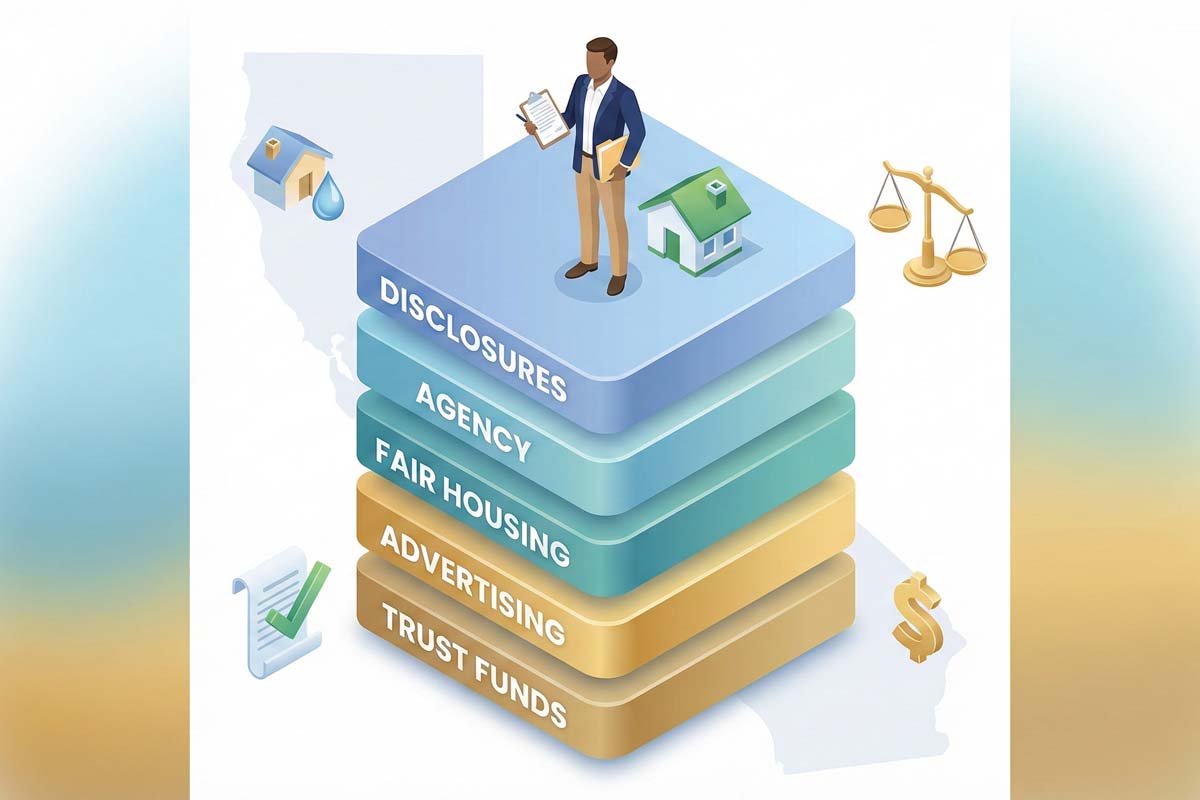
California real estate disclosure laws are just one layer of your compliance defense. Think of your "Compliance Stack" like this:
Most serious lawsuits involve a failure in two or three of these layers at once.
If you fail to follow seller disclosure laws in California, the consequences are severe:
To protect yourself, use these tools in every transaction.
Before you send a packet, ask:
Yes. “As-is” usually means the seller doesn’t plan to make repairs, but they still must disclose known material defects.
Yes, if it occurred within the last three years. If a buyer asks directly about any past death, you must answer honestly.
No. Even if they never lived in the property, they must disclose any material facts they know.
No. They help reduce risk, but you’re still expected to read them and flag major issues for your client.
Understanding California disclosure laws is about more than just passing your exam. It’s about building a career that lasts. When you master these forms, you aren't just pushing paper—you are establishing yourself as a pro who knows how to navigate risk.
If you’re not licensed yet and this article made you realize how serious this business is, that’s a good thing.
Read our California Real Estate Laws & Compliance Guide to see the big picture, or explore our classes to get the kind of training that actually prepares you for the real world.

Founder, Adhi Schools
Kartik Subramaniam is the Founder and CEO of ADHI Real Estate Schools, a leader in real estate education throughout California. Holding a degree from Cal Poly University, Subramaniam brings a wealth of experience in real estate sales, property management, and investment transactions. He is the author of nine books on real estate and countless real estate articles. With a track record of successfully completing hundreds of real estate transactions, he has equipped countless professionals to thrive in the industry.

"Hey guys,
I took the exam today and passed!!!!
It only took me one try which was one of my goals. I took the online
classes and follow your suggestions so I took the crash course,
used the crash course app a lot, took 7 mock tests and went
confident to present the exam. Thank you for the great job you are
doing, you guys are awesome!!!! May God continue to bless you!"
Willie V.