

California's teaching crisis has reached a tipping point, with 40% of educators considering leaving the profession. While real estate offers potential earning opportunities that can exceed teaching salaries , the transition requires careful consideration of financial risks, market realities, and lifestyle changes. This guide provides an honest assessment of both opportunities and challenges, helping teachers make informed decisions about whether real estate represents their best career move.
The convergence of teacher burnout and California's dynamic real estate market creates both opportunity and risk. While top-performing agents in premium real estate markets can earn $200,000+, the reality for most new agents is far different. Industry data shows that a large portion of real estate agents fail within five years, and first-year earnings can be below $40,000. Teachers must weigh potential rewards against the loss of stable income, comprehensive benefits, and predictable schedules.
The Teaching Crisis: Understanding the Exodus
California's teacher retention crisis has reached unprecedented levels. The primary drivers include:
The student-to-teacher ratio has reached nearly 46 students per teacher, among the highest nationally. These conditions drive educators to explore alternatives, but the question remains: Is real estate the right choice?
Real Estate Reality Check: Success Rates and Income Volatility
Before pursuing real estate, teachers must understand the harsh realities:
Failure Rates and Timeline to Success
- A good portion of of new agents fail within the first five years
- First-year median income: $8,330 (NAR Member Profile)
- Only 14% of agents earn over $100,000 annually
- Typical timeline to stable income: 18-24 months
Commission Reality vs. Marketing Hype
When articles cite "$16,000-$20,000 per transaction," they omit crucial details:
- Brokerage splits: New agents typically give 30-40% to their broker
- Actual take-home: That "$16,000" becomes lower after brokerage splits
- Business expenses: Reduce net income by another 20-30%
Hidden Costs Most Articles Don't Mention
Annual expenses for California real estate agents typically include:
- Association dues: $1,500-$3,000 (NAR, CAR, local associations)
- MLS access: $500-$1,200
- E&O insurance: $500-$1,000
- Marketing budget: $5,000-$10,000 (websites, signs, advertising)
- Technology/CRM: $2,000-$3,000
- Transportation: $3,000-$5,000
- Desk/franchise fees: $0-$12,000 (varies by brokerage)
- Self-employment tax: 15.3% of net earnings
Total first-year costs: $15,000-$35,000 before earning a single commission
California Licensing: Requirements and Real Costs
California requires 135 hours of pre-licensing education: Real Estate Principles, Real Estate Practice, and one elective (45 hours each).
Updated 2024 Requirements
SB 1495 mandates enhanced implicit bias and fair housing training in all Real Estate Practice courses starting January 1, 2024.
Examination and Licensing Costs
- State exam: 70% passing score required (105/150 questions)
- Pass rate: 49-54% for first-time test takers
- Total government fees: $540 ($100 exam + $350 license + $90 fingerprinting)
- Education costs: $99-$499 with ADHI Schools
- Total investment: $640-$1,100 minimum
Continuing Education
You must renew your real estate license with 45 hours of coursework every four years including mandatory courses in ethics, agency, trust funds, and fair housing.
Salary Reality: Breaking Down the Numbers
Teacher Salaries (Stable but Limited)
- California median: $101,084
- Los Angeles: $65,396
- San Francisco: $74,794
- Plus benefits valued at $12,000-$17,000 annually
- Total compensation: $77,000-$118,000
Real Estate Agent Earnings (Variable and Uncertain)
First-Year Reality:
- Median earnings: $8,330-$40,000
- Most agents close 0-4 transactions
- 60% earn less than they spent on business expenses
Years 2-5:
- Median earnings: $45,000-$75,000
- Top 20% reach $100,000+
- Bottom 50% still earn under $40,000
Established Agents (5+ years):
- Regional averages: LA $209,106, SF $225,000, SD $198,106
- These figures represent top performers, not typical agents
- Include gross commission before splits and expenses
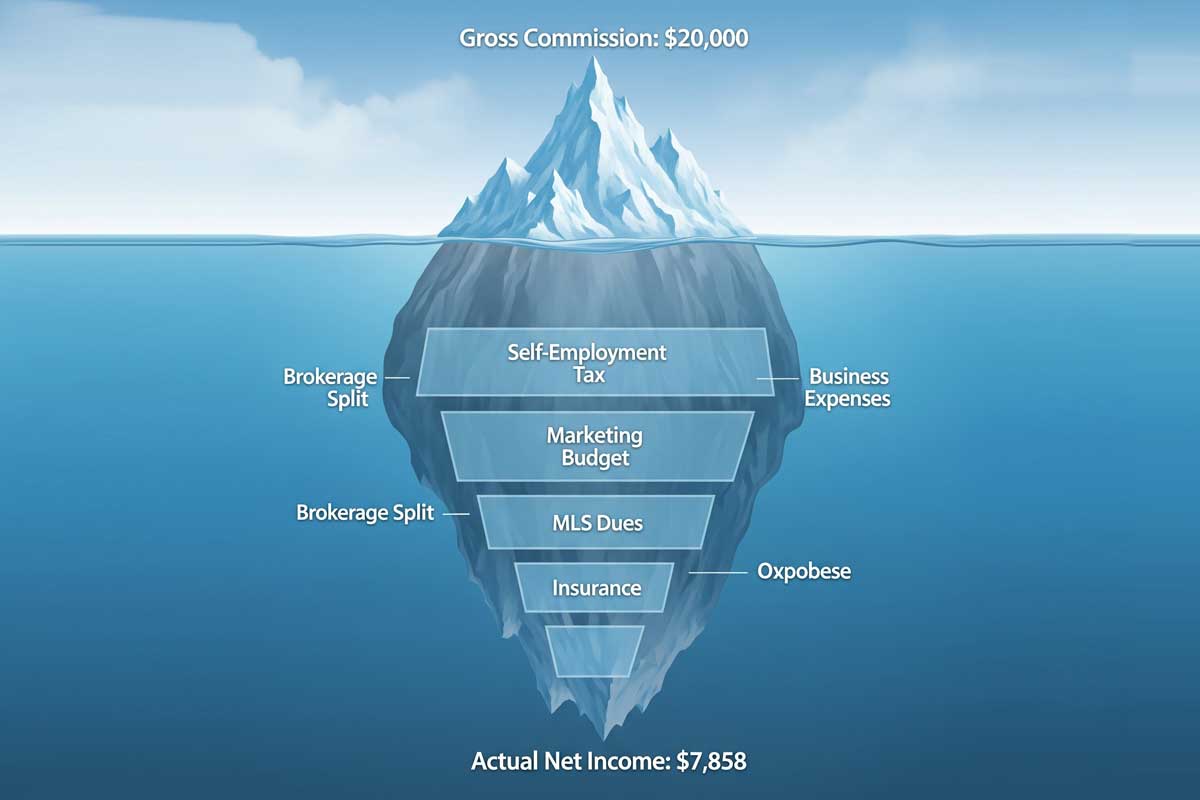
The Commission Math Teachers Need to Understand
Example: $800,000 home sale (California median)
- Total commission (2-3%): $20,000
- Agent/broker split (70/30): $14,000
- Self-employment tax (15.3%): -$2,142
- Business expenses (20%): -$4,000
- Net income: $7,858
To match a $75,000 teaching salary, you need 9+ transactions annually—challenging for new agents.
Market Analysis: Opportunities and Risks
Current Market Conditions (2024-2025)
- Median home price: $800,000 (projected $909,400 by 2026)
- Sales forecast: 10.5% increase to 304,400 units
- Active agents: Decreased from 226,300 to 220,400
Market Risks Often Overlooked
- Interest Rate Sensitivity: Rising rates can eliminate buyers overnight
- Seasonal Volatility: 40% of annual income may come in just 3-4 months
- Economic Downturns: Real estate is highly cyclical
- Competition: Experienced agents dominate during slow markets
- Regulatory Changes: New laws can dramatically impact commissions
Regional Variations Matter
- Bay Area: High prices but extreme competition (10,000+ agents)
- Los Angeles: Moderate opportunity but high living costs
- Central Valley: Lower prices mean smaller commissions
- Rural Areas: Limited inventory and buyer pool
Work-Life Balance: The Hidden Trade-offs
What Teachers Lose:
- Summers off: Peak real estate season requires maximum availability
- Predictable schedules: Clients expect evening/weekend availability
- Holiday breaks: Prime showing time when buyers have time off
- Stable income: Commission fluctuations create financial stress
- Comprehensive benefits: Health insurance, retirement matching gone
What Teachers Might Gain:
- Flexible daily schedule: Control over midday activities
- Unlimited earning potential: Top producers can exceed teaching pay
- Entrepreneurial satisfaction: Building your own business
- Variety: Every day and client is different
The Reality of "Flexibility"
While agents have theoretical schedule control, client demands often dictate availability. Successful agents work 50-60 hours weekly, including nights and weekends. The promised flexibility often becomes 24/7 availability.

Strategic Transition Planning: A Realistic Approach
Financial Preparation Checklist
- Save 12-18 months of living expenses (not the often-cited 6 months)
- Pay down high-interest debt before losing stable income
- Budget for $10,000 in startup costs (licensing, marketing, survival)
- Secure health insurance options before leaving teaching
- Understand tax implications of self-employment
Recommended Timeline
Months 1-6: Research and soul-searching
- Shadow successful agents
- Attend real estate events
- Calculate true financial needs
- Consider personality fit
Months 7-9: Education while teaching
- Complete pre-licensing courses
- Join real estate forums
- Build savings aggressively
Months 10-12: Gradual transition
- Pass licensing exam
- Interview brokerages carefully
- Start part-time if possible
- Build sphere of influence
Year 2: Evaluate and adjust
- Assess financial viability
- Decide on full-time commitment
- Consider returning to teaching if needed
Questions to Ask Yourself
- Can I handle 12+ months without stable income?
- Am I comfortable with rejection and self-promotion?
- Can my family handle the financial uncertainty?
- Do I have a strong local network for referrals?
- Am I prepared to work evenings/weekends indefinitely?
- Have I considered all alternatives to real estate?
Making an Informed Decision
The transition from teaching to real estate can be rewarding for some, but it's not the "perfect career switch" often portrayed. Success requires:
- Substantial financial reserves (not just optimism)
- Realistic expectations about income timeline
- Strong sales aptitude beyond just communication skills
- Willingness to sacrifice work-life balance initially
- Entrepreneurial mindset and self-discipline
- Local market knowledge and connections
Red Flags to Reconsider:
- Less than $10,000 in savings
- Primary income earner for family
- Uncomfortable with sales/self-promotion
- Expecting immediate income
- Seeking better work-life balance
- No strong local network
Green Lights to Proceed:
- 18+ months expenses saved
- Secondary income in household
- Natural networker with sales aptitude
- Realistic 2-3 year success timeline
- Strong local connections
- Genuinely passionate about real estate
Beyond the Hype
While some teachers successfully transition to real estate, the portrayal of it as an ideal career switch overlooks significant challenges. The reality includes high failure rates, substantial startup costs, income instability, and demanding work schedules that may exceed teaching responsibilities.
Teachers possess valuable transferable skills, but success in real estate requires additional competencies in sales, self-promotion, and business management. The financial rewards are possible but not guaranteed, and most new agents earn far less than teaching salaries for several years.
Before making this leap, thoroughly investigate all career alternatives, honestly assess your financial situation and risk tolerance, and consider starting part-time to test the waters. The teaching crisis is real, but the solution isn't necessarily real estate—it's finding the right career match for your skills, circumstances, and goals.
Remember: The best career transition is one made with full knowledge of both opportunities and obstacles, not one based on marketing hype or desperation to leave teaching.
Love,
Kartik