

When you begin the journey toward a California real estate license, the fear of choosing the "wrong" school is often the first hurdle. For most applicants, the natural instinct is to search for the most popular real estate schools in California.
I guess the logic is simple: if thousands of other students are using a specific program, it must be the “safest path” to passing the state exam.
However, in my 20+ years of helping students navigate the DRE’s 135-hour requirement, I’ve seen that popularity is often a reflection of marketing scale rather than individual student success. While high-volume schools offer certain advantages, "popular" does not always mean "best fit" for your specific learning needs or timeline.
How can I identify the most popular real estate schools?
Since the California DRE does not publicly rank schools by enrollment or pass rates, popularity is best identified through visibility signals like high search volume, large numbers of reviews on third-party platforms, and established partnerships with major brokerage firms. To find the Best Real Estate Schools in California, look past the volume and verify the school's specific support channels, course expiration policies, and the depth of their California-specific exam prep.
Before you enroll based on a brand name, it is important to distinguish between a school’s size and its effectiveness for your learning style.
Since enrollment data isn't public, you can verify a school’s "popular" status by looking for these three indicators:
Instead of choosing the "biggest" school, use this checklist to verify the artifacts of a quality education. This is the same framework we use to evaluate the Best Real Estate Schools in California.
Don't just look for a "Help" button. Identify the channel :
Many popular, low-cost programs have rigid policies that can lead to unexpected fees:

The 135-hour pre-licensing grind is a significant time investment. Students often gravitate toward online real estate schools in California that have high volume because they want to avoid "making a mistake."
This is especially true for those looking for the fastest way to get a real estate license in California. The logic is: "If it's popular, the system must be efficient." While often true for the tech platform, speed without comprehension can lead to multiple failed attempts at the state exam.
I’ve observed that the "popular" choice works differently depending on the student's background:
1. Confusing "Top of Search" with "Top of Class": Heavy advertising is a sign of a healthy marketing budget, not necessarily a superior educational outcome.
2. Overlooking "Generic" Content: Some national brands use "multi-state" materials. Always verify the content focuses on California-specific law and practice.
3. Assuming a "Popular" Prep is Enough: Many high-volume schools are excellent at the 135-hour requirement but provide only basic "practice questions" for the state exam. Real exam prep should include simulated exams and a targeted study plan.
How do I know if a popular school is DRE-approved?
You can verify any school by searching the California DRE's searchable database of approved providers. Never enroll until you've confirmed their license status.
Are big national schools better than local California schools?
For this purpose, not really. Local California schools have more direct access to instructors who understand the specific nuances of the state exam and the licensing process in California that is unlike any other state.
Does a "popular" school have better pass rates?
There is no publicly available data to prove this. Pass rates are generally a reflection of the student's dedication and the quality of the school's specific "Exam Prep" product, not the size of the school.
What happens if I start with a popular school and want to switch?
You can usually switch, but your progress doesn’t transfer. You will likely have to restart the specific 45-hour course you were in and pay a new enrollment fee.
Popularity is a helpful data point, but it shouldn't be your only decision rule. Your goal isn't just to enroll—it's to get licensed.
If you’re ready to see how the top programs in the state stack up based on actual quality, support, and student outcomes, visit our main decision hub: Best Real Estate Schools in California.

Founder, Adhi Schools
Kartik Subramaniam is the Founder and CEO of ADHI Real Estate Schools, a leader in real estate education throughout California. Holding a degree from Cal Poly University, Subramaniam brings a wealth of experience in real estate sales, property management, and investment transactions. He is the author of nine books on real estate and countless real estate articles. With a track record of successfully completing hundreds of real estate transactions, he has equipped countless professionals to thrive in the industry.

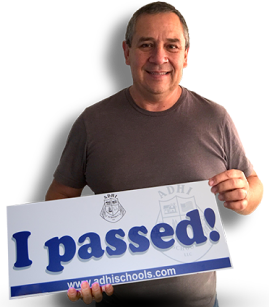
"Hey guys,
I took the exam today and passed!!!!
It only took me one try which was one of my goals. I took the online
classes and follow your suggestions so I took the crash course,
used the crash course app a lot, took 7 mock tests and went
confident to present the exam. Thank you for the great job you are
doing, you guys are awesome!!!! May God continue to bless you!"
Willie V.