
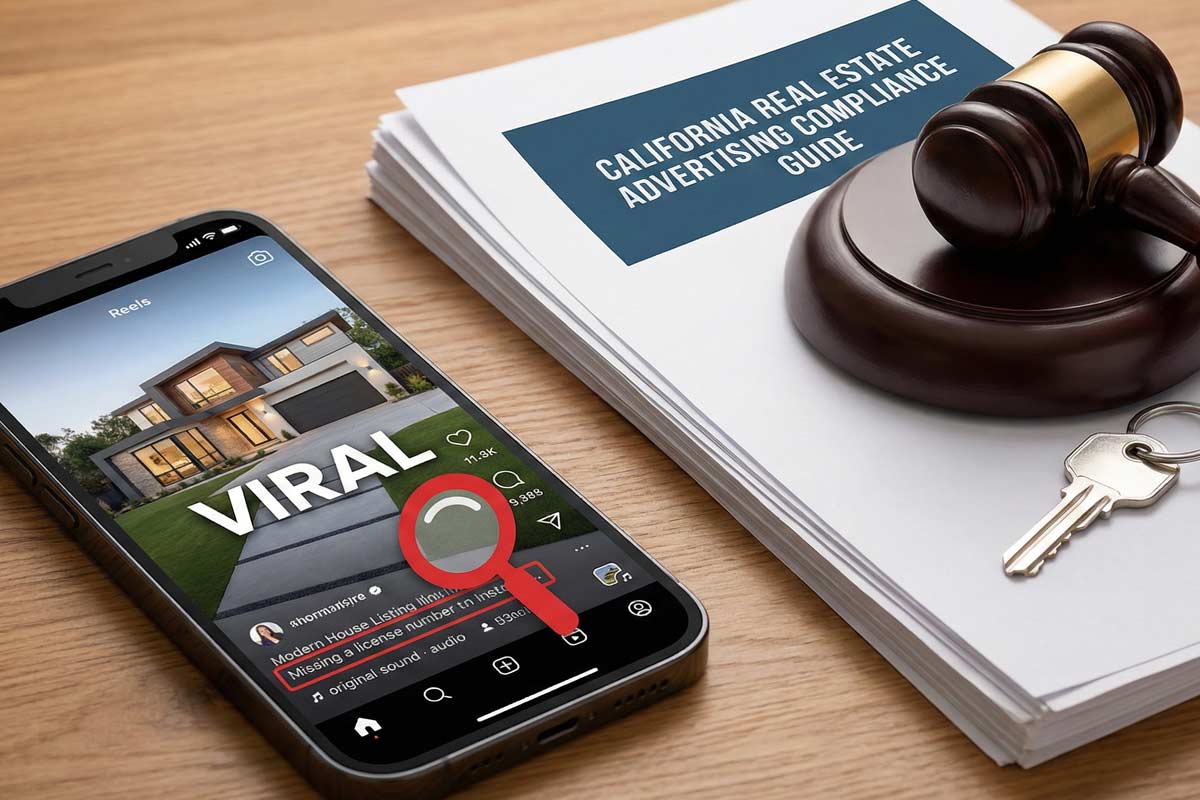
Imagine this: You’ve just spent $2,000 on a high-end video shoot for a new listing. The Reel goes viral—DMs, likes, and shares are pouring in. Then, you get a different kind of notification: a formal letter from the California Department of Real Estate (DRE).
A competitor noticed your license identification number was missing from the video. They filed a complaint through the DRE’s online portal in minutes. Now, instead of prepping for your open house, you’re prepping a response to a DRE investigator.
At ADHI Schools, I’ve spent over 20 years training agents to comply with the California Real Estate Laws.
If there is one thing I’ve learned, it’s this:
The DRE doesn't care how "aesthetic" your feed is; they care about consumer protection.
In California, your license identification number isn’t a suggestion—it’s a non-negotiable anchor for every piece of solicitation you put into the world.
Under Business and Professions Code and Commissioner’s Regulation 2773, any "solicitation materials intended to be the first point of contact with consumers" must include your license identification number. The DRE calls these "first point of contact" solicitation materials.
In practice, the DRE treats many consumer-inviting posts as solicitation.
Use this 3-part test: If a post contains
(1) your identity as an agent/broker,
(2) a specific property or service, and
(3) any invitation to contact, treat it as solicitation.
If the post has branding and services, even without an explicit CTA, it can still be construed as solicitation designed to incentivize a professional relationship.
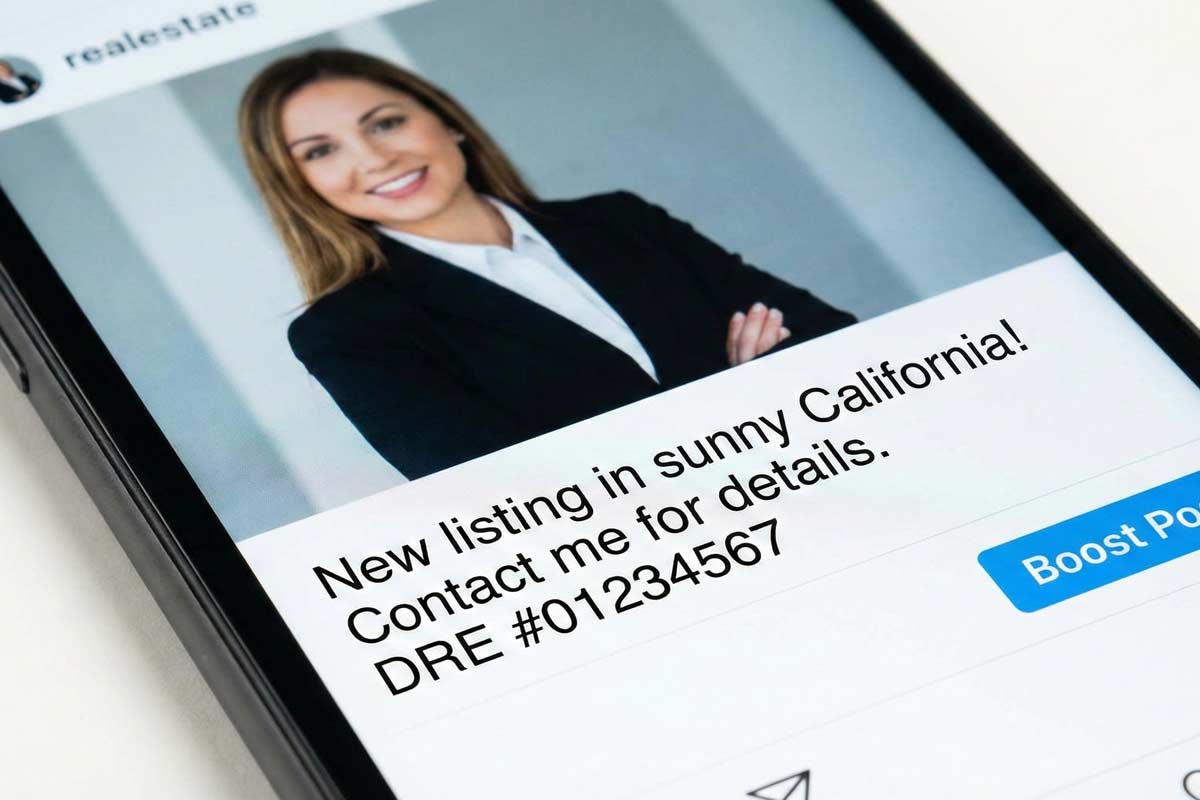
Most complaints come with a single asset screenshot—one Reel frame or one flyer image. In practice, "it’s elsewhere on my site" is rarely a strong defense. If you’re wondering what actually gets the Department’s attention in the field, check out our report on What the California DRE Actually Enforces.
A pattern of sloppiness in your public-facing materials often signals deeper systemic issues to an investigator, which can lead to a wider review of Common DRE Violations and How to Avoid Them.
As a broker, here is exactly how I would protect your license: Systematize the boring stuff so you can focus on the selling.
The same systems discipline required for advertising also applies to your backend operations, such as Trust Fund Handling Rules for California Agents.
Do I need my license number on every Instagram post?
If it functions as first point-of-contact solicitation, disclosure is required. Since any "real estate" post can become someone’s first contact via a share or search, the safest system is to include it by default.
Does a real estate team page need license numbers?
Yes. Every licensee featured on the page must have their license number displayed next to their name.
What if I’m just posting market updates?
If you are presenting yourself as a professional to attract clients, it’s solicitation. The DRE is very broad in its interpretation of "incentivizing" a consumer to contact you.
If you want the full compliance map for your career, start with our California Real Estate Laws & Compliance Guide. If you’re wondering what actually gets the Department's attention in the field, check out our report on What the California DRE Actually Enforces.

Founder, Adhi Schools
Kartik Subramaniam is the Founder and CEO of ADHI Real Estate Schools, a leader in real estate education throughout California. Holding a degree from Cal Poly University, Subramaniam brings a wealth of experience in real estate sales, property management, and investment transactions. He is the author of nine books on real estate and countless real estate articles. With a track record of successfully completing hundreds of real estate transactions, he has equipped countless professionals to thrive in the industry.

"Hey guys,
I took the exam today and passed!!!!
It only took me one try which was one of my goals. I took the online
classes and follow your suggestions so I took the crash course,
used the crash course app a lot, took 7 mock tests and went
confident to present the exam. Thank you for the great job you are
doing, you guys are awesome!!!! May God continue to bless you!"
Willie V.