
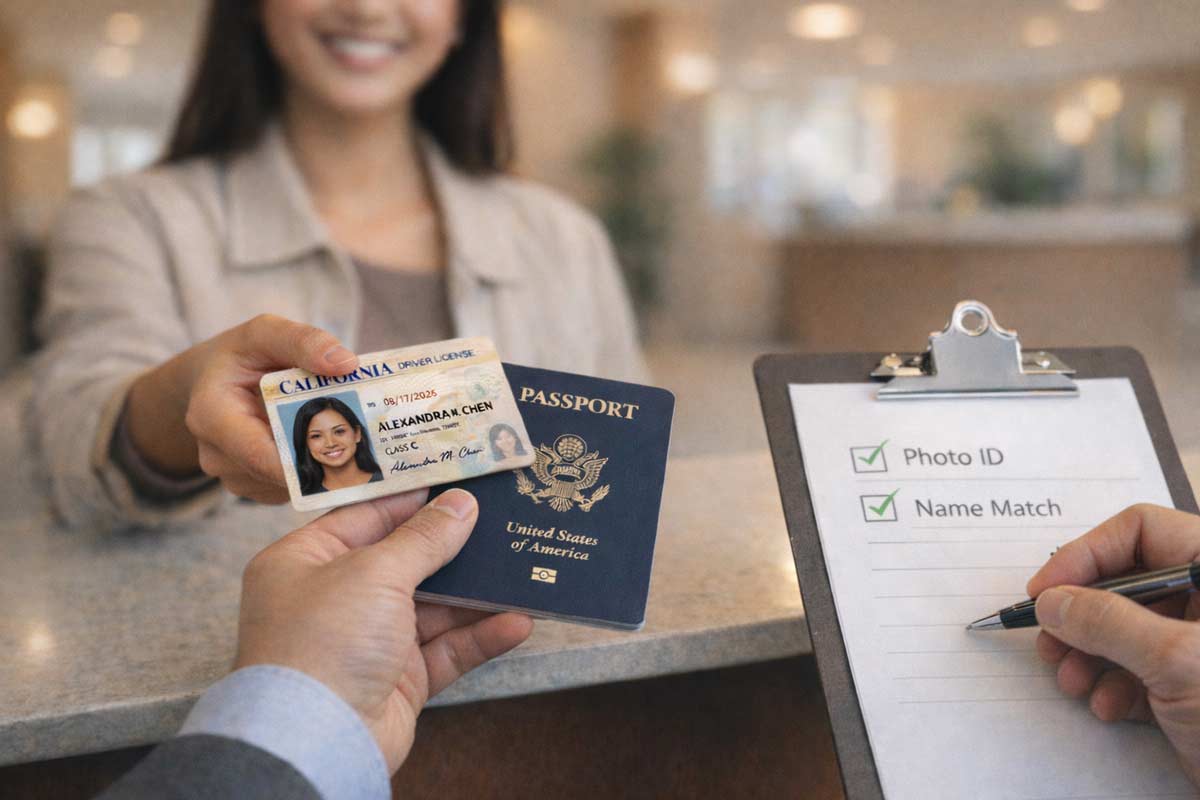
You’ve spent weeks—maybe months—memorizing agency relationships, trust fund accounts, and the intricacies of California land use. You are ready to pass the real estate test. But for many candidates, the biggest obstacle isn't the exam questions; it’s the person standing at the check-in desk.
In my 20-plus years of coaching students at ADHI Schools, I’ve seen incredibly well-prepared candidates get turned away before they even touch a keyboard.
Why?
Because of a simple identification mismatch. This guide is your "proctor-proof" checklist to ensure your ID and records are in perfect alignment.
According to the California Department of Real Estate (DRE), you must present a valid, current form of photo identification. Only the following are typically accepted: a current state-issued driver’s license or DMV ID card, a U.S. Passport, a foreign government passport, or a U.S. Military ID. You will not be admitted without one of these specific physical documents.
If the name on your photo ID does not match the name on your exam registration, you may be denied entry. While minor formatting differences like a middle initial could be fine, significant discrepancies—such as nicknames or unrecorded name changes—require you to update your DRE record before your exam date to avoid being marked as a "No Show."
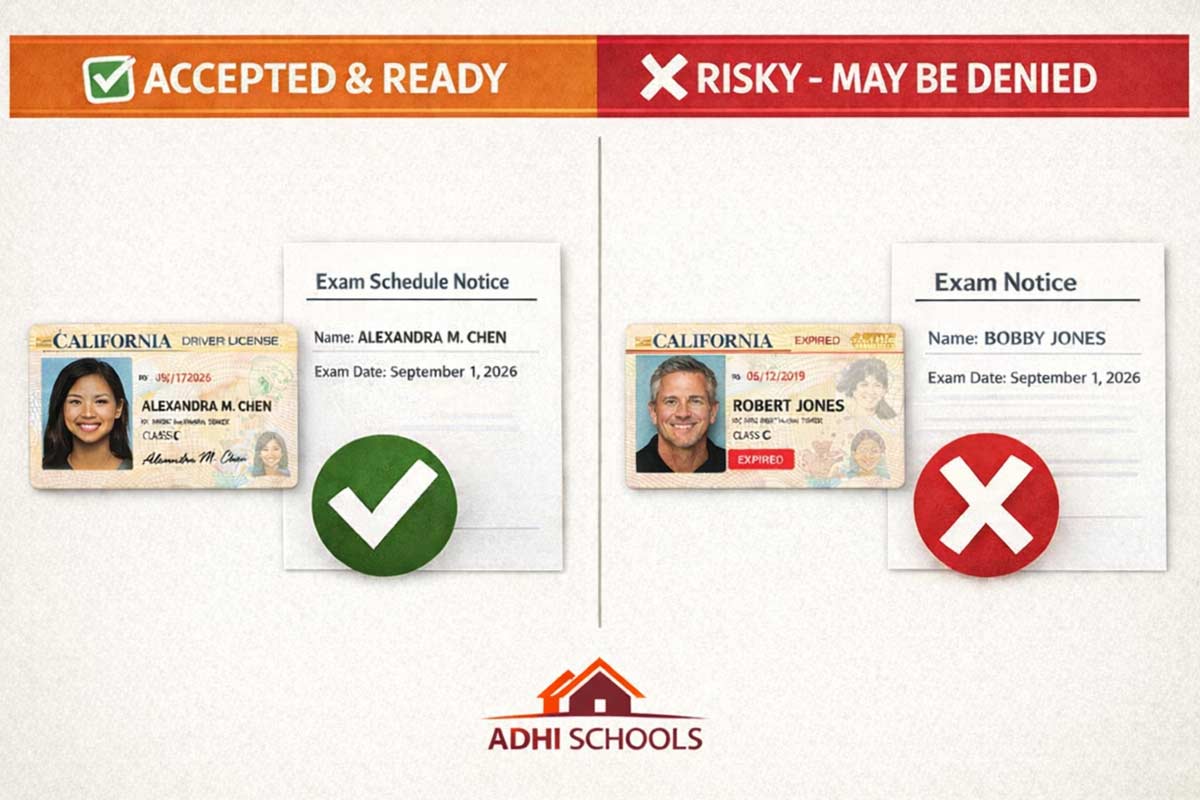
The absolute "Golden Rule" for exam day is that your identification must be current (valid) and it must match the name on your exam registration. The DRE is the final authority on these policies, and testing center proctors follow their handbook strictly. They are not authorized to make "judgment calls." While minor formatting differences are sometimes accepted, you should assume strict matching is required and resolve any discrepancies weeks before your date.
To be admitted into the examination, you must show a valid form of photo identification. Per current DRE guidelines, only the following forms are accepted:
Important: The DRE is the source of truth for these policies. Always review the most recent "Taking the Exam" guidance from the DRE website before your scheduled date.
Even if it only expired yesterday, an expired ID is invalid for testing purposes.
A temporary or paper receipt from the DMV is often not accepted as a primary form of ID because it lacks the required security features of a plastic card.
If your photo is peeling, the plastic is cracked through your name, or the card is heavily worn, a proctor may reject it. If your ID is in poor condition, replace it now.
Two weeks before your exam, perform this final audit:
If a proctor denies you entry due to an ID issue, you may be marked as a "No Show." This typically means you forfeit your exam fee and must wait for the DRE to process the status before you can reschedule.
If this happens, stay calm. Visit our guide on What Happens If You Fail the CA Real Estate Exam—the process for rescheduling due to a "No Show" is essentially the same as a traditional failure.
To ensure you don't run into other procedural hurdles, be sure to review our comprehensive list of California Real Estate Exam Rules & Testing Policies.
Being familiar with the check-in process and knowing what to bring to the exam is critical. By having a look at your ID today, you remove the "what-ifs" from exam day. Once you get that "Congratulations" printout at the desk, find out What Happens After You Pass the California Real Estate Exam to finish your journey.
For a complete look at the application process, scheduling, and study strategies, visit our California Real Estate Exam Guide.
Founder, Adhi Schools
Kartik Subramaniam is the Founder and CEO of ADHI Real Estate Schools, a leader in real estate education throughout California. Holding a degree from Cal Poly University, Subramaniam brings a wealth of experience in real estate sales, property management, and investment transactions. He is the author of nine books on real estate and countless real estate articles. With a track record of successfully completing hundreds of real estate transactions, he has equipped countless professionals to thrive in the industry.

"Hey guys,
I took the exam today and passed!!!!
It only took me one try which was one of my goals. I took the online
classes and follow your suggestions so I took the crash course,
used the crash course app a lot, took 7 mock tests and went
confident to present the exam. Thank you for the great job you are
doing, you guys are awesome!!!! May God continue to bless you!"
Willie V.