The most common question I’ve heard over the last 20+ years helping students get licensed in California is: "How fast can I get this done?"
It’s an understandable question. You’re ready for a career change, and the only thing standing between you and your first commission is three courses and an exam. However, there is a massive difference between "finishing the courses" and "being ready to pass the exam."
Marketing headlines often promise "Get your license in weeks," but the reality of the California Department of Real Estate (DRE) requirements and your own life schedule usually tell a different story.
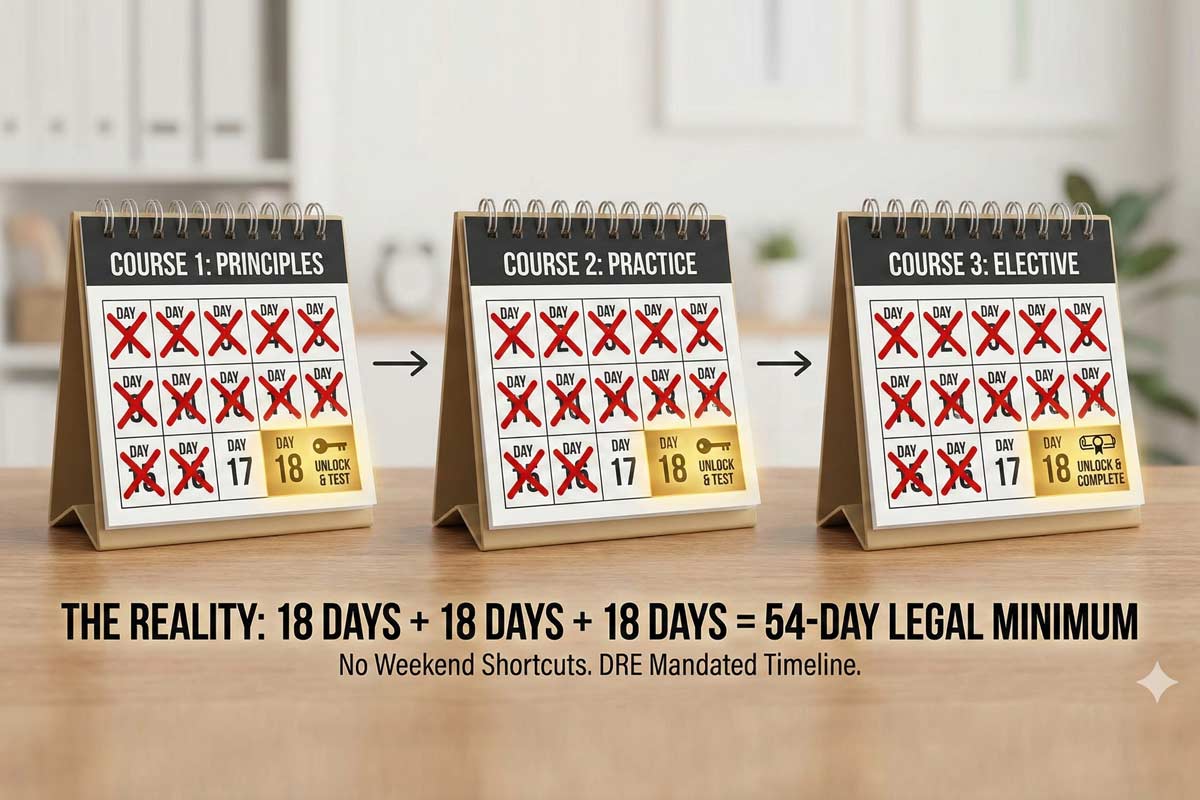
While the absolute legal minimum time to complete your pre-licensing education is roughly 54 days (due to DRE-mandated holding periods), most successful students finish in 3 to 5 months. Speed is a tool, but consistency is what actually gets you to the finish line.
In California, most students are completing 135 hours of statutory pre-licensing education (three 45-hour courses)—but calendar time depends on consistency and minimum completion windows.
In California, the DRE requires you to complete three college-level courses before you can even apply for the state exam:
Each of these courses is designed around a 45-hour curriculum. For home-study/online statutory courses, providers generally can’t allow the student to test out of a course if fewer than 18 days pass from the date you’re granted access to the materials—so the course final typically won't unlock until at least Day 18.
With three courses, that means the mathematical minimum is 54 days. If a school tells you that you can finish all three in a single weekend, they aren't being honest about California law.
How long you will take depends entirely on your weekly cadence. Over the decades, I’ve seen students fall into one of these three tracks:
This requires a "deep work" approach. You are treating school like a part-time job.
This is where 70% of our students live. It’s sustainable and allows for life to happen without derailing your progress.
While possible, this track has the highest risk of drop-off. The longer you take, the more you forget what you learned in the first course.
Finishing school is just Phase 1. To plan your career launch, you must account for the DRE’s administrative timeline:
Most students don't fail because the material is too hard; they fail because they lose their momentum. After 20 years of observation, these are the biggest "time killers":
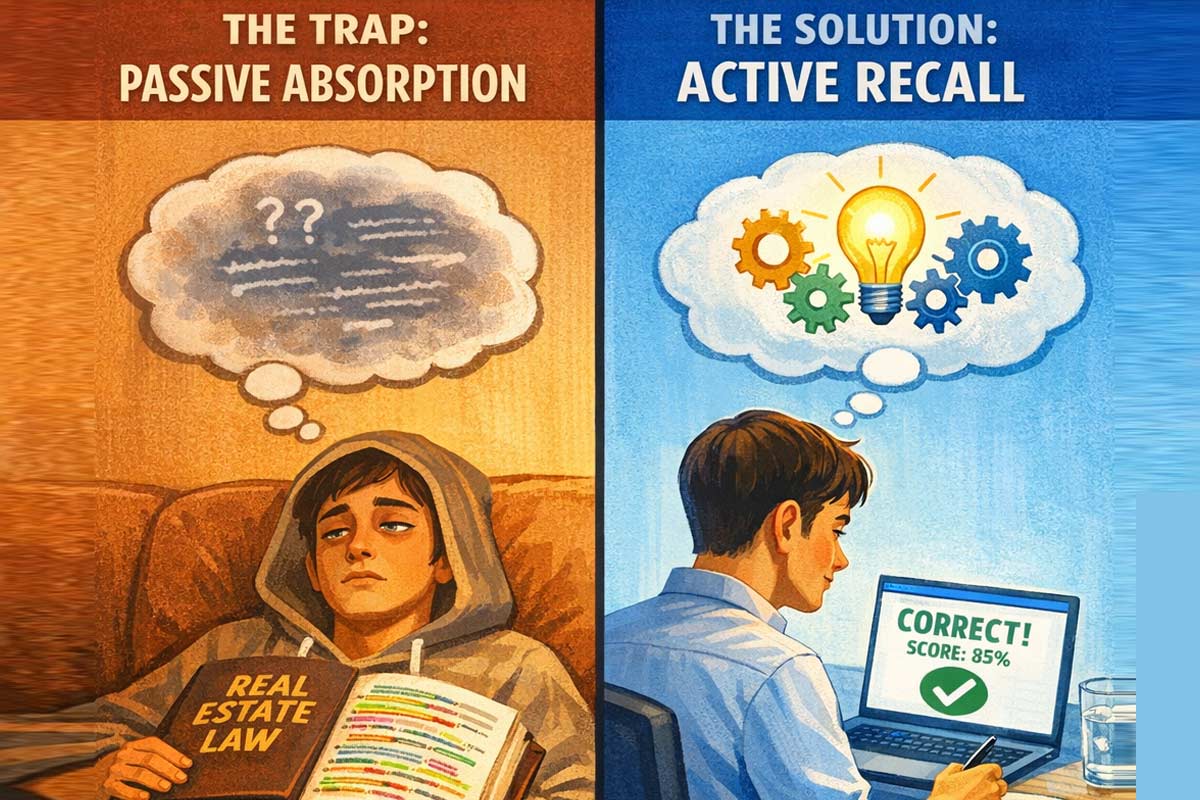
I’ve seen students spend three weeks "reading and highlighting" a textbook without taking a single practice quiz. They feel like they are working, but they aren't retaining anything. When they finally take a quiz and fail, they get discouraged. This cycle of effort without retention is what leads to the common question: do online real estate classes actually prepare you? The answer hinges on your strategy.
A common trap is waiting until you finish all three courses to even look at exam prep materials. This often leads to a "re-learning" phase that can add weeks to your timeline. My advice: start lightweight recall on Principles while you are still working through Practice.
The first two weeks are fueled by excitement. By week three, the novelty wears off. Without a system, this is where most people quit. If you find yourself stalling, you need to learn how to stay motivated during real estate school to push through the mid-course slump.
If you want to move quickly, you don't skip the material—you optimize how you consume it.
Your timeline shouldn't just be a wish; it should dictate which school you choose. If you need to be done in 3 months, you need a school that provides a clear roadmap, recorded or live instruction, and a support team that responds quickly when you're stuck.
Don't just take my word for it. Look at the data and what students say about online real estate schools (2026) to see which formats actually lead to completion versus which ones just leave you with a PDF and a prayer.
Can I finish real estate school in 2 weeks? No. For online courses, providers generally cannot unlock the final exam until at least Day 18 of the course. Since you need three courses, the absolute minimum in California is 54 days.
What if I work a full-time job? Most students do. Expect a timeline of 4 to 6 months. By dedicating a little time every night and some time on the weekends, you can stay on track without burning out.
Can I take the three courses at the same time? It depends on the provider's structure. Most successful students find that focusing on one course at a time maintains better momentum, though you can start the 18-day clock for the next course as soon as the previous block has lapsed.
What is the fastest realistic schedule if I work full-time? A sample plan: 60 minutes of study every weekday morning, 30 minutes of practice quizzes during lunch, and one 4-hour "deep dive" on Saturday. This puts you on the "Balanced Track" (4-5 months).
What happens if I take a long break? A good course provider can keep your enrollment active for up to one year. However, if you take a break longer than two weeks, you will likely need to spend extra time reviewing previous material to reset, which extends your total timeline.
A realistic timeline is the sum of California’s legal requirements, your weekly consistency, and the support structure of your chosen school. Don't aim for the "fastest" possible route if it means you'll be unprepared for the actual state exam.
Ready to see which program aligns with your goals?
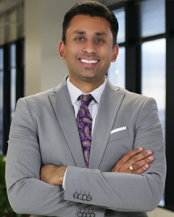
Founder, Adhi Schools
Kartik Subramaniam is the Founder and CEO of ADHI Real Estate Schools, a leader in real estate education throughout California. Holding a degree from Cal Poly University, Subramaniam brings a wealth of experience in real estate sales, property management, and investment transactions. He is the author of nine books on real estate and countless real estate articles. With a track record of successfully completing hundreds of real estate transactions, he has equipped countless professionals to thrive in the industry.

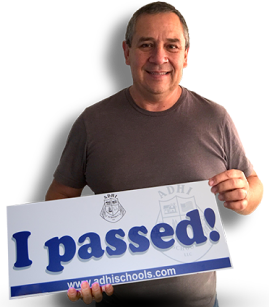
"Hey guys,
I took the exam today and passed!!!!
It only took me one try which was one of my goals. I took the online
classes and follow your suggestions so I took the crash course,
used the crash course app a lot, took 7 mock tests and went
confident to present the exam. Thank you for the great job you are
doing, you guys are awesome!!!! May God continue to bless you!"
Willie V.