

You’ve passed the real estate exam, your license is hanging at a brokerage, and the initial celebration has subsided. Now, you’re staring at a blank calendar and a quiet phone. It’s what I call the “post-license cliff”. This moment is particularly acute in California, where high competition meets complex markets, and the pressure to “figure it out fast” can lead new agents toward expensive, ineffective shortcuts.
If you’re a new real estate agent in California wondering how to get your first clients without buying leads, this article is your playbook. Securing your first three clients isn't just about income—it’s about proof of concept. In my 20+ years of working in the California real estate market, I’ve noticed the agents who survive the first year are those who replace "hustle" with systems and processes.
Before we dive in, let’s define a "win." Success in your first month isn't measured by closed escrows—it’s measured by inputs. These inputs work because they maximize trust-building touches, not impressions. If you follow this operating system, your 30-day scoreboard should look like this:
This is the phase where most new real estate agents in California either build momentum—or quietly stall. Your first three clients are your learning labs. You are building the muscle memory of a professional. Success here comes from
Practice + Proximity + Follow-up
not expensive marketing.
Before you pick up the phone, you need a professional foundation. California’s disclosure-heavy environment means your first clients are as much about the learning process as closing deals.
The Reality: Your first client is almost always someone you already know, or someone they know. People do business with people they trust.
The Action Plan: Stop "announcing" your career and start consulting. Use these micro-scripts to offer value:
Micro-Credibility Boost:
The 14-Day Follow-Up Cadence:
A "system" is simply: Name + Source + Last Contact + Next Action. In week one, a spreadsheet is fine. To move toward a sustainable pipeline, you need to build a real estate database from scratch.
The Reality: Open houses are one of the few places consumers actually expect to talk to an agent. It is a high leverage use of your time.
The Action Plan (The 3-Step Flow):
A productive open house for a new agent isn’t measured by attendance—it’s measured by 2–3 follow-up conversations scheduled within 48 hours.
The Deeper Resource:
To turn a handshake into a contract, you need a specific follow-up method. Learn the full process in our guide: How New Agents Should Hold Open Houses in California.

The Reality: While most agents chase "perfect" leads, you can find your first three clients by looking where others don't.
High-volume agents often ignore these opportunities because they require follow-up instead of marketing scale.
The Action Plan:
The Guardrails: Always follow "Do Not Call" rules and brokerage policy. Your job is service, not pressure. Once you've mastered these manual methods, you can explore broader lead sources for new California agents to scale.
Neither moment looks dramatic—but both are how real careers actually start.
Most new agents quit because they confuse activity with income-producing actions. This is how agents stay ‘busy’ for six months and exit the industry silently.
The below activities do NOT count as prospecting:
The only 3 activities that count:
Real conversations
Intentional follow-up
Studying local inventory.
Managing this focus is the difference between a hobby and a career. Implement these New Agent Time Management Strategies to stay on track.
Note: Five conversations means real two-way dialogue—not texts sent or DMs unanswered.
Finding your first three clients is the hardest part of this business because it requires the most faith. But once you close that third deal, the "imposter syndrome" fades.
Mastering these first three clients is how you build a durable practice, not just a fleeting side hustle. For the complete framework on launching correctly—from mindset to long-term planning—your next step is our foundational guide: Start Your Real Estate Career in California.

Founder, Adhi Schools
Kartik Subramaniam is the Founder and CEO of ADHI Real Estate Schools, a leader in real estate education throughout California. Holding a degree from Cal Poly University, Subramaniam brings a wealth of experience in real estate sales, property management, and investment transactions. He is the author of nine books on real estate and countless real estate articles. With a track record of successfully completing hundreds of real estate transactions, he has equipped countless professionals to thrive in the industry.

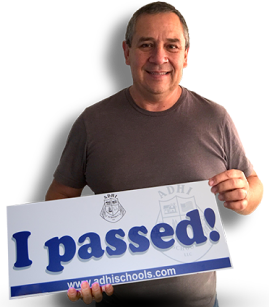
"Hey guys,
I took the exam today and passed!!!!
It only took me one try which was one of my goals. I took the online
classes and follow your suggestions so I took the crash course,
used the crash course app a lot, took 7 mock tests and went
confident to present the exam. Thank you for the great job you are
doing, you guys are awesome!!!! May God continue to bless you!"
Willie V.