
In California, the Department of Real Estate (DRE) maintains a rigorous standard for what must be taught. Because of this, many students assume that every DRE-approved real estate school is essentially the same. After all, if they all cover the same 135 hours of mandated material, why does it matter where you go?
The reality is that while the curriculum is standardized, the delivery, support, and outcomes vary wildly. This framework helps you evaluate real estate school quality in California without relying on price or marketing claims. In my two decades of coaching students to pass the California exam and launch their careers, I’ve watched many come to us after a false start elsewhere. They often chose a program based on the lowest price, only to lose months—and momentum—in the process.
In this guide, “quality” means: (1) you finish the coursework, (2) you get real help when stuck, and (3) you’re actually prepared for the state exam.
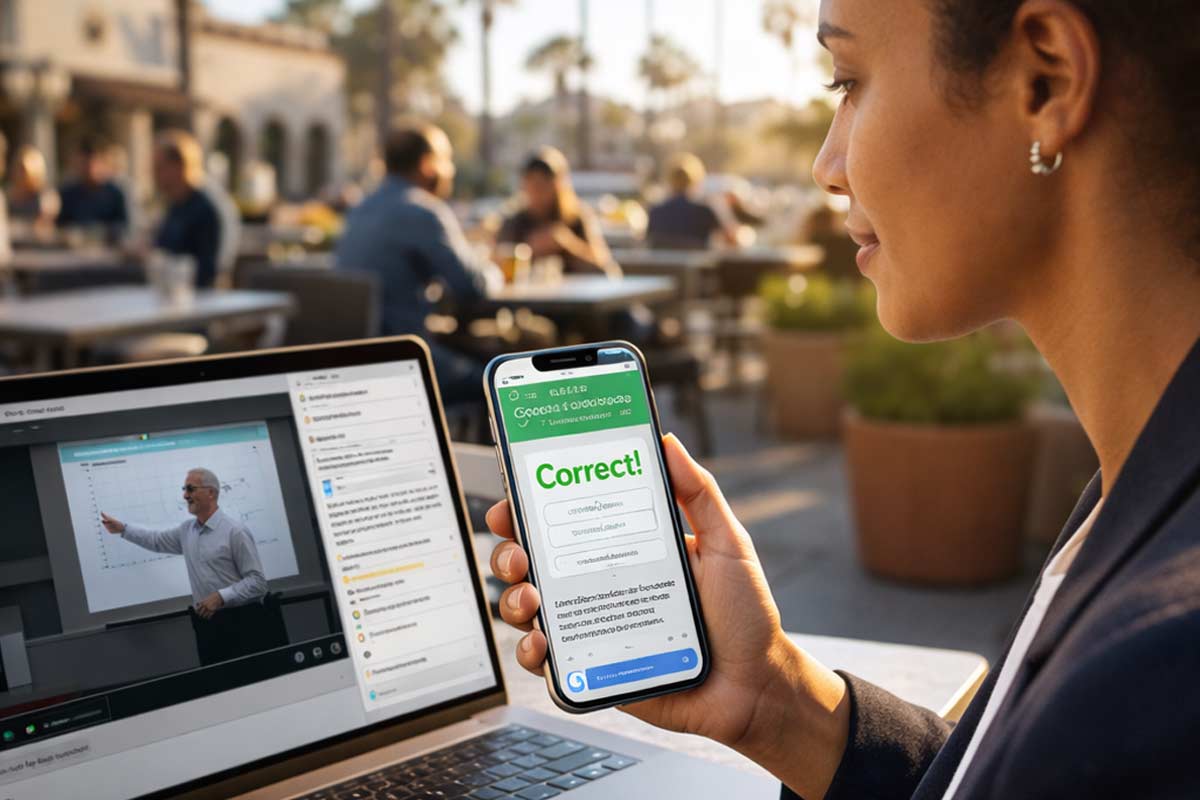
The "best" format is the one you will actually finish. Life in California is busy, and a format that worked for your friend might not work for your particular schedule. When evaluating a school, you need to look at how the content is delivered and reinforced.
Kartik’s Insider Tip: Understanding Online vs. In-Person Real Estate Schools in CA: Pros & Cons is the first step in narrowing your search.
Most students don't think about support until they are stuck on a complex concept or facing a technical glitch. In practice, most preventable delays come from certificate processing issues or unanswered support tickets—not from course difficulty. This is where budget schools usually cut corners.
Support isn't just a "Contact Us" page; it’s a dedicated system. Look for:
Real-World Scenario: Imagine you have a tech issue the night before a self-imposed deadline. If the school has no support or escalation path, you lose your momentum.
Before you pay, run the Support Test today. Email a specific question about the California exam. You’ll know who’s real pretty quickly.
Understanding What Matters Most When Choosing a Real Estate School? often comes down to who is there to pick up the phone when you’re confused.
"99% Pass Rate!" is a common marketing headline, but these numbers are often noise. To find the truth, you must look for exam readiness transparency.
The DRE does not publish a public school-by-school pass-rate leaderboard, so most pass-rate claims you see are self-reported. To verify these claims, ask these questions:
If they won’t define the metric, treat it as a marketing number.
If a school cannot provide a clear methodology, look at The 10 Biggest Differences Between California Real Estate Schools to see how they stack up in areas like practice exam quality. High-quality practice exams with detailed rationales are a better predictor of your success than a vague marketing percentage.
If you want a full shortlist approach, start with Best California Real Estate Schools and then apply this rubric to your top choices.
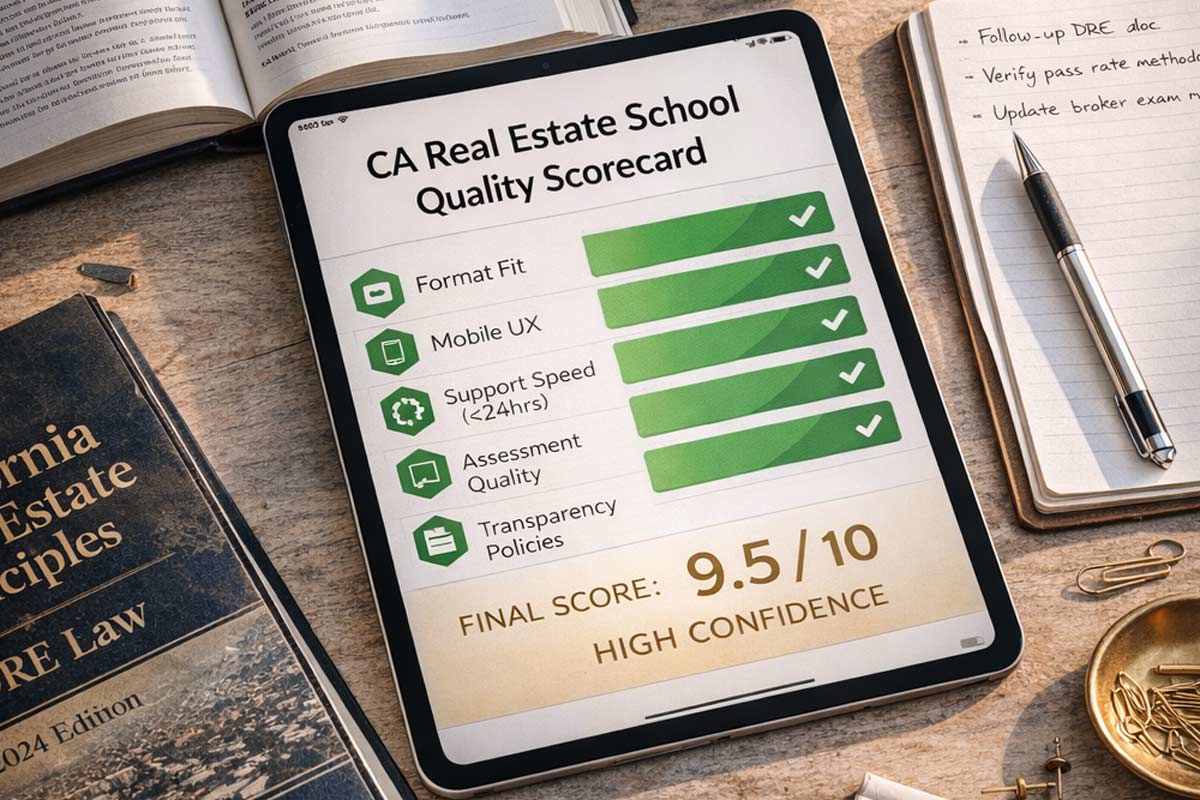
8–10: High-confidence choice.
6–7: Acceptable, but verify support and practice exam quality before paying.
0–5: High risk; likely to cost you more time and money in the long run.
Before you commit, it helps to know How to Compare California Real Estate Schools (Step-by-Step Guide) so you can compare apples to apples.
Q: Does DRE approval guarantee quality?
A: No. It only means the school meets the minimum legal requirements. It says nothing about the quality of the teaching or support.
Q: What support do I need if I work full‑time?
A: You need a school with a published response‑time standard—the ability to get a clear, helpful answer waiting for you the next morning.
Q: How long should the courses take realistically?
A: While the legal minimum is 7.5 weeks, most working adults take 10–16 weeks to finish without rushing and truly master the material.
Choosing a school is the first business decision you make as a future agent. Don't base it on the lowest price; base it on the highest probability of success.
Use this list to separate schools with real systems from schools with good sales pages. Copy and paste these into an email or ask them over the phone:

Founder, Adhi Schools
Kartik Subramaniam is the Founder and CEO of ADHI Real Estate Schools, a leader in real estate education throughout California. Holding a degree from Cal Poly University, Subramaniam brings a wealth of experience in real estate sales, property management, and investment transactions. He is the author of nine books on real estate and countless real estate articles. With a track record of successfully completing hundreds of real estate transactions, he has equipped countless professionals to thrive in the industry.

"Hey guys,
I took the exam today and passed!!!!
It only took me one try which was one of my goals. I took the online
classes and follow your suggestions so I took the crash course,
used the crash course app a lot, took 7 mock tests and went
confident to present the exam. Thank you for the great job you are
doing, you guys are awesome!!!! May God continue to bless you!"
Willie V.