
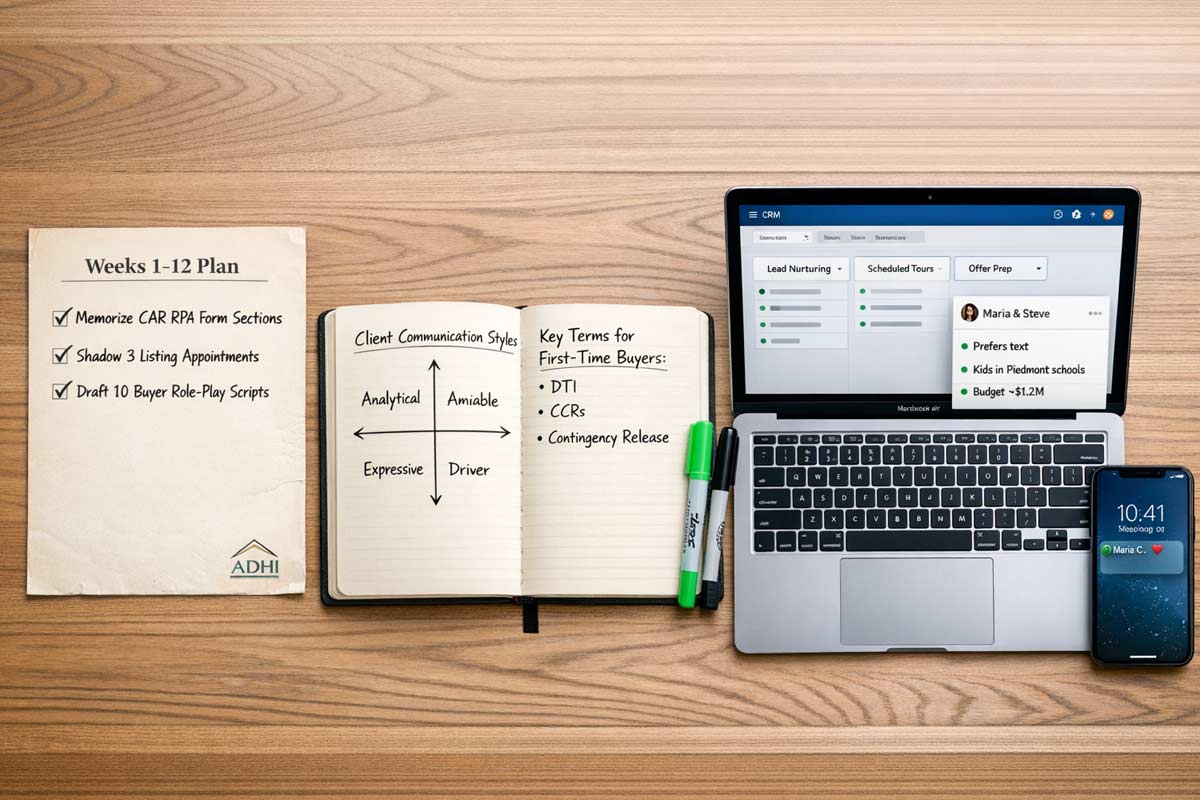
Passing the real estate exam is a milestone, but it isn’t the finish line.
The blunt truth that many schools won't tell you is this: The hardest part of real estate isn't the knowledge you've memorized—it's performing under pressure.
In your first 90 days, you will face "jargon paralysis," inconsistent leads, and the crushing anxiety of an awkward conversation with a potential client. I’ve spent over 20 years at ADHI Schools building real-world competence in California agents, and I can tell you that the difference between the agents who wash out and those who thrive isn't luck. It is the intentional mastery of a specific "Skill Stack."
To succeed in the California real estate market, you need more than a license. You need a framework that allows you to handle complex transactions and high-stress negotiations.
What It Is: The ability to deliver information clearly even when you are uncertain or being challenged.
Why It’s Critical in California: California buyers and sellers are savvy. If they smell blood—or even a hint of hesitation—they will look for a more "experienced" veteran. To survive, you must learn how to build confidence as a new agent through repeated, controlled exposure to pressure.
Common Beginner Mistake: Over-apologizing for being new or saying "I don't know" without a confident follow-up plan.
10-Minute Daily Drill: Record yourself explaining agency on your phone. Listen back and delete "um," "uh," and "I think."
Improvement Signal: You stop feeling a "pit in your stomach" when the phone rings from an unknown number.
What It Is: The art of leading a conversation rather than just participating in one.
Why It’s Critical in California: With high home prices, the stakes are massive. Clear communication prevents lawsuits and builds the trust necessary to close six-figure commissions. These are the communication skills that separate top agents from the rest in a crowded market.
Common Beginner Mistake: Talking too much. New agents often "oversell" because they are nervous, instead of asking discovery questions.
10-Minute Daily Drill:Practice "Active Listening" with a friend. Let them talk for two minutes; your only job is to summarize what they said back to them before responding.
Improvement Signal: Clients start saying, "I never thought of it that way," or "Thank you for explaining that so clearly."
What It Is: Fluency in the language of the California Residential Purchase Agreement (RPA) and local market trends.
Why It’s Critical in California: Ca: You lose authority the moment you misuse a term like "contingency" or "escrow." You need to understand how to master real estate terminology fast to gain instant respect from peers and clients.
Common Beginner Mistake: Using improper terms for important concepts, which can lead to misinterpretation of contract deadlines.
10-Minute Daily Drill:Open the RPA. Pick three paragraphs. Explain them out loud as if you were talking to a fifth-grader.
Improvement Signal: You can explain a "Notice to Perform" without looking at a cheat sheet.
What It Is: Managing your own stress while navigating the high emotions of buyers and sellers.
Why It’s Critical in California: Real estate is a high-emotion, high-finance game. Emotional intelligence for real estate agents is what allows you to stay calm when a deal is falling apart at the eleventh hour.
Common Beginner Mistake: Taking a client’s frustration personally or getting "commission breath" (prioritizing your paycheck over their needs).
10-Minute Daily Drill: Journal about a recent stressful interaction. Identify exactly what triggered you and how you could respond with "neutral empathy" next time.
Improvement Signal: You remain the calmest person in the room during a heated negotiation.
What It Is: The "bonus" skill. It is the ability to treat your career like a business, not a hobby.
Why It’s Critical in California: Without a boss hovering over you, it's easy to waste days on "busy work" that doesn't lead to a paycheck.
Common Beginner Mistake: Waiting for the "perfect time" to prospect instead of following a strict calendar.
10-Minute Daily Drill: Plan your next day's "Big 3" tasks the night before.
Improvement Signal: You start your workday at the same time every morning, regardless of how many appointments you have.

| Skill | Why It Matters in CA | Daily Drill |
|---|---|---|
| Confidence | Defends your commission | Record and review your "elevator pitch." |
| Communication | Prevents transaction friction | Practice summarizing client needs. |
| Terminology | Establishes instant authority | Define 3 contract terms out loud. |
| EQ | Keeps deals from dying | Practice "Neutral Response" exercises. |
| Self-Management | Ensures long-term survival | Set your "Big 3" goals every evening. |
| Week | Focus Area | Primary Action |
|---|---|---|
| Week 1 | The Lingo | Pick 5 terms from the RPA daily; define them without hesitation. |
| Week 2 | The Script | Role-play "The Introduction" 10 times daily to build muscle memory. |
| Week 3 | The Market | Visit 5 local open houses; practice asking listing agents high-value questions. |
| Week 4 | The Routine | Execute a 2-hour "Lead Gen" block every morning; focus on EQ to handle rejection. |
Think of your first year as a “competence-building year.” Your goal isn't just to sell a house; it's to build a version of yourself that is capable of selling any house. Mastery doesn't happen in the classroom; it happens in the daily drills and the uncomfortable conversations you choose to have anyway.
This article is part of a comprehensive framework designed to move you from "licensed" to "competent." To see how these skills integrate into a long-term career strategy, explore our full guide on Real Estate Agent Skills California

Founder, Adhi Schools
Kartik Subramaniam is the Founder and CEO of ADHI Real Estate Schools, a leader in real estate education throughout California. Holding a degree from Cal Poly University, Subramaniam brings a wealth of experience in real estate sales, property management, and investment transactions. He is the author of nine books on real estate and countless real estate articles. With a track record of successfully completing hundreds of real estate transactions, he has equipped countless professionals to thrive in the industry.

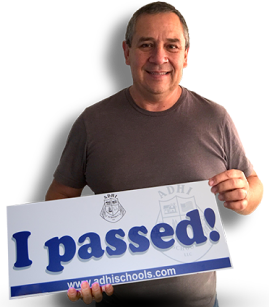
"Hey guys,
I took the exam today and passed!!!!
It only took me one try which was one of my goals. I took the online
classes and follow your suggestions so I took the crash course,
used the crash course app a lot, took 7 mock tests and went
confident to present the exam. Thank you for the great job you are
doing, you guys are awesome!!!! May God continue to bless you!"
Willie V.