
AdhiSchools Blog

Environmental Regulations California Agents Should Know

Environmental image

Reading Time :  5 minutes

Environmental issues are the "silent deal killers" of California real estate. A single undisclosed underground tank or a mismanaged mold complaint can trigger five-figure remediation costs and six-figure lawsuits.

In practice, your job is to surface red flags, disclose material facts, and document referrals—not to diagnose or guarantee property conditions. This guide provides a practice-based protocol for protecting your license and your clients from environmental liability.

Disclaimer: Informational only, not legal or environmental engineering advice. Rules vary by property and local jurisdiction; consult qualified counsel and environmental professionals.

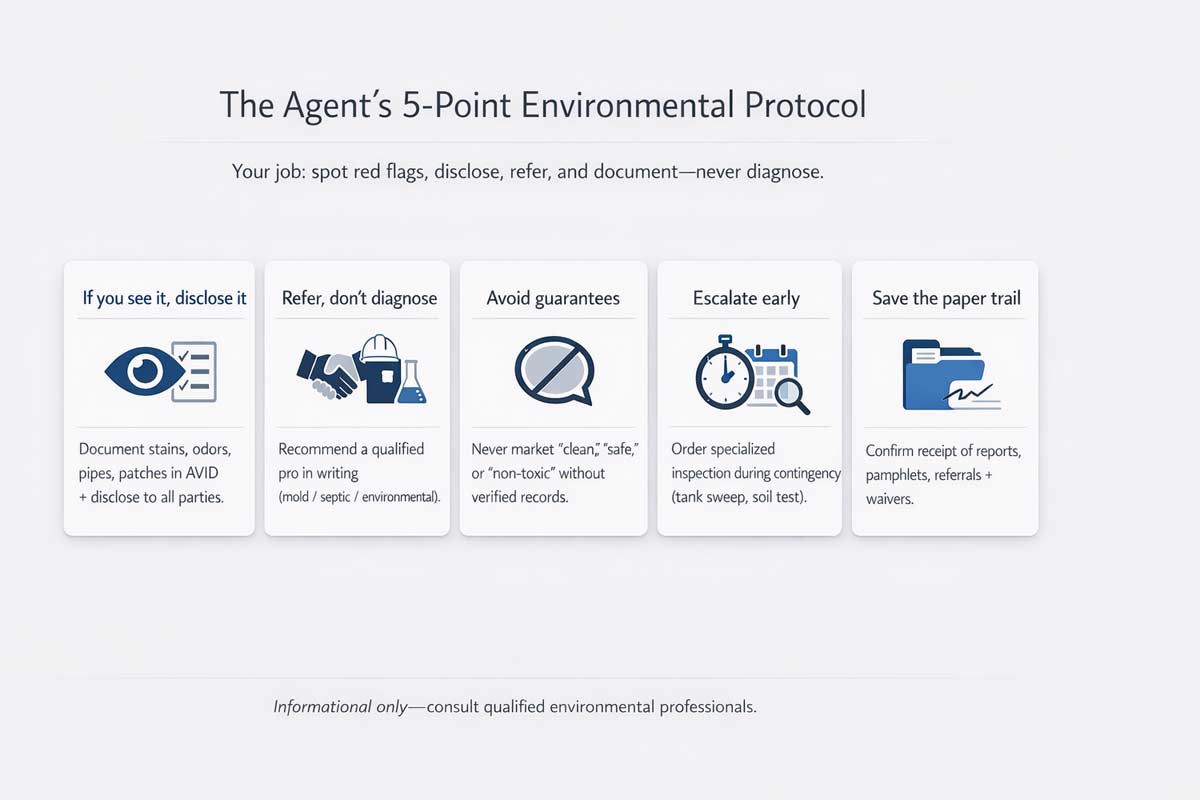
The Agent’s 5-Point Environmental Protocol

  1. If you see it, disclose it: Document visual flags (stains, pipes, odors) in your AVID and disclose them to all parties.
  2. Refer, don't diagnose: Never tell a client "that looks like harmless mildew." Recommend a professional (mold, septic, or environmental pro) in writing.
  3. Avoid Guarantees: Never market a property as "clean," "safe," or "non-toxic" in MLS remarks or conversations.
  4. Escalate Early: Recommend specialized inspections (like tank sweeps or soil tests) during the contingency period, not after.
  5. Save the Paper Trail: 5.Obtain signed receipts for all environmental reports, pamphlets, and written recommendations and any inspection waivers.

The Agent’s "Non-Negotiables"

Problems often stem, not from the hazard itself, but from an agent’s failure to follow these rules:

  • Rule 1: You are not the expert. Even if you’ve seen a hundred "slurry-filled" oil tanks, do not give an opinion on the safety or cost of removal. Point it out and suggest a specialist.
  • Rule 2: Perform required visual diligence. Disclose observable red flags where applicable. Missing a blatant red flag can lead to a negligence claim.
  • Rule 3: Verify claims with records. If a seller says soil is "clean," do not market it as such until you see closure documentation or other credible third-party records (as applicable) and reference those reports in your discussions.
  • Rule 4: Recommend in writing—even if they decline. If a buyer waives an environmental inspection, send an email (or have them sign a document) confirming they have chosen to assume that risk against your advice.

Hazards: Red Flags

1. Mold & Moisture Intrusion

In California, mold is a primary habitability issue. For rentals, these issues often trigger complex Rent Control Laws in California (Agent Guide) disputes regarding repair timelines and tenant leverage.

  • Red Flags: Musty odors, water stains, bubbling paint.
  • Safe Script: "I noticed discoloration; I recommend a mold professional test the air quality."
  • What NOT to Say: "Bleach will fix it." Do not make health claims like "non-toxic."

2. Asbestos & Lead-Based Paint

In pre-1978 construction, lead based paint may be present. This is a critical consideration before discussing California ADU Laws because construction disturbs suspect materials.

  • Red Flags: Popcorn ceilings, linoleum, or "shingle" siding in older homes.
  • Safe Script: "Due to the age of the home, these materials may be present. Consult a specialist before renovating."
  • Recommend: Delivery of the CalEPA "Environmental Hazards" booklet and other documentation as required by law and your brokerage.

3. Underground Storage Tanks (UST) & Contamination

  • Red Flags: Metal pipes in the yard, circular concrete patches, or proximity to old dry cleaners.
  • Safe Script: "This pipe may indicate a former tank; we should recommend a search for closure records."
  • SB 9 Alert: Feasibility marketing is where agents get sued. Before you market the feasibility of a lot split, ensure environmental constraints don't kill the path for SB 9 Explained for Real Estate Agents.
  • What NOT to Say: "The tank was definitely removed correctly."

4. Private Wells & Rural Hazards

Environmental due diligence must expand to include water potability, yield, and seasonality.
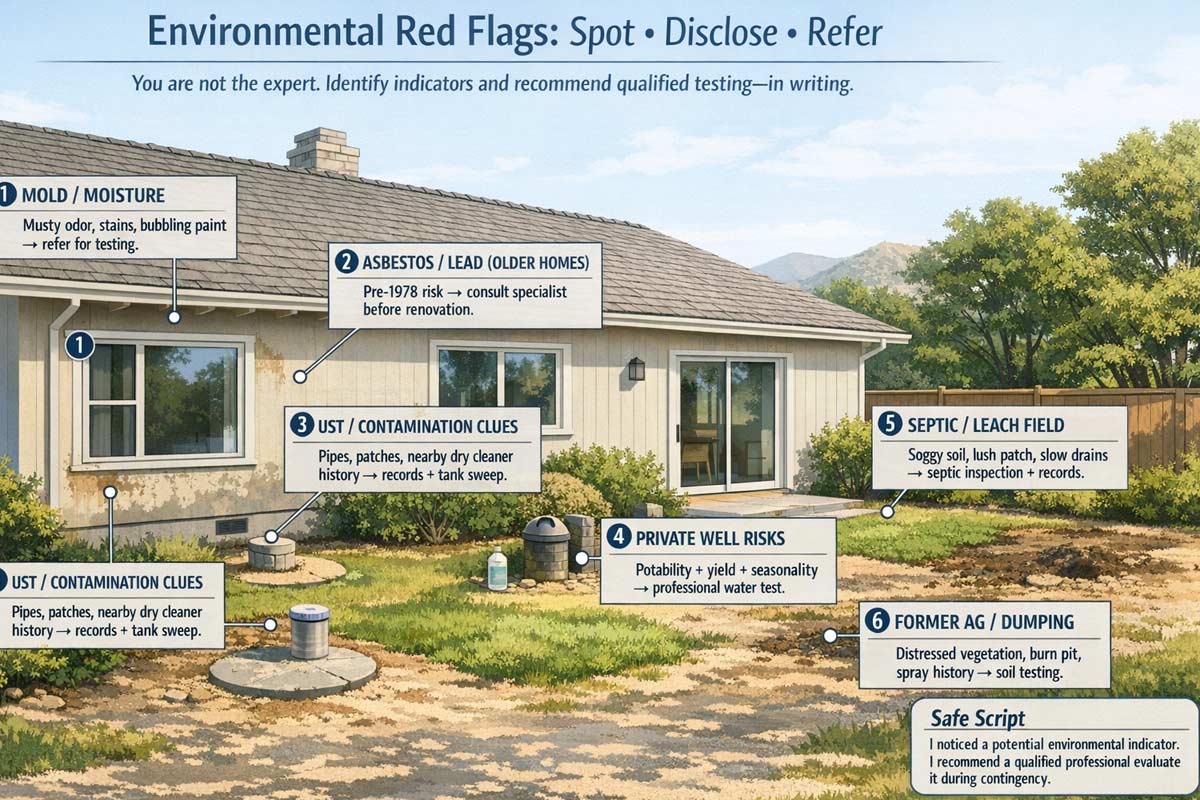
  • Red Flags: Nearby industrial sites, agricultural runoff, or "smelly" water.
  • Safe Script: "Since this property uses a private well, I recommend a professional test for potability and yield."
  • Pro Tip: Beyond physical service, ensure you understand Water Rights & Easements in California Real Estate.

5. Septic Systems & Leach Fields

  • Red Flags: Lush green patches in dry weather, soggy soil, or slow drains.
  • Recommend: Septic inspection, records search, and pumper's report.
  • What NOT to Say: "It passed before" or "pumping proves it functions perfectly."

6. Former Agricultural Use & Dumping

  • Red Flags: Abandoned burn pits, distressed vegetation, or historical records of crop spraying.
  • Recommend: Soil testing by a qualified pro; consult an environmental specialist.
  • What NOT to Say: "It was just farmland, so it’s clean."

environmental_red_flags_image

Regulatory Touchpoints

California environmental "regulation" for agents is primarily about disclosure mechanisms:

  • The NHD Mechanism: The Natural Hazard Disclosure (NHD) flags "zones" (Fire, Flood, Seismic). It does not certify property condition—it only flags state-mapped risks.
  • Wildfire & Build Feasibility: Treat wildfire exposure as a build-feasibility constraint, especially if your client plans an ADU.
  • Phase I ESA: A research report used to identify "Recognized Environmental Conditions" (RECs)—signs the property’s history may involve contamination risk.
  • The TDS: The Transfer Disclosure Statement is where sellers disclose known property conditions, including environmental hazards.

Marketing Language: "Bad vs. Better"

Bad Language (High Risk) Better Language (Lower Risk)
"No environmental issues" "Seller reports no known issues; recommend buyer inspection."
"Mold-free home" "Professional remediation completed [Date]; see attached report."
"Safe well water" "Water quality to be investigated by buyer during contingency."
"No tank on property" "No known tanks disclosed; buyer to verify via records/testing."
"Clean Phase I" "Phase I ESA available for review; buyer to perform due diligence."

Agent Due Diligence Checklist

  • Review NHD Early: Flag any fire, flood, or fault exposures for the buyer immediately.
  • Where Relevant, Check Databases: For suspected history, check databases such as GeoTracker or EnviroStor.
  • Document in AVID: Note all odors, stains, or nearby industrial uses.
  • Confirm Receipt: Document delivery of all disclosures (NHD, TDS, advisories, and booklets).
  • Written Referral: Recommend appropriate professional evaluation during contingency; document acceptance/decline.

Frequently Asked Questions

Does "buyer to verify" protect an agent from liability in California?

It is a standard supplement, but it does not absolve you of the duty to disclose a known red flag or material fact.

What should I do if the buyer waives inspections?

Immediately document the waiver in writing. Send an email confirming that you recommended the inspection and they have chosen to assume the risk of the unknown and have the buyer sign a waiver that they are acting against your recommendation.

Is a seller's refusal to allow testing a material fact?

A refusal to allow requested testing is a major red flag and should be communicated to the buyer immediately; ensure this communication is documented in writing.

What is the difference between Phase I and Phase II?

A Phase I is historical research (no drilling). A Phase II involves actual soil or water sampling to determine if contamination exists.

Build Your Compliance System

Environmental risk management is just one piece of a successful real estate practice. If you are building a professional compliance system, start here:

California Real Estate Laws & Compliance Guide

Kartik Subramaniam

Founder, Adhi Schools

Kartik Subramaniam is the Founder and CEO of ADHI Real Estate Schools, a leader in real estate education throughout California. Holding a degree from Cal Poly University, Subramaniam brings a wealth of experience in real estate sales, property management, and investment transactions. He is the author of nine books on real estate and countless real estate articles. With a track record of successfully completing hundreds of real estate transactions, he has equipped countless professionals to thrive in the industry.


Enjoy what you read?

Sign up for our newsletter and get weekly updates on our latest articles