
In today’s global economy, real estate is far more than a series of local markets whose prices are determined by local buyers—it is an interconnected, international market where the economic conditions Read more...
In today’s global economy, real estate is far more than a series of local markets whose prices are determined by local buyers—it is an interconnected, international market where the economic conditions in one nation can affect real estate values thousands of miles away. Foreign investment in U.S. real estate is now commonplace and has significant impacts on both commercial and residential market conditions.
Hearing this, a number of questions come to mind: Where is the money coming from and how much is there? Why do foreign nationals and companies want to invest in the United States? How does this investment work? What are the impacts on our economy and different real estate markets? What will happen if this investment slows down?
How much foreign investment is currently in U.S. real estate?
The overall percentage of real estate controlled by foreign buyers depends on whether you are talking about the commercial or residential business.
In 2015, foreign buyers accounted for at least 17% of commercial real estate acquisition by dollar amount (NAIOP, Source 1). The National Association of REALTORS® states that international buyers purchased 4% of existing U.S. homes sold April 2014 through March2015, but those sales added up to 8% of the dollar value (NAR, Source 2). This indicates that high dollar homes are often scooped up by foreign buyers.
Foreign investment in commercial real estate in 2015 totaled $94.3 billion. Foreign investment in residential real estate acquisition in 2015 totaled $104 billion--totalling more than $198 billion in foreign real estate acquisition in the U.S. last year (Asia Society, Source 3).
So who is investing all of this money?
Until very recently Canada was the number one source of residential real estate investment in the U.S., but last year China spent much more than our neighbor to the north in this sector with $28.6 billion to Canada’s $11.2 billion. India was third in residential real estate investment, with investors pouring $7.9 billion into acquisitions.
Commercial real estate acquisitions are still dominated by Canadian investors with $24.6 billion spent last year. Singapore was next with $14.6 billion in acquisitions. China and Norway tied at third with $8.5 billion each spent in commercial real estate acquisitions.
There is a common perception that China is dominating investment and buying everything in America, but these figures show that this is not at all the case, especially in the commercial markets. Canada is spending almost three times as much in commercial real estate investment. Singapore outspent China by $6 billion in U.S. commercial real estate acquisitions despite having a GDP 2.7% the size of China’s (World Bank, 4).
This is not to suggest that China’s purchasing power should be considered miniscule (realistically China will outdistance Canada, Singapore, and Norway in real estate investment before long); rather, it is important to recognize just how many foreign investors from around the world view the United States as a premier investment destination.
There are many reasons people want to invest in U.S. real estate.
The most obvious reason for foreign investment in U.S. real estate is financial gain. Real estate investors, wherever they are located, would like to profit and the U.S. has the world’s largest economy with the world’s largest real estate market that is recovering and growing. For example, Norway’s surprisingly enormous amount of money spent on commercial real estate is the action of the state-run Government Pension Fund of Norway--the largest sovereign wealth fund in the world. The fund spent $7.6 billion on property globally last year in what it describes as an attempt to attain “the highest possible return with a moderate risk level” as a “long-term investor” (WSJ, 5). The focus isn’t necessarily on profiting in the near-term on the income the property provides. One such purchase was a 45% stake in the 40-story tower at 11 Times Square in Manhattan in February 2015 for $401.9 million. The fund also purchased a 49.9% stake of the Foundry Square II property in San Francisco for $139.7 million (Norges Bank, 6).
The United States became the preferred investment destination for these funds because of perceived long-term stability and near-guaranteed long-run appreciation in trophy markets like New York City and San Francisco. The famed Waldorf Astoria Hotel in New York sold for $1.95 billion to a Chinese investment group in 2014. That same group bought Strategic Resorts and Hotels, which has luxury hospitality locations across the U.S. in major markets like Silicon Valley and New York, for $6.5 billion this year (NY Times, 7). For an example closer to home for our Southern California readers, think of the Korean Air Wilshire Grand development. Korean Air and its parent company, Hanjin Group, owned the old Wilshire Grand, tore it down, and is in the midst of building what will soon be the tallest building west of the Mississippi to house a new hotel, retail space, and office space at the cost of more than a billion dollars (Curbed, 8). From coast to coast, America’s big markets are attracting billions in real estate investment.
Insecurities and political issues in other markets drive some investors to purchase U.S. real estate as much for stability and security as profit. Many Chinese investors in U.S. real estate were motivated to move money away from a faltering stock market and slowing domestic growth.
According to some experts, others around the world want to protect their assets and get their funds out of their own country. Basically, the U.S. real estate market can act a bit like an offshore bank. From an investor’s perspective, sure the U.S. government taxes your money; but, your investment will never be seized by the state and will likely appreciate over time (US News, 9).
There are of course more reasons to invest in U.S. real estate. Some families have a child attending school in the United States and want to buy a house here. The U.S. can also act as a tax haven (depending on the nationality of the foreign investor), especially considering taxes will not be paid until the property is sold or earns income.
So how does this foreign investment work?
Unlike some other countries, the United States has almost no barriers to to foreign ownership of real estate. Investors are generally taxed on their property’s income or sale just like domestic investors (although some treaties with particular nations can ease this burden). However, recent revision of the Foreign Investment in Real Property Tax Act (FIRPTA) has actually removed some of this tax barrier. FIRPTA guarantees that foreign investors are taxed on their sale of U.S. real estate. The new reforms (which went into effect December 18th, 2015) add more exemptions for foreign pension funds, increases the ownership threshold on the amount of publicly traded real estate investment trust (REIT) stock that foreigners can own before being subject to FIRPTA taxation upon sale of said stock from 5% to 10%, and reforms the rules to determine if REIT is domestically controlled. A strong majority of foreign investors interviewed by the Association of Foreign Investors in Real Estate have said that this reform will lead them to invest more heavily in U.S. real estate (Skadden, 10).
Aside from taxation, unless the foreign buyer is subject to U.S. sanctions (for reasons such as being a war criminal in another nation; it is incredibly uncommon for the U.S. to place sanctions on an individual), there are no restrictions preventing U.S. citizens and organizations doing business with foreign nationals.
As for the actual funding, many international buyers come with cash (including 71% of Chinese buyers 2013-2015). But there are financing options available for these investments. Chinese banks alone have issued $8.5 billion in loans for commercial acquisitions. These same banks make residential loans as well, which are of obvious need for Chinese investors, since they invest more money in residential than commercial real estate acquisitions (Asia Society, 1). However, the Asia Society describes these loans as “limited, but growing”. Those needing lending for residential mortgages are thus more likely to connect with a domestic lending institution for their loan needs. This process is mentioned below.
Foreign buyers can also purchase a first property with cash, then take out a home-equity loan to make funds available for other purchases. With funds in U.S. bank accounts investors can begin to obtain credit and establish a credit history that will enable further investment.
There are also domestic lenders that have targeted foreign real estate investment. Some of these operate nationwide while others only grant these types of loans for specific states. There is a great deal of variance in products offered as well: minimum and maximum loans, LTV, credit reports (or lack thereof), property types, etc.
East West Bank is one of the best examples. Specializing in Chinese commercial investment, East West Bank grants loans (typically between $3 million and $30 million) to investors that might otherwise not be able to attain financing. This bank has chosen to be selective, rejecting some applicants, while employing a strong connection to Chinese culture to remain competitive and a noted voice in this type of investment (Commercial Observer, 11). As of 2013 East-West had an average LTV of 55% across their commercial real estate loan portfolio (we could not find a more recent stat on their LTV rates), making them a fairly conservative lender (East West Bank, 12). Note that this is not a set policy where all investors receive the same terms. East West is selective and adapts to their situation.
BofI Federal Bank is another major player that offers portfolio loans to foreign national borrowers (minimum $300,000, maximum $10 million) at up to 50% LTV. Borrowers have to come in with a large amount of cash, but credit scores are also not required for evaluation.
A&D Mortgage lends to foreign investors, but operates only in south Florida. They will lend up to 70% LTV on up to a $15 million loan on single family, condo, and condo-hotel property types (Scotsman Guide, 13).
The takeaway is that foreign ownership of real estate is a big business and lenders are carving out niches to capitalize on the opportunity. Some are willing to assume more risk than others with higher LTV ratios or proof of credit in their underwriting standards, but overall there are opportunities for foreign buyers to obtain the financing they need.
There are potential hurdles to investment in the form of capital controls in foreign nations. China, for example, typically only allows one of its citizens to take $50,000 out of the country in a given year (Bloomberg, 14). Exceptions for investment and pooling of money allow the substantial investment in real estate we see, but these types of regulations do inhibit some investment
So what are the affects of this foreign investment on U.S. real estate markets?
This external boost to domestic real estate markets can contribute to increasing prices in some cities, which makes sense. Healthy, competitive markets can create price inflation. Buyers may not appreciate the costs of these strong markets, but sellers obviously benefit.
This effect is more noticeable in some cities than others. Very expensive cities like San Francisco and New York see a substantial percentage of real estate transactions involving foreign investors. Chinese investors, for example, spent $9.56 billion on commercial acquisitions in New York City alone between 2010 and 2015 (Asia Society, 1). And while Chinese purchases still make up a small proportion of sales in the overall U.S., Chinese buyers do buy 1 in 14 homes sold for $1 million or more and Chinese buyers pay on average $831,000 for their homes in the U.S. as of last fall (more than three times as much as the median home price in the U.S., $239,700)(NY Times, 15; NAR, 16). It follows that these buyers are concentrating themselves in metropolitan areas like New York, Los Angeles, San Francisco, Seattle, Chicago, Los Angeles, and Miami (The Guardian, 17).
A consequence of this foreign demand is that housing becomes less affordable for domestic buyers. According to the California Association of REALTORS®, as of the the fourth quarter of 2015, only 30% of households in California could afford to purchase the median priced home (39% the median priced condo or townhouse), compared to the 58% U.S. average (CAR, 18). While foreign buyers are obviously far from the only factor creating such a competitive housing market, they do play a role.
This influence is actually most visible in the highest end of real estate. Although housing affordability issues impact lower and middle income individuals the most, the immediate impact of a drop in funding for foreign investment is most visible in expensive markets like Silicon Valley. Despite still having some of the lowest average days on market (DOM) stats in the country, a recent slowdown in investment from China is visible. With China’s faltering stock market and new controls on capital leaving the country coinciding with a 20% decrease in venture capital investments in Silicon Valley in the first quarter of 2016 from Q1 2015, the high end market slowed significantly (WSJ, 19). In April 2016 the average DOM was 16 days, compared to 11 in 2015 and 10 in 2014. The average DOM rose to 30 days in May (Bloomberg, 20). While still a fast market, that is an enormous proportional increase in DOM.
While this is a small market where a handful of lingering properties can impact the statistics, the example is there: high end markets have become more dependent on foreign investment than other markets. Other high end markets could be susceptible to similar problems.
Another impact is on cap rates in commercial real estate. The steep competition that foreign investment is contributing to has “kept cap rates suppressed” between five and six percent on average as foreign investors continue to perceive retail assets as “long-term stability” investments. (Globest, 21) As demand for investment real estate increases and prices keep getting pushed up, cap rates will continue to decrease.
Cap rates are staying low because expensive buildings--even with expensive leases and high operating income--are not seeing rents increase quickly enough to raise cap rates. Part of this is investors buying buildings that already have tenants with set leases. Until the lease is up the investor cannot negotiate higher rent to increase cap rates.
Demand is another significant factor. Investors are willing to pay a high price for a property with long-term appreciation in mind. This means paying higher prices than one would pay if they were solely using income to evaluate the investment. Consider the example of the Government Pension Fund of Norway from earlier. Their focus is so much on income - it was purchased at a 2.9% cap rate. But that return provides some short-term benefit while the overall value of the property provides the long-term investment incentive.
While some of these effects seem negative, consider a few benefits. Foreign investment helped the housing market recover after the crash as valuable dollars continued to flow into the market. It may not have been a comfort to those losing their homes, but it was beneficial to the economy. And foreign investment also generates tax revenue. While this may not be a benefit that many people think of, a strong real estate market does provide valuable tax revenues (with benefits such as funding public schools).
So what happens if the foreign investment dries up?
If foreign investment in real estate has become a significant factor in the strength of the market, it follows that there should be concern about the longevity of this investment.
First, there is little reason to fear foreign investment ceasing. Even with China’s increased internal controls on capital leaving the country, there is enormous demand for American real estate. This demand is created in a number of ways (mostly explained above). As long as the U.S. is a major economic player on the global stage (which is inevitable for the foreseeable future), there will be demand. Abundant coastline and large metropolitan cities that create high prices for domestic buyers also draw foreign buyers.
If there are fluctuations in this foreign demand they should act just as a fluctuation in domestic demand. Days on market could increase and thus draw down prices, but as foreign investment is still far from a majority of investment, this effect should not be as strong as when domestic demand falters. In some cities there could be less effect as domestic buyers find they can afford homes when competition is slightly decreased.
Take Away
At the end of the day there will always be people concerned about foreign outsiders buying their cities or driving up prices for the local population. Calls for higher taxes on foreign investment and other restrictions will never cease. But it is our position that barriers to the influx of foreign dollars into real estate markets other is not a sound decision. Without foreign investment the last recession and housing market crash would have dragged on longer, harming the same people that investment controls would allegedly protect. Strong real estate markets do create affordability issues in some cases, but also the potential for job creation with new construction and the subsequent affected industries and buying power of employed workers. And while some may not approve of this influence, it is a difficult position to tell property owners that they should receive lower selling prices when they sell their property because international buyers are not investing in the market.
The U.S. real estate market is not completely dependent upon foreign investment, but it is significantly influenced by it (in some local markets much more than others). It is unlikely that this will change in an increasingly globalized economy.
Sources
1) http://www.naiop.org/en/Magazine/2016/Spring-2016/Finance/Cross-border-Investment-in-US-Commercial--Real-Estate.aspx
2) http://www.realtor.org/sites/default/files/reports/2015/2015-profile-of-international-home-buying-activity-2015-06-18.pdf
3) http://asiasociety.org/files/uploads/66files/Asia%20Society%20Breaking%20Ground%20Complete%20Final.pdf
4) http://databank.worldbank.org/data/download/GDP.pdf
5) http://www.wsj.com/articles/norway-fund-bulks-up-on-real-estate-1424795145
6) https://www.nbim.no/en/transparency/news-list/2014/fund-makes-new-investment-in-san-francisco/
7) http://www.nytimes.com/2016/03/14/business/dealbook/chinese-owner-of-waldorf-astoria-bets-big-on-more-us-hotels.html
8) http://la.curbed.com/2015/7/13/9941028/wilshire-grand-construction
9) http://realestate.usnews.com/real-estate/articles/how-international-issues-affect-foreign-investment-in-us-real-estate/
10) https://www.skadden.com/insights/firpta-reform-impacts-investment-opportunities-us-real-estate
11) https://commercialobserver.com/2014/10/east-west-bank-poised-profit-chinese-investors-us-real-estate/
13) http://www.scotsmanguide.com/Residential/Directories/Niches.aspx?id=1502
14) http://www.bloomberg.com/news/articles/2014-07-14/secret-path-revealed-for-chinese-billions-overseas
15) http://www.nytimes.com/2015/11/29/business/international/chinese-cash-floods-us-real-estate-market.html?_r=0
16) https://ycharts.com/indicators/us_existing_home_median_sales_price
17) https://www.theguardian.com/business/2016/may/16/chinese-pour-110bn-into-us-real-estate-says-study
18) http://www.car.org/marketdata/data/haitraditional/
19) http://www.wsj.com/articles/china-boosts-efforts-to-keep-money-at-home-1441120882
20) http://www.bloomberg.com/news/articles/2016-05-17/silicon-valley-mansions-linger-on-market-in-real-estate-slowdown
21) http://www.globest.com/sites/geofferymetz/2016/05/23/retail-at-a-glance-whats-driving-foreign-investment/?slreturn=20160502123659
|

Homelessness is a serious problem. Despite efforts to curb it—from government housing programs to charitable organizations and shelters—it persists. A recent federal House bill (with bipartisan cosponsorship) Read more...
Homelessness is a serious problem. Despite efforts to curb it—from government housing programs to charitable organizations and shelters—it persists. A recent federal House bill (with bipartisan cosponsorship) has been written that aims to help homeless and formerly homeless students and student veterans attain housing.
H.R. 5290 would amend the Internal Revenue Code to “qualify low-income building units that provide housing for homeless students and veterans who are full-time students for the low-income housing tax credit.” The full-time student must have been a homeless child or youth during any portion of the seven years prior to occupation of the housing unit in order to be eligible. Veterans are eligible if they have been homeless at any point in the previous five years and are full-time students.
So what is the low income housing tax credit (LIHTC) and how would this bill impact affordable housing? The LIHTC frees up funding for the development costs of low-income housing. Investors receive a dollar-for-dollar tax credit that directly lowers owed income tax. These investors propose a project to the state housing finance agency. A certain percentage of units in the development are committed to being both rent restricted and occupied by individuals under a certain income threshold compared to the median gross income in the area.
This commitment includes a number of years (typically 30) that the rent restrictions and availability will exist, meaning that landlords cannot take advantage of a tax credit, then remove rent restrictions. The specific scenarios are outlined here. These projects can be new construction or acquisition and/or rehabilitation of existing housing developments. Once the state housing finance agency approves the project, the credits are claimed over a ten year period.
To summarize: a landlord-investor set aside a certain number of units that have lowered rent to be made available to renters with low income. H.R. 5290 would automatically qualify students that were homeless children or youths within the last seven years and veterans that have been homeless within the last five years as eligible tenants for the rent-restricted units.
If H.R. 5290 is passed and signed into law there would be more incentive for landlords and developers to subsidize housing for formerly homeless veterans and youths while they are in college. This makes it easier for those who have escaped homelessness to stay out—a very real problem, especially in more expensive areas of the country. It is difficult to succeed in higher education while earning enough money to support oneself. It also provides a pathway out for those currently homeless. If they can become a full-time student, they can gain access to cheaper housing.
Will it pass? No way to tell yet, but bipartisan cosponsorship is always a good sign. In an increasingly divided legislature and an election year, cooperation is not something we hear about too often. Because this bill has Democratic and Republican support it may have a better chance of being passed. But the Senate is not currently in session, so any movement by the House will not be matched in the Senate until at least September. We will be certain to keep our readers updated as this legislation progresses or falters.
For questions about the legislation, programs described, or other real estate topics feel free to reach out to the author at cody@adhischools.com. If you feel strongly one way or another about this proposed legislation, we encourage you to contact your elected representatives. Anyone looking to obtain their real estate license needs to keep an eye on these important legislative updates.
|

Many real estate professionals use their knowledge and expertise to invest in real estate. They know a good deal when they see it, know the laws they need to navigate, and likely have contacts in property Read more...
Many real estate professionals use their knowledge and expertise to invest in real estate. They know a good deal when they see it, know the laws they need to navigate, and likely have contacts in property management or are confident in their ability to manage a rental property. Rental losses are also potentially deductible, insulating investors from some risk. But how does this deduction work? In Gragg v. United States of America; Internal Revenue Service a real estate professional was found to not be eligible for a tax deduction that they felt they were entitled to, shedding light on the details of the law—real estate agents who invest in rental properties should not necessarily expect these tax deductions unless they can prove that their investment involves material participation.
Gragg v. United States has provided us with a clarification on the Internal Revenue Code’s definition of material participation in rental activities. If a real estate professional materially participates in their rental activities, losses may be deducted. Passive activity in a rental investment, on the other hand, is not grounds for a tax deduction. The court case cites Section 469 of the Internal Revenue Code (I.R.C.), which defines material participation as activity in which the “taxpayer is involved in the operations of the activity on a basis which is—(a) regular, (b) continuous, and (c) substantial.” Rental activity is typically classified as “per se passive” and not eligible for any deductions under the material participation rule. Yet Section 469 (c)(7) of the I.R.C. has established that for “taxpayers who qualify as real estate professionals, the per se rental bar” does not apply, meaning real estate professionals have a greater ability to deduct losses on rental investments because real estate is their profession.
So how do these two sections of code work together? Since Gragg is a real estate professional, she should have been able to claim a deduction, right? Yet the court sided with the IRS and found Gragg ineligible for the deduction. How does this work?
The explanation lies in the interaction of the two sections of code. The court states that the effect of the real estate professional exception to the law is to remove the automatic classification of rental activity as passive—it does nothing to the general rule that material participation is necessary for exemption. Thus without proof of material participation, a real estate professional invested in a rental property cannot deduct losses.
Essentially there is a two step process to earn a tax deduction. First, one must be a real estate professional. Step two is to demonstrate material participation, something Gragg was incapable of proving. Two pages of undated notes were offered, but as those notes had not been present for previous court proceedings the court in this case declined to address them as a new argument.
The lesson for the real estate professional with rental investment properties—document your material participation. Prove activity in property management. Without this proof your deductions will be rejected by the IRS and you will find yourself paying more in taxes than you would have needed to if you had documented your material participation properly.
|
|
|

As you complete your real estate classes with us, you may come across a buyer client who is looking to “fix their credit” before buying a property. You may also represent a seller who is in escrow Read more...
As you complete your real estate classes with us, you may come across a buyer client who is looking to “fix their credit” before buying a property. You may also represent a seller who is in escrow with a buyer and the buyer’s loan starts to go sideways because of an error on their credit report.
What do you do?
One of the most common questions that consumers ask credit counselors is, “How can I get negative items removed from my credit reports?” The accurate, short answer to that question is this: It’s relatively easy to get incorrect information removed from a credit report but can be quite difficult to legally remove items that are reported accurately. In other words, if a debt is yours, and if all the particulars listed on the credit report are correct, they your options for legal removal are limited.
The good news is that there are several ways to potentially eliminate negatives from an official credit report, even when the debt is yours and when it’s listed correctly. Here are the strategies that many consumers have used to clean up their credit reports:
Paying to delete negative items: If you contact a creditor and agree to pay the debt in full right away, then they might consider removing it from your report. This technique is especially successful when the amount owed is rather large and the delinquency is not very old. Many creditors are happy to have a large debt paid off quickly and taken off the books. They’ll often agree to remove the item from your report if you ask them nicely, in writing and as soon as possible after it has been reported to the bureaus.
Asking for a goodwill removal: After you’ve paid a debt and the listing is still on your credit report, it’s possible to contact the creditor and request that they remove it. It helps to explain that you have otherwise good credit and have been current on any other accounts you have with them. If there were special circumstances that led to the delinquency, be sure to explain the situation to the creditor. This is basically a “hardship” request and doesn’t always work, but it’s worth a try.
Asking for verification of the debt after several years: Bureaus can keep negative items on a report for up to seven years. After one or two years have passed, you can contact the creditor and ask for the debt to be verified. It’s often the case that creditors can’t verify older debts that have been paid off and closed out. If they can’t verify it, then you can have it legally removed by contacting the credit bureau in writing and disputing the debt. Without verification from the creditor, the bureau will have to remove the listing.
It’s important to remember that only the creditor has the power to remove a legitimate listing from your credit report. In fact, they are supposed to leave items on for up to seven years so that other lenders can get an accurate view of your credit-worthiness by reading your report. But, as in the situations noted above, creditors are sometimes willing to remove a negative item if you approach them with the right attitude. Separately, inaccurate information can potentially be removed by invoking the last strategy mentioned.
If you are interested in taking live real estate classes or preparing for the real estate exam, call us at 888 768 5285 or visit www.adhischools.com
Love,
Kartik
|

Tips For Real Estate Agents on Social Media
Businesses can’t ignore social media if they want to remain relevant and competitive in today’s busy online marketplace and the real estate business is Read more...
Tips For Real Estate Agents on Social Media
Businesses can’t ignore social media if they want to remain relevant and competitive in today’s busy online marketplace and the real estate business is no exception. Social media platforms like Facebook and Instagram can be powerful outlets that help real estate professionals position themselves as industry experts while connecting with their audience and building confidence in their experience and services.
I practice what I preach. Our real estate school has had a Twitter account since early 2009 and a Facebook page for almost as long. Even our original YouTube channel has had content since 2009. That’s 10+ years of going hard on all these platforms.
So how do you win considering that more and more content is being added each and every second to Twitter, Facebook/IG and YouTube? It is getting more and more difficult to get noticed.
The key to getting the most out of your social media presence is utilizing tactics that help you build stronger connections with your audience and inspire them to work with you. Below, I’ve put together my top 4 social media tips for real estate agents, particularly in the residential space as I figure most of our real estate school students are going to start there.
1. Educate your buyers on the market.
Buying or selling a home is a major life decision for most people, and they want to know that they are working with a Realtor that can guide them through the process and answer all their questions as they move through the process. The best way to build this confidence with your audience is by educating them about the real estate market.
In addition to sharing educational articles from your own blog, curate some content from reputable, third-party sources to help your audience understand important parts of the buying and selling process. In addition, you can post your own honest tips and advice to your social media pages based on the questions that you are most often asked by new buyers or sellers.
2. Share information on a particular neighborhood.
When promoting your listings (or those of your company) on social media, go beyond just sharing the features of the homes you are selling. Most homebuyers want to know more about the neighborhood or surrounding areas. Real estate professionals can use their social media channels to educate buyers on the benefits and unique characteristics of local neighborhoods to help them make a more informed decision about where they want to buy.
In addition to sharing your own content about the neighborhoods you sell in, share content from local organization pages. For instance, you might link to an event calendar from the city’s Facebook page or share a tweet from a local restaurant. This is especially true in areas like Downtown Los Angeles or coastal Orange County where the nightlife and social aspects of the community are a lure for buyers.
3. Start a conversation.
The social aspect of social media is often forgotten when professionals use social media channels for marketing. However, if you really want to get to know your audience and build trust, it’s vital that you chat with your fans and followers. Get active in the comments section of your social media posts and pay attention to what others are saying on your pages.
With the instantaneous nature of social media, most users expect an instant response to their questions or concerns. In addition to being active in the comments section, you’ll need to be diligent about checking for and responding to direct messages across platforms. When someone reaches out with a question or concern, make sure that you are available to answer these questions and get them the help they need when they need it.
4. Don’t forget video!
Many real estate professionals will skip video content when it comes to managing their social media pages. However, with the visual nature of home buying, it’s important that real estate agents utilize video to showcase their properties when possible.
Most people reading this article have a television broadcasting system in their purse or pocket with their iPhone or Android device. It’s easy to quickly do a live on Instagram or post a quick story to your page. Just get out there and start. I posted a video of all of my equipment here, but I didn’t start with this much stuff. All I had back in 2009 was one camera with an internal microphone and just started recording videos on HD cassettes. I always knew video was going to be huge across the Internet and would be a valuable marketing tool. The faster you can start engaging with an audience the faster you can monetize.
Video content also helps create an emotional connection with viewers in a way that images alone cannot. Providing a video tour of a property allows the real estate agent to give their audience a better idea of what it is like to experience this home instead of seeing the space out of context.
If you are interested in taking real estate classes online or in one of our classrooms, please call us at 888 768 5285 or visit www.adhischools.com.
Love,
Kartik
|

Before the question of whether or not open houses actually “work” is answered we should probably define what the word “work” actually means.
If you are a real estate agent and believe that a Read more...
Before the question of whether or not open houses actually “work” is answered we should probably define what the word “work” actually means.
If you are a real estate agent and believe that a successful open house is one where the agent found a buyer for that property on the day of that open house then very few open houses actually “work”.
However, if you define a successful open house as a chance to network with neighbors in a particular farm area, an opportunity to show the owners that you are doing something that is almost expected, and a way to find buyer clients for other homes, then nearly every open house has the potential to be a success.
Like many things in business, a substantial amount of time and effort is necessary to ensure that an open house will attract the right kind of traffic and result in at least a few interested and qualified potential buyers. Sometimes, sadly, even with a high traffic count, the net result might be less than satisfying.
While it’s also true that on occasion, “the buyer” will walk into an open house and make it all seem easy, if not preordained – but this can sometimes be attributed to pure chance.
Folks who are not quite ready to buy immediately frequently visit open houses as a way to solidify their preferences and explore the market. An open house can be the best way for an agent to meet people “up close and personal,” demonstrate market knowledge, hand out cards, and take names. You never know when you’re going to meet a buyer. It’s best to always be prepared.
How to Do a Successful Open House
Use all the tools available to you to stand out from the crowd. You don’t have to spend big bucks on advertising, or on refreshments. Use technology to your advantage.
Here are some ideas:
• Livestream the Open House on Facebook, Instagram and YouTube:
Give quick snippets of information as you walk through the rooms. Talk about the neighborhood, the easy commute to downtown, the community pool, the schools or a nearby shopping mall. Show the house at the same time.
• Invite the neighbors:
Count them as your allies to “sell” the good points about the area, rather than as “tire-kickers.”
• Consider Unconventional Hours:
If the home has spectacular sunset views, schedule the open house for late afternoon. Or, alternatively, be slightly ahead of the normal 1-3 or 2-4 schedule, and offer coffee or fresh-squeezed orange juice. If you are going to serve alcohol at an open house, other rules can apply. Proceed with caution. I did a video and an article on this as indicated by the prior link.
• Creativity Counts:
Employ an iPad as a digital sign-in sheet and encourage visitors to ask questions. Get back to them via email with specific answers. You’ll boost your chances of developing new relationships.
Perhaps most importantly, be there for everyone who walks through the front door. Meet and greet every visitor with a smile and a card. Never simply sit behind a desk or on a kitchen stool. But, be sure to give visitors a chance to walk through the house at their own speed and in their own way.
View an open house as an opportunity to sell yourself as well as the property and then every open house is, indeed, totally worth it!
If you are interested in online real estate school or even classroom oriented real estate courses, call us at 888 768 5285 or visit www.adhischools.com
Love,
Kartik
|

In order to become a real estate agent in California, applicants must complete courses in Real Estate Principles, Real Estate Practice as well as one Elective course. Although there are a number of options Read more...
In order to become a real estate agent in California, applicants must complete courses in Real Estate Principles, Real Estate Practice as well as one Elective course. Although there are a number of options available for necessary pre-licensing coursework, there are specific benefits of a classroom scenario to advance your real estate career goals. The give and take of personalized education provided by a knowledgeable and experienced real estate practitioner can outweigh the flexibility and convenience of other choices.
Here’s why:
Motivation
Online courses allow learners to work when it best suits them, but they are also easier to skip. Pre-licensing coursework requires a minimum of 135 hours of coursework; if you’re not sure of your ability to maintain an unwavering schedule without some structure, classroom time can help. By blocking out a specific time and place for class on a regular basis, many students find that the tendency to procrastinate or postpone is eliminated.
Interaction with Others
There is no substitute for the “up close and personal” attention that classroom real estate courses offer. Students have the ability to ask questions and receive immediate clarification often learn faster and retain information longer than those who simply listen to a presentation online or click through slides. An online classroom is, essentially, a one-way street; interaction is limited, even if visual aids are used and chat room communication is available. The dynamic in a physical classroom is different; interaction with other students is every bit as important as discussion with the instructor.
People Skills
Because real estate is, at its heart, a people-oriented business, association with individuals from varied backgrounds and with different skill sets is always instructive. The classroom can help you hone your people skills, assist you to address unique needs, and open your mind to the varied approaches that must be employed to work with different personalities.
Even if role-playing is not a formal part of the curriculum, students in a classroom situation benefit from the mix, and learn to develop a personal style.
Professional Networking
A classroom provides an opportunity to form business associations with other career-minded individuals, and to develop a professional network of both mentors, “cheerleaders” and motivators. The requirements for real estate licensing and the need to pass state licensing exams can be daunting. Classroom participation with a group of like-minded people offers a “first step” platform into the world of real estate, helping to sustain your motivation, gain professional stature and grow your business. That’s an ongoing career benefit.
If you’re serious about pursuing a real estate career, it’s only natural to feel an eagerness to get started. It’s also natural to want a “good deal” financially. Although classroom learning may be slightly more costly on the front end compared to an online option, the above benefits are likely to pay dividends by allowing you to pass the licensing exam with confidence and to start earning sooner.
As in any other field, the old saying, “Time is money,” holds true. Enrolling is a real estate class is an investment in your future.
Choose wisely.
For more information about real estate licensing or getting a real estate license in California call us at 888 768 5285.
|
So you’ve finished up at our real estate school and passed the real estate exam. You’re stoked because you have your first buyer client but their credit is less than perfect. The buyer badly wants Read more...
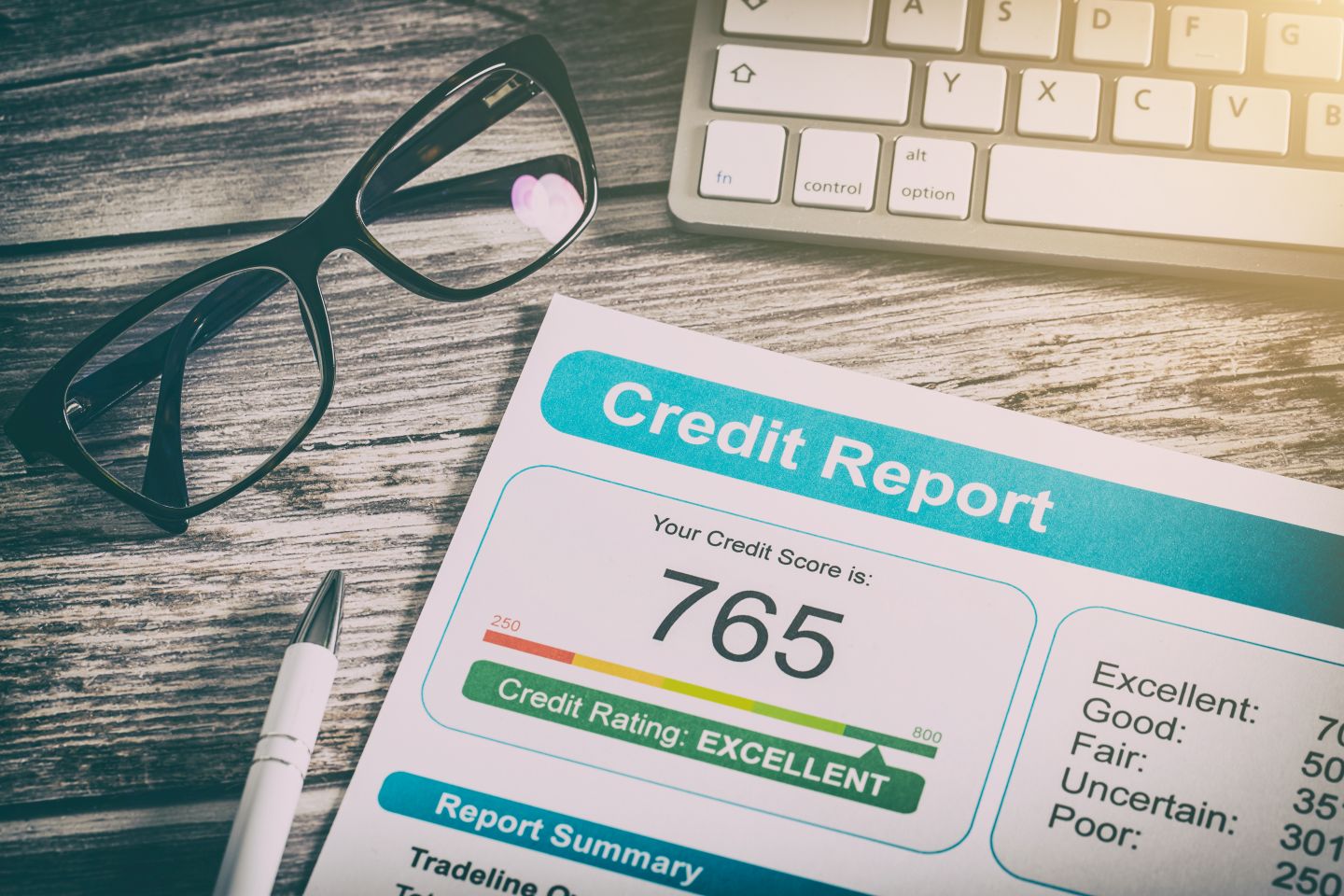
So you’ve finished up at our real estate school and passed the real estate exam. You’re stoked because you have your first buyer client but their credit is less than perfect. The buyer badly wants a home and you’re asking yourself: What advice can I give them to improve their credit score?
The reality is that credit scores today have a profound impact on quality of life. It determines the rates you pay on all sorts of things from mortgage interest rates to whether or not you can rent a car. The difference between good credit and bad credit can also determine where and how you live.
Make sure that only accurate information appears on the credit report
It makes sense that a borrower would want to be sure that their credit report contains accurate information. Any inaccurate data can be disputed with the credit bureaus. Equifax, Experian and TransUnion are the three bureaus and can be contacted to dispute erroneous information.
If your borrower isn’t sure how to start the dispute process there are third party providers that can help quarterback this with the credit agencies. I would recommend checking online or with other folks in the business that can give you a good referral to a vendor that can help.
Pay down revolving debt
Assuming that all the data on the credit report is accurate, the next question is “What else can we do to bump up the score?” One thing that can quickly impact the FICO is to advise the borrower to pay down as much revolving debt as possible. This is known as the “credit utilization” ratio. This ratio is a big deal as it accounts for about a third of the FICO algorithm. The less credit you have available the worse your score will generally be.
In other words if all your credit cards are maxed out, your score is probably going to be low. Do your best to get credit card debt paid down quickly to improve the credit utilization ratio and get that score up.
Try to get added as an authorized user
Another thing that can help bump the credit score is if the borrower can convince a family member or a loved one to add them to one of their credit cards. If mom or dad has a credit card that has a solid payment history and they are willing to add the borrower as an authorized user, this can help piggyback their on-time payments to boost the score.
Make sure bills are paid on-time
A central aspect of good credit is ensuring that the borrower pay their bills on-time. An easy way to do this is to calendar all required payments on a cell phone or Google calendar. Better yet – back up the calendaring with autopay. Autopay eliminates the aspect of human error and also eliminates wasted money spent on a bunch of late fees. Better still – auto pay eliminates the worst case scenario of an altogether missed payment. One missed payment means a catch-up scenario for the borrower and forces them to make two or more payments at once. Letting bills pile up can make it really hard to dig out of a deep hole.
Think long-term with your buyers
Remember that selling real estate inherently involves a very long sales cycle. Even if your prospect can’t buy a property immediately, they may be able to with some future planning. A year is going to go by quicker than you might think. Do you plan on being in the business in 12 months? I would think so. Sticking with a prospect even when it looks like they might not be able to buy immediately will create loyalty and your deal will eventually come to fruition.
As a real estate professional, it’s important to be a valued resource for your clients. Giving great advice can help foster loyalty among your customer base. This can be priceless and irreplaceable.
As always, if you are interested in online real estate courses or even live classroom courses, call us at 888 768 5285 or visit www.adhischools.com.
Love,
Kartik
|

OK – So you took our real estate classes in Los Angeles or maybe you took our real estate classes online. Now you have your license and it’s time to do your first open house! You’re hoping to make Read more...
OK – So you took our real estate classes in Los Angeles or maybe you took our real estate classes online. Now you have your license and it’s time to do your first open house! You’re hoping to make some great connections with potential clients and you want visitors to roam through the home a little longer. What do you do? Bribe them with ice cream? Booze? Both?
If you decide to serve alcohol at your open house and you don’t have a liquor license (no agent is going to have one) it’s important to ensure that the open house is not open to the public. If you are serving alcohol and your open house is open to the public you need to have a liquor license to do it.
Want to serve liquor at an open house? There are other rules too:
There can’t be any sale of alcohol
It’s important to make sure that there’s no actual sale of alcohol happening at the open house. Agents typically don’t charge for liquor at an open house so this isn’t something that most real estate agents have to worry about.
The premises cannot be maintained for the purpose of keeping, serving, consuming, or disposing alcoholic beverages.
If you’re doing an open house at a residential property, it’s pretty unlikely that the premises are going to be maintained for the purpose of serving liquor. It’s a residential property, it’s not zoned commercial, it’s not zoned retail restaurant or bar. So this second rule isn’t going to be a problem for most real estate agents.
The event should not be open to the “general public” at the time alcoholic beverages are served.
In the hospitality world, this is known as a “private party exception”. For the private party exception to be invoked, the person doing the open house has to have a list of guests prior to the event. Only people on the list are permitted to be admitted to the event and it would become a “private party”.
This means that if somebody does show up at your open house and they’re not on the list, you have to turn them away. If you’re serving alcohol and you let them in the event could be interpreted as being “open to the public” which could trigger a licensing requirement. The list of attendees is important to maintain and should be respected.
Finally, it’s hard to overstate the amount of liability that the agent can incur in the event the agent allows alcohol to be served to someone that is underage. Agents can also be liable in the event that they continue to serve alcohol to someone who is obviously intoxicated or is “habitual drunkard”.
So be smart about it. Make sure that if you are serving wine you need to have proper protocol that’s being followed to make sure we limit our liability at these open house events.
As always, if you are interested in taking real estate classes in Los Angeles or in Orange County please visit www.adhischools.com. Feel free to call the office at 888 768 5285.
Love,
Kartik
|