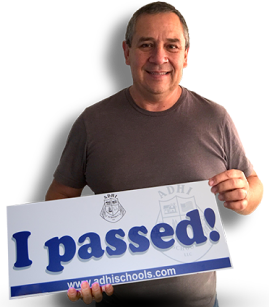
Once you complete our real estate school and pass the real estate exam you’ll be out on your own to start your career. Hopefully you’ll be ready to land your first client and take home a big commission! Read more...
Once you complete our real estate school and pass the real estate exam you’ll be out on your own to start your career. Hopefully you’ll be ready to land your first client and take home a big commission! =) After doing well on your real estate license exam, you'll get your desk set up with your broker and start working some leads. You’re probably going to start reaching out to your sphere of influence and let them know you’ve started a real estate career. As a newer real estate professional, the goal should always be to compress the time between finishing real estate school and cashing your first commission check. To this end, I wanted to write a quick article exposing some bad habits that real estate agents can develop if they’re not careful. Remember That Self-Employment Is Vastly Different From a 9-5 A self-employed person is solely responsible for his or her workday. In the real estate industry, it’s a common misnomer that once you pass your real estate exam, you’ll have leads pouring in and homes to sell. That’s not what happens. Instead, you need to work to create your own business. This often means spending time daily working to drum up business, cultivate leads, market, and respond to internet inquiries. Here are a few of the bad habits real estate agents create that virtually prevent them from becoming a successful Realtor quickly. You’re Doing "Busy" Work You’ve ordered business cards. You cleaned up your desk. You have talked to a dozen other agents today about what’s going on in their business and personal life. You may have even touched up your LinkedIn profile and posted a picture of the salad you had for lunch on Instagram. All of these “tasks” might feel necessary but the bigger question is what did you ignore by doing these things? Are you prospecting for buyer and seller leads? Are you following up on existing ones? In short, it’s easy to “feel busy” without actually building your pipeline, which ultimately cuts into your income. You’re Frustrated with Your Workday There are a dozen calls you have to make today for various reasons. Each one of them could be a lead. Perhaps you have some really good leads, but there’s so much on your plate to do right now that you miss those key opportunities to connect. You’re in and out of the office, forgetting appointments, and not seeing the kids. And, you thought this career was flexible? This is a common concern. The problem is that without any oversight into your activities and a consistent schedule, it’s easy to lose track of what’s important. To be successful as a real estate agent, you have to be organized. You also have to create a schedule that works for you and stick with it. This discipline is actually the key to freedom. Make time to plan for every task that matters during your course of the day. Remember - The number one calendar item is prospecting. Other Bad Habits Costing You Your Career After completing real estate school, it’s easy to become overwhelmed. Here are more of the common bad habits agents have: You aren’t communicating with your prospective clients fast enough. This is especially true for internet leads. Speed to contact makes a big difference in results. Make every client believe that they are your most important client. Work to return calls as quickly as possible. Try and email back as fast as you can. Failing to marketing adequately. If you’re not seen in the local industry, you’re unknown to prospective clients. Make marketing a component of your day, every day. Remember that there are over 400,000 real estate licensees in California alone - You have to make noise to stand out! You’re not looking as professional as you should be. Consumers expect agents to look professional at all times. If you look disheveled, that could indicate you’re less organized and not “with it.” Not updating your website or social media accounts in quite some time. Remember, if you haven't posted in a year people will wonder whether or not you are still in business. Send a contract to be signed electronically and tell the client to sign without explaining what they are signing. Being "too busy" to call other agents back. Working 24/7 and not taking care of your health. Getting paid your commission and not setting aside money for taxes. If you finished at our Orange County real estate school don't forget that this is only the beginning. As Warren Buffett says "The chains of habit are too light to be felt until they are too heavy to be broken." The best way to break bad habits is to avoid them in the first place. For information on getting a real estate license, call us at 888 768 5285. Love, Kartik
|

With hundreds of thousands of real estate salespeople in California alone, clients have choices. The million dollar question is “On what basis will the client decide?” This can be a hard thing to predict, Read more...
With hundreds of thousands of real estate salespeople in California alone, clients have choices. The million dollar question is “On what basis will the client decide?” This can be a hard thing to predict, especially If there are two real estate salespeople that are equally competent, have similar experiences and both work for reputable companies - the client might make a decision on who to hire based on pure “likability”.
If one agent is more “likable” than another who do you predict will get the business? It’s not hard to assume that the agent that can win the heart and mind (in that order) of the client is going to get the contract signed.
Because clients are often concerned or nervous through the real estate process, the agent should strive to be the kind of salesperson that brings good energy and enthusiasm into every presentation they go on. It has long been said that sales is simply the "transfer of energy from the salesperson to the customer”. The more energy and enthusiasm you exude, the more likely the client will sign.
Still, there are some real estate salespeople that are the personification of negativity and create roadblocks through the sales process. We have all met people like this. You know the type - they walk into a room and all the plants begin to die and when they exit they spring back to life.
I would urge all of our readers to examine which of these describe them. Are you the kind of person that brings vibrance and energy to every interaction or are you the exact opposite? When you walk into a room is there a big grey rain cloud over your head?
If you aren’t sure how to answer this, have a look at people that you would characterize as being in each of the two groups. Positive and energetic or negative and draining?
Consider the group of people that you know. Think of five or ten people that you know who are real energizers. You probably can think of a few right off the bat. Who do you know that when they show up, when they call the energy is better because of their presence? Who are the few people that you know when they walk into the room the energy shifts to the “dark side”?
Believe me. People notice.
This is important because your likability impacts how much business you're able to do.
So what are some things that we can do to immediately increase likability? The first thing I would urge is to be interested in other people. If you have ever read the classic book How to Win Friends and Influence People by Dale Carnegie a recurring theme is to try and make other people feel special by being interested in them and their story. It’s pretty simple - be interested. Be interested in other people and who they are and what they are about.
People that are interested in others are infinitely more likable than those that are not.
In a nutshell: Try harder to be interested than be interesting.
Another thing to increase that “L” factor is to always leave people better than you found them. In the case of real estate, that could be a critical market update to a buyer or seller. It could be an escrow update to one of your current deals but always look to add value at each and every interaction.
There’s plenty of pessimism in this environment - you don’t need to look hard to find it. Be the person that's optimistic and lights up a room each and every time they are in it. Not only will this be better for your physical health, it’ll be better for your wallet.
If you are interested in real estate classes in Los Angeles or online real estate school call us at 888 768 5285.
Love,
Kartik
|

It's nice to get a piece of a pie, whatever the size. But let's be honest: Would you prefer 3 percent of a $300,000 listing or of an $18 million mansion? The luxury real estate market is where you can Read more...
It's nice to get a piece of a pie, whatever the size. But let's be honest: Would you prefer 3 percent of a $300,000 listing or of an $18 million mansion? The luxury real estate market is where you can earn the big bucks — but breaking into it isn't easy.
Fortunately, one of my former students Jason Peteler recently sat down with me and discussed how he got into this lucrative market. Newer real estate agents can successfully transition into the luxury business by embracing these four points:
Be good at marketing.
Be good with people.
Know your area.
Don't start out alone!
1. Master the Art of Marketing:
Your image is everything in the high-end market. That's why marketing is the key to putting your best foot forward and spreading awareness about your brand.
You need to be where your potential clients are looking. The current trends are overwhelmingly in mobile and social media. If you're not on Facebook and Instagram yet, you need to create accounts today. If your website isn't mobile optimized, get some help to update it ASAP.
Every time you post, you should present yourself in a way your clients want to see you. Do you want to look negative and unmotivated? Of course not! Instead, post about your current successes and create the image of a confident and competent professional.
Get creative and post infographics, pictures and videos. You can even go "live" for a behind-the-scenes tour of a new listing!
2. Remember It's All About People!
Peteler briefly touched on being a "therapist" in his interview, and he's spot on. Imagine the stress buyers experience when buying or selling average-priced homes. Now multiply the commitment and risk by 10, and you have a client who's parting with or purchasing a high-end property.
Great real estate agents can help their clients cope with the stress and pressure involved with one of the biggest financial moves of their life. This interpersonal skill can make or break a transaction, because maintaining a good agent-client relationship keeps the ball rolling.
3. Know Your Area!
Who wants to work with an agent who doesn't know anything about the local area? When high-end clients approach an agent, they're looking for expertise. When you know the area well, you can sell the listing well.
Acquaint yourself with the area by spending time there: Eat at the local restaurants, talk to residents, walk around and soak in the sights and mood of the district. The more you know about the area, the more your clients will trust you.
4. Don't Start Out Alone!
Real estate agents who have successfully broken into the luxury market virtually agree on one point: Don't try to do it alone. You'll need to learn the ropes from agents who have real experience in the high-end market.
This can mean co-listing with another agent, being part of a team or even becoming someone's "apprentice." In fact, Peteler says that you should first follow a template: Copy what you see has worked for someone, and later you can expand upon it and innovate.
5. Get in Touch!
Another indispensable quality a luxury real estate agent needs is a solid education. To find out more about our real estate courses, contact me today. You can call the office at 888-768-5285 and we would be happy to help get you enrolled in California real estate license courses!
|

How to Choose a Real Estate School
I know that many of you who are considering our real estate school are also cross-shopping — as you should. During this decision process, you're going to look at Read more...
How to Choose a Real Estate School
I know that many of you who are considering our real estate school are also cross-shopping — as you should. During this decision process, you're going to look at our program and stack it up against other real estate schools, community colleges and online schools. This makes sense, because smart shoppers do their homework.This is why I want to take a moment to explain why our program might be a good fit for you.
The Numbers Speak for Themselves
First off, you should compare our pass rate for the real estate exam with the current statewide statistics. In a recent month, there were 3,987 people who scheduled to take the real estate exam. Out of those scheduled, 3,494 showed up. Of the 3,494 that took the exam, only 46 percent passed that month.As a potential real estate agent, it’s very important to align yourself with an education program that has a proven system to give you the greatest chance of passing the exam - the first time!
Why Does Our Program Work?
I chalk it up the overall process of our entire program. We're going to provide you with excellent support, flexibility on when and how to take classes, a great faculty and solid course materials.
• Full-time support: Our knowledgeable and friendly staff is available five days a week, Monday to Friday. Our representatives are all professional and highly trained. Compare this with smaller real estate schools that simply don’t have the resources that we do.
• Flexible locations: We have many brick and mortar locations if you want to do the classes with a classroom component. This definitely plays into the convenience factor when you're trying to find a school near your home. Here's the best part about it: You get unlimited access to any of these locations' classrooms for twelve months! So, if you need a place close to your friend's house or dentist's office, we have your back. We also have online classes too if your schedule is more scattered.
• Great online real estate classes: No other online school in California has the amount of video that we do. These aren't amateur videos either, but instead are done with professional lighting and audio and great camerawork to ensure you have the most professional set of real estate materials available.
• High-quality instructors: Our faculty is simple the best out there. All of our instructors are extremely professional and knowledgeable. Some of our teachers have been presidents of large real estate organizations. One was even the VP of the global MLS. Another has done over 700 short sales and foreclosure transactions during his career. These are not isolated cases, each one of our instructors is screened for their teaching ability and personality before we hire them.
• The right course material: When you take classes with us, you'll get three tangible college-level textbooks, not just PDFs. You get that "real school" feel by having a solid book in your hands. These textbooks contain hundreds of practice questions to help prepare you for the real estate exam.
• Convenient (and affordable) crash courses: Start out with a bang! Our upper-tier packages also include an intense (and fun) two-day live crash course. This is going to give you the skills and knowledge needed to pass the real estate exam - the first time!
Try It Before You Buy
Naturally, you don't want to commit to something before you have a chance to try it out. That's why I'd like to offer you a free guest pass. With this pass, you can visit any location of ADHI schools at no cost or obligation.To sign up for a physical classroom guest pass, go to the main part of our website, scroll down and then enter your email in the information box. We will immediately send you a guest pass. Come hang out with us! We would be excited to have you in the classroom! If you can't come in person, you're welcome to try out one of our online classes. Sign up for a trial account of our online real estate school. Scroll to the bottom of the page and check it out!
Shop Smart
I highly encourage you to compare our programs side by side with other real estate schools that you might be considering. I'm confident that you'll find that we have much more to offer than the competition.At the end of the day, you need to make the right decision for you. However, I think you'll be very happy if you choose us. Check out ADHI Schools today!
- Kartik
|

Errors can happen on a credit report. What causes these errors? Sometimes it can be something as simple as a father and a son who have the same name and the only difference is a “Sr.” or “Jr.” Read more...
Errors can happen on a credit report. What causes these errors? Sometimes it can be something as simple as a father and a son who have the same name and the only difference is a “Sr.” or “Jr.” What if son paid a few bills late and this incorrectly appears on Dad’s credit report?
Worse than the above scenario is a customer who may have been the victim of identity theft. Perhaps their social security number and date of birth were compromised on a website and sold to criminals. Each year we read of many major corporations who have had their databases compromised. Equifax, eBay and JP Morgan Chase are just a few examples of large corporations that have been targeted by hackers. Where then does a customer turn?
The Federal Trade Commission has several recommendations for those that genuinely believe that false and erroneous information appears on their credit report. The Fair Credit Reporting Act mandates that the credit bureau and creditor have a collective responsibility to correct and update any incorrect information in the customer’s credit report.
The individual with erroneous information on their credit report should send correspondence to the credit bureau that has displayed this erroneous information. This could be either Experian, Transunion, or Equifax or could potentially be all three. Mail correspondence isn’t required, however, as the individual can file their dispute online.
If the customer is sending their dispute via mail, the Federal Trade Commission has a sample dispute letter available on their website and this letter can act as a starting point for anyone seeking to eliminate inaccurate information from their credit profile.
In order to increase the chances of incorrect and incomplete information being deleted from the credit report individuals are encouraged to support the claim with any proof that the data is incorrect. Examples of this proof could be cancelled checks or bank statements showing that the bills were paid on time or the fact that the debt is no longer even valid. In some cases, the customer might have paid off the debt and it is still reporting as open on the credit report. Combining the letter or online dispute with substantiation that the information is inaccurate will increase the chances of having incorrect information deleted from the credit report.
The FTC recommends that this substantiating documentation not just be sent to the credit bureau but also to the creditor with whom the customer is disputing the incorrect information. This may increase the chances of incorrect information being deleted from the credit file. If this doesn’t work the customer is able to leave a note in their credit file next to the “incorrect” trade line stating that the customer disputes the accuracy of this information.
Generally, the credit reporting agency must investigate the disputed items within 30 days of the dispute being filed. However, the law has an exception for the credit agencies wherein they don’t have to investigate a dispute that they deem to be frivolous. in the event that a credit bureau is going to investigate a disputed item, they are required to forward everything received from the customer over to the creditor.
Once the investigation is complete, the bureaus are required to give the customer notification of the outcome of the dispute in writing. They are also required to provide a copy of the credit report to the customer in the event that the dispute resulted in a change to their credit report. Statute also requires that the credit bureau provide one copy of a credit report to everyone for free each and every year. A customer who is disputing information on their credit report that results in a copy of their credit file being sent to them will still be allowed their one free credit report per year. What this means is that a customer who is disputing credit information in their file may end up with multiple credit reports per year at no charge.
Because credit scoring can affect so many aspects of a person’s life, the government has a system in place to ensure that incorrect information on a report can be disputed and ultimately deleted. Hope is not lost in the event of identity theft or an incorrectly reported late payment. There is a dispute process in place and will work if done properly. The Federal Trade Commission’s sample dispute letter can be a great place to start.
As always, if you are considering getting into our great real estate business, you’ll need to go to real estate school first. Need help passing the real estate exam? Check out our test prep site here.
Love,
Kartik
|

Once you complete our classroom real estate courses in California or real estate classes online, you’ll need to put your license with a broker if you want to go to work.
At this early stage in your Read more...
Once you complete our classroom real estate courses in California or real estate classes online, you’ll need to put your license with a broker if you want to go to work.
At this early stage in your career, you are probably full of enthusiasm and at the same time have some serious questions and perhaps some lingering fears about whether not you’re making the right career decision.
One of the most important steps you will take as a real estate salesperson is to choose a broker, the place where you will, in effect, hang your hat along with your license, and build your initial reputation in the field. Whether you’re already licensed, or are shopping for a place to take your real estate classes, finding the right environment is all-important to your future. Even though it’s not a lifetime commitment, your choice of initial affiliation will affect not only your earning ability, but also your learning curve, your growth potential as a real estate agent, and your long-term success and fulfillment as a professional.
Brokers also want to ensure that new agents who join their firms will be compatible, hard-working, knowledgeable, committed, enthusiastic, and a good match for the company culture.
How should you evaluate your opportunities? What are the steps to take to assure the best possible fit?
To prepare for your interview, expect to be asked the following questions by a potential employing broker:
1. What drives your decision to become a licensed real estate agent?
Do you have previous sales experience? Is money your primary goal? How do you intend to support yourself until the sales (and closings) start rolling in?
2. Do you have a monetary goal in mind?
If you’ve given even a little thought to this, you will probably answer this question with a specific dollar figure; then you can go on to explain that you intend to grow your earnings over time to reach your ultimate goal. Also, you’d be wise to impress a potential broker with your knowledge of real estate facts and figures. It’s not detrimental to disclose that, in the beginning, you view real estate as a part-time gig, until you can build a reputation and a clientele. This disclosure is important because it will help to understand whether or not the brokerage’s training calendar is going to be a fit.
3. How much time and energy can you devote to the business?
Real estate, unlike a 9-5 job, requires evening and weekend work, coupled with high levels of client accessibility. A broker will want to know that you understand the time commitment, as well as the energy it takes to see a transaction from listing to closing, or from initial contact with prospective buyer to the accepted offer by the seller and the escrow ultimately closing.
Real estate can be an extremely rewarding — and profitable — profession. But it requires knowledge, dedication and commitment. Show a broker those three qualities, and you’ll be on your way to a mutually beneficial association.
If you need help being placed with a broker or are considering the first steps to real estate licensing or passing the real estate exam, call us at 888 768 5285.
Love,
Kartik
|
Earlier this morning the California Association of Realtors sent out a “red alert” regarding Assembly Bill 1381. The frenzy was caused by a last minute change that would exempt some outdoor advertising Read more...
Earlier this morning the California Association of Realtors sent out a “red alert” regarding Assembly Bill 1381. The frenzy was caused by a last minute change that would exempt some outdoor advertising companies from needing a real estate license. This could harm many Realtor’s businesses as this is an area of specialization for some.
If this bill were to pass, two problems are created:
First, while real estate licensees have a fiduciary duty toward their client, it isn’t immediately clear whether or not these outdoor advertising companies would have the same duty to the landowner or advertiser.
Another potential pitfall is this bill could have the effect of reducing a revenue stream for Realtors by allowing those negotiating outdoor advertising space to act in that capacity without a license.
The California Association of Realtors and ADHI Schools, LLC are opposed to this or any legislation that would allow companies or individuals to act in a real estate license capacity without a license.
|
The Section 8 housing voucher program is at the center of recent debates in the California legislature and in the Appellate Division of the Sacramento Superior Court. Section 8 is designed to provide Read more...
The Section 8 housing voucher program is at the center of recent debates in the California legislature and in the Appellate Division of the Sacramento Superior Court. Section 8 is designed to provide housing for very low income families, the elderly, and the disabled: the federal government provides the funding and local housing agencies distribute vouchers that essentially guarantee a portion of the rent to a landlord. The Section 8 recipient pays a portion of the rent and the housing agency sends a check for the remainder. Landlords have long chosen whether or not they would participate in Section 8. Federal law does not require landlords to participate, so states typically follow those guidelines. Now, however, arguments are being made that landlords should not be able to reject applications to rent for the reason that their income is from a Section 8 voucher.
The court case of Sacramento Manor v. Morris was of particular importance in this debate. Court proceedings began when Sacramento Manor ended its participation in the program, eventually evicting any remaining Section 8 tenants. The Sacramento Manor cites difficulties receiving payment on time as a significant reason for their intended exit from the program (an issue they blame on government administration of the Section 8 program, not the tenants). A tenant, Dorothy Morris, was sued for eviction and in her appeal claims elderly tenants and Section 8 tenants should be considered protected classes under the Unruh Civil Rights Act.
In February the California Apartment Association (CAA) filed a court brief arguing that participation in the Section 8 Housing voucher program should remain optional for landlords. The CAA claims “a myriad of valid business and policy reasons why owners should not be forced in to the program and why it should remain voluntary as intended under federal law”. In the brief the CAA also argues that the voluntary nature of the program is designed to incentivize people to join the program and that landlords should not be forced into permanent arrangements. Last week the plaintiff chose to drop the Section 8 protected class argument (for which the CAA claims credit), ending the threat to landlords—for now. Without the legal precedent of a court ruling, another person could bring a similar suit to court with a chance of success.
Meanwhile, State Senator Mark Leno (D, Senate District 11) has authored SB 1053, which ,if passed and signed into law, would classify those receiving Section 8 vouchers as a protected class under the Unruh Civil Rights Act, meaning discriminating based on a potential tenant receiving Section 8 vouchers would become illegal. According to Senator Leno, “All tenants should have a fair opportunity to apply for housing, regardless of whether they receive a housing voucher”, receiving support from housing-specific advocacy groups such as Housing California.
This would also mean that the recent developments in the Sacramento Manor v. Morris court case would become irrelevant as the legislature (and subsequently, the governor) settles the issue itself. California’s legislature has a strong Democratic majority and the state also has a blue governor, so it is quite possible that this Democrat-sponsored bill will in fact become law. The bill is currently placed on Appropriations Suspension file, meaning it is waiting to advance to the floor for voting.
Real estate professionals should keep an eye on these proceedings as they could greatly impact the renter’s market in California. There is also the obvious need to understand any and all protected classes in order to avoid discriminatory behavior in your business practices. We will be sure to update our readers as soon as possible when there is a development.
For questions or clarifications, start a discussion in the comments or write to the author at: cody@adhischools.com
|

On the surface, solar panels appear to be a great selling feature for a home. The prospect of lower utility costs are appealing to everyone and many buyers love the idea of “going green”. Because solar Read more...
On the surface, solar panels appear to be a great selling feature for a home. The prospect of lower utility costs are appealing to everyone and many buyers love the idea of “going green”. Because solar panels are increasingly common in residential real estate, the professional REALTOR should be properly informed as to the impact these panels can have on a transaction. According to the Solar Energy Industries Association the number of homes and businesses with solar panels has exceeded 748,000 in the United States and growth is expected to continue, so this topic will only become more relevant.
Especially if you are taking real estate classes in Los Angeles you’re going to be dealing with houses with solar panels frequently and it’s important to know a few things once you are licensed.
It’s important to note that the installation of solar panels on homes does not automatically equal an increase in value. In some instances solar panels can actually lower property value, even in areas that have high utility costs. The desirability of the panels is often determined by whether the panels are owned or leased. If the homeowner purchased the panels, there is evidence to suggest that the home could gain value (sometimes more than $15,000), because long-term utility bills are predictably lower and solar power is viewed as a property improvement.
However, solar leases are often viewed as less desirable. No-money-down solar lease offers have enticed some homeowners to agree to long term leases—sometimes upwards of 15 years. With the lowered bills and no upfront costs, this seems like a fiscally sound choice—and it very well may be for the original owner.
Yet problems can arise when the homeowner tries to sell their home with the leased panels. Potential buyers find themselves signing up for a solar lease with steep credit qualifications that could act as a deterrent. Although solar companies such as Clean Power Finance claim that 95% of the time the buyer either assumes the lease or the owner pays it off, that still leaves 5% of potential transactions where the looming costs or credit qualification issues break a deal. Many people simply do not want to assume the responsibilities of a deal they did not negotiate and may struggle to qualify for, particularly if they have an agent that views the lease as a poorly negotiated deal.
The result can be that a potential buyer may back out of a contract or demand that the seller pay off the lease before they leave. Homeowners with a time constraint like a job relocation may be forced to pay off a $15,000+ lease so they can close a sale and move on. These problems don’t arise on every property with leased panels, but it can happen to a substantial number of homeowners who initially thought they were improving their property. These owners optimistically invest in their homes, but when they decide to sell they find themselves in a position to lose money on their investment.
This is in no way an attempt to dissuade anyone from buying or leasing solar panels or agreeing to represent a seller in this situation. It is simply something to keep in mind: not every dollar spent is a dollar gained.
|

In what should be exciting news to any Veterans looking to pursue a career in real estate, effective July 1st the initial licensure processing for all honorably discharged Veterans will be expedited.
S.B. Read more...
In what should be exciting news to any Veterans looking to pursue a career in real estate, effective July 1st the initial licensure processing for all honorably discharged Veterans will be expedited.
S.B. 1226 added Section 115.4 to the Business and Professions Code (BPC) and requires that all boards within the jurisdiction of the Department of Consumer Affairs “expedite, and may assist, the initial licensure process” for any applicant that can prove honorable discharge from the U.S. Armed Forces. This includes the licensure process under the California Bureau of Real Estate. The Salesperson Exam/ License Application also provides the details for this expedited process. There is no word yet on how expedited the process will be, but considering the process can currently take several weeks this should be a valuable perk for Veterans.
We at Adhi Schools would like to thank all Veterans for their service and remind our readers that Veterans receive a 25% discount from our live packages if they choose Adhi for their real estate education. We are proud to say that we have many Veteran students who have completed our programs and we always provide the highest quality real estate education to those who have served our country.
|