
Chinese Investment in U.S. Real Estate Down
Some of the most significant players in the U.S. real estate market are Chinese investment groups. In fact, if you check out our Foreign Investment Study, Read more...
Chinese Investment in U.S. Real Estate Down
Some of the most significant players in the U.S. real estate market are Chinese investment groups. In fact, if you check out our Foreign Investment Study, you’ll find that 1 in 14 residential properties that sold for over a million dollars was sold to either someone from Hong Kong, mainland China or Taiwan. Chinese investments in U.S. real estate have long brought health and vitality to the U.S. real estate market.
That said, Mark Heschmeyer from CoStar reports in his article Already Down, Chinese Investment in U.S. Real Estate Evaporates in First Quarter that if you compare the first quarter of 2017 with the first quarter of 2018, Chinese investment in U.S. real estate has gone down a staggering 75 percent.
This is a significant piece of news for real estate investors and agents for a lot of reasons — one of them being that Chinese investors have long been stimulating the U.S. economy. When 85 to 90 percent of foreign investment in U.S. real estate slows down, so can development and job creation.
Mixed Signals and an Update
Just a disclaimer: Nobody knows for sure if this trend is likely to continue or if in a few quarters things will return to the way they were. In fact, recently Costar reported that the American arm of Wanxiang Group Cos. acquired the Prudential Plaza Office Complex in Chicago for a cool $680 million, exceeding all the investments made in the entire first quarter of this year. As you can see, this situation is still very much up in the air.
What’s Causing This Overall Decrease?
Heschmeyer suspects that one factor that may be causing Chinese investment in real estate to dwindle is that the Chinese government has enacted new legislation that has pushed a lot of Chinese investment toward Europe and other parts of Asia rather than here in the United States.
Selling Current Holdings
Another trend is that these groups are selling their current U.S. holdings – thereby increasing supply. Recently many large deals have involved Chinese investment groups acting as as sellers-disposing of their U.S. real estate assets.Right now these are just large investments. For example, in February 2018, a Chinese investment group sold New York’s 1180 Sixth Avenue for $305 million and 19 East 64th Street for $90 million. These are just a couple of the large U.S. holdings that Chinese investment groups have sold off.
What If You’re Investing on a Smaller Scale?
If you’re an investor in smaller properties, you may be watching this situation closely to see if it will eventually affect you. As an onlooker, here are some questions you may have:
1. Is this an ongoing trend? Are Chinese investors going to be continually pulling money out of the U.S., or is this just a short-term reaction to legislation and things will return to normal in a few quarters?
2. Will this start affecting smaller deals? Is this the catalyst of a trend that will eventually trickle down to smaller properties like a $500,000 home or a $2 million building? Will we lose out on these smaller investments that help our economy and development?
In reality, nobody has definitive answers to these questions at this time. The only thing that we can be sure of is that Chinese investment in U.S. real estate has dropped precipitously, but we’re not sure if it will stay this way.
Tell Me What You Think
Do you think that this trend will trickle down to smaller assets? Do you think this drop is only temporary and that it won’t affect smaller holdings? Is this a good thing or a bad thing? How do you think it will affect the overall economy?
Current Events and Real Estate
Great agents stay on top of what’s going not only locally but also internationally. This awareness helps them tailor their sales and marketing strategy. Starting your real estate education off on the right foot can make all the difference in the world.
Learn how great real estate agents operate in the landscape of constantly changing legislation, buyer behavior and marketing trends at ADHI Schools.
Love,
Kartik
|

Zillow has recently announced that it's going to start buying and selling houses.
This is a surprising move because it feels like the website is jumping 2 to 3 steps ahead of what it's currently doing Read more...
Zillow has recently announced that it's going to start buying and selling houses.
This is a surprising move because it feels like the website is jumping 2 to 3 steps ahead of what it's currently doing with the " Make Me Move" offer system, which is merely a seller's way to gauge what the interest would be for their home if they listed at a certain price.
What are the details of this new development with Zillow? How will this affect buyers, sellers, and real estate agents?
Zillow Instant Offers
This is a concept that Zillow is currently testing only in the Phoenix and Las Vegas area. The company is basically acting as the principal in real estate transactions.
Zillow is launching their Instant Offers concept in these specific markets to offer homeowners "greater control over the selling process" and a "more predictable time frame" for the sale.
This program bears some similarity to the way Opendoor or OfferPad work, offering convenient and quick sales at the expense of the best sales price. Speed is the name of the game.
What It Looks Like on the Seller's Side
A homeowner in the area who wants to sell their home can give Zillow their address and answer an online questionnaire about the home. Zillow will then make an offer on it. If the seller agrees to the price, then there will be a home inspection. Then, a Premier Agent will be chosen as the listing agent to close on the deal.
The Buyer Side
If a private buyer is interested in a property that's for sale in those areas, he or she can send an email to Zillow and tell them they want to buy it. If the numbers make sense to the company, then they'll then wire the money over to the owner. The buyer gets the house, and the seller gets to move. It's all meant to be a quick and seamless process.
What about Real Estate Agents?
In short, Zillow intends to keep agents in the selling process, but the program will benefit a select pool of agents. However, the company is confident that they're giving agents highly motivated leads, saving them time and hassle.
If Zillow buys the home, the company will pay a real estate commission to a premier agent that they'll select as the property's listing agent. This means that ordinary agents who haven't paid to be promoted on the website will be excluded.
Zillow explicitly states that the program will benefit only "pre-selected partner Premier Agents and brokers" at this time. As you know, it costs money to get into this inner circle, so it will be up to the individual agent to determine whether this investment will be worth it.
Another detail is that Zillow will be teaming up with Berkshire Hathaway HomeServices Arizona. As we find out more about this partnership, we'll let you know about it.
What happens to the home if Zillow buys it?
If Zillow buys the house instead of a private buyer, then the company will fix up the property and resell it. According to the Las Vegas Review Journal, the company aims to buy the houses below market value in order to flip them for a profit. This naturally means that the seller might not profit as much as she could have if she sold her home in a more traditional way.
If Zillow's offer is turned down by the seller, then the homeowner is free to sell the home through an agent on the open market.
The company's Chief Marketing Officer Jeremy Wacksman expresses the modern homeowner's need for a quick sale at the expense of not selling for top dollar,"[Homeowners] want help, and while most prefer to sell their home on the open market with an agent, some value convenience and time over price.”
Tell us what you Think
What's your take on Zillow's latest move? As a homeowner, would you sacrifice profits for convenience? In today's fast-paced world, there are always going to be attempts to make the process of selling a home become quicker.
The Value of an Agent
Though selling in the open market with an agent from the get-go may take longer, homeowners get the peace of mind that they are going to sell for the highest price possible and have access to expert real estate advice throughout the whole process- not just the closing phase.
If you have any comments, please post below. Don’t forget to check out our YouTube channel for all the latest news and information on the real estate market. I recorded a YouTube video on this Zillow development. You can check that out here.
If you are interested in becoming a real estate agent and taking real estate classes through our company, please visit www.adhischools.com or call us at 888-768-5285.
|

Recent foreclosure data published by CoreLogic details a lengthy trend of declining completed foreclosures and mortgages at risk for foreclosure. Take a closer look at a few key figures that show some Read more...
Recent foreclosure data published by CoreLogic details a lengthy trend of declining completed foreclosures and mortgages at risk for foreclosure. Take a closer look at a few key figures that show some good news about 2016’s housing market.
Nationwide there were just 30,000 completed foreclosures in October 2016—that’s down from 40,000 in October 2015 and 3.6% fewer than September 2016 (a significant decline). The number of mortgages in serious delinquency, and thus at greatest risk for future foreclosure, fell below 1,000,000 to 997,000. What does that do to the overall foreclosure picture? Well, as of October only 0.8% of homes nationwide were in foreclosure—and that number is falling.
November showed even more progress in this area. The number of completed foreclosures fell further to 26,000, down 30.0% from November of 2015. This is a 14.1% drop from October. Better yet, this means that the number of completed foreclosures year-over-year (2015 to 2016) is down 25.9% with 61 consecutive months of year-over-year (e.g. November 2015 vs November 2016) declines in foreclosure inventory.
CoreLogic also published a promising figure on housing prices—year-over-year housing prices are up 7.1% through November, with projections of 4.7% increases by November 2017.
December finished out the year in similar fashion. There were just 21,000 completed foreclosures in December 2016, 29.5% fewer than December of 2015. This leaves just 0.8% of all homes with a mortgage in the foreclosure inventory, the same percentage as October.
These numbers are clearly great for homeowners right now and are encouraging to many in the industry. A healthy housing market is great for the economy and the consumer, promoting further engagement with the housing market. This is part of the reason that real estate professionals are encouraging people to buy and sell—they are witnessing a strong housing market.
There are those that point out that the national foreclosure rate was very low before the housing crisis that kicked off the Great Recession. We would be remiss to ignore this data. The housing market is one of the most important markets in the U.S. economy, but the economy itself is of course complicated and never invulnerable to decline. Housing affordability and rent affordability issues are legitimate and contribute to analysts’ long-term worries for the housing market.
Adhi always recommends that our readers obtain as much information about the housing market as possible in order to assess different housing markets. The market conditions in Los Angeles may vary from the market conditions in New York City. These foreclosure and price numbers are, for now, a sign of a healthy market with improving conditions for a great many Americans.
What does this mean for your market? Have you seen these stats reflected in your market? Are foreclosures down, or are they up or stable? Any signs of upcoming changes? Let us know, we would love to hear more about your market conditions!
|

Find here a summary of important legislative updates affecting California real estate professionals.
Assembly Bill 1650—Disclosure Requirements on Solicitations
New legislation has been signed Read more...
Find here a summary of important legislative updates affecting California real estate professionals.
Assembly Bill 1650—Disclosure Requirements on Solicitations
New legislation has been signed into law by the governor that affects disclosure requirements on real estate solicitation materials.
A.B. 1650 is concerned with real estate licensees disclosing when they are performing a task that requires a license if it is intended as a first point of contact with a consumer. Thus any publishing or distributing of materials that advertise a product or service that requires a license must state that a license is required for that activity. For example, if a REALTOR® wants to advertise his or her listing services, their distributed material must make it clear that listing a property requires a real estate license.
All of these “first point of contact” materials are also required to include the licensees license identification number and apply to mortgage loan originators as well, not just real estate salespersons or brokers.
The new law provides examples of materials that will require this disclosure. It specifically states that covered materials “includes business cards, stationery, advertising flyers, and other materials designed to solicit the creation of a professional relationship between the licensee and a consumer”. Note that this is not an all-inclusive list and any other material intended as a first point of contact with consumers would be subject to the same requirements. The real estate commissioner has the power to define the list further.
This law’s reach does not extend, however, to “an advertisement in print or electronic media” or to for sale signs.
SB 710 Clarifies Team Name Laws
Current California law requires the listing of the company name and responsible broker’s license number on all team advertising materials, which was not the intent of legislators when they originally wrote the law.
Enter Senate Bill 710, which, effective immediately, changes the requirement from both the “name under which the responsible broker is currently licensed by the bureau and conducts business in general or is a substantial division of the real estate firm” and the associated license identification number, to that name or that name and the license identification number.
Those wishing to refrain from listing the broker’s identification number on advertising materials may now do so. Again, this law is effective immediately.
For any further information, the text of the legislation can be found here
AB 2330 Updates Broker Associates Searchable Information and Broker Notification Requirements
The California legislature has unanimously passed and Gov. Brown has signed into law AB 2330 and goes into effect January 1st, 2018. This new law requires brokers to “immediately notify the Commissioner in writing” when a new real estate salesperson hangs their license under the broker or is terminated by the broker. “Willful or knowing” violation of this provision is punishable as a misdemeanor.
Brokers must also report to CalBRE if a licensee is an “associate licensee” and if so, which broker the licensee is contractually associated with. CalBRE will be required to publish this information as well.
AB 197, SB 32: Greenhouse Gas Legislation
A seemingly unusual law for inclusion in a real estate-centered legislative update, but this law actually has the potential to be quite important.
This law requires the State Air Resources Board to “approve a statewide greenhouse gas emissions limit equivalent to the statewide greenhouse gas emissions level in 1990” to be achieved by 2020. By 2030 greenhouse gas emissions are to be reduced to 40% below 1990 levels. The board is also required to “protect the state’s most impacted and disadvantaged communities” while creating these regulations.
This means that more steps will be taken to lower emissions—steps that have not yet been decided. The economic impacts are not yet known. Housing is clearly an issue that disadvantaged communities are concerned with, perhaps lending strength to the argument that policies that would directly affect the housing market will not be included. Yet, there is not yet any such guarantee. Real estate professionals should watch this law and its impacts as they assess their markets. Adhi encourages our students and readers to pay attention to politics and the state of the economy as our industry is dependent upon consumer confidence and a healthy economy.
AB 73: Clarifications Upon Disclosures of Death, HIV
This law, which took effect on September 25th, 2016, updates the wording of the law to clarify required disclosures. One such clarification is the confirmation that owners and agents are not required to disclose an occupant’s death or cause of death on the property if it occurred more than three years prior “to the date the transferee offers to purchase, lease, or rent the property”. Previously the law only stated that failure to disclose under these circumstances provided no cause of action.
This law also clarifies the disclosures surrounding HIV/AIDS. Owners and agents are not required to disclose that “an occupant of the property was living with human immunodeficiency virus (HIV) or died from AIDS-related complications” at any point.
It is of crucial importance that California real estate professionals fully understand these disclosure requirements in order to fulfill their duties to their client and not violate the law.
AB 2406, AB 2299, and SB 1069: “Accessory Dwelling Units”
These laws change some requirements for the zoning and creation of “Accessory Dwelling Units” (ABUs), formerly referred to as “Second Units”.
AB 2406 permits a “local [housing] agency” to “provide by ordinance” for the creation of ABUs in single-family or multifamily residential areas. This includes “Junior” ABUs within a single-family home. Any proposed ordinance to permit these ABUs must include “among other things”, building standards for the creation of said ABUs, “required deed restrictions, and occupancy requirements”. Additional parking requirements for the unit are prohibited by this law.
AB 2299 and SB 1069 work together to change the term “Second Unit” to “Accessory Dwelling Unit” as well as establish guidelines for ADU permit review processes and restrictions with the declared hope of increasing housing supply in the state. Cities and counties are permitted to identify and/or evaluate potential sites for the creation of ABUs. Cities and counties will be able to substitute ABUs for up to 25% of “the community’s obligation to identify sites for any income category” (meaning that communities that invest in housing may include ABUs as part of said investment, with further requirements.)
The laws also mandate that local agencies approve or disapprove applications “ministerially without discretionary review” unless they have adopted their own ordinance in accordance with this law—incentivizing local agency cooperation. Local agencies can adopt certain restrictions to accommodate other zoning laws.
For specific requirements and details of these laws, visit them here: AB 2406, AB 2299, SB 1069
We welcome feedback and commentary from our readers on these important new laws. Do you foresee important market impacts? Will any of these laws affect your business in any way? Let us know in the comments. And as always, for any questions or clarifications feel free to reach out to cody@adhischools.com
|

As we predicted on July 20th, H.R. 3700/ S. 3083, the bipartisan housing legislation that passed through Congress without receiving a single “no” vote, was signed into law by President Obama on Friday, Read more...
As we predicted on July 20th, H.R. 3700/ S. 3083, the bipartisan housing legislation that passed through Congress without receiving a single “no” vote, was signed into law by President Obama on Friday, July 29th.
The new law will reform HUD’s Section 8 housing voucher program (and any other family rental assistance programs) by requiring public housing agencies (PHAs) to develop new systems to properly review the incomes of families receiving assistance, to cease assisting families with assets exceeding $100,000, and a cap on project-based vouchers (those vouchers tied to the unit, not the tenant).
The FHA mortgage insurance eligibility requirements have also been changed. The FHA has now been instructed to make recertification of eligible condominiums less burdensome and to lower the required percentage of units occupied by owners in a development from 50% to 35% in order to qualify.
Loan approval authority for the USDA Rural Housing Service’s single family housing guaranteed loan program will now be made available to preferred lenders, streamlining this program.
As noted earlier, we predicted that this legislation would pass due to its broad bipartisan support and common sense reforms to important government policies and programs. We supported the legislation, as did the National Association of REALTORS®, California Association of REALTORS®, California Association of Mortgage Professionals, and other professional organizations. The reforms to FHA condominium approval processes are particularly promising and have the opportunity to open up more affordable housing opportunities for Americans while incentivizing the development of more housing, something we desperately need.
The full text (with summary) of the law can be found here. Or view our previous article summarizing some of the key impacts. For any questions or comments, reply below or reach out to the writer at cody@adhischools.com
|

In this month’s Real Estate Magazine, the official publication of the California Association of Realtors, an article was published about the size of most real estate companies in California. To my surprise, Read more...
In this month’s Real Estate Magazine, the official publication of the California Association of Realtors, an article was published about the size of most real estate companies in California. To my surprise, over 86% of all real estate brokerages comprise four or fewer agents.
How does this statistic affect a new agent?
My recommendation has always been to affix your license to a market leader. In most cases, the market leader is going to be a large organization with fifty or more agents. Most of these larger firms have a systematic training program and scale built up.
This is especially important for a new licensee with very little to no real estate experience. When sitting across the negotiating table with a seller, it’s comforting to be able to lean on what your firm has done to help fill in some of the holes in your own experience.
Besides being able to lean on the accomplishments of your office, it’s also helpful to be in a large office if you can develop synergies within the organization. If you want to to pick up buyer leads by holding a property open, for example, it’s easier to do that when you have 100 agents to approach and hundreds of listing to choose from. Also, being in a large office allows you to learn from the mistakes and failures of colleagues that have been in your shoes before.
Check out this video of veteran Realtor, David Hurtado, talking about how he chose an office to work with when he was a new agent. Also, this video might help you decide on what office to work for.
|

Just got this email from CAR. Glad our industry is keeping an eye on things.
UNDISCLOSED SHORT SALE PAYMENTS MAY BE ILLEGAL
Undisclosed payments in short sale transactions, especially those paid Read more...
Just got this email from CAR. Glad our industry is keeping an eye on things.
UNDISCLOSED SHORT SALE PAYMENTS MAY BE ILLEGAL
Undisclosed payments in short sale transactions, especially those paid outside of escrow, may violate the law, including RESPA, laws against loan fraud, and licensing laws. Short sale agents have increasingly reported to C.A.R. about requests for agents and their clients to pay junior lienholders and others, oftentimes outside of escrow.
One common scenario is when a short sale seller's senior lender authorizes a payment of $3,000, for example, to extinguish a junior lien, but the junior lender demands that the buyer pays an additional $9,000 outside of escrow. Not only would it be risky for a buyer to pay outside of escrow, but concealing this additional payment from a federally-insured senior lender may constitute loan fraud, which is a crime punishable by 30 years imprisonment plus a $1 million fine (18 U.S.C. section 1014). Furthermore, omitting from the HUD-1 Statement any charges paid at settlement by either a buyer or seller may violate the Real Estate Settlement Procedures Act (RESPA) (Appendix A to 24 C.F.R. Part 3500). Depending on the specific circumstances, carrying out these payment requests may also violate other laws and regulations, and an agent's participation in the scheme may be subject to license revocation by the Bureau of Real Estate or other disciplinary action.
Agents and their clients are encouraged to file any complaints regarding fraudulent activities to the proper authorities, including the following agencies:
Attorney General's Office
California Department of Justice
800-952-5225 Phone
https://ag.ca.gov/consumers/mailform.htm
Department of Housing and Urban Development (HUD)
HUD Office of Inspector General Hotline (GFI)
800-347-3735 Phone
http://www.hud.gov/offices/oig/hotline
Federal Bureau of Investigation (FBI)
202-324-3000 Phone
https://tips.fbi.gov
|

A recent article I read in the Wall Street Journal talks about a common problem homeowners face when attempting to refinance their homes.Today, bankrate.com shows an average 30 year mortgage rate of 5.03%. Read more...
A recent article I read in the Wall Street Journal talks about a common problem homeowners face when attempting to refinance their homes.Today, bankrate.com shows an average 30 year mortgage rate of 5.03%. Pretty killer deal, right? This is likely much lower than the current rate on your home loan and you may be tempted to refinance.The issue that at least a quarter of all homeowners will have in attempting to refinance is a lack of equity due to declining home values. This isn't such a big surprise - everyone knows real estate values have dropped and many owe more on their homes than they are worth.But what I liked about this article is that it shed light on the fact that if people were actually able to refinance it would have a positive impact on the economy. The following is the chain of logic I had while I was reading this article.If people can refinance their home, it becomes more affordable.If more people can afford their homes, there are less foreclosures.If there are less foreclosures property values will stabilize.If property values stabilize, this could stabilize other facets of our economy.If other facets of our economy stabilize, our country may recover faster.This is kind of a chicken-and-the-egg scenario. You can't refinance because your home value has dropped, but if banks refinanced borrowers this may stabilize home values.Of course, the problem of declining home values isn't something that appeared out of thin air. It's a purge of the gluttony that the real estate industry partook in from 2003-2006. The Wall Street Journal article closed by reporting that the Obama administration is looking into whether or not FHA can help refinance homeowners that don't meet the traditional loan-to-value requirements necessary to refinance.
|

I just got this email from our Government Affairs Director. Subject: IMPORTANT Message from NAR President Charles McMillan From: NAR_xxxxx_xxxxxxxx@realtors.org Date: Tue, 27 Oct 2009 12:24:19 -0400 TO: Read more...
I just got this email from our Government Affairs Director. Subject: IMPORTANT Message from NAR President Charles McMillan From: NAR_xxxxx_xxxxxxxx@realtors.org Date: Tue, 27 Oct 2009 12:24:19 -0400 TO: State and Local Association Presidents, Executive Officers, Government Affairs Directors, Communications Directors FROM: NAR President Charles McMillan, NAR Government Affairs Senior Vice President Jerry Giovaniello DATE: 27 October 2009 RE: Tax Credit Extension and Expansion The United States Senate is expected to vote, later today, on a bill to extend Unemployment Insurance benefits. This bill will contain the Dodd - Lieberman - Isakson Amendment to Extend and Expand the $8,000 First Time Homebuyer Tax Credit. The Extended and Expanded Tax Credit will contain the following provisions: Amount: $8,000 Eligibility: ALL HOME BUYERS (Step-up buyers will have to have lived in their current home for SEVEN* years to be eligible) Income Limits: $125,000 for single filers/$225,000 for joint filers Time Frame: December 1, 2009 to April 30, 2010 plus 60 Day extension if binding contract is in place by April 30, 2010 *The 7 year ownership requirement is designed to lower the "score" or cost of the tax credit. This is still open to change. The Congressional Budget Office is going to "score" the cost of 3 year and 5 year requirements. We are continuing to push for step-up buyers to be required be in their current home for three year period. NAR will be monitoring the progress and any potential changes to the bill. NAR will send out a notice when the legislation is voted on tonight--regardless of how late into the night or early into the morning the debate continues.********************Let's keep our fingers crossed that this passes! Would definitely help!
|
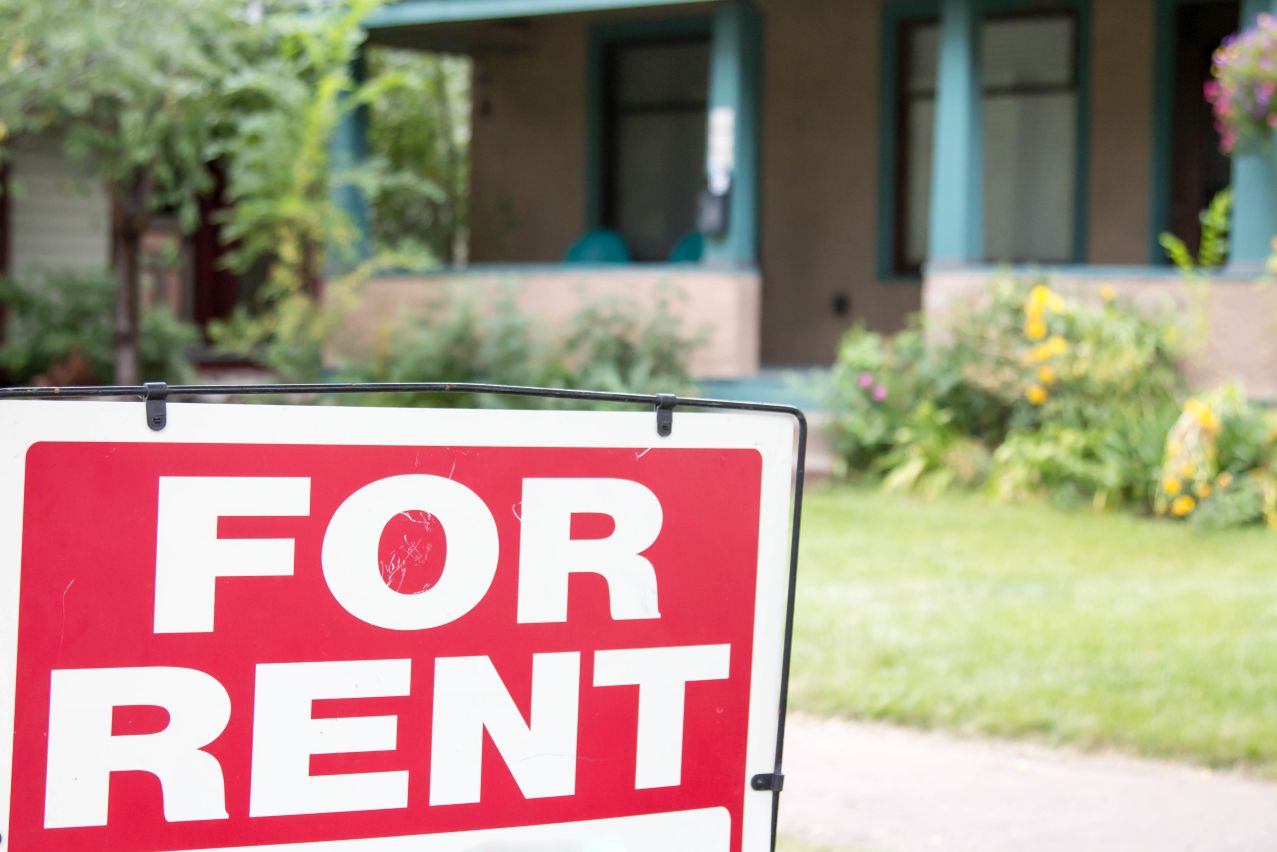
Owning a home is a big piece of the puzzle known as the American Dream. Despite this, there is a group of people who believe that owning a home is a bad decision no matter what the market is doing or Read more...
Owning a home is a big piece of the puzzle known as the American Dream. Despite this, there is a group of people who believe that owning a home is a bad decision no matter what the market is doing or no matter who you are.I had an agent that I used to work with that was consistently making over $300,000 per year and - rumor had it - didn't own a single piece of real estate. Not even his principal residence.People that maintain this position typically point to the fact that renters don't have to make repairs to a home and are free to move whenever they want. They also note that the responsibilty for paying for utilities, property taxes and insurance rests with the owner not the tenant.All this would be fine except for one fundamental point - control. When I first got into the real estate business my broker gave me an article about a woman that had been living in Newport Beach for years. Her rent started at $400.00 per month or thereabout. Over the years she found herself in a position where her rent had jumped up so much that she could no longer afford to live there. She was forced to move out of an area that she had planted roots in for much of her life. The irony of this story is that if she would have just bought the property - my recollection about this story is that she was in a position to do so at some point during her tenancy - it would have been completely paid off. Life changing decisions like "Should I rent or buy?" should not be taken lightly. I get that. I also understand that there is no one size fits all solution to anything.I just think it's tragic when we get in our own way.
|