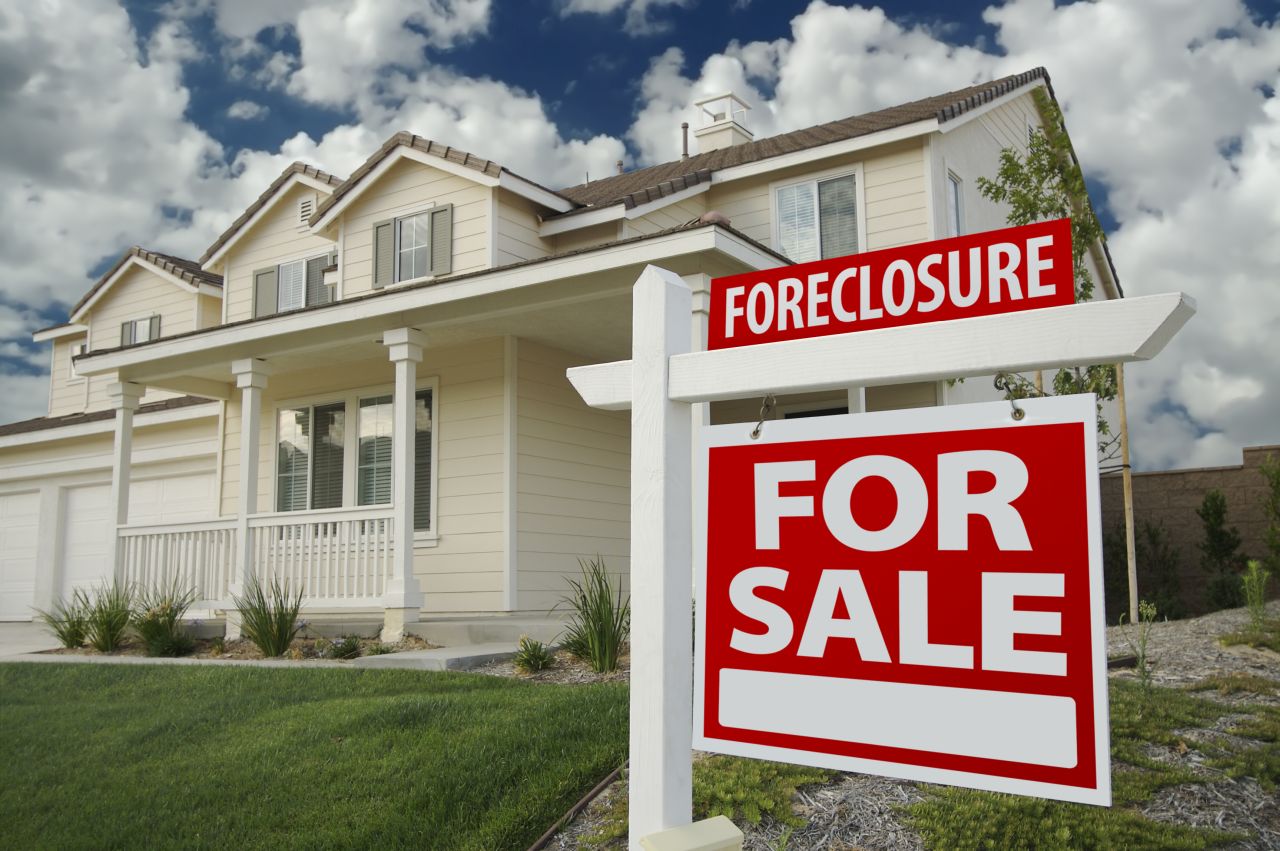
Many people who are in the market for a home consider purchasing a foreclosure for various reasons. The two most common motivating factors include getting an inexpensive place to live and purchasing so-called Read more...
Many people who are in the market for a home consider purchasing a foreclosure for various reasons. The two most common motivating factors include getting an inexpensive place to live and purchasing so-called "investment properties" that can be renovated and sold for a nice profit. There's nothing inherently wrong with these concepts, and a good number of buyers do indeed find major bargains.
But like everything else in the world of real estate, there are pros and cons to purchasing a house that is in foreclosure. The best way to approach the question is to look at what it means for a property to be categorized as "foreclosed," and what the most common advantages and disadvantages are when it comes to buying foreclosed properties. Learning how to invest in real estate can be an important tool for any consumer.
What is a Foreclosure?
In the broadest terms, a property becomes a foreclosure when the original owners can no longer make the payments and the bank takes ownership and possession of the home. At that point, buyers aren't dealing with the former owners of the house. They're buying directly from the bank (different than a short sale discussed below).
Banks don't like being in the home-selling business, so they're often anxious to unload whatever houses they are holding in inventory. There are lots of reasons a home can go into foreclosure, but the inability of the original owners to honor the terms of the original note is the most common scenario.
What are the Main Advantages of Buying a Foreclosure?
Foreclosures can be attractive buys for a number of reasons:
Low price: The most common advantage for buyers is a price that could be lower than market value. In some cases, banks are willing to accept offers that are less than you would pay if the home were being sold by its original owners. As far as banks are concerned, the high level goal of selling a home is to recoup their investment. If they can do that, and if there aren't several other buyers bidding the price up, then they're usually glad to get the asset off their books and into your possession through a sale. Prices on foreclosures can be lower than market value.
Title can still be clear: If you are buying an REO from a real estate broker and there is a standard escrow you can often get title insurance on it guaranteeing that the title is free of clouds.
Financing is virtually the same: In many cases, you can still use FHA, VA or conventional financing options to purchase a foreclosure. The only difference is that you're submitting your bid to a bank rather than a person. Expect the bank to make a counter-offer if they aren't happy with your first bid.
Investment opportunities: If you don't plan to live in the house and have the funds for upgrading or repairing it, then a foreclosure can be a smart way to invest in a potentially profitable piece of real estate. Some people have slowly built up a small portfolio of homes for sale by acquiring low-cost foreclosures and having them repaired.
What are the Disadvantages of Buying a Foreclosed Home?
There's a downside to buying foreclosed homes. Here are common disadvantages:
Closing can take a long time: Depending on the reason the home went into foreclosure, it might take you several months to close on the property after you decide to buy it. If you're in a hurry, or need to use the house as your main residence, time may not be on your side.
This is more true with a short sale. A short sale is different from a bank-owned foreclosure because the seller is not the lender in a short sale. The reason that short sales can take a longer amount of time to go through is because in a short sale, the seller needs approval from their lender to sell the property for less than the amount owed on the home. This third-party approval can take time to process.
Condition is usually "as-is": This is the main disadvantage of buying a foreclosed home. The condition is often quite bad and you have to do your best to figure out how much it will cost to bring it up to par. Generally banks selling foreclosures are exempt from providing a buyer with many of the disclosures that you would otherwise get from the prior owner. That means a thorough inspection at the very least. Next, you'll need to hire one or more contractors to give you estimates for repair work. Perhaps the roof needs to be replaced or there are plumbing problems.
You'll need to be approved and have good credit: You need to check with your lender and see if you can get approved for financing on a foreclosure. That typically means you'll need at least "good" credit and perhaps much better than good. Like any real estate deal, do not venture into the foreclosure market until you get a go-ahead from your own lender.
There's a reason it's still on the market: Foreclosed properties that have been up for bids for a may have "hidden problems." Think of it this way: why have so many other potential buyers passed on the chance to buy the house? By far, the most common reason is the condition and the potential cost to repair it.
The Big Picture
The key point to keep in mind is that buying a foreclosed property can be either a very good or very bad financial move. You have to perform your own due diligence and find out what the pros and cons of a specific property are. Are extensive repairs needed? Do you have the funds to bring the house up to a high standard of quality and sell it for a profit, or live in it comfortably? Will your lender approve your application to purchase a foreclosed property? Are you ready to have the home inspected and take care of the necessary repairs? Are there unknown facts about why the property has been on the market, with no buyers, for x number of days?
Be sure to do a thorough analysis and try to get answers to all your questions. One thing that can be of great help is working with a Realtor who specializes in foreclosures. That way, you'll have the added advantage of expert advice every step of the way. What's the bottom line on buying foreclosures? If you take your time, work with a professional and do plenty of research, it's possible to find good deals. But never approach the process if you're in a rush, know nothing about the real estate market or are expecting to guarantee yourself a quick profit.
If you are interested in learning more about the real estate market or becoming a real estate agent so you can invest on your own, call us at 888-768-5285.
Love,
Kartik
|

Whether you are a brand-new real estate agent trying to launch a career or are a seasoned agent looking to increase production I wanted to write a quick article for you. The below is a list of some of Read more...
Whether you are a brand-new real estate agent trying to launch a career or are a seasoned agent looking to increase production I wanted to write a quick article for you. The below is a list of some of the common traits I have observed in successful real estate agents.
Whether you are considering enrolling in a real estate class or are about to take a crash course to prepare for the real estate license exam the below list should prove useful
1. Manage Your Energy Level
Being able to run at a high level for a sustained period is critical to your success as a Realtor. It isn’t enough to just say “Work smarter and not harder.” You have to do both. Managing your energy level throughout the day is critical so you can work as hard as possible and continue to push.
The reason that this is so important is because many real estate agents and other outside salespeople tend to eat poorly, work long hours and lack consistent exercise.
The highest producing real estate people consciously try and escape this trap. How do they do this?
A consistent eating schedule of things that (for the most part) fuel their energy long-term - meaning plenty of vegetables, fruit and water. This also means a consistent program of vigorous exercise for at least 30 minutes a day on a ritualistic basis.
2. Focus on Improving One Area at A Time
There is a famous proverb that says “If you chase two rabbits, you will catch neither.”
The best businesspeople attack and focus on one target at a time, reach it and move to the next goal.
The secret is to cut up each goal into bite sized pieces that you can accomplish in short bursts so that you can rapidly move on to reaching the next one.
For example, if your goal is to have a better listing presentation, you might cut the entire presentation into 1/3 pieces.
The first third might be the verbal presentation itself.
The second third might be the physical presentation and other collateral material.
The final step might be objection handling practice.
The best agents don’t move on to tweaking their physical presentation until their verbal presentation is right.
Breaking the broad goal of “I want to have a better listing presentation” into pieces like this will result in the broader goal being achieved but in a shorter period of time.
3. Start with Baby Steps, Then Accelerate
It’s an interesting thing when I talk to newer real estate agents about their goals. I will often ask students why they want to get into real estate and what they plan on getting out of the course and their new career. Often they will say things like “I want to be rich!” Or “I want to make $250,000 my first year!”
I never want to crush someone’s dream or tell them that the thing they seem to want so badly isn’t possible. I think back to when I was a young 20 year old starting out in the business and if someone told me that my goals were unrealistic I would have dismissed them as being too negative and pessimistic.
With that being said, setting goals just for the sake of sounding overly ambitious can be dangerous and not useful.
The best businesspeople set rational and attainable goals with specific deadlines.
In the context of real estate sales this process might involve initially calculating how much you need to live on a monthly basis. Next, determine your average sales price in your area and the average commission per deal. Finally, ask yourself how many deals you need to do to achieve that income amount.
Example:
Average sales price = $600,000
Average commission = 2.5%
Average commission= $15,000
My expenses = $7,000 per month
Needed income = $84,000 per year
I need to sell 6 homes per year to survive.
My goal = 6 homes per year
Once you have proven that doing 6 deals a year is possible, you can then set loftier goals.
Remember that being great doesn’t happen by accident and a process must be followed. I would encourage you at this early stage of your real estate career to adopt habits and set goals that give you the greatest chance of success in a highly competitive industry.
Love,
Kartik
|

When you're in sales, the first impression can be the gateway to success. For real estate agents, it's the first step down a long and potentially lucrative path. The good news is that working on your first Read more...
When you're in sales, the first impression can be the gateway to success. For real estate agents, it's the first step down a long and potentially lucrative path. The good news is that working on your first impression will serve not just your career, but every other relationship you have in life. I wanted to write a blog post to take you through what a solid first impression looks like, how it helps you better relate to your clients, and what their takeaway will mean for your bottom line.
How to Create a Great First Impression
1. The Basics
Most of making a good first impression is common sense. However, just because it's easy to understand, doesn't mean it's easy to do. Even natural extroverts have to continually practice their manners and mannerisms before they get it right.
Smile: Nearly half of all Americans say that the smile is the most memorable feature after meeting someone new. A fresh-faced smile sends a signal to people that you're happy to work with them and you're ready to get the work done.
Focus: When it comes to meeting new clients, the nervousness of making a good first impression can be enough to force your head down. Eye contact is both polite and helps forge an instant connection with clients.
Listen: Anyone who's ever dealt with a salesperson knows how frustrating it can be to feel as though your words are going straight into the wind. Active listening means paying attention, asking questions, and responding to the clients' real concerns.
2. Dig a Little Deeper
A first impression is more than just following the basics. Picture the guy with the comically huge grin plastered on his face, the woman with off putting eye contact, or the agent who effusively responds to every statement as if it's the most fascinating thing they've ever heard. In the strictest sense of the word, they're smiling, listening, and focusing, but they still aren't leaving the right impression.
To really master the directions, you need to practice sincerity with each step. Express genuine emotion when appropriate, but remember that subtlety can also go a long way. Give a small grin when meeting people and save the teeth for the last minute. Follow-up on client statements that are vague or need further information. Blink normally when making eye contact and don't be afraid of looking down for a second if the conversation is getting too intense.
3. Practice Makes Perfect
Practicing your first impression doesn't necessarily mean going to your local bar and talking to endless strangers. It can be as simple as setting up role-playing with people you already know and trust. Have them provide honest feedback and constructive criticism about the sincerity of your smile, the volume of your voice, and the firmness of your handshake. These comments can go a long way if you're trying to understand how other people see you during their first interaction.
When you're shaking someone's hand, look into their eyes and strike a balance between death grip and limp. Use the first name as quickly as possible during the conversation so you're less likely to forget their names halfway through. Make sure that you’re annunciating your words and the volume of your voice is appropriate for the context of the environment.
4. Do Your Prep Work
Once you've taken care of some of the more subjective aspects of the first impression, you should have a much easier time addressing the more practical work of meeting someone. Being prepared can be as simple as getting to a meeting early or donning a sports coat or blazer to make your outfit just a touch more professional.
Before you meet with clients, it helps to know as much as possible about what they're looking for. Even if it's as simple as knowing they want a duplex rather than a single-family. The art of sales can get complicated, so it helps to hit the ground running.
5. Express Yourself
As tempting as it can be to remain neutral during your meeting, blandness will ultimately not help you be memorable. The truth is that even the most successful real estate agent may turn off a client or two with their personality, but it's ultimately better than being seen as forgettable. You can still be polite and respectful while expressing your personal opinions.
To stay on topic and to maximize the first few seconds with a client, some agents may give a short elevator speech where they emphasize their particular brand. So whether you're a bulldog in negotiations or the master of the short escrow, letting clients know upfront can be a good way to stand out.
Unlike most traditional sales, successfully navigating a property sale can take months or longer. If you hope to maintain your reputation and relationship with your clients for that long, you need to get off on the right foot. Use these tips to stand out from the crowd, so you're the one who ends up growing customer base.
This may be a slightly different blog post than I normally write, but so many of our real estate school students express their nervousness in meeting clients early in their careers. Hope this helps.
If you are interested in taking online real estate courses please visit our website or call us at 888 768 5285.
Love,
Kartik
|

Welcome to the world of people. Some clients you have are going to be just terrific. Others can make you regret getting into the real estate business altogether. Most are probably going to be somewhere Read more...
Welcome to the world of people. Some clients you have are going to be just terrific. Others can make you regret getting into the real estate business altogether. Most are probably going to be somewhere in between. With that said, one of the benefits of working in our real estate business is the ability to work one-on-one with people. Not only are you helping to fill their needs, but also create positive, long-lasting relationships in many cases. Remember that after you finish real estate school with us and get out into the real world you’re going to find that not all people are as easy to deal with as you might like. Sometimes, you’re going to have a client that is.. well.. let’s just call them challenging. Whether you are a seasoned real estate agent or a new Realtor who just passed the real estate license exam, there are a few simple things you can do to make these difficult relationships easier to manage.
#1: Keep Your Calm
No matter how awful the things are that the client may be saying, it’s essential to remain professional. If you have to rant and get some of your frustrations off your chest do so in private (not with agents or other clients). It is always important to keep the focus on the transaction. Remember, you do not have to work with them again. Consider this. When a client is difficult, you may feel as though they are not worth your time or energy. Keep in mind that some difficult clients may be self-aware enough to recognize this about themselves. If you stick with them long term, they are more likely to continue the process and transact. They may even surprise you and refer you other business. It’s not always going to be easy, but it can be necessary to stick it out and maintain your composure and professionalism.
#2: Listen to Their Underlying Concerns
What happens if you encounter is a client that’s seemingly always unhappy? They complain about every property even though they’ve just asked to see it. They may say that the price is too high and the neighborhood isn’t good enough. A true leader can recognize that constant negative behavior like this may point to a larger, underlying problem. Sit down with your client and talk about what you’ve looked at and the concerns you have had thus far. Then, ask them what they really want. Try to uncover their concerns. Are they truly ready to buy? Perhaps they are not sure if they have their finances teed up. In other cases, they may be be a fear of completing the purchase and make this type of commitment. Their complaints are just symptomatic of another issue. Bear in mind that there are situations where their concerns will be valid. Perhaps they don’t feel you’re putting enough time into them or that you aren’t giving them what they need. It’s important to get them to clarify the root of the problem so that you can address it and move on.
#3: Respond to Them Sooner
Let’s say a client contacts you at 9 pm. What he or she said is irritating to you. You want to clarify the situation, but it’s already so late. Are you going to spend the night tossing and turning as a result of this situation? If so, it’s better to respond now and get it over with, so you can sleep. The key here is when a client raises a concern about any factor, make it a priority to get it figured out as soon as you can. This helps to validate the client’s concerns. That doesn’t mean you are agreeing with them or even accepting any type of blame. Rather, you are simply moving things forward to the next step in the process. Be sure to restate their claim or concern. For example, you might say, “Thank you for your email. I understand you are concerned with the timing of this sale….” You do not have to provide a solution right away, but you can tell the client you’re working on it or set up a time to talk about it.
#4: Let Go of Fear
Let’s say there is a client that just downright doesn’t understand the rules of the game. The buyer may want to underbid every property you show them. What about a seller who is adamant about overpricing the home? Worse yet, what about a seller who is refusing to make proper disclosures to a buyer? In these situations, you may be afraid to lose the client, but you have to step outside of that fear. Be frank and honest with your clients all of the time. Tell them what is going to happen in any given situation. “If we underbid this by that much, we’re going to lose it to a competitor’s bid. Here’s what I think we should do.” Or, state, “It’s legally required to communicate this information. If you are not willing to do that, I need to step away from this relationship to protect my real estate license.” Sometimes, you have to say what they need to hear frankly. Taking charge like this doesn’t mean being aggressive, but it means reminding them, in a positive way, that you know what you are doing.
#5: Find a Solution as a Priority
When clients are difficult, there is generally a reason for this. Your goal is not to ignore that concern. Rather, it is to find a compromise or solution that works for them. We are in the business of helping people, and that often means figuring out what they want and need without them clarifying this. There will be times when you will miss the mark or make a mistake. The great real estate agent will admit those mistakes and find a solution to recover the client. How can you improve this situation if you were wrong? On the other hand, if the client is wrong, you may want to throw your hands up and walk away. Before you do that, explain what’s happening. Then, offer more than one solution. By giving your client an option, you put the ball in their court. They now remain in charge of the outcome. Difficult clients happen in every business. As you work to build your real estate career, you will find that there are 10 good clients for every bad one. Those are good odds, and it can mean that that one individual is pushing you to become a better agent, one that has to step outside of their comfort zone to support their client and your real estate sales business. I’m always looking to bring our readers value. If I can be of service, please let me know. Feel free to reach out on Instagram or by phone at 888 768 5285. Side note - If you read this and aren’t scared away at the prospect of real estate sales and want to enroll in our real estate school, feel free to do so here. We would love to have you as our newest student!
Love,
Kartik
|

Happy holidays! Did you finish your real estate license courses as yet? Have you prepared for the real estate exam? In a way, I almost feel bad for our real estate school students who get their real estate Read more...
Happy holidays! Did you finish your real estate license courses as yet? Have you prepared for the real estate exam? In a way, I almost feel bad for our real estate school students who get their real estate licenses during the holidays. Becoming a Realtor in December can be a tough thing. A common objection that real estate agents get around this time of year is that sellers and buyers say they want to “wait until after the 1st”. While potential clients are waiting you aren’t earning. I wanted to write an article to answer the question of “Is selling your home during the holidays, a good idea?” Traditionally, home selling during November and December can be a bit slower depending on your market. People often put it off until the New Year for no real reason other than the perception might be that the first quarter of the next year is better than the fourth quarter of the prior one. It’s important to recognize that there is no “best time” to sell a property - the best time is when your client is ready to move. There are a few key reasons why selling during the holidays could be the ideal choice. If you have clients that are on the fence about moving now, communicate the following as to why this could be the perfect time to list.
There Are Far Fewer Homes on the Market
Perhaps the most compelling reason to list during the holidays is that there tends to be less competition. Depending on where you live, inventory can be a concern. People are buying homes throughout the year – including the final quarter. At the same time, fewer sellers list at this time, creating more opportunities for your listing to sell faster and for more money. Compare this to the spring and early summer when there are more listings that tend to hit the market. This increase in supply can contribute to more of a buyer’s market as supply increases which can drive marketing times up and prices to soften. When your home hits the market during the holidays and it fits a buyer’s needs, and it’s the only one that does, buyer don’t have that luxury of tire-kicking. This can work in your favor as a seller every time.
You Might Sell Faster, Too
Along with that increased demand for your property is the likelihood that your home will sell faster. Redfin did a study back in 2013 that found homes listed during the fall and winter months sold 65 percent of the time – which is more than any other time of the year. They also found that homes that sold between December 21st through March 21st sold closest to their listing price. For sellers, this means a sale more likely closer to list price.
Holidays Buyers Are More Committed
When selling a home during the spring and summer months, you’ll find that many of the showings rarely write offers. While that may be for many reasons, one key fact is that many people looking at homes during summer might not be ready to buy. They are browsing or window shopping during the summer. The weather is nicer and open houses can be a “thing to do” on a lazy Sunday afternoon. However, buyers looking for a home during the winter months are likely to be far more serious. They are ready and tend to be qualified buyers, too. Consider why this may be. A person buying a home in December probably does not want to spend all of their extra time going from home to home – there’s much more to do. Family might be in town during the holiday season, the kids may be off of school - personal time is at a premium this time of yet. Net-net wintertime buyers are often serious buyers and ready to go.
You Can Create Some Holiday Magic to Show Off Your Home
Though you shouldn’t overdo it, adding a bit of holiday magic to your listing can be an excellent way to move buyers into action. For example, if you live in an area where people routinely decorate for the season, adding a few holiday decorations and creating a formal, but elegant display can help people see themselves in that home next year, doing the same. In other words, the holidays can work for you here. As a real estate agent, the holidays present an opportunity to light up the fireplace and to bake some cookies, too. Why go to this trouble? You’re setting the stage and creating an opportunity for the potential buyers looking at your listing to see what life could be like if they buy from you. What other time of the year is your home as inviting? The holidays can be magical.
People Moving for Jobs Need Homes Before January
Many people switch positions and relocate around the beginning of the year meaning they might be forced or at least incentivized into buying a home in December. You may find that this creates an influx of buyers for you in the last few weeks of the year. If you live in an area where job growth is plentiful and high-paying positions are common, this is a key reason to take listings now rather than wait until the New Year.
When Is The Best Time To List A Home for Sale?
There’s no right answer to this question. We should be ready to help our clients whenever they need it and do what’s in their best interest. The perceived benefit of waiting until the spring months to list might not be real. Remember that the spring and summer periods are when sellers may have increased competition to sell. If you are considering enrolling in our real estate license school, please feel free to reach out on Instagram or call the office at 888 768 5285. We are always happy to help! Just like selling a home, starting real estate school to get your real estate license doesn’t have a “best time”. The best time is when you are ready. There’s no time like the present! I'm looking forward to having you as our newest student!
Love,
Kartik
|

I don’t think that anyone can deny that nearly every business should have a website of some sort. To the extent you can, it’s far better to control your own digital footprint rather than have the Read more...
I don’t think that anyone can deny that nearly every business should have a website of some sort. To the extent you can, it’s far better to control your own digital footprint rather than have the world do it for you. According to one recent study, an incredible 93% of all interactions between a business and its customers begin in the exact same way: with a search engine like Google. For that reason alone, the quality and execution of your real estate website is of paramount importance - especially in those fragile early days of your career. OK so you finished real estate school and have passed the real estate license exam and obtained your real estate license. Your career can begin in earnest. But without the right, thoughtfully designed website to make your presence known, you're not going to get as far as quickly. Thankfully, designing the perfect real estate website - one that is compelling, that properly speaks to what you do and your value proposition - isn't necessarily as difficult as you might think. All it requires is the right approach, and for you to keep a few core things in mind.
Understand Your Goals
Before you think about the actual design of your website, you need to come to terms with exactly what that design needs to do. Yes, there's a certain element of marketing at play here in that your website is supposed to be selling something. Only instead of pitching your products and services, in our real estate business you're really selling the most valuable asset of all: yourself. But even more than that, you need to understand that your website is more than just an advertisement. It's a way to make people aware of your unique perspective on the real estate industry, it's an opportunity to establish yourself as an authority in your market and it's a way to begin building trust - essentially all at the same time. If your site comes off as little more than an expanded advertisement that someone might see when searching through Google, you're not going to be able to do any of those things. Therefore, your real estate website needs to be genuine, honest, informative and legitimately helpful - all in equal measure. These four qualities need to inform every decision you make moving forward, from design all the way down to the type of content you create and share.
Get Specific With It
There's a common misconception out there that the right real estate website needs to appeal to the largest audience that it can. But the truth is that your visitors will rarely come to your site looking for a home across an entire state, or even in a larger city. They're going to be looking for information on current listings in specific neighborhoods, and you need to be able to capitalize on that. All of this is to say that you shouldn't build your site in a way that claims you're an authority on "real estate in California" or even "real estate in San Diego, California." Hone in on specific neighborhoods and communities that you have the most experience with. Integrate Multiple Listing Service (MLS) and Internet Data Exchange (IDX) search capabilities into your site in a way that allows people to focus their efforts on those places they really want to live in. Establish yourself as an authority at first in a few specifically targeted areas and work on building your reputation - and your client list - over time. You can always expand your focus later as your business does the same, but in those early days don't be afraid to get as granular as you possibly can.
It's Also About Supplementary Features
Remember that the goal of your real estate website shouldn't JUST be to offer listings for homes in those areas, though. Listing sites are a dime a dozen - the chances are high that people will have seen information about a lot of those current homes in other areas before they ever stumble across your domain. Instead, you need to go above and beyond that idea - turn your site into a true informational and educational resource in every sense of those words. You should absolutely be writing blog posts that give insight on current trends in the industry. Poke around my blog. I’ve been in our business for almost 20 years and I have written over 200 articles and recorded over 1,400 videos on real estate topics. This helps to establish me as an industry expert. Remember, however, that I started out just like you - 0 followers and 0 content. It takes time and consistency to make it work. The sheer volume of content being produced every second is making it harder and harder to get noticed. This underscores the fact that you have to pump out as much high quality content as possible to get known. So what to do? As a new agent take the time to write a few hundred words that take an important real estate topic and break it down in a way that is easy for anyone to understand. Write about what people should look for in a first home and what they shouldn't be focusing so much of their attention on, for example. Try and integrate videos, a comment section, mortgage calculators and other things that will make the house hunt as easy as possible. Don't forget that you're not just trying to get someone to buy or sell a home. You're trying to convince them to buy or sell a home with YOU. To get to that point, people need to see you as an authority - articles and videos go a long way towards establishing precisely that.
Reviews, and Lots of Them
Last but not least we arrive at the concept of reviews - something that is particularly important in terms of your long-term success in real estate. People aren't just going to take your word for it that you know what you're talking about. Real estate has always been built on relationships - someone wants to buy a new home and they immediately turn to their friends and say "hey, do you know anybody I can call for help?" The Internet operates in exactly the same way, to the point where a massive 90% of people who responded to a survey who read online reviews claimed that those positive reviews absolutely influenced their eventual buying decision. When you close on a deal with a client, ask them to write you a review. Then, get that review up on your website as soon as you can. Then, share those reviews on social media sites like Facebook and Twitter - which should also be integrated into your site. Do this as often as you possibly can. This will help you establish social proof, which truly is the currency of the modern era. The more someone sees that others value what you do, the sooner they'll start to value it, too. At that point, you'll have a steady stream of hot new leads headed straight to your door. At the end of the day don’t be afraid to shine and show off a little. If you can add value somewhere by earning a 5 star review or writing a blog or recording a video do it! Don’t be afraid to show the world that you are a real estate expert and you know what you’re doing. If I can be of service, please let me know. You can connect on Instagram here or reach out by phone at 888 768 5285. Love, Kartik
|

It’s Saturday and I’m at a local coffee shop banging away on the keyboard. I like working on stuff like this on Saturday and Sundays. It’s quiet. Yes i have a few people in the office today, Read more...
It’s Saturday and I’m at a local coffee shop banging away on the keyboard. I like working on stuff like this on Saturday and Sundays. It’s quiet. Yes i have a few people in the office today, but it’s nothing like the sometimes pandemonium associated with a weekday. I wanted to write a quick article about why weekends matter to the entrepreneur because it’s not hard to argue that there’s never been a better time to start your own business. Between the ability to reach a large audience and access to technology, individual people with great ideas and a solid work ethic have a better chance to succeed in today's market. However, that does not make success an easy thing to achieve. Statistics indicate that around 62% of adults think that becoming an entrepreneur can be an excellent career. When you break down those numbers, though, you'll find that nearly 50% think they themselves are equipped to become an entrepreneur and 40% believe it's easy. Let's just cut to the chase — the people who think it's easy are mistaken. Ask any entrepreneur who has even a modicum of success and they have likely taken ridiculous risks and worked very hard to make their baby fly. Notwithstanding those “entrepreneurs” who have “Phds”. If you're wondering, a PhD means “Papa Has Dough”. For the most part, I’m not talking about those who had a family member give them money to “start their own thing”. I’m talking about the real entrepreneurs who started from nothing and actually built something great. Entrepreneurship sounds like a great business because Instagram and other social media outlets inundate us with information about the benefits of being self-employed. Some of this propaganda includes an excitement about the work you're doing, the ability to make a living doing the things you love and being your own boss. What you might not be aware of is that small business owners often work longer much longer hours than their employees. At least they do if they're building a successful business. I'm not totally complaining about the glamour that the Internet has put on the business of real estate. It's helped push lots of people to enroll in our real estate license school and pass the real estate exam. Still, it's important to remember that there is only so much time in a day and time is your most valuable commodity. This is why many entrepreneurs work every day and set their schedules so that they can optimize the time when they're working. If you have a great idea and are launching your business, here are some reasons you should consider working weekends.
Why Entrepreneurs Don't Follow the Typical Weekend Schedules
For a typical employee, there are set number of days where work is required and specified days off. The most common model by far is Monday through Friday, 9-5. This may vary but, for the most part, Saturday and Sunday are days off to catch up on personal errands or spend time with family and friends. These are the reset days for the typical working world. For an entrepreneur, taking these days off completely may not be possible if they want their business to thrive. Because the rest of the businesses they deal with are likely closed on one or both of those days, the weekend becomes a fantastic time for entrepreneurs to catch up, refocus, and innovate. This doesn't mean that you have to work around the clock to run a successful business. In fact, doing that can easily lead to burnout. A work/life balance is important for healthy relationships outside of your career. But most entrepreneurs do find ways to use their hours creatively to improve their productivity. This might mean taking downtime on a weekday so that you can work through the weekend. It might also mean working part of the day on a weekend so that you can participate in social events around your work schedule.
Benefits to Using Weekends for Work Time
There are a few reasons that entrepreneurs work through many of their weekends. Here are a few benefits to working through other peoples' downtime:
• Fewer Distractions.
Working on a weekend allows you more time to focus uninterrupted. This is true whether you're a business owner or work on a team. Because your clients and other professionals usually don't work on Saturday or Sunday, you won't have to spend time fielding calls from clients, attending conference calls, or attending to different things that might pop up during a regular business day. This gives you the uninterrupted time you need to focus on a single task.
• Time to Plan.
Weekdays tend to fly by with many demands and few chances to catch up. This is especially true for small business owners who often take charge of multiple aspects of their company. With the rest of the world off the clock, the weekend gives you time to assess your previous week. You can check to make sure you've stayed on schedule with assigned tasks (and catch up on tasks you didn't get to). This time is also a great way to plan ahead for the following week. If you choose a day over the weekend to plan and assess your progress every week, you'll be more likely to keep your benchmarks in mind and achieve short term and long term goals.
• Less Rigid Schedule.
Working on weekends doesn't have to feel like you never get a day off. You don't necessarily have to work from the office and you can even plan your hours to suit your mood. I’m sitting in a coffee shop right now with my laptop and a latte. It feels little less like work when I’m in a pair of Jordan’s and jeans as opposed to a suit and tie.
There Are Down Sides,
Too Successful entrepreneurs build their businesses to a large degree because they've put in the work and effort. That does come with sacrifices. While it's true that many small business owners use weekend hours to help them get ahead, that doesn't mean it's always easy. For lots of us including myself the work is something we love and are excited about. We often enjoy putting in long hours and have a sense of pride and purpose in what we are doing. However, that doesn't mean it's always easy to spend your Saturdays and Sundays working when the rest of the world is getting that time to take care of their personal needs. Here are a few negative points to working weekends that you should be prepared to navigate:
• Loved Ones May Not Understand.
If your significant other is on the “regular” world schedule, they may not understand the long hours you put in at your company and it can lead to arguments.
• Most Personal/Social Obligations Are On Weekends.
This is especially true if you have children but even single people will find their social calendar is mostly full of events on weekends.
• You Miss Out On Some Great Events.
It's not all about obligations. Working those hours also means you'll miss out on fun events that you'd enjoy attending. A football game in the middle of a Sunday might be something that is playing on the TV or online in the background as opposed to you being able to physically attend the game. Building a thriving business means working longer hours than you would as an employee. That's simply a truth. Weekends offer you hours to catch up and get ahead of your competition. I’m always looking to bring you value. If there is anything I can do to help, please reach out on Instagram or call the office at 888 768 5285. If you are interested in becoming a real estate agent, please call me or my team. We are happy to be of service.
Love,
Kartik
|

For those starting in our great real estate business it’s natural to ponder the best way to go about becoming successful. A well-known shortcut between starting a new career and achieving success is Read more...
For those starting in our great real estate business it’s natural to ponder the best way to go about becoming successful. A well-known shortcut between starting a new career and achieving success is to model what others before you have done. Observing the most successful people and implementing the best of their strategies is going to ensure your success more quickly than trying to reinvent the wheel altogether. This is especially true in a simple business like real estate sales. It’s important to recognize that I said “simple” not “easy”. Our real estate sales business is a simple one as long as you do the things daily that are required to succeed. Again, this is a simple process but one that is not always easy. I wrote down a few characteristics of the most successful real estate agents. As you embark on the journey of obtaining your real estate license I would encourage you to be cognizant of how you are implementing the following:
THE BEST AGENTS UNDERSTAND THEIR LOCAL MARKET
There is an old saying in real estate that “All real estate is local”. To the newer agent this might not make sense but let me explain. Essentially this means that the real estate salesperson that has the most intimate market knowledge and is most deeply connected to the neighborhoods they serve will generally win. Great real estate salespeople tend to be known in the community. They may sponsor the local little league, help out with local garage sales or door knock frequently. They send direct mail postcards every month or post frequently in local Facebook groups or on nextdoor.com. Whether this connection is established through physical marketing or digital makes little difference. Net-net: The best real estate agents are known in their local marketplace.
THEY UNDERSTAND THEIR CLIENTS' NEEDS
This one might sound a little too broad to be helpful. You might read the above sentence of “understanding your clients’ needs” and think - “Great but what does this actually mean?” When representing a buyer, for example the best agents have their client requirements nailed down. If the client requests a property with a bedroom and full bathroom downstairs, don’t bother to show them homes that do not. If they are deeply against having a pool, make sure you check this on the MLS and verify with the listing agent before emailing it to them. Getting to know your client and being able to anticipate their needs will go a long way to helping you become a successful real estate agent.
THEY HAVE A SYSTEM PERFECTED
Do you have a particular time of the day when you're checking emails? Spending time with clients? Marketing your business? Having a schedule for your routine and daily activities will help keep you organized and be sure that nothing falls through the cracks.
THEY KEEP THEIR SALES PIPELINE FULL
It's one of the things you hear with any real estate sales business. Always be selling. If marketing and prospecting for new clients is a part of your every day routine, you'll never have to worry about a seasonal slow down or slump, because you know that the marketing system you have in place will have the next client through the door soon. Also, if your Facebook ads aren’t doing as well as they normally do A/B test the ads to ensure that you are staying on top of social media trends. Don’t ignore door knocking and telephone prospecting either. These activities might not be the most relished by the real estate professional but they are sure to give you more control over your pipeline. Hit a slump? Talk to more people.
DEVELOP RELATIONSHIPS AND MAKE CONNECTIONS WITHIN THE LOCAL COMMUNITY
Successful real estate agents take the time to build a large network of people in the market that they serve. They don’t limit themselves to creating a database of only past, current, and potential clients. Great real estate agents should also make contacts with other experts within their industry, including appraisers and mortgage loan originators. You’ll have a ready list of vendors to refer your clients to and potentially be on the receiving end of referrals when the time comes. You should also consider building a network of other brokers and agents in outside areas. Remember, it is customary for one broker to pay another broker a referral fee for a client upon closing. (Not among service providers though, that would be. RESPA violation)
THEY USE SOCIAL MEDIA PLATFORMS AND THE INTERNET TO THEIR ADVANTAGE
The impact that social media platforms like Facebook, Twitter, Instagram, and YouTube have on business are undeniable. Formerly, these platforms were looked at as only a way to connect with friends and family or share photos but they have made their way into the fabric of our society. According to Statista, 91% of U.S. businesses will use social media for marketing purposes. Some of the largest companies in the world are using social media as a way to connect with their customers and potential customers. Why would the individual real estate agent be any different? As a real estate agent, if you aren't using social media, you are missing out on a huge opportunity. At a minimum, each agent should have a Facebook page to reach their potential audience. If you have the budget, a highly-targeted Facebook ad can provide additional reach to new potential clients you may not be able to find through your more traditional marketing mechanisms.
THEY ARE PARTICULAR ABOUT THE DETAILS
When it comes to selling real estate, the smallest details can make the biggest difference. Things like staging a home or how to position a property in certain markets can be the difference between a good and a great real estate agent. Also the intricate details of the purchase contract or the listing agreement are critical to ensure that your client’s interests are protected.
THEY ARE AWARE OF SPEED TO LEAD
A saying that I live by in business is that “Time kills all deals”. The best agents know that the sooner they can get back to a lead the more likely they are to convert that lead to a contract. This is especially true regarding Internet leads. Whether you are selling residential or commercial real estate, the best agents know that the sooner they respond to an inquiry the more likely deals are to close. I can’t emphasize this enough - in this day and age speed is probably the most important aspect of sales. The faster you move the more likely you are to win. I’m always looking to bring you value. If I can be of service to you please let me know on Instagram or Facebook. Of course if you are looking to get enrolled in real estate license school, reach out here. Feel free to also call the office at 888 768 5285.
Many of our students have gone on to be very successful real estate agents! Click on the link to read success stories from past ADHI School Students!
Love,
Kartik
|

Those considering a career in the real estate field are frequently drawn to the amount of money they can make on each property they sell. Each commission check can be upwards of $10,000, $20,000 or even Read more...
Those considering a career in the real estate field are frequently drawn to the amount of money they can make on each property they sell. Each commission check can be upwards of $10,000, $20,000 or even more. This is great for today because it means when you do work hard you will be rewarded handsomely. But what about tomorrow? What about when you get a little older or lose a little bit of that drive?
When you become a Realtor, it’s important to remember that you are in business for yourself and should have a solid financial plan in place that provides for your post-retirement needs. It's exciting to finish real estate school and obtain your real estate license. The early phase of your career is a time to build relationships, learn the trade, and earn money while you establish yourself as a professional. But it's always wise to remember that time waits for no man woman or Realtor. At that point, all your financial planning and regular saving will pay off in the form of a stable, secure retirement income.
What about retirement?
To be clear, there are a lot of great real estate salespeople and brokers that have absolutely no intention of ever retiring. But there’s a difference between wanting to work and having to work.
I think we can all agree that not having to actually show up at some place at some time and have money coming in and available to you would be a great thing.
With that said, many Realtors often wonder how secure their retirement will be. After all, if you become a Realtor and work for yourself then you'll need a financial plan in place to take care of your retirement years. Earning a real estate license is simply an early milestone in your career.
But what about life after real estate school and your sales career? You'll need to create the right kind of retirement plan for yourself. You can do this alone with some help from a CPA and Google or hire a financial planner to lay out the plan for you and keep you disciplined.
Here are some things to bear in mind when thinking about long-term financial security:
Consider investing in real estate.
Early in my career I heard brokers tell me “Kartik you have to become your best client.” Since then a stated goal of mine has been to buy one piece of real estate each and every year. Imagine over a 20 year career in our business owning 20 properties, each with a positive cash flow of just $200 per month. That amounts to $200 per month x 20 properties = $4,000 per month. Over time the values on these properties are quite likely to rise and the loans will eventually be paid off - adding to your wealth in retirement.
Of course in order to buy one property per year, you have to ensure that your income is sufficient to obtain financing - a solid real estate sales career will make this easier. Properly managed, a "nest egg" of real estate can be a smart way to diversify your retirement income resources.
There are other ways to set money aside in retirement funds:
You can opt to put money into a traditional IRA, a Roth IRA, a solo 401(k) or a SEP IRA. All have their pros and cons that should be discussed with an appropriate professional. For example, traditional IRAs have no income limit but there is an annual contribution limit. If you pull finds out before retirement, there is a stiff penalty in most cases. Traditional IRAs are funded with your pre-tax earnings, so you'll get a nice deduction and lower your tax bill in most cases.
Roth IRAs are funded with your after-tax earnings, so you get no deduction right now. The upside to a Roth is that you can take out the contributed funds any time for any reason without paying a penalty. It's also possible to set up a solo 401(k) for yourself, even if you have no employees and work as a sole proprietor. Contributions come from your pre-tax earnings but there's currently a pretty high annual limit on what you can put in.
SEP IRAs are a little more complex but are a good option for real estate professionals who have a few employees. You can contribute up to 25 percent of your earnings but keep in mind that you have to do the same for each employee you have. If you withhold 10 percent, for example, from your earnings for the SEP IRA, you'll need to withhold 10 percent of each employees' earnings as well.
A one-hour consultation with a reputable financial planner can resolve most questions you have about which is the best kind of retirement savings plan for your particular situation.
It’s also important to remember that I’m not a financial planner and laws and rules can and do change. Make sure you’re planning properly and not relying on my blog alone to plan for your retirement. =)
Please call my office at 888 768 5285 or send me a message if I can be of service.
For information on real estate classes visit www.adhischools.com
Always looking to bring you value.
Love,
Kartik
|

It’s Saturday and I’m at a local coffee shop banging away on the keyboard. I like working on stuff like this on Saturday and Sundays. It’s quiet. Yes i have a few people in the office today, Read more...
It’s Saturday and I’m at a local coffee shop banging away on the keyboard. I like working on stuff like this on Saturday and Sundays. It’s quiet. Yes i have a few people in the office today, but it’s nothing like the sometimes pandemonium associated with a weekday. I wanted to write a quick article about why weekends matter to the entrepreneur because it’s not hard to argue that there’s never been a better time to start your own business. Between the ability to reach a large audience and access to technology, individual people with great ideas and a solid work ethic have a better chance to succeed in today's market. However, that does not make success an easy thing to achieve. Statistics indicate that around 62% of adults think that becoming an entrepreneur can be an excellent career. When you break down those numbers, though, you'll find that nearly 50% think they themselves are equipped to become an entrepreneur and 40% believe it's easy. Let's just cut to the chase — the people who think it's easy are mistaken. Ask any entrepreneur who has even a modicum of success and they have likely taken ridiculous risks and worked very hard to make their baby fly. Notwithstanding those “entrepreneurs” who have “Phds”. If you're wondering, a PhD means “Papa Has Dough”. For the most part, I’m not talking about those who had a family member give them money to “start their own thing”. I’m talking about the real entrepreneurs who started from nothing and actually built something great. Entrepreneurship sounds like a great business because Instagram and other social media outlets inundate us with information about the benefits of being self-employed. Some of this propaganda includes an excitement about the work you're doing, the ability to make a living doing the things you love and being your own boss. What you might not be aware of is that small business owners often work longer much longer hours than their employees. At least they do if they're building a successful business. I'm not totally complaining about the glamour that the Internet has put on the business of real estate. It's helped push lots of people to enroll in our real estate license school and pass the real estate exam. Still, it's important to remember that there is only so much time in a day and time is your most valuable commodity. This is why many entrepreneurs work every day and set their schedules so that they can optimize the time when they're working. If you have a great idea and are launching your business, here are some reasons you should consider working weekends.
Why Entrepreneurs Don't Follow the Typical Weekend Schedules
For a typical employee, there are set number of days where work is required and specified days off. The most common model by far is Monday through Friday, 9-5. This may vary but, for the most part, Saturday and Sunday are days off to catch up on personal errands or spend time with family and friends. These are the reset days for the typical working world. For an entrepreneur, taking these days off completely may not be possible if they want their business to thrive. Because the rest of the businesses they deal with are likely closed on one or both of those days, the weekend becomes a fantastic time for entrepreneurs to catch up, refocus, and innovate. This doesn't mean that you have to work around the clock to run a successful business. In fact, doing that can easily lead to burnout. A work/life balance is important for healthy relationships outside of your career. But most entrepreneurs do find ways to use their hours creatively to improve their productivity. This might mean taking downtime on a weekday so that you can work through the weekend. It might also mean working part of the day on a weekend so that you can participate in social events around your work schedule.
Benefits to Using Weekends for Work Time
There are a few reasons that entrepreneurs work through many of their weekends. Here are a few benefits to working through other peoples' downtime:
• Fewer Distractions.
Working on a weekend allows you more time to focus uninterrupted. This is true whether you're a business owner or work on a team. Because your clients and other professionals usually don't work on Saturday or Sunday, you won't have to spend time fielding calls from clients, attending conference calls, or attending to different things that might pop up during a regular business day. This gives you the uninterrupted time you need to focus on a single task.
• Time to Plan.
Weekdays tend to fly by with many demands and few chances to catch up. This is especially true for small business owners who often take charge of multiple aspects of their company. With the rest of the world off the clock, the weekend gives you time to assess your previous week. You can check to make sure you've stayed on schedule with assigned tasks (and catch up on tasks you didn't get to). This time is also a great way to plan ahead for the following week. If you choose a day over the weekend to plan and assess your progress every week, you'll be more likely to keep your benchmarks in mind and achieve short term and long term goals.
• Less Rigid Schedule.
Working on weekends doesn't have to feel like you never get a day off. You don't necessarily have to work from the office and you can even plan your hours to suit your mood. I’m sitting in a coffee shop right now with my laptop and a latte. It feels little less like work when I’m in a pair of Jordan’s and jeans as opposed to a suit and tie.
There Are Down Sides, Too
Successful entrepreneurs build their businesses to a large degree because they've put in the work and effort. That does come with sacrifices. While it's true that many small business owners use weekend hours to help them get ahead, that doesn't mean it's always easy. For lots of us including myself the work is something we love and are excited about. We often enjoy putting in long hours and have a sense of pride and purpose in what we are doing. However, that doesn't mean it's always easy to spend your Saturdays and Sundays working when the rest of the world is getting that time to take care of their personal needs. Here are a few negative points to working weekends that you should be prepared to navigate:
• Loved Ones May Not Understand.
If your significant other is on the “regular” world schedule, they may not understand the long hours you put in at your company and it can lead to arguments.
• Most Personal/Social Obligations Are On Weekends.
This is especially true if you have children but even single people will find their social calendar is mostly full of events on weekends.
• You Miss Out On Some Great Events.
It's not all about obligations. Working those hours also means you'll miss out on fun events that you'd enjoy attending. A football game in the middle of a Sunday might be something that is playing on the TV or online in the background as opposed to you being able to physically attend the game. Building a thriving business means working longer hours than you would as an employee. That's simply a truth. Weekends offer you hours to catch up and get ahead of your competition. I’m always looking to bring you value. If there is anything I can do to help, please reach out on Instagram or call the office at 888 768 5285. If you are interested in becoming a real estate agent, please call me or my team. We are happy to be of service.
Love,
Kartik
|

A little different type of blog from me this time. I wanted to write something for those that have already finished our real estate license courses and are working in the field. I was browsing some listings Read more...
A little different type of blog from me this time. I wanted to write something for those that have already finished our real estate license courses and are working in the field. I was browsing some listings on theMLS recently and was horrified at some of the pictures agents were uploading but even worse was of the copy used to describe the listings. Problems with syntax, punctuation and tense were not uncommon. If you have a listing now or are going to take one soon, I would recommend making sure your ad copy is extra tight. Remember that besides pictures, the ad copy is the most important part of your listing marketing material. There are really no hard and fast rules for writing real estate ad copy, but guidelines exist to help you capture reader attention and generate responses. The goal is to highlight enough desirable features to prompt an online visitor to click through to the full listing, or to prompt a reader to call for additional information. The prime directive is to avoid the temptation to "oversell." Use superlatives in moderation and be sparing when including value judgments in your descriptions. Remember that only one home can be the "best value" in a neighborhood, and even that is subjective to the point that it has little meaning to a prospective buyer. Readers tend to gloss over phrases like value-priced, priced to sell and won't last long. Common terms like amenity-filled, chef's kitchen, memorable views, and stunning architecture are overused and ineffective. The goal is to be descriptive in a manner that is meaningful, while still leaving something to the imagination so that the reader wants to know more.
Writing Real Estate Copy 101
Writing ad copy that gets results isn't difficult, but it can require thought. Here are specific elements you can employ to make your efforts more effective.
First, define your target audience:
Online property descriptions will have a different focus, and a different tone, than a printed brochure or an open house handout. But all copy should include, at minimum, a headline or title. It might be as simple as the property address; however, if you can use a catchy descriptive phrase, do so. Something like "Come Home to a View of the Ninth Hole" would appeal to someone looking for golf course property. Then, add gas to the fire of imagination: Place yourself in the potential buyer's shoes and provide a "hook" that makes them want to continue reading. Focus on the lifestyle that can be theirs if they move into the home. "Enjoy a refreshing cool drink on your expansive poolside patio as you look forward to your next tee time at the award-winning course adjacent to your property." A brief description of the overall appeal of the community and the home's general description can be included here. It can be as brief as you wish, or it might run to several paragraphs, depending on actual space and your purpose. Say something like: "This 3-bedroom, 4-bath, 3-car garage contemporary offers everything necessary for living the good life -- privacy, convenience to schools, shopping and entertainment, an easy commute to the business center, and abundant leisure time enjoyment options with neighbors and friends." Finally, highlight the most important home features: This is where you should strive to paint meaningful word pictures. Be descriptive, but not overly detailed. Leave some specifics out. You might say something like "Old-world craftsmanship is evident in the finishes used throughout the home's 4,200 square feet, especially in the fine wood paneling and bookshelves of the home's private office." Or, you can point to the evidence of upscale options and trendy finishes that "include an eco-friendly, sustainable choice of recycled glass countertops in the kitchen, low-VOC paint throughout, and main-level flooring crafted from reclaimed timbers." Whatever you write in words is always better when accompanied by professional photographs that graphically illustrate the same features. It's not necessary to include a book's worth of photos, but words and pictures are better when they go hand in hand. There is little more disheartening for a prospective buyer than to read a glowing description of a home spa retreat only to find that there is no photograph of the space included with the listing or in the brochure. Coordinate your efforts with your photographer and your marketing team. Keywords and Buzzwords Define your potential market. Imagine what prospective buyers would type in to an online property search: Don't simply toss around phrases like "high-end finishes, family-friendly neighborhood, or spectacular views." Instead, utilize popular keywords to generate interest, adding filters and qualifiers as needed, such as the city or subdivision. Examples include:
• Beachside Cottage
• Ski Retreat
• Urban Condo
• City Lights
• Mountain Views
• Polished Wood Flooring
• Gated Community
Know Your Market
The copy you write about a high-end home will naturally be different from the copy that describes a mid-price starter home, but the same principles apply. However, don't make the mistake -- in either case -- of believing that buyers on one end of the price spectrum are any less concerned about quality and value, energy savings and sustainability, style and safety, or built-in features and community amenities. Make every effort to describe a lifestyle rather than listing specific features. Weave specifics into general descriptions of rooms and spaces. While studies have confirmed that online readers appreciate skimmable copy and bullet points, lists can be overused. Typically, 8 to 10 bullet points are sufficient. Always stop short of making your property description simply a "laundry list" of features. To write meaningful copy, acknowledge that there are some home features that should be specifically mentioned:
• A backyard pool, because it can be either a selling point or a deal killer, depending on the buyer;
• An eat-in kitchen;
• Ensuite baths for each bedroom; • A detached garage, casita or other type of auxiliary building;
• Specialty spaces, including an exercise room, home theater or media room, finished attic, in-law or au pair quarters; and oversize lots or adjacent acreage or public land.
• Solar panels, or alternative energy provisions, including 240V electric car charging stations. Use your in-depth knowledge of the local market to determine what other features deserve mention, knowing that your decision might vary substantially from one neighborhood to the next, and even from one season to another. Monitor reactions and responses you receive, and adjust the way you write your next property description based on the feedback offered by clients. Finally, never forget to include your contact and broker information (along with Department of Real Estate license number) and a call to action. You never know who will become your next client, or when and how they will appear. Ensure that you can be reached by anyone in need of your services! Of course if there’s anything I can do for you, including helping you get started in our real estate license courses, please let me know or call 888 768 5285.
Love,
Kartik
|

Once you complete our real estate school and pass the real estate exam you’ll be out on your own to start your career. Hopefully you’ll be ready to land your first client and take home a big commission! Read more...
Once you complete our real estate school and pass the real estate exam you’ll be out on your own to start your career. Hopefully you’ll be ready to land your first client and take home a big commission! =) After doing well on your real estate license exam, you'll get your desk set up with your broker and start working some leads. You’re probably going to start reaching out to your sphere of influence and let them know you’ve started a real estate career. As a newer real estate professional, the goal should always be to compress the time between finishing real estate school and cashing your first commission check. To this end, I wanted to write a quick article exposing some bad habits that real estate agents can develop if they’re not careful. Remember That Self-Employment Is Vastly Different From a 9-5 A self-employed person is solely responsible for his or her workday. In the real estate industry, it’s a common misnomer that once you pass your real estate exam, you’ll have leads pouring in and homes to sell. That’s not what happens. Instead, you need to work to create your own business. This often means spending time daily working to drum up business, cultivate leads, market, and respond to internet inquiries. Here are a few of the bad habits real estate agents create that virtually prevent them from becoming a successful Realtor quickly. You’re Doing "Busy" Work You’ve ordered business cards. You cleaned up your desk. You have talked to a dozen other agents today about what’s going on in their business and personal life. You may have even touched up your LinkedIn profile and posted a picture of the salad you had for lunch on Instagram. All of these “tasks” might feel necessary but the bigger question is what did you ignore by doing these things? Are you prospecting for buyer and seller leads? Are you following up on existing ones? In short, it’s easy to “feel busy” without actually building your pipeline, which ultimately cuts into your income. You’re Frustrated with Your Workday There are a dozen calls you have to make today for various reasons. Each one of them could be a lead. Perhaps you have some really good leads, but there’s so much on your plate to do right now that you miss those key opportunities to connect. You’re in and out of the office, forgetting appointments, and not seeing the kids. And, you thought this career was flexible? This is a common concern. The problem is that without any oversight into your activities and a consistent schedule, it’s easy to lose track of what’s important. To be successful as a real estate agent, you have to be organized. You also have to create a schedule that works for you and stick with it. This discipline is actually the key to freedom. Make time to plan for every task that matters during your course of the day. Remember - The number one calendar item is prospecting. Other Bad Habits Costing You Your Career After completing real estate school, it’s easy to become overwhelmed. Here are more of the common bad habits agents have: You aren’t communicating with your prospective clients fast enough. This is especially true for internet leads. Speed to contact makes a big difference in results. Make every client believe that they are your most important client. Work to return calls as quickly as possible. Try and email back as fast as you can. Failing to marketing adequately. If you’re not seen in the local industry, you’re unknown to prospective clients. Make marketing a component of your day, every day. Remember that there are over 400,000 real estate licensees in California alone - You have to make noise to stand out! You’re not looking as professional as you should be. Consumers expect agents to look professional at all times. If you look disheveled, that could indicate you’re less organized and not “with it.” Not updating your website or social media accounts in quite some time. Remember, if you haven't posted in a year people will wonder whether or not you are still in business. Send a contract to be signed electronically and tell the client to sign without explaining what they are signing. Being "too busy" to call other agents back. Working 24/7 and not taking care of your health. Getting paid your commission and not setting aside money for taxes. If you finished at our Orange County real estate school don't forget that this is only the beginning. As Warren Buffett says "The chains of habit are too light to be felt until they are too heavy to be broken." The best way to break bad habits is to avoid them in the first place. For information on getting a real estate license, call us at 888 768 5285. Love, Kartik
|

With hundreds of thousands of real estate salespeople in California alone, clients have choices. The million dollar question is “On what basis will the client decide?” This can be a hard thing to predict, Read more...
With hundreds of thousands of real estate salespeople in California alone, clients have choices. The million dollar question is “On what basis will the client decide?” This can be a hard thing to predict, especially If there are two real estate salespeople that are equally competent, have similar experiences and both work for reputable companies - the client might make a decision on who to hire based on pure “likability”.
If one agent is more “likable” than another who do you predict will get the business? It’s not hard to assume that the agent that can win the heart and mind (in that order) of the client is going to get the contract signed.
Because clients are often concerned or nervous through the real estate process, the agent should strive to be the kind of salesperson that brings good energy and enthusiasm into every presentation they go on. It has long been said that sales is simply the "transfer of energy from the salesperson to the customer”. The more energy and enthusiasm you exude, the more likely the client will sign.
Still, there are some real estate salespeople that are the personification of negativity and create roadblocks through the sales process. We have all met people like this. You know the type - they walk into a room and all the plants begin to die and when they exit they spring back to life.
I would urge all of our readers to examine which of these describe them. Are you the kind of person that brings vibrance and energy to every interaction or are you the exact opposite? When you walk into a room is there a big grey rain cloud over your head?
If you aren’t sure how to answer this, have a look at people that you would characterize as being in each of the two groups. Positive and energetic or negative and draining?
Consider the group of people that you know. Think of five or ten people that you know who are real energizers. You probably can think of a few right off the bat. Who do you know that when they show up, when they call the energy is better because of their presence? Who are the few people that you know when they walk into the room the energy shifts to the “dark side”?
Believe me. People notice.
This is important because your likability impacts how much business you're able to do.
So what are some things that we can do to immediately increase likability? The first thing I would urge is to be interested in other people. If you have ever read the classic book How to Win Friends and Influence People by Dale Carnegie a recurring theme is to try and make other people feel special by being interested in them and their story. It’s pretty simple - be interested. Be interested in other people and who they are and what they are about.
People that are interested in others are infinitely more likable than those that are not.
In a nutshell: Try harder to be interested than be interesting.
Another thing to increase that “L” factor is to always leave people better than you found them. In the case of real estate, that could be a critical market update to a buyer or seller. It could be an escrow update to one of your current deals but always look to add value at each and every interaction.
There’s plenty of pessimism in this environment - you don’t need to look hard to find it. Be the person that's optimistic and lights up a room each and every time they are in it. Not only will this be better for your physical health, it’ll be better for your wallet.
If you are interested in real estate classes in Los Angeles or online real estate school call us at 888 768 5285.
Love,
Kartik
|

It's nice to get a piece of a pie, whatever the size. But let's be honest: Would you prefer 3 percent of a $300,000 listing or of an $18 million mansion? The luxury real estate market is where you can Read more...
It's nice to get a piece of a pie, whatever the size. But let's be honest: Would you prefer 3 percent of a $300,000 listing or of an $18 million mansion? The luxury real estate market is where you can earn the big bucks — but breaking into it isn't easy.
Fortunately, one of my former students Jason Peteler recently sat down with me and discussed how he got into this lucrative market. Newer real estate agents can successfully transition into the luxury business by embracing these four points:
Be good at marketing.
Be good with people.
Know your area.
Don't start out alone!
1. Master the Art of Marketing:
Your image is everything in the high-end market. That's why marketing is the key to putting your best foot forward and spreading awareness about your brand.
You need to be where your potential clients are looking. The current trends are overwhelmingly in mobile and social media. If you're not on Facebook and Instagram yet, you need to create accounts today. If your website isn't mobile optimized, get some help to update it ASAP.
Every time you post, you should present yourself in a way your clients want to see you. Do you want to look negative and unmotivated? Of course not! Instead, post about your current successes and create the image of a confident and competent professional.
Get creative and post infographics, pictures and videos. You can even go "live" for a behind-the-scenes tour of a new listing!
2. Remember It's All About People!
Peteler briefly touched on being a "therapist" in his interview, and he's spot on. Imagine the stress buyers experience when buying or selling average-priced homes. Now multiply the commitment and risk by 10, and you have a client who's parting with or purchasing a high-end property.
Great real estate agents can help their clients cope with the stress and pressure involved with one of the biggest financial moves of their life. This interpersonal skill can make or break a transaction, because maintaining a good agent-client relationship keeps the ball rolling.
3. Know Your Area!
Who wants to work with an agent who doesn't know anything about the local area? When high-end clients approach an agent, they're looking for expertise. When you know the area well, you can sell the listing well.
Acquaint yourself with the area by spending time there: Eat at the local restaurants, talk to residents, walk around and soak in the sights and mood of the district. The more you know about the area, the more your clients will trust you.
4. Don't Start Out Alone!
Real estate agents who have successfully broken into the luxury market virtually agree on one point: Don't try to do it alone. You'll need to learn the ropes from agents who have real experience in the high-end market.
This can mean co-listing with another agent, being part of a team or even becoming someone's "apprentice." In fact, Peteler says that you should first follow a template: Copy what you see has worked for someone, and later you can expand upon it and innovate.
5. Get in Touch!
Another indispensable quality a luxury real estate agent needs is a solid education. To find out more about our real estate courses, contact me today. You can call the office at 888-768-5285 and we would be happy to help get you enrolled in California real estate license courses!
|

Errors can happen on a credit report. What causes these errors? Sometimes it can be something as simple as a father and a son who have the same name and the only difference is a “Sr.” or “Jr.” Read more...
Errors can happen on a credit report. What causes these errors? Sometimes it can be something as simple as a father and a son who have the same name and the only difference is a “Sr.” or “Jr.” What if son paid a few bills late and this incorrectly appears on Dad’s credit report?
Worse than the above scenario is a customer who may have been the victim of identity theft. Perhaps their social security number and date of birth were compromised on a website and sold to criminals. Each year we read of many major corporations who have had their databases compromised. Equifax, eBay and JP Morgan Chase are just a few examples of large corporations that have been targeted by hackers. Where then does a customer turn?
The Federal Trade Commission has several recommendations for those that genuinely believe that false and erroneous information appears on their credit report. The Fair Credit Reporting Act mandates that the credit bureau and creditor have a collective responsibility to correct and update any incorrect information in the customer’s credit report.
The individual with erroneous information on their credit report should send correspondence to the credit bureau that has displayed this erroneous information. This could be either Experian, Transunion, or Equifax or could potentially be all three. Mail correspondence isn’t required, however, as the individual can file their dispute online.
If the customer is sending their dispute via mail, the Federal Trade Commission has a sample dispute letter available on their website and this letter can act as a starting point for anyone seeking to eliminate inaccurate information from their credit profile.
In order to increase the chances of incorrect and incomplete information being deleted from the credit report individuals are encouraged to support the claim with any proof that the data is incorrect. Examples of this proof could be cancelled checks or bank statements showing that the bills were paid on time or the fact that the debt is no longer even valid. In some cases, the customer might have paid off the debt and it is still reporting as open on the credit report. Combining the letter or online dispute with substantiation that the information is inaccurate will increase the chances of having incorrect information deleted from the credit report.
The FTC recommends that this substantiating documentation not just be sent to the credit bureau but also to the creditor with whom the customer is disputing the incorrect information. This may increase the chances of incorrect information being deleted from the credit file. If this doesn’t work the customer is able to leave a note in their credit file next to the “incorrect” trade line stating that the customer disputes the accuracy of this information.
Generally, the credit reporting agency must investigate the disputed items within 30 days of the dispute being filed. However, the law has an exception for the credit agencies wherein they don’t have to investigate a dispute that they deem to be frivolous. in the event that a credit bureau is going to investigate a disputed item, they are required to forward everything received from the customer over to the creditor.
Once the investigation is complete, the bureaus are required to give the customer notification of the outcome of the dispute in writing. They are also required to provide a copy of the credit report to the customer in the event that the dispute resulted in a change to their credit report. Statute also requires that the credit bureau provide one copy of a credit report to everyone for free each and every year. A customer who is disputing information on their credit report that results in a copy of their credit file being sent to them will still be allowed their one free credit report per year. What this means is that a customer who is disputing credit information in their file may end up with multiple credit reports per year at no charge.
Because credit scoring can affect so many aspects of a person’s life, the government has a system in place to ensure that incorrect information on a report can be disputed and ultimately deleted. Hope is not lost in the event of identity theft or an incorrectly reported late payment. There is a dispute process in place and will work if done properly. The Federal Trade Commission’s sample dispute letter can be a great place to start.
As always, if you are considering getting into our great real estate business, you’ll need to go to real estate school first. Need help passing the real estate exam? Check out our test prep site here.
Love,
Kartik
|

As you complete your real estate classes with us, you may come across a buyer client who is looking to “fix their credit” before buying a property. You may also represent a seller who is in escrow Read more...
As you complete your real estate classes with us, you may come across a buyer client who is looking to “fix their credit” before buying a property. You may also represent a seller who is in escrow with a buyer and the buyer’s loan starts to go sideways because of an error on their credit report.
What do you do?
One of the most common questions that consumers ask credit counselors is, “How can I get negative items removed from my credit reports?” The accurate, short answer to that question is this: It’s relatively easy to get incorrect information removed from a credit report but can be quite difficult to legally remove items that are reported accurately. In other words, if a debt is yours, and if all the particulars listed on the credit report are correct, they your options for legal removal are limited.
The good news is that there are several ways to potentially eliminate negatives from an official credit report, even when the debt is yours and when it’s listed correctly. Here are the strategies that many consumers have used to clean up their credit reports:
Paying to delete negative items: If you contact a creditor and agree to pay the debt in full right away, then they might consider removing it from your report. This technique is especially successful when the amount owed is rather large and the delinquency is not very old. Many creditors are happy to have a large debt paid off quickly and taken off the books. They’ll often agree to remove the item from your report if you ask them nicely, in writing and as soon as possible after it has been reported to the bureaus.
Asking for a goodwill removal: After you’ve paid a debt and the listing is still on your credit report, it’s possible to contact the creditor and request that they remove it. It helps to explain that you have otherwise good credit and have been current on any other accounts you have with them. If there were special circumstances that led to the delinquency, be sure to explain the situation to the creditor. This is basically a “hardship” request and doesn’t always work, but it’s worth a try.
Asking for verification of the debt after several years: Bureaus can keep negative items on a report for up to seven years. After one or two years have passed, you can contact the creditor and ask for the debt to be verified. It’s often the case that creditors can’t verify older debts that have been paid off and closed out. If they can’t verify it, then you can have it legally removed by contacting the credit bureau in writing and disputing the debt. Without verification from the creditor, the bureau will have to remove the listing.
It’s important to remember that only the creditor has the power to remove a legitimate listing from your credit report. In fact, they are supposed to leave items on for up to seven years so that other lenders can get an accurate view of your credit-worthiness by reading your report. But, as in the situations noted above, creditors are sometimes willing to remove a negative item if you approach them with the right attitude. Separately, inaccurate information can potentially be removed by invoking the last strategy mentioned.
If you are interested in taking live real estate classes or preparing for the real estate exam, call us at 888 768 5285 or visit www.adhischools.com
Love,
Kartik
|

Tips For Real Estate Agents on Social Media
Businesses can’t ignore social media if they want to remain relevant and competitive in today’s busy online marketplace and the real estate business is Read more...
Tips For Real Estate Agents on Social Media
Businesses can’t ignore social media if they want to remain relevant and competitive in today’s busy online marketplace and the real estate business is no exception. Social media platforms like Facebook and Instagram can be powerful outlets that help real estate professionals position themselves as industry experts while connecting with their audience and building confidence in their experience and services.
I practice what I preach. Our real estate school has had a Twitter account since early 2009 and a Facebook page for almost as long. Even our original YouTube channel has had content since 2009. That’s 10+ years of going hard on all these platforms.
So how do you win considering that more and more content is being added each and every second to Twitter, Facebook/IG and YouTube? It is getting more and more difficult to get noticed.
The key to getting the most out of your social media presence is utilizing tactics that help you build stronger connections with your audience and inspire them to work with you. Below, I’ve put together my top 4 social media tips for real estate agents, particularly in the residential space as I figure most of our real estate school students are going to start there.
1. Educate your buyers on the market.
Buying or selling a home is a major life decision for most people, and they want to know that they are working with a Realtor that can guide them through the process and answer all their questions as they move through the process. The best way to build this confidence with your audience is by educating them about the real estate market.
In addition to sharing educational articles from your own blog, curate some content from reputable, third-party sources to help your audience understand important parts of the buying and selling process. In addition, you can post your own honest tips and advice to your social media pages based on the questions that you are most often asked by new buyers or sellers.
2. Share information on a particular neighborhood.
When promoting your listings (or those of your company) on social media, go beyond just sharing the features of the homes you are selling. Most homebuyers want to know more about the neighborhood or surrounding areas. Real estate professionals can use their social media channels to educate buyers on the benefits and unique characteristics of local neighborhoods to help them make a more informed decision about where they want to buy.
In addition to sharing your own content about the neighborhoods you sell in, share content from local organization pages. For instance, you might link to an event calendar from the city’s Facebook page or share a tweet from a local restaurant. This is especially true in areas like Downtown Los Angeles or coastal Orange County where the nightlife and social aspects of the community are a lure for buyers.
3. Start a conversation.
The social aspect of social media is often forgotten when professionals use social media channels for marketing. However, if you really want to get to know your audience and build trust, it’s vital that you chat with your fans and followers. Get active in the comments section of your social media posts and pay attention to what others are saying on your pages.
With the instantaneous nature of social media, most users expect an instant response to their questions or concerns. In addition to being active in the comments section, you’ll need to be diligent about checking for and responding to direct messages across platforms. When someone reaches out with a question or concern, make sure that you are available to answer these questions and get them the help they need when they need it.
4. Don’t forget video!
Many real estate professionals will skip video content when it comes to managing their social media pages. However, with the visual nature of home buying, it’s important that real estate agents utilize video to showcase their properties when possible.
Most people reading this article have a television broadcasting system in their purse or pocket with their iPhone or Android device. It’s easy to quickly do a live on Instagram or post a quick story to your page. Just get out there and start. I posted a video of all of my equipment here, but I didn’t start with this much stuff. All I had back in 2009 was one camera with an internal microphone and just started recording videos on HD cassettes. I always knew video was going to be huge across the Internet and would be a valuable marketing tool. The faster you can start engaging with an audience the faster you can monetize.
Video content also helps create an emotional connection with viewers in a way that images alone cannot. Providing a video tour of a property allows the real estate agent to give their audience a better idea of what it is like to experience this home instead of seeing the space out of context.
If you are interested in taking real estate classes online or in one of our classrooms, please call us at 888 768 5285 or visit www.adhischools.com.
Love,
Kartik
|

Before the question of whether or not open houses actually “work” is answered we should probably define what the word “work” actually means.
If you are a real estate agent and believe that a Read more...
Before the question of whether or not open houses actually “work” is answered we should probably define what the word “work” actually means.
If you are a real estate agent and believe that a successful open house is one where the agent found a buyer for that property on the day of that open house then very few open houses actually “work”.
However, if you define a successful open house as a chance to network with neighbors in a particular farm area, an opportunity to show the owners that you are doing something that is almost expected, and a way to find buyer clients for other homes, then nearly every open house has the potential to be a success.
Like many things in business, a substantial amount of time and effort is necessary to ensure that an open house will attract the right kind of traffic and result in at least a few interested and qualified potential buyers. Sometimes, sadly, even with a high traffic count, the net result might be less than satisfying.
While it’s also true that on occasion, “the buyer” will walk into an open house and make it all seem easy, if not preordained – but this can sometimes be attributed to pure chance.
Folks who are not quite ready to buy immediately frequently visit open houses as a way to solidify their preferences and explore the market. An open house can be the best way for an agent to meet people “up close and personal,” demonstrate market knowledge, hand out cards, and take names. You never know when you’re going to meet a buyer. It’s best to always be prepared.
How to Do a Successful Open House
Use all the tools available to you to stand out from the crowd. You don’t have to spend big bucks on advertising, or on refreshments. Use technology to your advantage.
Here are some ideas:
• Livestream the Open House on Facebook, Instagram and YouTube:
Give quick snippets of information as you walk through the rooms. Talk about the neighborhood, the easy commute to downtown, the community pool, the schools or a nearby shopping mall. Show the house at the same time.
• Invite the neighbors:
Count them as your allies to “sell” the good points about the area, rather than as “tire-kickers.”
• Consider Unconventional Hours:
If the home has spectacular sunset views, schedule the open house for late afternoon. Or, alternatively, be slightly ahead of the normal 1-3 or 2-4 schedule, and offer coffee or fresh-squeezed orange juice. If you are going to serve alcohol at an open house, other rules can apply. Proceed with caution. I did a video and an article on this as indicated by the prior link.
• Creativity Counts:
Employ an iPad as a digital sign-in sheet and encourage visitors to ask questions. Get back to them via email with specific answers. You’ll boost your chances of developing new relationships.
Perhaps most importantly, be there for everyone who walks through the front door. Meet and greet every visitor with a smile and a card. Never simply sit behind a desk or on a kitchen stool. But, be sure to give visitors a chance to walk through the house at their own speed and in their own way.
View an open house as an opportunity to sell yourself as well as the property and then every open house is, indeed, totally worth it!
If you are interested in online real estate school or even classroom oriented real estate courses, call us at 888 768 5285 or visit www.adhischools.com
Love,
Kartik
|

So you’ve finished up at our real estate school and passed the real estate exam. You’re stoked because you have your first buyer client but their credit is less than perfect. The buyer badly wants Read more...
So you’ve finished up at our real estate school and passed the real estate exam. You’re stoked because you have your first buyer client but their credit is less than perfect. The buyer badly wants a home and you’re asking yourself: What advice can I give them to improve their credit score?
The reality is that credit scores today have a profound impact on quality of life. It determines the rates you pay on all sorts of things from mortgage interest rates to whether or not you can rent a car. The difference between good credit and bad credit can also determine where and how you live.
Make sure that only accurate information appears on the credit report
It makes sense that a borrower would want to be sure that their credit report contains accurate information. Any inaccurate data can be disputed with the credit bureaus. Equifax, Experian and TransUnion are the three bureaus and can be contacted to dispute erroneous information.
If your borrower isn’t sure how to start the dispute process there are third party providers that can help quarterback this with the credit agencies. I would recommend checking online or with other folks in the business that can give you a good referral to a vendor that can help.
Pay down revolving debt
Assuming that all the data on the credit report is accurate, the next question is “What else can we do to bump up the score?” One thing that can quickly impact the FICO is to advise the borrower to pay down as much revolving debt as possible. This is known as the “credit utilization” ratio. This ratio is a big deal as it accounts for about a third of the FICO algorithm. The less credit you have available the worse your score will generally be.
In other words if all your credit cards are maxed out, your score is probably going to be low. Do your best to get credit card debt paid down quickly to improve the credit utilization ratio and get that score up.
Try to get added as an authorized user
Another thing that can help bump the credit score is if the borrower can convince a family member or a loved one to add them to one of their credit cards. If mom or dad has a credit card that has a solid payment history and they are willing to add the borrower as an authorized user, this can help piggyback their on-time payments to boost the score.
Make sure bills are paid on-time
A central aspect of good credit is ensuring that the borrower pay their bills on-time. An easy way to do this is to calendar all required payments on a cell phone or Google calendar. Better yet – back up the calendaring with autopay. Autopay eliminates the aspect of human error and also eliminates wasted money spent on a bunch of late fees. Better still – auto pay eliminates the worst case scenario of an altogether missed payment. One missed payment means a catch-up scenario for the borrower and forces them to make two or more payments at once. Letting bills pile up can make it really hard to dig out of a deep hole.
Think long-term with your buyers
Remember that selling real estate inherently involves a very long sales cycle. Even if your prospect can’t buy a property immediately, they may be able to with some future planning. A year is going to go by quicker than you might think. Do you plan on being in the business in 12 months? I would think so. Sticking with a prospect even when it looks like they might not be able to buy immediately will create loyalty and your deal will eventually come to fruition.
As a real estate professional, it’s important to be a valued resource for your clients. Giving great advice can help foster loyalty among your customer base. This can be priceless and irreplaceable.
As always, if you are interested in online real estate courses or even live classroom courses, call us at 888 768 5285 or visit www.adhischools.com.
Love,
Kartik
|

OK – So you took our real estate classes in Los Angeles or maybe you took our real estate classes online. Now you have your license and it’s time to do your first open house! You’re hoping to make Read more...
OK – So you took our real estate classes in Los Angeles or maybe you took our real estate classes online. Now you have your license and it’s time to do your first open house! You’re hoping to make some great connections with potential clients and you want visitors to roam through the home a little longer. What do you do? Bribe them with ice cream? Booze? Both?
If you decide to serve alcohol at your open house and you don’t have a liquor license (no agent is going to have one) it’s important to ensure that the open house is not open to the public. If you are serving alcohol and your open house is open to the public you need to have a liquor license to do it.
Want to serve liquor at an open house? There are other rules too:
There can’t be any sale of alcohol
It’s important to make sure that there’s no actual sale of alcohol happening at the open house. Agents typically don’t charge for liquor at an open house so this isn’t something that most real estate agents have to worry about.
The premises cannot be maintained for the purpose of keeping, serving, consuming, or disposing alcoholic beverages.
If you’re doing an open house at a residential property, it’s pretty unlikely that the premises are going to be maintained for the purpose of serving liquor. It’s a residential property, it’s not zoned commercial, it’s not zoned retail restaurant or bar. So this second rule isn’t going to be a problem for most real estate agents.
The event should not be open to the “general public” at the time alcoholic beverages are served.
In the hospitality world, this is known as a “private party exception”. For the private party exception to be invoked, the person doing the open house has to have a list of guests prior to the event. Only people on the list are permitted to be admitted to the event and it would become a “private party”.
This means that if somebody does show up at your open house and they’re not on the list, you have to turn them away. If you’re serving alcohol and you let them in the event could be interpreted as being “open to the public” which could trigger a licensing requirement. The list of attendees is important to maintain and should be respected.
Finally, it’s hard to overstate the amount of liability that the agent can incur in the event the agent allows alcohol to be served to someone that is underage. Agents can also be liable in the event that they continue to serve alcohol to someone who is obviously intoxicated or is “habitual drunkard”.
So be smart about it. Make sure that if you are serving wine you need to have proper protocol that’s being followed to make sure we limit our liability at these open house events.
As always, if you are interested in taking real estate classes in Los Angeles or in Orange County please visit www.adhischools.com. Feel free to call the office at 888 768 5285.
Love,
Kartik
|