
Picture this: you've just passed your real estate exam, your license is now in hand, and your heart races with anticipation and nerves. You're ready to conquer the world, but the path seems uncertain. Read more...
Picture this: you've just passed your real estate exam, your license is now in hand, and your heart races with anticipation and nerves. You're ready to conquer the world, but the path seems uncertain. Don't worry, you're not alone. New real estate agents often walk a familiar road and by learning from your own missteps and those of others, you'll gain the knowledge and resilience to thrive in this dynamic field.
After over 20 years in the real estate industry, I’ve put together a list of common mistakes that newer real estate agents make after completing real estate license school and some potential solutions to these problems.
Mistake 1: Not Understanding Real Estate is a Direct Sales Job
Description: Some people new to selling houses don't realize that their job is really about direct sales, like selling a product directly to customers. This misunderstanding can make them less successful because they're not prepared for what the job actually involves. Real estate agents don't just sell houses; they're selling their own skills and trustworthiness to help people through the big deal of buying or selling a home. If they fail to recognize their job as centered on sales, they may avoid seeking new clients or improving their sales skills, both of which are crucial for success in their role.
Solution: Embrace the sales nature of real estate by developing strong sales and negotiation skills. This includes learning how to effectively communicate your value proposition, understanding the needs and wants of your clients, and mastering the arts of prospecting and closing. Building a strong personal brand and marketing yourself effectively are also key components of successful sales strategies in real estate. Networking, both online and in-person, is essential for generating leads and getting referrals. Understanding that real estate is fundamentally a direct sales job is the first step towards aligning your efforts with the demands of the industry and setting the stage for a thriving career.
Mistake 2: Failing to Set a Business Plan
Description: One of the most common pitfalls for new realtors is the need for a concrete business plan. Diving into the real estate industry without a clear strategy is like having a sailboat with no sail - the ship goes adrift. A well-thought-out business plan sets a clear direction for your real estate career and helps you establish achievable goals and strategies for reaching them. It should outline your market analysis, target audience, marketing strategies, financial planning, and growth objectives, providing a roadmap to success and a mechanism to measure progress.
Solution: Creating a robust business plan is your first step towards a successful career in real estate. Begin by defining your mission statement and unique value proposition—what sets you apart from the competition. Next, conduct a thorough market analysis to understand your local real estate market's needs, trends, and gaps. Set SMART (Specific, Measurable, Achievable, Relevant, Time-bound) goals to give your efforts direction and focus. Outline your marketing strategies: how do you plan to reach your target audience? Is this through digital marketing, networking events, or other channels? Lastly, draft a financial plan that includes your budget, expected income, and expenditure. This plan will guide you through the ups and downs of your real estate journey, enabling you to make informed decisions and adjust your strategies as the market evolves. The broker you work with should help chart this out.
Mistake 3: Neglecting Networking Opportunities
Problem: New real estate agents can easily get caught up in the immediate tasks of listing properties and chasing leads. However, overlooking the power of networking is a significant missed opportunity. Building relationships with other real estate professionals, industry professionals, and potential clients is crucial for generating referrals and expanding your knowledge base. Consider out-of-area networking also as you are less likely to get a referral from another agent in your area.
Solution:
Attend Industry Events: Make an effort to attend local real estate association meetings, open houses hosted by other agents, and community events related to homeownership. These provide platforms to meet new people and introduce yourself.
Join Online Communities: Leverage social media groups and online real estate forums to engage with other professionals, ask questions, share insights, and build a network of connections that extends beyond your geographical area. Referral fees are common in the real estate industry and the bigger your network is, the more money you can expect to make.
Focus on Relationship Building: Networking isn't just about collecting business cards. Prioritize genuine connections, offer help without expecting immediate returns, and position yourself as a valuable resource within the community.
Mistake 4: Not Fully Understanding the Local Market
Description: A deep understanding of the local real estate market is crucial for any real estate agent, yet it's an area where many newer licensees find themselves playing catch-up. Without a thorough understanding of the local marketplace you're essentially operating in the dark, unable to provide accurate advice to clients or make informed pricing, marketing, and negotiation decisions. This lack of insight can lead to overpriced listings that languish on the market or missed opportunities in emerging neighborhoods.
Solution: To avoid this pitfall, commit to becoming an expert in your local market. Start by analyzing your area's current listings, recent sales, and historical trends. Attend local real estate meetings, seminars, and workshops to network with other professionals and stay abreast of new developments. Utilize tools and platforms that provide real-time data and analytics on your market. Regularly reviewing the Multiple Listing Service can provide insights into property values. Most importantly, engage with your community. The more you understand the people and the unique characteristics of different neighborhoods, the better equipped you'll be to serve your client's needs and become a trusted local expert.
Mistake 5: Overlooking the Power of Online Marketing
Problem: A solid online presence is essential for Realtors in today's digital landscape. Failing to utilize online marketing tools effectively means missing out on countless leads and severely limiting your visibility as an agent. Potential clients almost always begin their home search online and if you're not there, you're invisible.
Solution:
Build a Professional Website: Your website should be your digital storefront. It should highlight your expertise, listings, and client testimonials and provide easy ways for potential clients to contact you.
Embrace Social Media: Actively engage on platforms where your target audience spends time (e.g., Facebook, Instagram). Share listings, provide market insights, and showcase your personality to build a loyal following.
Invest in SEO (Search Engine Optimization): Optimizing your website and content will help you rank higher in search results, driving more organic traffic and leads your way.
Mistake 6: Ignoring the Need for Continuing Education
Description: The real estate industry constantly moves with new laws, evolving market trends, changing marketing strategies, and technological advancements. Failing to keep up with these changes can lead to stagnation. New real estate agents must pay attention to ongoing training even after passing their initial licensing exams. Failure to do so will put them at a significant disadvantage in an increasingly competitive market. Continuous learning is not merely about fulfilling licensing requirements—it's about staying competitive, informed, and at the forefront of the industry.
Solution:
1.Adopt a philosophy of lifelong learning to ensure you remain relevant and practical in your profession.
Pursue additional qualifications, certifications, and courses that cover a wide range of topics, from digital marketing to real estate law.
Participate in workshops, attend conferences, and join webinars to get acquainted with industry trends and practices.
Check your local Association of Realtors and see what training they have available in addition to company provided training.
Mistake 7: Poor Time Management
Description: The flexible nature of a real estate career can be a double-edged sword. A lack of effective time management can lead to missed appointments, neglected leads, and a constant feeling of being overwhelmed. As a result, promising opportunities slip away, and your business growth suffers.
Solution:
Time Blocking: Dedicate specific blocks of time to different tasks - lead generation, client meetings, administrative work, etc. This helps prevent reactive work patterns and maintains focus. Your schedule is your boss in real estate.
Prioritize High-Value Activities: Analyze and prioritize which tasks generate the most income. Delegate or outsource other tasks when feasible.
Embrace Technology: Use a CRM (Customer Relationship Management) system to track client interactions, set reminders, and automate follow-ups, streamlining your workflow.
Schedule Breaks and Recharge: Real estate can be demanding. Intentionally schedule breaks and time for self-care to prevent burnout and maintain productivity.
Mistake 8: Not Setting Aside Savings for Slow Periods
Description: Real estate is an industry characterized by its cyclical nature, with highs and lows that can significantly impact income. A common oversight is failing to prepare for inevitable fluctuations. This lack of financial preparation can lead to stress and instability during slower periods when sales are fewer and far between. Understanding and planning for these fluctuations is essential for maintaining financial stability and ensuring longevity in the industry.
Solution: An essential strategy for managing this aspect of your real estate career is diligent financial planning, which includes setting aside a portion of your earnings during busier times to cover expenses during slower periods. A general recommendation is to save at least 20-30% of each commission check. Additionally, diversifying your income sources, such as rental income or other investments, can provide a steadier cash flow. Creating a detailed budget that accounts for personal and professional expenses will help you understand your financial needs and better prepare for the future.
Additional Tips:
Find a Mentor: A seasoned agent as a mentor can provide invaluable guidance, share their experiences, and accelerate your learning curve.
Embrace Technology: Stay ahead by incorporating the latest technologies and tools to optimize your processes and reach a greater audience.
Never Stop Learning: The real estate industry is constantly evolving. Commit to continuing education to stay informed and remain a trusted advisor for your clients.
With the right approach, the challenges of starting your real estate career can become your most significant growth opportunities!
Love,
Kartik
|

How to Excel in Real Estate Negotiations: Strategies and Real-Life Scenarios
Negotiation is the heartbeat of the real estate industry. Whether you're representing buyers or sellers or navigating a Read more...
How to Excel in Real Estate Negotiations: Strategies and Real-Life Scenarios
Negotiation is the heartbeat of the real estate industry. Whether you're representing buyers or sellers or navigating a lease agreement, your ability to negotiate effectively will directly impact your success. This comprehensive guide will arm you with the knowledge, tactics, and real-world insights to become a formidable force at the negotiation table.
Understanding Real Estate Negotiation Fundamentals
Successful real estate negotiation requires a firm grasp of these core concepts:
Principles of Negotiation: Real estate negotiations thrive on the concept of mutual gain, where the objective isn't just for one party to win at the expense of another, but rather for all involved to find value in the agreement. This approach requires a deep understanding of what each party values most, enabling skilled negotiators to devise innovative arrangements that address those needs, thereby fostering a positive outcome for everyone involved.
Common Terms and Conditions: Price is important but only one of the focuses. Earnest money deposits, inspection periods, appraisal contingencies, and repair requests—an understanding of these common terms empowers you to negotiate with confidence.
Psychological Aspects: Real estate is emotional. Sellers may have deep attachments to their homes; buyers might be desperate to move quickly. Recognizing and addressing these emotions can tip the scales in your favor.
Preparation: The Cornerstone of Success
Fail to prepare, prepare to fail – this adage holds especially true in real estate negotiations. Meticulous preparation includes:
Market Analysis: Don't just know the neighborhood; understand the micro-market. What are genuinely comparable homes selling for? What are the average days-on-market? Data is your most potent weapon.
Setting Objectives: Are you laser-focused on price, or are flexible closing dates more critical to your client? Define your non-negotiables and the areas where you have room to compromise.
Negotiation Toolkit: Have all your ducks in a row – comps, pre-approval letters (if you're a buyer's agent), and disclosure documents. The more organized you are, the more credible you'll appear.
Effective Negotiation Strategies
Master these strategies to gain the upper hand in negotiations:
Building Rapport: People do business with people they like. Take genuine time to connect with the other party – find common ground, and share a little about yourself. This investment pays dividends.
The Art of Listening: Ask open-ended questions and listen to the answers. You'll uncover needs and pain points, allowing you to tailor offers that genuinely resonate.
Strategic Concession-Making: Don't hold all your cards close to your chest. Conceding on smaller items (repairs, paint allowance) can make the other side feel like they're winning, encouraging them to compromise on more significant issues like who pays for closing costs.
The Power of Patience: The first offer is rarely the best. Don't be afraid of silence, and know when to walk away (or give the appearance of being ready to do so).
Advanced Negotiation Techniques
To truly separate yourself, consider mastering these nuanced techniques:
Psychological Tactics: Learn about anchoring (setting an initial reference point), framing (how you present information), and even social proof (citing comparable sales) to subtly influence the negotiation. Anchoring, framing, and social proof are psychological tactics that, when skillfully applied, can significantly influence real estate negotiations. Anchoring sets an initial reference point, such as a price or condition, that shapes the rest of the negotiation, subtly nudging the other party's perception of what's reasonable towards this figure. Meanwhile, framing allows a negotiator to present information in a way that emphasizes certain aspects, influencing how the information is received and interpreted. For example, highlighting the uniqueness of a property can enhance its perceived value, while framing refurbishment as an investment can alter perceptions regarding cost. Social proof capitalizes on the tendency of individuals to look to the actions and decisions of others when making their choices. In the context of real estate, mentioning the interest of other buyers or citing comparable sales can generate a sense of urgency or validation, making the deal more attractive. Together, these tactics offer powerful tools for negotiators to subtly steer discussions to achieve favorable outcomes, leveraging human psychology to create win-win situations.
Leverage: Don't just have information, wield it. Is the seller in a hurry? Does the buyer have multiple offers? Use these factors to bolster your position.
Creative Problem-Solving: Think beyond dollars and cents. Can you structure an earn-out to bridge a price gap? Offer a rent-back agreement to ease the seller's moving stress. Get creative for a win-win.
Overcoming Roadblocks
No negotiation is without challenges. Be prepared for:
Difficult Personalities: Being a real estate agent is hard enough without trying to engage in ego battles. Stay calm, focus on your client's goal, and try to remove emotion from the transaction when it doesn’t help you. This requires a blend of diplomacy and strategy. Rather than engaging in confrontations that can escalate tensions and hinder progress, it's crucial to maintain a level of professional detachment, prioritizing the objectives over personal reactions. By doing so, you can more effectively manage challenging interactions, steering the conversation back to the core issues at hand and keeping the focus on achieving your client's goals. Additionally, recognizing when to employ techniques such as active listening or strategic compromise can turn potential conflicts into opportunities for finding common ground, further smoothing the path toward a successful negotiation.
Deadlocks: If progress stalls, try re-framing the issue. Can a price impasse be broken by adjusting terms? Don't be afraid to take a calculated break and revisit with fresh eyes.
Beyond the Table – Ensuring a Smooth Closing
Negotiations don't end at signing. To foster trust and a successful outcome, proactively manage the escrow process, anticipate potential hurdles, and over-communicate with your client.
Continuous Improvement
Treat every negotiation as a learning experience. Debrief with your broker, mentor, or colleagues. What went well? Where could you grow? This self-reflection makes you a more assertive negotiator with each transaction.
Excelling in real estate negotiations is an art that combines understanding fundamental principles with the skillful application of advanced tactics and strategies. Remember, successful negotiation is not about winning at the expense of others, but about finding mutually beneficial solutions that meet the needs of all parties involved. By staying calm in the face of difficult personalities, leveraging information effectively, and thinking creatively, you can become a formidable negotiator. Beyond the negotiation table, ensuring a smooth closing and engaging in continuous self-reflection and improvement will further enhance your skills and success in the real estate industry. Armed with these strategies and a commitment to ethical negotiation, you are well on your way to achieving outstanding results for your clients and setting yourself apart as a leader in the field.
Example of active listening and asking the right questions:
Clara had an appointment with the Robinsons, a couple looking to buy their first home. The Robinsons were visibly anxious, their dream home checklist in hand, filled with specifics that seemed almost impossible to meet within their budget. Clara greeted them with a warm smile and led them to her office, where the dance of negotiation was about to begin.
Instead of diving straight into listings or pitching sales tactics, Clara did something different. She asked, "What does your perfect home feel like when you walk through the door?" This open-ended question opened a floodgate of responses from the Robinsons. They spoke not just of physical attributes but of feelings, memories they hoped to create, and fears of financial strain.
Clara listened. Truly listened. Not just to respond, but to understand. As the Robinsons spoke, she noted not only the specifics of their dream home but also their underlying concerns about safety, community, and financial flexibility.
After the conversation, Clara had a deep understanding of what the Robinsons truly needed, beyond their initial checklist. She could have bombarded them with listings that checked off boxes, but instead, she tailored her approach, focusing on homes in neighborhoods known for their community spirit and safety, which also offered financial incentives for first-time buyers.
A few days later, Clara presented a home that wasn't on the Robinsons' radar. It met their desires in ways they hadn't articulated but Clara had intuited. The house was in a friendly neighborhood with a renowned local school, and it offered a sizable backyard for their children to play in—a detail Clara had discerned from their stories.
The Robinsons were hesitant initially, as the house needed some work, but Clara reminded them of their shared conversations about making a house a home and building memories. She had listened to their dreams and now presented them in a form they hadn't quite imagined but felt right.
In the weeks that followed, as the Robinsons settled into their new home, they often reflected on how Clara had understood their needs better than they had themselves. It was her ability to ask open-ended questions and truly listen to their answers that guided them to their dream home—a home that resonated with their unspoken wishes.
Clara's story spread throughout the Robinson’s sphere of influence - not just as a tale of a real estate agent who made a great sale, but as a story of someone who mastered the art of listening, transforming the dreams of a young couple into reality. This art didn't just negotiate a transaction; it built a bridge between dreams and reality, illustrating that listening, truly listening, is the most powerful tool in any negotiation.
Love,
Kartik
|
How Fast Can I Get My Real Estate License in California?
After being in real estate education for over 20 years, I can confirm that embarking on a career in real estate in California is an exciting Read more...
How Fast Can I Get My Real Estate License in California?
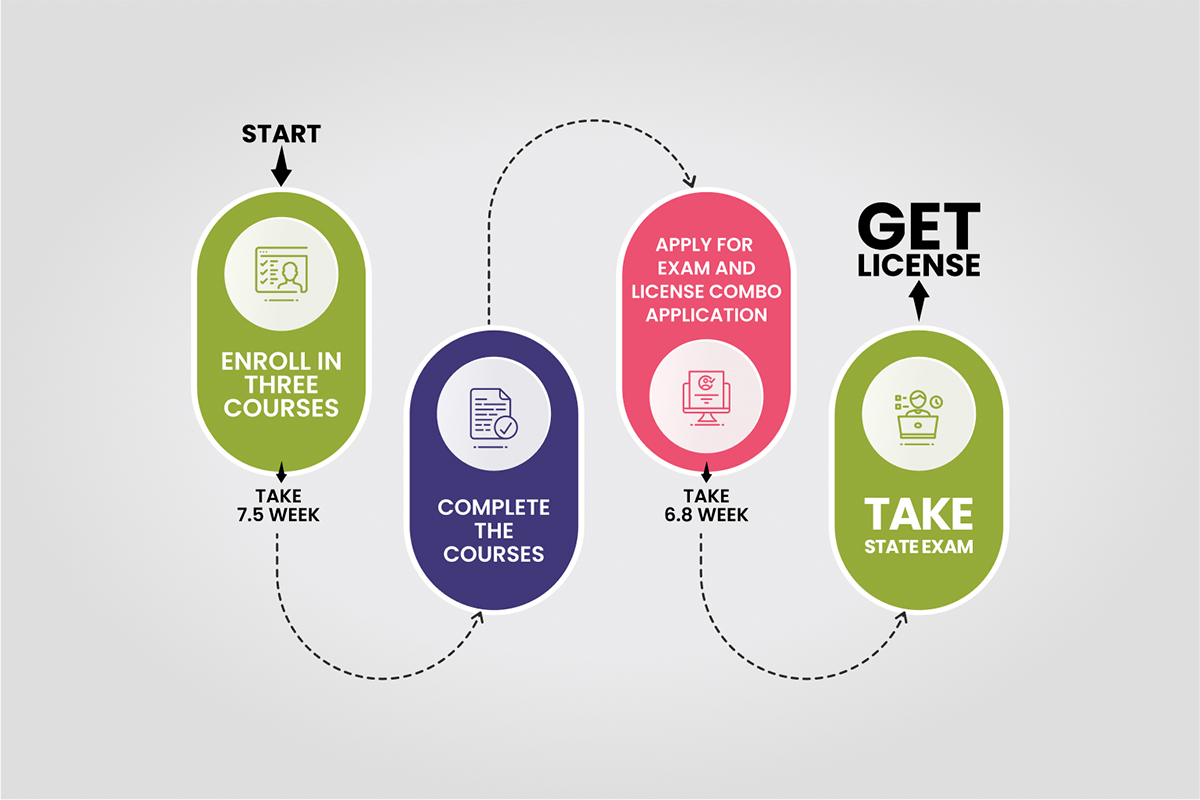
After being in real estate education for over 20 years, I can confirm that embarking on a career in real estate in California is an exciting journey that opens up a world of opportunities. The first step towards this venture is obtaining your real estate license. This process involves meeting specific requirements, each with its timeline. In this article, I’ll break down these requirements, the time it typically takes to complete each one, and the overall process to give you a clear picture of how quickly you can start your new career in real estate.
What are the Licensing Requirements?
To qualify for a real estate license in California, candidates must complete a handful of key steps:
Education: Aspiring real estate agents must complete 135 hours of Pre-Licensing education. This includes three courses: Real Estate Principles, Real Estate Practice, and one elective course with courses approved by the Department of Real Estate in California. [This can be finished in as fast as 54 calendar days]
Examination and License Application: After completing the educational requirements, you must apply to take the California real estate license exam. You can apply for the exam and license simultaneously, but it’s important to bear in mind that this step can’t be completed without first completing the pre-license courses. [This processing typically runs 6-8 weeks.]
Background Check: A fingerprinting process through Livescan is required for a background check. These fingerprints should be completed before applying for the real estate exam but after completing the three pre-license courses.
State Examination: Pass the California real estate license exam and apply for your license. Just as a heads up, the real estate license exam is given in a computerized format.
How Soon Can I Do Each One?
Education: The 135 hours of Pre-Licensing education can be completed at your own pace through ADHI Schools We have online courses for flexibility, so you can potentially complete this step in as little as 54 days. However, you have up to one year to complete the program. We want to give you more time, but the DRE in California says that all courses must be completed within one year of enrollment.
Exam and License Application: Once you complete the three open-book exams on our website, the next step is to apply for the state exam. You can apply online through a California Department of Real Estate eLicensing system. Processing times for the application to take the state exam can vary, but planning is critical. Currently, the processing time is typically between 6-8 weeks. This period can vary, so checking the DRE website for the most current timeframes is advisable.
Background Check: The fingerprinting process can be completed relatively quickly, often within a week, but scheduling might vary based on location and availability.
Where Do I Take My Real Estate License Test?
The California real estate license exam is administered at several DRE locations throughout the state. Candidates can choose the most convenient location when scheduling their exam. The DRE website lists the locations and provides addresses and contact information for planning your exam day.
The five locations where exams can be taken are Fresno, Oakland, Sacramento, San Diego, and La Palma. (La Palma is considered the "Los Angeles area" location for the state exam.)
To summarize, completing the pre-license courses can take up to 2 months, followed by an additional 1.5 to 2 months for the state to process the application. This means the entire process will take approximately 3.5 to 4 months in total.
Obtaining your real estate license in California requires dedication and planning. By understanding the steps involved and the time each takes, you can efficiently navigate the journey toward becoming a licensed real estate agent.
Remember, the time it takes to get licensed varies based on individual circumstances. Still, with a clear plan and a commitment to your goal, you can achieve your real estate aspirations in California. ADHI Schools would love to be a part of your journey!
TLDR: Ideally the whole process should take around 4 months if you hustle!
Love,
Kartik
|

Embarking on a real estate career can be exciting and daunting, especially when meeting the qualifications for obtaining a license. One question that arises among aspiring real estate professionals in Read more...
Embarking on a real estate career can be exciting and daunting, especially when meeting the qualifications for obtaining a license. One question that arises among aspiring real estate professionals in California is: "Can you take the real estate exam in California without any classes?" This question is crucial for those eager to dive into the industry but must decide on the required educational commitments. I wanted to address this question head-on while incorporating insights from related topics pertinent to launching a successful career in real estate.
California, known for its dynamic real estate market, sets forth specific requirements for individuals aiming to become licensed real estate agents. The California Department of Real Estate (DRE) mandates that applicants complete some coursework before sitting for the state licensing exam. Specifically, you must complete three college-level courses in real estate principles, practice, and one elective course from a list from an approved California real estate license school However, exceptions exist for individuals if they are a lawyer who wants a real estate license in California. Lawyers who are members of the State Bar of California are exempt from the college-level course prerequisites, allowing them to proceed directly to the licensing exam. This exemption acknowledges the extensive legal education that lawyers undergo, which overlaps significantly with real estate law and practices. However, California attorneys still must take and pass the real estate license exam.
For those not exempted by a legal career, the educational requirement is more than just a bureaucratic hoop to jump through. It is designed to equip you with a foundation to navigate the complexities of real estate transactions. These courses cover various topics, from property rights and contracts to finance and ethics, ensuring that you are well-prepared to serve your clients effectively.
Preparing for the California real estate exam is a rigorous process that demands a comprehensive understanding of various subjects. Our real estate exam prep guide offers a valuable resource for those studying for the exam, providing structured guidance and strategies to tackle the exam confidently. The guide includes practice questions, outlines of key topics, and test-taking tips to enhance your chances of passing on your first attempt.
Passing the California real estate exam is a notable achievement, but it's just the beginning of your journey. A Guide to Your First 30 Days as a Real Estate Agent outlines essential steps for newly licensed agents, from joining a brokerage to developing a marketing plan and building your client base. This critical period can set the tone for your career, emphasizing the importance of a strong start.
Once licensed, continuous learning and adaptation are key to longevity and success in the real estate profession. California requires real estate agents to complete continuing education courses to renew their licenses. This requirement ensures that agents stay updated on the latest laws, regulations, and market trends, reinforcing the value of lifelong learning in this dynamic field.
In addition to formal education and licensing requirements, building a successful real estate career involves mastering practical skills and leveraging personal networks. Referrals 101: How to Ask Your Friends and Family for Referrals highlights the significance of referrals in generating business. Cultivating a solid referral network can be instrumental in establishing and growing your real estate practice, underscoring the industry's relational nature.
Understanding the financial aspects of real estate, such as understanding off-the-top fees as a Realtor is also crucial. This knowledge helps agents manage their finances effectively, from navigating commission structures to budgeting for business expenses. Financial understanding is essential for maximizing earnings and ensuring the sustainability of your real estate career.
While it may seem appealing to bypass educational requirements and jump straight into taking the California real estate exam, the state mandates these courses for good reason. They provide a solid foundation of knowledge and skills essential for success in the real estate industry. For lawyers, exemptions offer a streamlined path to licensure, yet the principles of thorough preparation and continuous learning apply universally across the profession. By embracing these educational opportunities and leveraging resources like exam prep guides and practical advice for new agents, aspiring real estate professionals in California can set themselves up for a rewarding and prosperous career.
TLDR: For the most part, classes are required. Lawyers in California are exempt from the classes, but nobody is exempt from the licensing exam.
Love,
Kartik
|

A well-crafted listing description is critical when you want a listing to get attention. It's more than just words on a page—it's the key to catching the eye of potential buyers and standing out in a Read more...
A well-crafted listing description is critical when you want a listing to get attention. It's more than just words on a page—it's the key to catching the eye of potential buyers and standing out in a competitive market.
By weaving together the correct details, emotions, and visual imagery, a creative listing description can attract attention and create a lasting impression, setting your property apart from the rest.
Start with a Captivating Opener
The first step in crafting a great listing description begins with the first sentence of your description. In real estate, where countless listings vie for attention, an opener that grabs attention is not just important—it's crucial. This is your chance to make a compelling first impression to ensure potential buyers pause and click through instead of scrolling past.
A powerful opener acts like a magnet, drawing in your target audience with the promise of something exceptional. It should be concise yet evocative, offering a glimpse into the lifestyle that the property enables. Whether it's the promise of serene suburban living, the allure of luxury urban convenience, or the charm of rustic countryside serenity, your headline should capture the essence of the property in a way that resonates with your intended buyers.
Incorporating keywords that highlight unique selling points—such as "panoramic views," "fully renovated," or "walkable to downtown"—can also enhance visibility in search results, making your listing easier to find among the sea of options. Remember, the goal is not only to inform but to entice and intrigue potential buyers, compelling them to delve deeper into what your listing offers.
If you want to learn more, after you read this article, check out Marketing Magnet: Attract Buyers & Close Deals with Next-Level Real Estate Strategies. Here, you'll find a treasure trove of tips and tactics that go beyond the basics, ensuring your listings attract attention and close deals.
Highlight Unique Features
The essence of a standout listing description lies in the ability to spotlight unique features of the property—those distinctive attributes that elevate it from merely a house to a potential home in the eyes of the buyer. Identifying and emphasizing these features requires an understanding of the property and an insight into what today's buyers seek.
Whether it's an expansive backyard perfect for summer barbeques, a gourmet kitchen that beckons the family chef, or a home office space tailor-made for the remote worker, highlighting these unique selling points is pivotal in connecting with potential buyers.
When identifying what to highlight, consider the elements that make the property special. Is it the architectural style, the eco-friendly upgrades, the proximity to coveted amenities, or the breathtaking views? These features should be brought to the forefront of your description, painted in a light that informs, entices, and excites the reader. The goal is to paint a picture in the buyer's mind where they can envision themselves enjoying these unique aspects of the property.
Moreover, it's not just about stating these features; it's about presenting them in a way that showcases their value. A bland statement like "attached garage" becomes more impactful when framed as "never worry about parking or weather with your own spacious, two-car attached garage."
Use Descriptive Language
The power of a listing lies not just in the details it conveys but in how it conveys them. Using vivid and descriptive language is akin to painting a picture for the buyer, one that transcends mere physical dimensions and taps into emotions and imagination. This approach transforms a simple listing into a compelling narrative that invites potential buyers to visualize a property and a future home filled with life and memories.
To achieve this, focus on sensory details and the emotions they evoke. Instead of merely stating "large windows," describe how the morning light pours into the room, creating a warm, inviting glow that illuminates the space. Rather than listing a "renovated kitchen," paint a picture of the space where culinary dreams come to life, with state-of-the-art appliances and ample counter space that invites family gatherings and gourmet explorations.
Language that evokes the sense of touch, sight, sound, and even smell can significantly enhance a property's allure. Mention the soft rustle of leaves in the private backyard oasis, the stunning views that capture the city skyline or serene landscapes, or the cozy fireplace where one can imagine curling up with a good book on chilly evenings.
Remember, the goal is to make potential buyers feel like they are walking through the home, experiencing its charm and envisioning their lives unfolding within its walls. By using descriptive language effectively, you not only showcase the property's best features but also create an emotional connection, making the listing memorable and compelling. This strategy helps attract attention and convert it into action, as buyers are more likely to pursue a property that sparks their imagination and feels like a dream home comes to life.
Create an Emotional Connection
A fundamental truth lies at the heart of every property transaction: real estate is as much about emotions and connections as it is about land and buildings. Writing descriptions that resonate emotionally with potential buyers is not just a strategy; it's an art that can significantly influence decision-making. To create an emotional connection, it's essential to weave narratives that speak not just to the mind but to the heart.
One effective strategy is to envision the lifestyle that the property enables. Rather than simply listing features, frame them in a context that suggests a story or a dream come true. For example, a backyard isn't just an outdoor space; it's a haven for summer gatherings, a future canvas for a garden enthusiast, or a serene retreat for quiet afternoons. This approach helps potential buyers envision their lives and cherished moments within the space, making the connection more personal and profound.
Incorporating elements of storytelling can also deepen this connection. Begin by setting the scene with the property's most enchanting qualities. Then, invite the reader on a journey through the home, highlighting how each space contributes to the overarching narrative of a fulfilled, joyful life. Use emotive language to describe how the property feels—peaceful, refreshing, warm, or welcoming—helping buyers see and feel the home's essence.
Understanding the target audience and tailoring the description to align with their aspirations and desires is also beneficial. A family might be drawn to a neighborhood's safety and community feel, while young professionals might value convenience and modern amenities. Aligning the property's attributes with the buyer's aspirations amplifies the emotional impact, making the listing more compelling.
Remember, at its core, Real Estate Is About People, Personalities, and Emotions. By placing people and their emotional responses at the center of your listing descriptions, you forge a more profound connection that transcends the physical aspects of the property. This emotional resonance distinguishes the listing in a crowded market and moves potential buyers closer to envisioning the property as their future home.
Be Honest and Transparent
Honesty is not just a policy—it's the foundation for lasting relationships and trust. For listing descriptions, honesty and transparency are crucial in attracting potential buyers and fostering a sense of reliability and integrity. This approach not only enhances the immediate appeal of a property but also safeguards the agent's reputation and mitigates potential issues down the line.
The importance of honesty in listing descriptions cannot be overstated. Overpromising or embellishing features may initially capture attention, but it can lead to disappointment and distrust when potential buyers view the property in person. This discrepancy between expectation and reality can sour the buying experience, damaging trust and potentially derailing transactions.
Transparency about the property's condition, features, and potential limitations conveys respect for the buyer's ability to make informed decisions. It demonstrates that the agent values integrity over making a quick sale, building a foundation of trust essential for successful, long-term relationships in the real estate industry. This approach also aligns with the expectations of today's buyers, who are more informed and discerning than ever before.
Moreover, honest descriptions help pre-qualify buyers, attracting those genuinely interested in what the property offers. This can lead to a more efficient selling process, as potential buyers are better matched to the property from the outset.
Use High-Quality Photos and Virtual Tours
In an era when the first impression of a property often happens online, integrating high-quality photos and virtual tours with your listing description is not just an enhancement—it's a necessity. These visual elements play a critical role in capturing the essence of the property and significantly augment its appeal to potential buyers.
Photos must be professional, well-lit, and thoughtfully composed to showcase the property in its best light, drawing buyers in and encouraging them to explore further.
Virtual tours offer an immersive experience beyond traditional photography, allowing potential buyers to navigate the property at their own pace. This technology enables viewers to understand the layout and flow of the home, giving them a sense of being there in person. Virtual tours have become increasingly important, offering buyers a convenient and comprehensive way to connect with a property, mainly when physical viewings are limited.
High-quality photos and virtual tours complement the descriptive language of your listing, creating a more complete and engaging portrayal of the property. This synergy between visual and textual elements enhances the listing's appeal and helps potential buyers form a deeper emotional connection with the home. They can envision their lives unfolding within its walls, a powerful motivator in home buying.
Embracing these visual tools is part of a broader digital strategy in real estate marketing, a theme explored in Real Estate Marketing Gets Real with Digital: Your Guide to the New Frontier. This resource delves into the evolving landscape of real estate marketing, highlighting the importance of leveraging digital technologies to connect with today's tech-savvy buyers. By understanding and applying these principles, real estate professionals can craft listings that stand out and resonate deeply with potential buyers, paving the way for successful transactions in the digital age.
Crafting a compelling listing description is an art form that requires attention to detail, creativity, and a deep understanding of what today's buyers are seeking. Throughout this blog, I've explored essential strategies that elevate your property listings from the ordinary to the extraordinary, ensuring they capture attention and stand out in a competitive market.
Applying these tips lets you transform your listings into captivating narratives that inform and inspire potential buyers. Remember, your goal is not just to sell a property but to tell a story that resonates with buyers, inviting them to imagine a future in the home you're presenting.
I encourage you to embrace these strategies, refining and adapting them to match your
unique listings and target audience. Doing so will make your listings stand out and create a more meaningful and impactful connection with potential buyers, paving the way for successful sales and satisfied clients.
Let these insights guide you as you craft your following listing. With creativity, honesty, and a keen eye for detail, you have the power to showcase properties in their best light, captivating the hearts and minds of buyers in today's real estate market.
Love,
Kartik
|

Starting your real estate career is exciting, but it also comes with a few nerves—especially when it comes to the California licensing exam. One of the most common questions we hear from new students Read more...
Starting your real estate career is exciting, but it also comes with a few nerves—especially when it comes to the California licensing exam. One of the most common questions we hear from new students at ADHI Schools is:
“How many times can I retake the California real estate exam if I don’t pass on my first attempt?”
The good news: California allows unlimited exam attempts within your two-year application window.
Below, we’ll walk you through how the retake process works and what to do differently to maximize your chances of passing on your next try.
The Short Answer: Unlimited Attempts (Within Two Years)
This is the rule that surprises most students.
➡️ The California Department of Real Estate (DRE) allows unlimited retakes within two years of your original application date.
There are:
No penalties for failing (except having to pay the exam fee again)
No mandatory waiting period (beyond waiting for your official results)
No cap on the number of tries during that two year period
This flexibility removes a lot of pressure.
If you want to understand the entire licensing process—not just retakes—review our full California Real Estate Exam Guide, which outlines exam structure, scoring, timelines, scheduling, and preparation strategy.
Essential DRE Retake Rules
You do have unlimited attempts, but the DRE has specific administrative rules you must follow to avoid delays.
1. Wait for Your Official Results
Before doing anything, wait until you receive your results from the DRE. Until you receive your score, do not:
submit a new application
pay another exam fee
attempt to schedule a new date
Doing so may flag your record or cause your newly scheduled date to be canceled.
2. How to Re-Apply
If you didn’t pass, the fastest way to get back on the schedule is through the DRE’s eLicensing system:
➡️ https://secure.dre.ca.gov/
It typically processes retakes more quickly than mailing paperwork.
3. The Two-Year Rule
Once two years pass from the date of your original application:
your application expires
you must submit a new exam application
you must requalify (education requirements must still be valid)
and pay the fee again
Most students pass long before reaching this point, but the deadline is important to keep in mind.
Why Students Need Retakes
If you’re preparing for a second attempt, you may be wondering:
Is the California Real Estate Exam Hard?
The exam is intentionally challenging. It’s designed to measure whether you can apply real estate principles—not just memorize them.
A quick look at the California Real Estate Exam Pass Rate Statistics makes it clear that failing once (or even twice) is more common than most people expect. It doesn’t mean you won’t be a great agent—it just means you need a better plan for your next attempt.
How to Make Your Next Attempt Your Last
Most retakes happen because students studied inefficiently, misunderstood the exam format, or didn’t manage the questions well. The good news is that these issues are fixable.
1. Analyze Your Performance
If you fail, the DRE gives you a breakdown of how you scored in each content area.
Use it—it’s your roadmap.
For even deeper insight, read Why People Fail the California Real Estate Exam.
It outlines the most common reasons students struggle, from content gaps to test-taking errors
2. Study the Right Way
Don’t just study harder—study smarter.
Use updated materials aligned with the DRE blueprint:
ADHI Crash Course Materials: https://www.adhischools.com/real-estate-crash-course/california
Free Real Estate Practice Exam: https://www.adhischools.com/free-real-estate-practice-exam
Crash Course Online (live instruction + strategy): https://www.crashcourseonline.com
These tools reinforce high-yield topics that appear most frequently on the exam.
3. Use a First-Try Mindset—Even on a Retake
Even if this is your second or third attempt, treat it like a fresh first attempt.
Our guide Tips for Passing the CA Real Estate Exam on the First Try covers how to:
break down tricky questions
avoid psychometric distractors
manage test-day anxiety
pace yourself efficiently
These strategies are just as valuable for retakers as they are for first-time candidates.
Final Thoughts
Retaking the California real estate exam can feel stressful, but the system is designed to give you every opportunity to succeed. With unlimited attempts in your two-year window—and a stronger, more strategic study plan—you can absolutely pass this exam.
Persistence is part of the real estate business.
ADHI Schools is here to support you until your license is in hand.
Frequently Asked Questions
Is there a limit to how many times I can fail? No. You can retake the exam as many times as you need within your two-year application window.
Do I have to pay every time I retake the exam? Yes. You must pay the exam fee for every single attempt.
Is there a waiting period before I can try again? There is no mandatory waiting period, but you must wait until you receive your official result notice from your previous attempt before scheduling a new one.
Do I have to retake my real estate classes if I fail? No. Your course completion certificates are valid for life. You only need to re-verify your education if your two-year application window expires.
Will the retake questions be the same? No. The DRE pulls from a large bank of questions, so expect a completely different version of the exam on your next attempt.
|

The California Department of Real Estate is the state's authoritative body responsible for administrating and regulating real estate laws and overseeing the licensing of real estate professionals, including Read more...
The California Department of Real Estate is the state's authoritative body responsible for administrating and regulating real estate laws and overseeing the licensing of real estate professionals, including salespersons and brokers, within California. Established to safeguard public interests in real estate transactions, the DRE ensures that the real estate industry operates with integrity, transparency, and compliance with state laws.
The Real Estate Commissioner is the head of the DRE and oversees the Department. The Commissioner gets their job by being appointed by the Governor of California.
What qualifies someone to be the Real Estate Commissioner?
Section 10052 of the Business and Professions Code states that the commissioner shall have been a real estate broker for five years actively engaged in business as such in California or shall possess related experience associated with real estate activity in California for five years within the last ten years.
Who is the Real Estate Commissioner today?
On January 3, 2024, Chika Sunquist officially took the helm as the Commissioner of the California Department of Real Estate (DRE), following her appointment by Governor Gavin Newsom on November 28, 2023. Her journey with the DRE commenced in 2006 when she embarked on her career as a deputy commissioner within the Sacramento Enforcement Office. In this role, she dedicated herself to probing complaints lodged against both licensed and unlicensed individuals, alongside conducting thorough background checks on those applying for licenses.
Her career trajectory within the DRE saw a significant transition in 2008 when she moved to the Mortgage Loan Activities unit. In 2015, she was promoted to supervising special investigator for the same unit.
Since 2020, Sunquist has been Assistant Commissioner of Enforcement at the DRE. Her responsibilities there involved overseeing management and operational facets of the Enforcement division.
Before her tenure at the DRE, Sunquist garnered practical experience in the field, having engaged in residential real estate sales. To this day, she maintains her broker license. Her educational background is impressive, with a Bachelor of Science in Languages and Linguistics from Georgetown University, complemented by an Associate of Arts in Administration of Justice from Sacramento City College.
What Does the Real Estate Commissioner do?
The California Real Estate Commissioner is critical in overseeing the California Department of Real Estate. The Commissioner's duties are specifically tailored to ensure the integrity, transparency, and efficiency of the real estate market in the state, protecting consumers and ensuring that real estate professionals adhere to the legal and ethical standards set forth by California law. Some of these duties are:
Enforcement of Real Estate Law: The Commissioner oversees the enforcement of California real estate laws. This involves investigating complaints against real estate licensees, taking disciplinary actions against those who violate the law, and ensuring compliance with state and federal regulations affecting the real estate industry.
Licensing and Certification: The Commissioner is responsible for licensing real estate brokers and salespersons in California. This includes overseeing the examination process for new licensees, renewing licenses, and ensuring that licensees meet the required educational standards.
Education and Professional Standards: Setting and maintaining educational standards for real estate professionals is crucial. The Commissioner approves real estate education courses offered by real estate schools in California, ensures the ongoing professional development of licensees, and sets criteria for real estate pre-licensing and continuing education through the legislative process.
Consumer Protection: A significant aspect of the Commissioner’s role is to protect consumers involved in real estate transactions. This includes providing resources and information to help consumers make informed decisions, addressing and resolving consumer complaints, and ensuring that the real estate industry operates fairly and transparently.
Regulatory Oversight: The Commissioner oversees the regulation of real estate practice and transactions, including managing escrow companies, mortgage brokers, and other entities involved in real estate transactions in California.
Industry Liaison: Acting as a liaison between the real estate industry and the public, the Commissioner engages in outreach and communication efforts to educate consumers and professionals about their rights and responsibilities under California real estate law.
In carrying out these duties, the California Real Estate Commissioner ensures that the state's real estate industry operates in a manner that is ethical, lawful, and conducive to the economic well-being of California residents while also fostering professional integrity and competence among real estate practitioners.
Love,
Kartik
|

Navigating Common Complaints Against Real Estate Agents: Understanding Client Concerns
The real estate industry is dynamic and multifaceted, with real estate agents guiding the complex process of buying Read more...
Navigating Common Complaints Against Real Estate Agents: Understanding Client Concerns
The real estate industry is dynamic and multifaceted, with real estate agents guiding the complex process of buying or selling properties. However, like any profession, real estate is not immune to challenges, and clients may occasionally file complaints against a real estate licensee. I wanted to explore some of the most common complaints against real estate professionals and offer insights into mitigating these issues.
This topic is especially important for our readership, primarily composed of individuals seeking the top real estate license schools or those currently preparing for the real estate license exam aiming to start their careers on a strong foundation.
Reason #1
Misrepresentation
A frequent complaint can involve misrepresentation. Clients may contend that a real estate agent provided inaccurate information about a property, failed to disclose pertinent details, or offered misleading descriptions. Maintaining transparency and ensuring accurate property information is crucial to fostering trust with clients.
The Case of the Hidden Sinkhole
Imagine a young couple, Sarah and Michael, excited about buying their first home. They find a charming two-story colonial in a desirable neighborhood, listed by a seasoned real estate agent named Tom. Tom assures them the house is in perfect condition, highlighting its spacious backyard and updated kitchen. Sarah and Michael are smitten and quickly make an offer.
After closing and moving in, Sarah and Michael discover a significant depression in the backyard, covered by hastily laid mulch. Upon further inspection, they find a sinkhole giant enough to swallow a small car. Panicked, they call Tom, who expresses surprise and claims he was unaware of the sinkhole. However, Sarah and Michael recall Tom mentioning plans for a pool in the backyard during the initial showing. They suspect Tom deliberately downplayed the sinkhole to make the sale.
Reason #2
Breach of Fiduciary Duty: Upholding Client Interests
Real estate agents owe a fiduciary duty to their clients, requiring them to act in the client's best interest. Complaints may arise when clients perceive a breach of this duty, such as self-dealing, conflicts of interest, or actions that do not prioritize the client's well-being. Real estate agents must consistently demonstrate an unwavering commitment to their client's interests to avoid such complaints.
Lisa, a real estate agent, convinces her elderly client, Mr. Jones, to sell his spacious condo for below-market value. With her cousin, Lisa secretly bought the condo at a discounted price and immediately flipped it for a significant profit.
Here's why this is a blatant breach:
Exploiting Vulnerability: Mr. Jones, being elderly, might be more susceptible to manipulation or unaware of the actual market value of his apartment. Lisa taking advantage of his vulnerability to secure a personal gain is textbook exploitation.
Undervaluing the Client's Asset: Selling the apartment below market value directly harms Mr. Jones' financial interests. Lisa benefits by buying it cheaper but deprives Mr. Jones of the money he could have received and harms him through her non-disclosure.
Hidden Motive: Lisa's hidden personal motive to buy the apartment for herself directly conflicts with her duty to act in Mr. Jones' best interest.
Insider Information: As Mr. Jones' agent, Lisa likely had access to information about the apartment's potential value and any other offers. Using this information to benefit herself while Mr. Jones suffers a financial loss is a clear breach of trust.
Reason #3
Failure to Disclose Material Facts: The Importance of Transparency
Failure to disclose material facts can lead to client dissatisfaction and complaints. Real estate agents must inform clients of any information that could significantly impact their decision-making process, including property defects, legal issues, or neighborhood concerns. Maintaining transparency throughout the transaction is essential.
The Leaky Roof on a Sunny Day
Imagine it:
A charming, sun-drenched bungalow sits in a picturesque neighborhood, listed by real estate agent Ray "Rainbow" Sunshine. Ray paints a vibrant picture of the home's potential, highlighting its spacious living areas, manicured lawn, and "fresh, bright atmosphere." He conveniently glosses over any mention of the roof.
The Thompson family, captivated by the home's cheerful energy and Ray's sunny disposition, make an offer without a second thought. Visions of backyard barbeques and lazy afternoons on the porch fill their minds.
The day their moving truck arrives, the storm clouds gather. With the first raindrop, the illusion shatters. Water, not sunshine, pours into the living room, staining the freshly painted walls and soaking the plush carpets. Panic sets in as the Thompsons scramble to salvage their belongings.
The "fresh" smell Ray mentioned masked a leaky roof, a notorious issue in the neighborhood, well-known to everyone including Ray.
Consequences of Omission:
The Thompsons face significant financial burdens. Roof repairs, damaged furniture replacements, and potential mold remediation create many unexpected expenses.
Ray's "Rainbow" reputation goes dark. The Thompsons might sue for misrepresentation, leading to legal fees and reputational damage for Ray.
Reason #4
Communication Woes: Bridging the Gap
Poor communication is a common source of discontent among clients. Complaints may stem from real estate agents who need to keep clients informed, respond promptly to inquiries, or provide updates on the progress of transactions. In this context, it's not just about maintaining communication with current clients; effective communication is also crucial in prospecting for new clients. Engaging potential clients with clear, informative, and timely communication can set the foundation for strong future relationships. Clear, open, and timely communication is vital to building and maintaining trust throughout the real estate process, whether it's with long-standing clients or those you are prospecting as new opportunities.
The Ghosting real estate agent
Imagine this:
Sarah, a young professional, entrusts Emily, a seemingly enthusiastic real estate agent, with finding her dream apartment. Sarah envisions Emily as a partner in this exciting quest, keeping her informed and supported through every step.
Initially, Emily shines. She schedules viewings efficiently, answers Sarah's questions promptly, and offers valuable insights. Sarah feels confident and optimistic about finding the perfect place.But then, communication fades. Emily's replies become delayed, often with vague excuses. Follow-up questions need to be answered. Updates on new listings disappear. Phone calls go straight to voicemail.
Days turn into weeks, and Sarah feels abandoned. The excitement morphs into frustration and anxiety. Is Emily working on finding her an apartment? Has she moved on to other clients? Sarah feels disconnected, unsure of how to proceed.
One day, out of the blue, Emily resurfaces with a potential apartment. She apologizes for the communication lapse, citing a personal emergency, but the trust is already broken. Sarah, unsure of Emily's commitment, hesitates to move forward.
Consequences of Communication Breakdown:
Client dissatisfaction and distrust: Sarah feels neglected and unimportant, damaging her confidence in the real estate agent and the process.
Missed opportunities: Delayed communication might cause Sarah to lose out on promising apartments or valuable negotiation leverage.
Time wasted and stress-induced: The lack of updates and follow-through creates uncertainty and anxiety for Sarah, impacting her daily life.
Reason #5
Negligence or Incompetence
Complaints related to negligence or incompetence can arise when clients believe their real estate agent made critical errors that resulted in financial losses or failed to demonstrate the necessary competence for adequate representation. Real estate agents must strive for excellence, staying informed about industry trends, regulations, and best practices.
Scenario: Overlooking Critical Property Disclosures
Situation:
John and Sarah, a young couple looking to buy their first home, enlisted the services of a real estate agent named Mark. Excited about a particular property, they relied on Mark's expertise for a smooth transaction. However, Mark, not staying current with industry regulations and best practices, failed to notice that the seller had not disclosed the property's history completely. Specifically, the property had a history of severe water damage and mold issues, which were not immediately apparent during the initial inspections.
Resulting Issues:
A few months after moving in, John and Sarah started experiencing significant mold and structural integrity issues caused by previous water damage. This resulted in substantial financial strain due to the unexpected repair costs. They were distressed and felt betrayed, as these issues should have been disclosed before the purchase.
Complaints of Negligence and Incompetence:
John and Sarah filed a complaint against Mark, alleging negligence and incompetence. They believed that Mark's failure to ensure full disclosure from the seller and his lack of due diligence in investigating the property's history directly led to their financial and emotional distress.
The Need for Excellence:
This situation underscores the critical importance of real estate agents continually striving for excellence. Staying informed about industry trends, regulations, and best practices, such as thorough property inspections and ensuring complete disclosures, is about compliance and protecting clients from potential future hardships. Real estate agents like Mark must understand that they facilitate transactions and serve as knowledgeable advocates for their clients, ensuring all necessary information is transparent and accessible.
While complaints against real estate agents are a reality, proactive measures can significantly reduce their occurrence. Real estate agents who prioritize transparency, clear communication, ethical practices, and continuous education are better positioned to navigate the intricacies of the real estate industry and build lasting, positive relationships with their clients. By addressing common concerns head-on, real estate professionals can uphold the integrity of their profession and contribute to a more trustworthy and robust real estate marketplace.
Mitigating Complaints:
Education and Training: real estate agents can invest in ongoing education and Training to stay abreast of industry developments and enhance their skills.
Clear Communication: Establishing clear lines of communication with clients and keeping them informed at every stage of the transaction helps prevent misunderstandings.
Ethical Practices: Upholding ethical standards and maintaining honesty in all dealings can foster positive client relationships.
Thorough Due Diligence: Conducting thorough due diligence on properties and ensuring accurate representation can minimize the risk of misrepresentation complaints.
Adherence to Regulations: real estate agents should be well-versed in local real estate regulations and ensure compliance with all legal requirements.
While complaints against real estate agents do exist, understanding the common pitfalls and actively mitigating them can lead to a more trusting and successful experience for all parties involved.
By prioritizing the five key areas – transparency, communication, ethical conduct, due diligence, and regulatory compliance – real estate agents can build a foundation of trust with their clients. Regular education and training ensure they stay informed and competent, enabling them to offer exceptional service and avoid costly missteps.
By embracing these principles and continuously striving for excellence, real estate professionals can contribute to a more trustworthy and robust marketplace, where clients feel confident, informed, and well-represented in every transaction. Remember, building trust and exceeding expectations are the true markers of success in the dynamic and ever-evolving world of real estate.
Love,
Kartik
|

What are the Pros and Cons of Becoming a Real Estate Agent?
Imagine a career where each day brings a new adventure, your income mirrors your ambitions, and you have the power to shape your destiny. Read more...
What are the Pros and Cons of Becoming a Real Estate Agent?
Imagine a career where each day brings a new adventure, your income mirrors your ambitions, and you have the power to shape your destiny. This is the world of real estate — a profession that's not just a job but a lifestyle. Real estate offers an exciting and rewarding path for those drawn to a career that combines flexibility, potential, and personal fulfillment. However, like any dynamic career, it comes with its challenges.
At our real estate school we are regularly counseling students on the benefits of obtaining a real estate license As such, I wanted to write an article exploring the multifaceted nature of a real estate career, examining the advantages and hurdles to give you a clear perspective on what it truly means to pass the real estate exam and become a real estate agent. Whether you're seeking a change, chasing a dream, or contemplating your next career move, understanding the pros and cons of real estate is an essential step toward making an informed decision.
Pros of Becoming a Real Estate Agent:
Unlimited income potential:
Forget the paycheck treadmill: Ditch the predictable, the capped, the "just enough" mentality. In real estate, you're the CEO of your career and the captain of your financial ship. Every transaction is a voyage, every negotiation a thrilling adventure, every closed deal a treasure chest overflowing with rewards.
A single high-value deal can catapult you to financial heights you never dreamed of. Imagine exceeding expectations, not just meeting them. Imagine exceeding your wildest goals, shattering personal records, and rewriting your definition of "possible."
Remember, the only limit in real estate is the one you set for yourself. So, grab your ambition, unleash your hustle, and get ready to conquer the world, one deal at a time. The open sky awaits!
Flexible Schedule:
Say goodbye to the clock punch and hello to a workday woven into the fabric of your life. Becoming a real estate agent isn't just about houses; it's about reclaiming your time and crafting a schedule that dances to your tune. Imagine this: No more rigid 8-to-5s cramping your dreams. No more morning commutes stealing precious moments with loved ones. As a real estate agent, your calendar becomes a blank canvas, ready to be splashed with vibrant hues of work, family, and personal pursuits. Early bird or night owl? Introvert or social butterfly? The answer doesn't matter here. You schedule the open houses around your yoga class, the client meetings around your kid's soccer game, and the paperwork blitz around your quiet writing hour. This is your symphony, and you get to conduct the tempo.
Need a midday break for a spontaneous hike? Go for it! The market doesn't close with the lunch bell. Just schedule that afternoon showing around your newfound sense of rejuvenation. Your well-being isn't an afterthought; it's fuel for your hustle. Flexibility doesn't just mean freedom, it means opportunity. Imagine catching a weekday morning showing for a client before their work starts, securing the deal before anyone knows the property is available. Or you are closing a late-night negotiation over cocktails, sealing the deal with a flourish while others are tucked in their beds.
This isn't just about escaping the cubicle: It's about embracing a life where work flows seamlessly with your passions, where every day feels like a dance between ambition and fulfillment. You're not just selling houses; you're selling control over your precious time and the freedom to design a life that truly resonates with your soul. Remember, in real estate, time is yours to bend, mold, and sculpt into the masterpiece of your life. What will you create?
Career Satisfaction:
Imagine this: unlocking the door to a family's first home, their eyes sparkling with excitement as they step onto the freshly cut lawn. Picture yourself handing keys to a young couple, their faces radiating gratitude after months of searching. Feel the warmth of a retiree's smile as they hand you the keys to their longtime home, ready for their next adventure. These aren't just transactions; they're life-changing moments.
If you decide to focus on residential real estate you're not just selling houses; you're orchestrating dreamscapes, crafting havens of happiness, and weaving the threads of hope into the very fabric of your community. The gratitude you receive isn't just a pat on the back; it's fuel for your soul. Every satisfied client is a testament to your impact, a living reminder of the difference you make in their lives. It's a validation that your hustle, expertise, and dedication matter. But it goes beyond the tangible. You become a trusted confidante, a shoulder to lean on, a cheerleader for their aspirations.
You witness the most vulnerable moments – the nervous excitement of first-time buyers, the bittersweet nostalgia of downsizing seniors, the quiet anxieties of those facing life transitions. In these moments, you're more than an agent; you're a human touchpoint. You offer empathy, understanding, and a reassuring hand to guide them through the emotional rollercoaster of buying or selling a home. You become a part of their story, a thread in the tapestry of their lives. This isn't just a career, it's a privilege.
Variety and Excitement:
For those of us in real estate, each day is a blank canvas, ready to be splattered with vibrant hues of new experiences, unexpected challenges, and the thrill of the unknown. Imagine this: One morning you're touring a sprawling mansion with a celebrity client, discussing million-dollar deals and marble countertops. The next, you're knee-deep in negotiations with a young couple, helping them navigate the labyrinth of first-time homeownership. By lunchtime, you're meeting an appraiser on one of your listings.
No two clients are the same, no two properties are identical. You'll encounter quirky retirees looking for a cozy retirement haven, savvy investors hunting for profitable flips, and growing families yearning for their perfect suburban nest. Every interaction is a mini-mystery, a puzzle to be solved, a story waiting to unfold. The market is a living, breathing entity, pulsing with change and unexpected turns. Every economic update, every shifting trend, every neighborhood hot spot creates a new wave of excitement, a new challenge to conquer.
Networking Opportunities:
Forget business cards, think handshake highways! Becoming a real estate agent isn't only about keys and contracts, it's about unlocking a vast network that can catapult your career and expand your horizons. Imagine a web of opportunity woven from every conversation, every client you meet. Your daily life becomes a networking event in disguise. Open houses are cocktail parties where you mingle with potential clients, lenders, and fellow agents. Every neighborhood walk becomes a chance to connect with homeowners, business owners, and community leaders. Your social media becomes a vibrant marketplace of professional interactions and referrals. But it's not just about numbers, it's about relationships. You become the trusted advisor, the one who knows a guy (or gal) for everything. Think of yourself as a spider at the center of a bustling web.
This network isn't just for business, it's for life. You'll find mentors who guide your path, friends who share your hustle, and collaborators who fuel your creativity. So, step out of your comfort zone and into the bustling marketplace of possibilities. Shake hands, share stories, offer help, and watch your network become your launchpad. Remember, in real estate, connections aren't just built; they're cultivated, cherished, and leveraged to unlock a world of success beyond your wildest dreams. Who will you connect with today?
Personal Growth:
Forget the gym, embrace the real estate hustle! This isn't just a career; it's a training ground for personal growth where you'll sculpt yourself into a more robust and resilient version of yourself. Imagine this: Every client interaction is a language lesson, honing your communication skills from a whisper to a roar. You'll learn to negotiate like a ninja, read people like open books, and navigate complex situations with the grace of a seasoned diplomat. Challenges won't break you, they'll build you. Every hiccup in a deal, every tough negotiation, every unexpected hurdle becomes a stepping stone, teaching you resilience, resourcefulness, and the art of thinking on your feet. You'll learn to trust your instincts, embrace your unique approach, and become the best version of yourself, brick by brick.
As a new real estate agent, think of yourself as a diamond in the rough, waiting to be polished. Real estate is the polishing cloth, the pressure, the heat that brings out your inner sparkle. You'll emerge not just a successful agent but a confident individual, a skilled communicator, a fearless problem-solver, and a leader in your own right. This isn't just a career, it's a personal odyssey. It's about pushing your boundaries, conquering your fears, and discovering the depths of your potential. So, roll up your sleeves, embrace the challenges, and get ready to be amazed by the person you'll become in the vibrant world of real estate. Remember, growth isn't found in comfort zones, it's found in the heat of the hustle. What will you discover about yourself today?
Community Impact:
Imagine this: You're the key that unlocks the door to a young family's first home, the foundation on which they'll build their memories. You're the guide who shepherds retirees into their perfect downsized haven, a cozy nest for their golden years. You're the matchmaker who connects vibrant businesses with the ideal location, injecting life and prosperity into the local tapestry.
You might also become the local professional who spearheads the annual charity bake sale and organizes the neighborhood clean-up day. Your success fuels your desire to give back, see your community thrive, and leave a legacy beyond commission checks.
So, step into the role of community champion. Embrace the opportunity to leave your mark, not just on a balance sheet, but on the very soul of your neighborhood. Make a difference: one client, block, and smile at a time. Remember, in real estate, you're not just building houses; you're building a legacy of community. What will yours be?
Cons of Becoming a Real Estate Agent:
Income Inconsistency: The fluctuating nature of the real estate market means that income can be inconsistent. This variability requires agents to be financially savvy and prepared for periods of lower earnings.
Competitive Market: The real estate industry is highly competitive, requiring agents to work hard to differentiate themselves and build a thriving client base.
Extended Hours and Stress: Success in real estate often means working outside traditional hours, including evenings and weekends. The job can also be stressful, dealing with various client demands and market fluctuations.
A career in real estate offers a unique blend of challenges and rewards. It's a profession that demands dedication, hard work, and a willingness to navigate its complexities. Real estate can provide a fulfilling and lucrative career path for passionate and committed people. When entering this field, prospective agents should consider their personal goals, strengths, and lifestyle preferences. Despite its challenges, real estate offers a rewarding journey with professional and personal growth opportunities for the right individual.
Love,
Kartik
|

Finding Your Dream Home: The Joy and the Jolt
You've done it. After countless open houses, endless online listings, and what felt like an eternal waiting game, you finally found your dream home. The Read more...
Finding Your Dream Home: The Joy and the Jolt
You've done it. After countless open houses, endless online listings, and what felt like an eternal waiting game, you finally found your dream home. The excitement was palpable as your offer was accepted, the contract signed, and the future seemed to paint itself in bright, hopeful colors.
But then, a twist in the tale: the appraisal comes in, and it's lower than your purchase price. This news jolts you, shaking your excitement. It's a scenario many homebuyers fear, yet few are prepared for. It's not just about numbers; it's about your dreams, hopes, and vision for your future.
The Safety Net: Understanding the Appraisal Contingency
In these moments of uncertainty, your appraisal contingency becomes more than just a clause in a contract; it's a lifeline. This contingency is a crucial aspect of the home-buying process, designed to protect you, as the buyer, from overpaying.
But what exactly is an appraisal contingency? In simple terms, it's a condition in your home buying contract stating the purchase is contingent on the property being appraised at or above the agreed-upon sale price. If the appraisal falls short, this clause gives you the power to renegotiate or even walk away from the deal without penalty - more on that later.
More Than Just Money: The Psychological Impact
Beyond its financial safety, an appraisal contingency is also about peace of mind. It's a buffer against the unforeseen, a guard against the unpredictable nature of real estate valuations. When the appraisal comes in low, it's easy to feel overwhelmed and unsure. This clause serves as a reminder that you have options and are not locked into a potentially unfavorable situation.
Navigating the complexities of a low appraisal can be challenging, but understanding the role and power of your appraisal contingency is the first step.
As we delve deeper into this guide, we'll explore how to handle the gap between appraised value and offer price, examine your options under the appraisal contingency, and equip you with the knowledge to make the best decision for your future.
Dealing with the Gap: Understanding and Managing the Discrepancy
The Dilemma of Differing Values
When faced with a lower-than-expected appraisal, you encounter a fundamental dilemma: the gap between the appraised value and your offer price. This discrepancy isn't just a set of numbers but a potential challenge to your home-buying journey.
Appraised Value vs. Offer Price
The appraised value of a property is an expert's opinion of its worth, whereas the offer price is what you're willing to pay for it. These two figures ideally should align closely, but when they don't, it's crucial to understand what each represents. The appraised value is grounded in thoroughly analyzing the property and market conditions. At the same time, the offer price can sometimes reflect more subjective factors like personal desire or market competition.
Common Reasons for a Low Appraisal
Understanding why appraisals come in low can help you navigate this situation more clearly. Here are some common reasons:
Market Fluctuations: Real estate markets are dynamic, and rapid changes can lead to disparities between current market conditions and recent sales data used by appraisers.
Property Condition: If the appraiser notes issues with the property that you, the home inspector, or the seller might have missed, it can affect the appraisal value.
Comparable Sales (Comps): Appraisers generally use recent sales of similar properties in the area (comps) to determine value. If there are few comps or if they sold at lower prices, it can impact your appraised value.
Inaccurate Listing Information: Sometimes, discrepancies in square footage, room count, or amenities between the listing information and the actual property can lead to a lower appraisal.
Navigating the Appraisal Report with Your Agent
There needs to be more than just knowing the appraised value; understanding why it is key. This is where reviewing the appraisal report with your real estate agent becomes invaluable. Your agent can help interpret the report, point out areas that might be disputed, and provide insight into the appraiser's reasoning. This knowledge is crucial for your next steps, whether challenging the appraisal, renegotiating the deal, or even deciding to walk away.
Your Options with an Appraisal Contingency
When faced with a low appraisal, your appraisal contingency clause becomes a critical tool, offering you several paths to consider. Each option carries its own set of considerations and potential outcomes.
Option 1:
Walking Away: This option offers a clean break. Assuming you still have your appraisal contingency intact, you reclaim your earnest money deposit and walk away from the deal, free to explore other opportunities. Consider this path if the gap between the offer and the appraised value is significant, exceeding your budget, or if the appraisal highlights major concerns. While finding another suitable home in a competitive market might take time, the financial and emotional security gained can be invaluable.
The Benefits of Opting Out
Financial Protection: Assuming that your appraisal contingency is still in play, walking away allows you to reclaim your earnest money deposit, safeguarding your finances.
Avoiding Overpayment: You avoid overpaying for a property, which could have long-term financial implications.
Opportunity to Reassess: This situation allows you to reassess your options and find a better fit.
Considering the Drawbacks
Market Challenges: In a competitive market, finding another suitable property might take time and effort.
Emotional Impact: Letting go of a home you've become attached to can be emotionally challenging.
Option 2:
Paying the Difference: This option demands serious financial consideration. If the gap is manageable and aligns with your long-term budget, it can still lead to securing your dream home. However, be meticulous in your calculations. Factor in additional costs like closing fees, potential repairs identified in the appraisal, and the impact on your future financial stability. Consulting your financial advisor is crucial to ensure this decision is manageable for your resources later.
Financial Implications
Immediate Costs: Paying the difference (the amount between the contract price and the appraised amount) means more upfront cash, which can strain your budget.
Long-Term Considerations: This decision could impact your property equity.
Making a Responsible Decision
Financial Planning: Carefully consider your financial situation and future implications.
Seeking Advice: Consulting with trusted advisors can provide clarity.
Option 3:
Renegotiating: This option leverages your appraisal contingency as a negotiation tool. Armed with the appraiser's report, you can present a compelling case to the seller highlighting the discrepancy between the offer and the property's actual market value. Be prepared to compromise – offering alternative solutions like a lower price, closing date adjustments, or repair credits in exchange for a price concession. Remember, a win-win outcome benefits both parties and increases the chances of reaching an agreement.
The Power of Negotiation
Leveraging the Report: Use the appraisal report findings to negotiate a fairer price with the seller.
Finding Compromise: Aim for a win-win situation where both parties feel satisfied with the outcome.
Strategy and Compromise
Presenting Your Case: Be clear and factual when presenting your case based on the appraisal report.
Flexibility and Creativity: Consider other aspects of the deal where you can compromise, such as closing dates or repair credits.
Ultimately, the best decision is the one that aligns with your unique circumstances and risk tolerance. Consider these factors:
Financial Situation: Can you comfortably absorb the difference in price or additional costs?
Market Conditions: Is the market hot or cooling? Is finding another suitable property feasible?
Emotional Attachment: How attached are you to this specific property? Is it worth compromising for?
Alternative Options: Have you explored other properties that suit your budget and needs?
Timeframe: Your appraisal contingency period sets a deadline for making a decision. Utilize it effectively to gather information and weigh your options.
Remember, your real estate agent and advisors are valuable allies in this process. Feel free to use their expertise and experience to analyze your options and make the most informed decision. With a clear head, careful consideration, and the power of your appraisal contingency, you can navigate this unexpected turn and confidently choose the path that leads to your ideal home.
Negotiation Tactics with Your Appraisal Contingency in Play
With a low appraisal comes the opportunity to flex your negotiation muscles, and your appraisal contingency is your secret weapon. Here are some tips to wield it effectively:
1. Know Your Numbers: Thoroughly understand the appraised value, its reasons, and how much you're willing to budge. Present factual evidence from the appraisal report to support your arguments.
2. Be Assertive, Not Aggressive: Approach the seller confidently but maintain a respectful tone. Remember, your goal is to reach a mutually beneficial agreement, not to burn bridges.
3. Focus on Solutions, Not Demands: Instead of simply demanding a lower price, offer alternative solutions like extending the closing date, taking on some repairs identified in the appraisal, or contributing a closing cost credit.
4. Be Prepared to Walk Away: While compromise is key, know your bottom line and walk away if the seller isn't willing to meet your needs. Your appraisal contingency empowers you to do so without penalty.
5. Leverage Your Agent's Expertise: Your real estate agent can act as a mediator, facilitating communication and helping you reach a fair deal. Feel free to rely on their experience and negotiation skills.
6. Consider Professional Appraisers: If you have doubts about the original appraisal, you can hire a second appraiser for a different perspective. However, weigh the cost of a second appraisal against the potential benefits of its findings.
7. Keep Emotions in Check: While feeling attached to the property is natural, don't let emotions cloud your judgment. Stick to your budget and financial goals, and decide based on logic and data.
8. Use Time to Your Advantage: Your appraisal contingency gives you a timeframe to gather information, negotiate, and make a well-informed decision. Don't feel pressured to rush into anything.
9. Document Everything: Keep clear records of all communication with the seller and your agent, including any proposed settlements or agreements. This protects you in case any disputes arise later.
Remember, successful negotiation is a balancing act. By presenting a solid case, remaining flexible, and strategically leveraging your appraisal contingency, you can turn a low appraisal into an opportunity to negotiate the right deal.
Embracing the Crossroads
A low appraisal can feel like a roadblock, throwing a wrench into your dream home journey. But remember, it's not a dead end; it's a crossroads. With your trusty appraisal contingency by your side, you have the power to navigate this unexpected turn and choose the path that leads to your ideal future.
Whether you walk away with your deposit intact, bridge the gap and secure your dream home, or negotiate a win-win with the seller, remember that this decision is about more than just bricks and mortar. It's about your finances, emotional well-being, and long-term goals.
This unexpected curve in the road might lead you to a better destination than you imagined. Another property awaits, perfectly aligning with your needs and budget, with an appraisal that sings your praises. Or, after careful consideration, you decide that this house, with its quirks and charms, is worth the extra effort.
So take a deep breath, trust your instincts, and embrace the crossroads. While filled with twists and turns, the journey to your dream home can be enriching when you chart your course.
Love,
Kartik
|